David Candaux

Don't hesitate to ask for any additional information, Alex is ready to assist and guide you in your decision
DETAILS
David Candaux’s career follows a typical path for an independent watchmaker: he began working for a major brand, moved on to freelancing, and eventually founded his own brand. He started at Jaeger-LeCoultre, which is fitting since he was born and raised in the Vallée de Joux, known as the “valley of watchmakers,” where the brand is based and where David Candaux still creates watches today. At Jaeger-LeCoultre, he contributed to the development of complicated timepieces, including the Hybris Mechanica à Grande Sonnerie super-complication wristwatch, which made his name well known – if not to the general public, then at least to experts and connoisseurs. In recent years, however, the brand has shifted its focus away from its talented watchmakers, concentrating instead on building its image. David Candaux is remembered as one of the creators of the Hybris Mechanica à Grande Sonnerie, the most complex wristwatch in the brand’s portfolio, and especially for inventing the so-called “trebuchet hammers” used in the striking mechanism – a feature the brand continues to use today, typically without crediting its creator.
In 2011, David Candaux left Jaeger-LeCoultre to pursue a freelance watchmaking career. His notable works include designing the extraordinary Ivresse caliber for the small brand Badollet, relaunched in 2006, and participating in the equally extraordinary HM6 ‘Space Pirate’ project for MB&F. He founded his D. Candaux Le Solliat atelier in 2017 and, in the same year, presented the 1740 First 8, his brand’s inaugural tourbillon, produced as a limited edition of eight pieces. The ‘1740’ in the name of the watch and its caliber refers to the first year a watchmaker was officially documented in the Vallée de Joux. David Candaux has chosen this movement as the basis for developing the brand’s collection, particularly for its first regular model, the DC1.
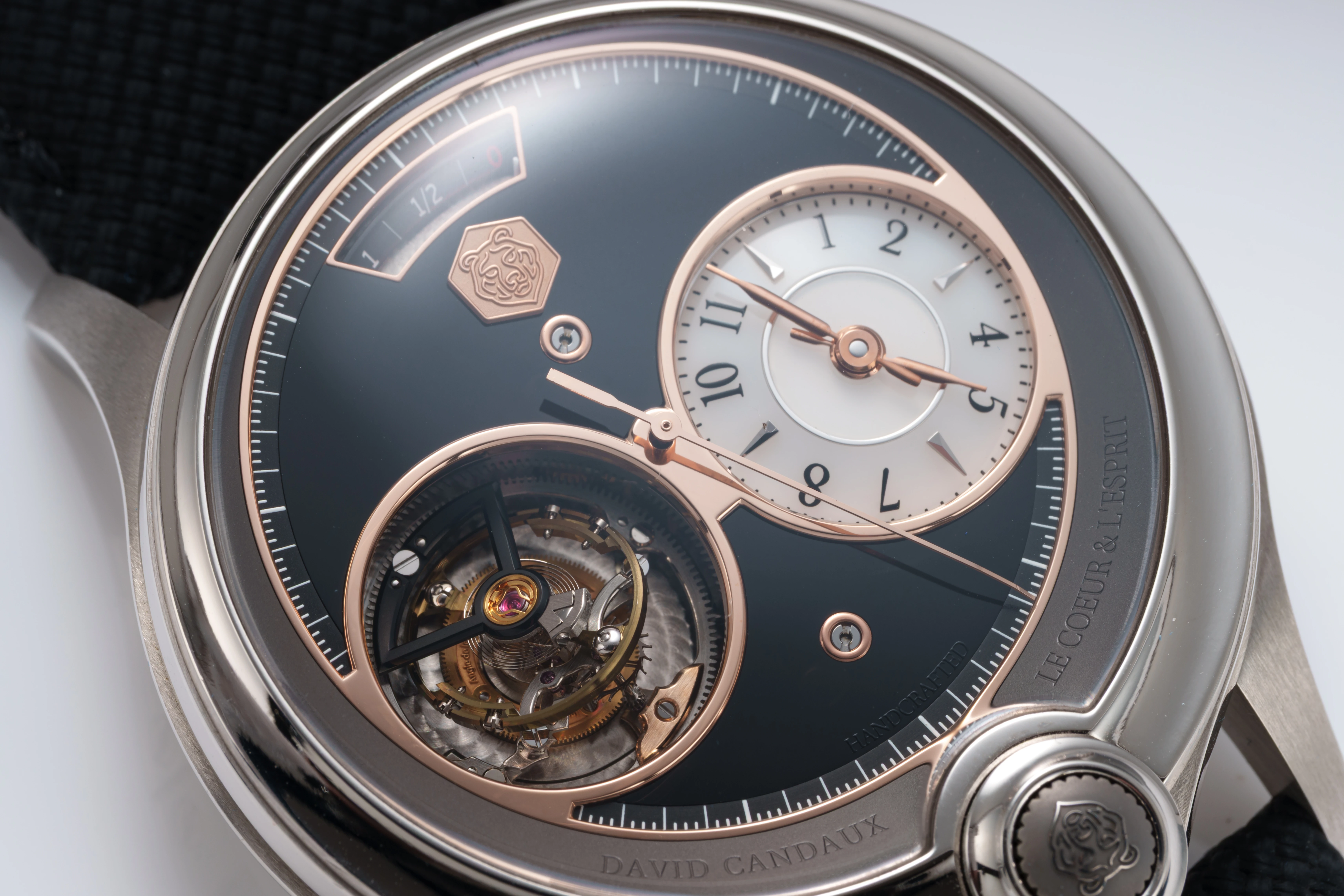
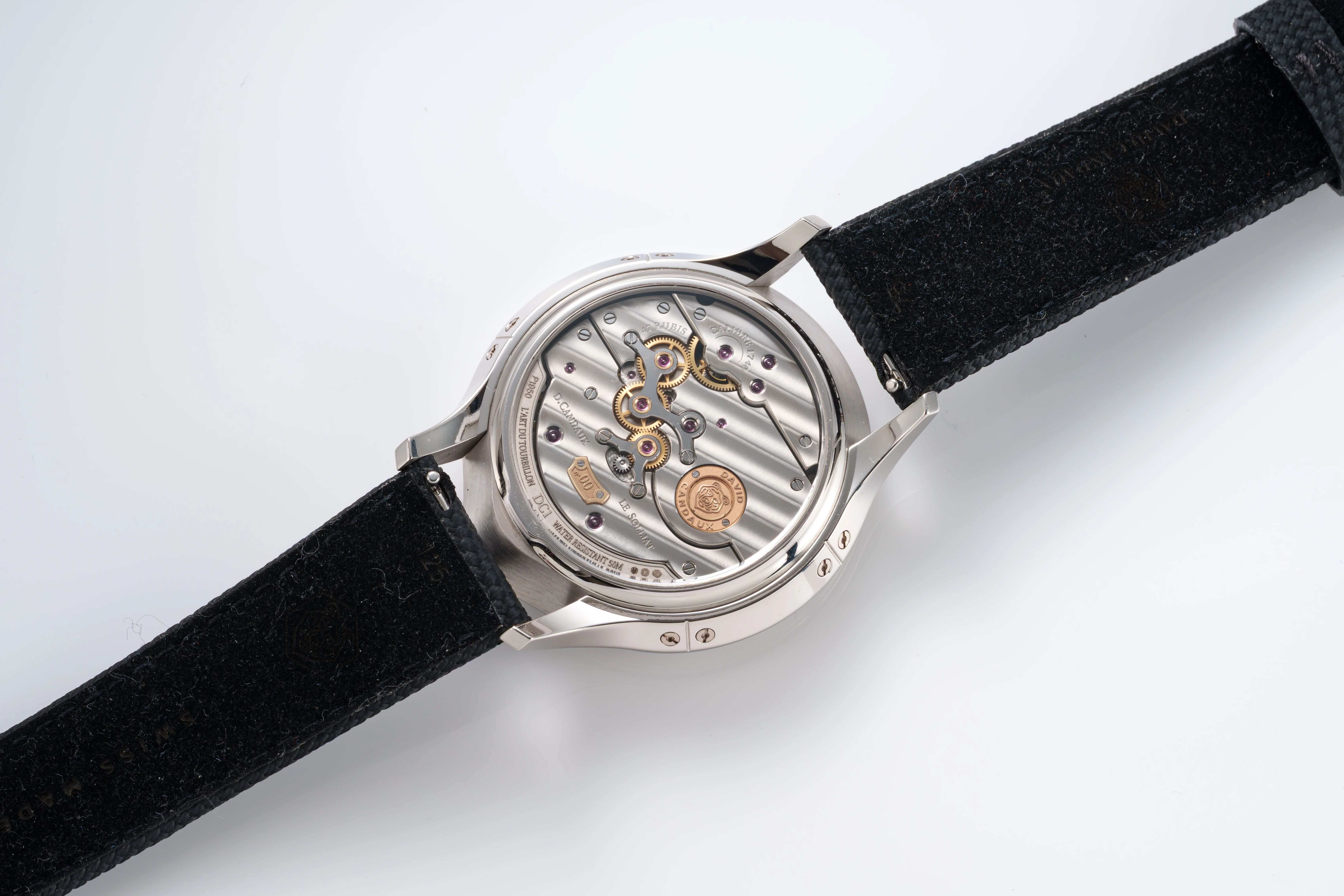
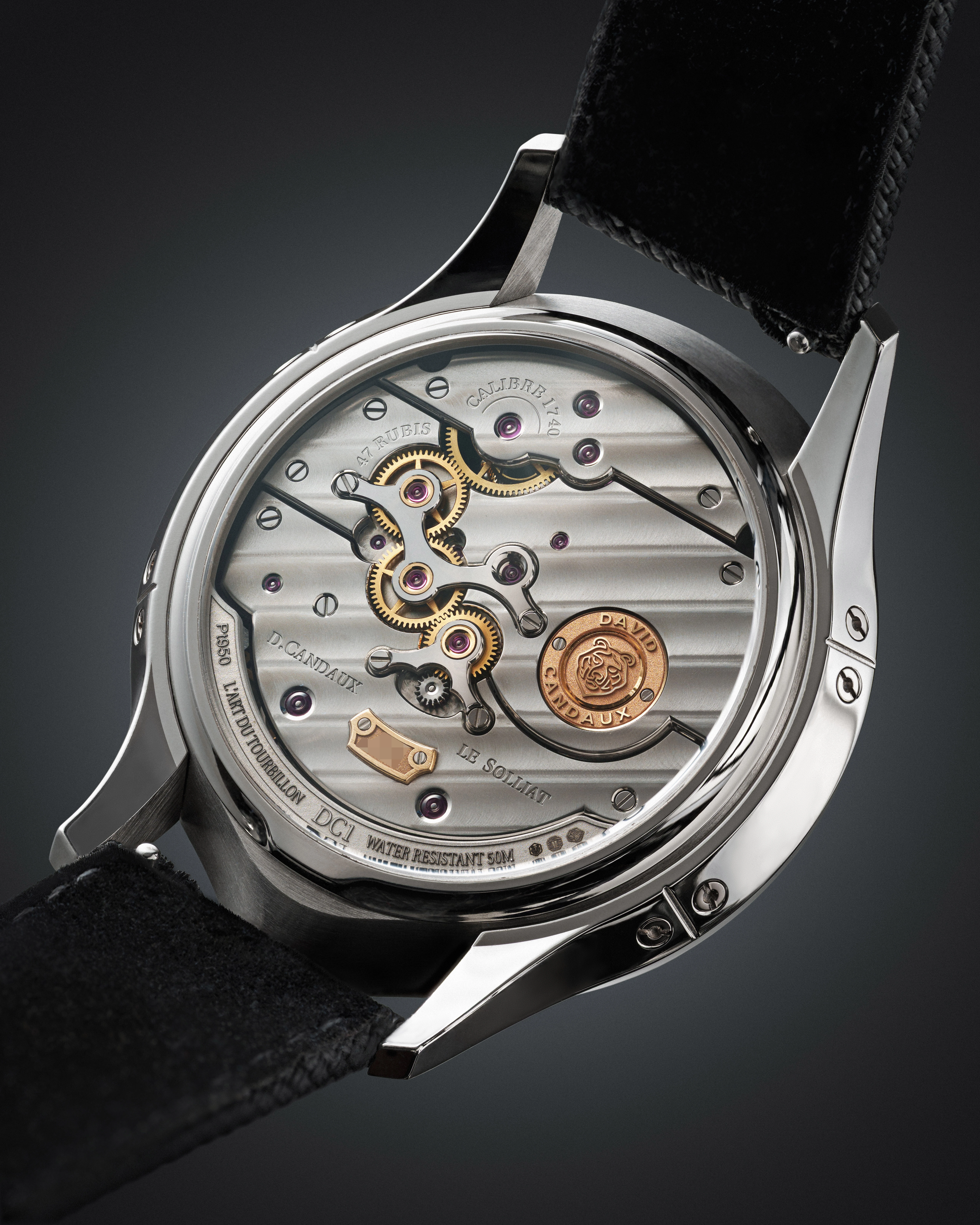
The caliber 1740 offers extraordinary technical features, as expected from David Candaux. It exemplifies independent watchmaking at its finest. The mainplate and bridges are made from uncoated titanium. The bridges feature a côtes du Solliat striped finish, designed by David and produced entirely by hand. These exceptionally attractive, iridescent broad stripes cannot currently be produced by machine. The bridges are chamfered, and the bevels are polished by hand, including the intricate finishing of the 23 sharp inner corners. The bridges are further adorned with two gold plates, secured by screws, bearing the watch’s serial number and the lion logo in relief. The caliber features an uncommon inclined stepped profile, with all components positioned at a three-degree angle relative to the case plane. As a result, the reverse side of the movement reveals a unique stepped arrangement of bridges. The three-degree inclination, sloping down toward the crown at 6 o’clock, is reflected in the watch’s design, angling the dial toward the eye when the watch is worn on the wrist. Rate accuracy is ensured by a 30-degree inclined flying tourbillon, which, like the other components, is also set at a three-degree angle to the case – hence the tourbillon’s ‘bi-plan’ designation.
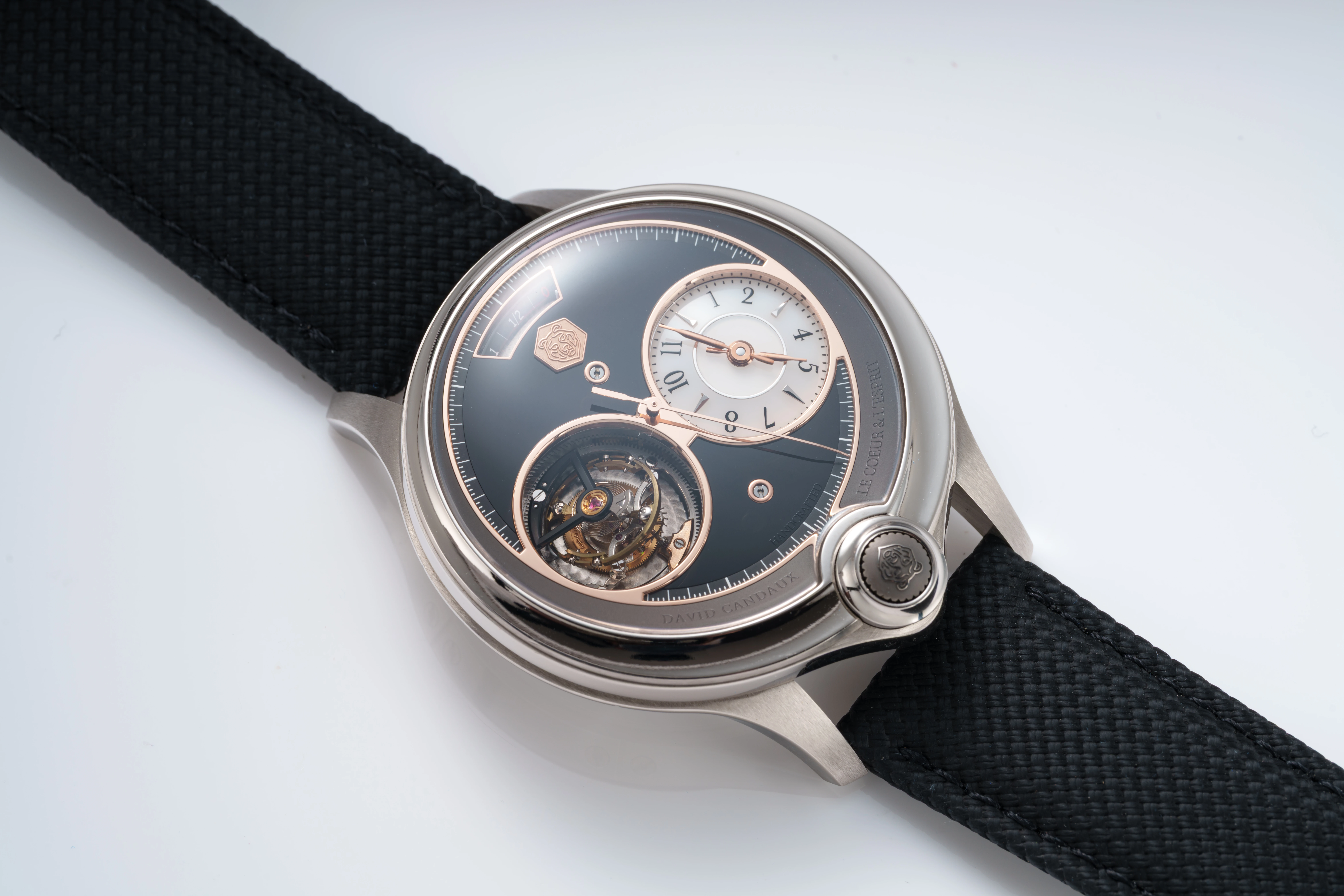
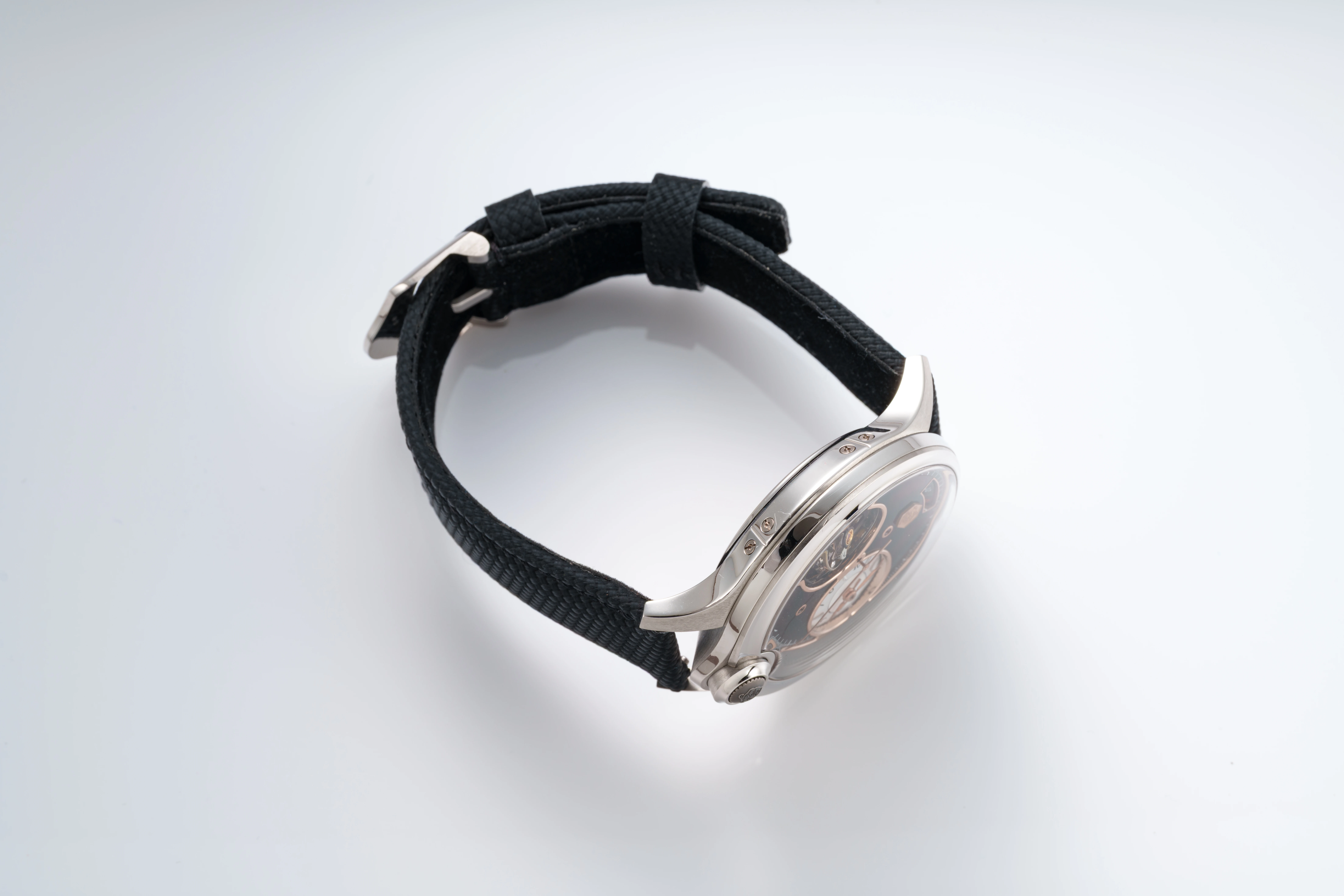
In addition to its exceptional caliber and symmetrical dial and case layout, another distinctive design feature of the DC1 is its vertical crown, which David Candaux calls the “Magic Crown”. This patented crown is usually recessed flush with the top of the case and must be released by pressing it to activate its three-position function: neutral, time setting, and winding. The Magic Crown enables a clean, symmetrical profile, further enhanced by a unique rounded protrusion at the lower part of the case, which requires significant investment to produce and finish due to its complex shape.
REASONS TO BUY
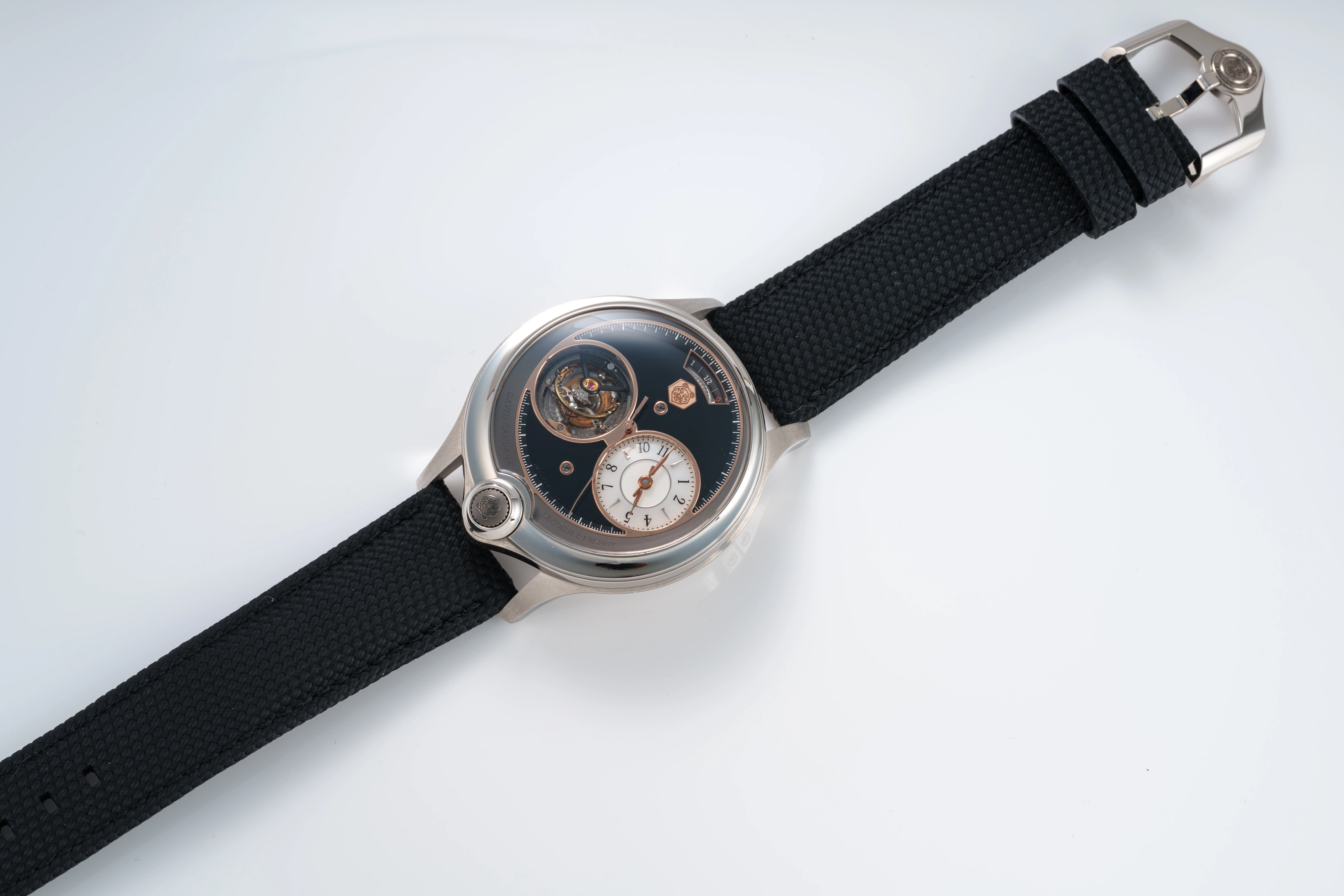
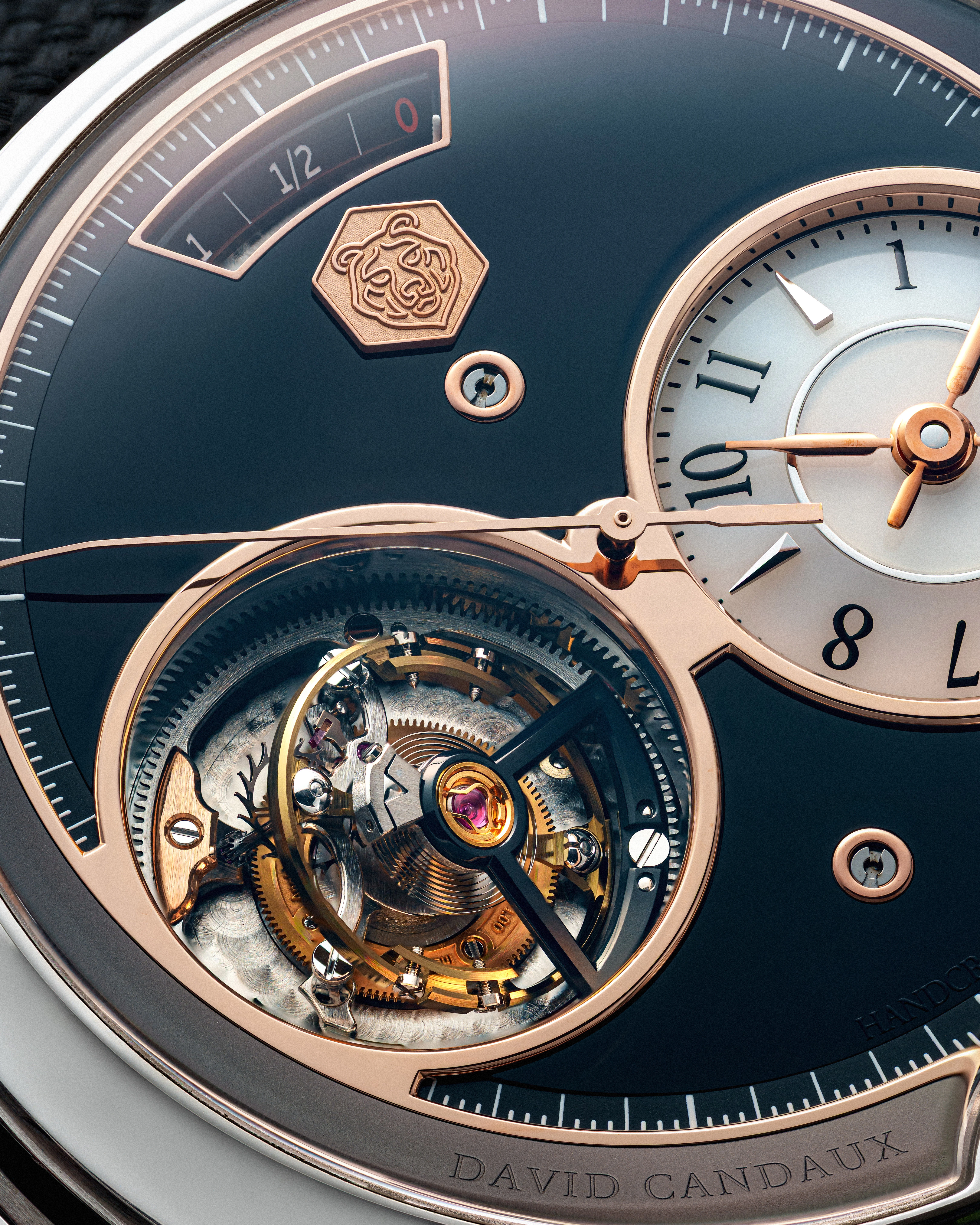
The meticulous high-end craftsmanship, unique design, and extraordinary technical specifications give this David Candaux DC1 watch in platinum, featuring an onyx dial and opal subdial, undeniable value, making it a remarkable collector’s item. This watch demonstrates the exceptional level of technical execution and uncommon design expected from a wristwatch created by a leading independent watchmaker. The tourbillon, the king of complications, is showcased in spectacular fashion with an inclined flying design, a free-sprung balance wheel, and a hairspring with a Breguet overcoil. The distinctive vertical crown, a hallmark of David Candaux watches, adds further appeal by creating a harmonious, symmetrical design and an uncommon user experience. All of this is enhanced by extremely limited production.
ABOUT THIS WATCH
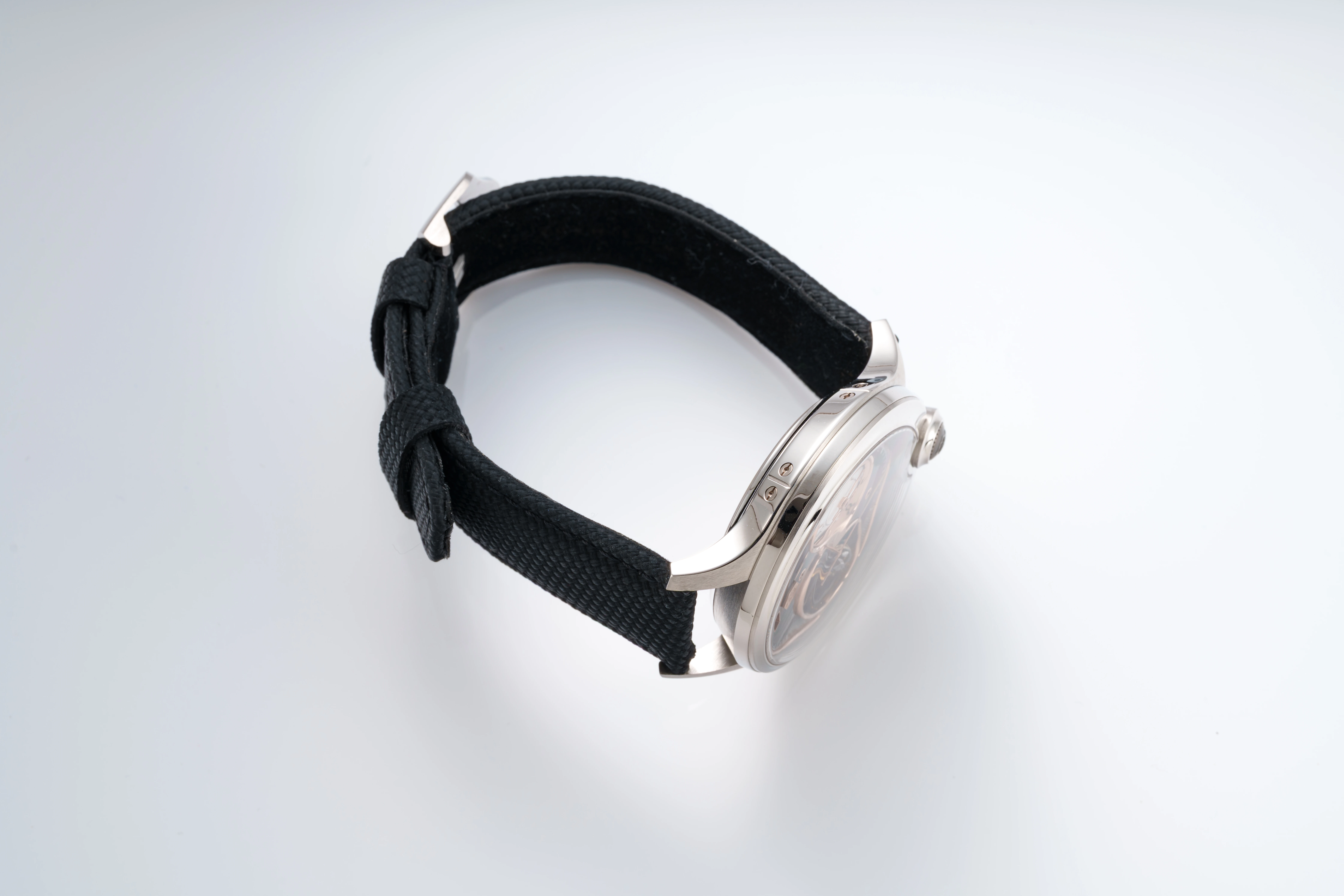
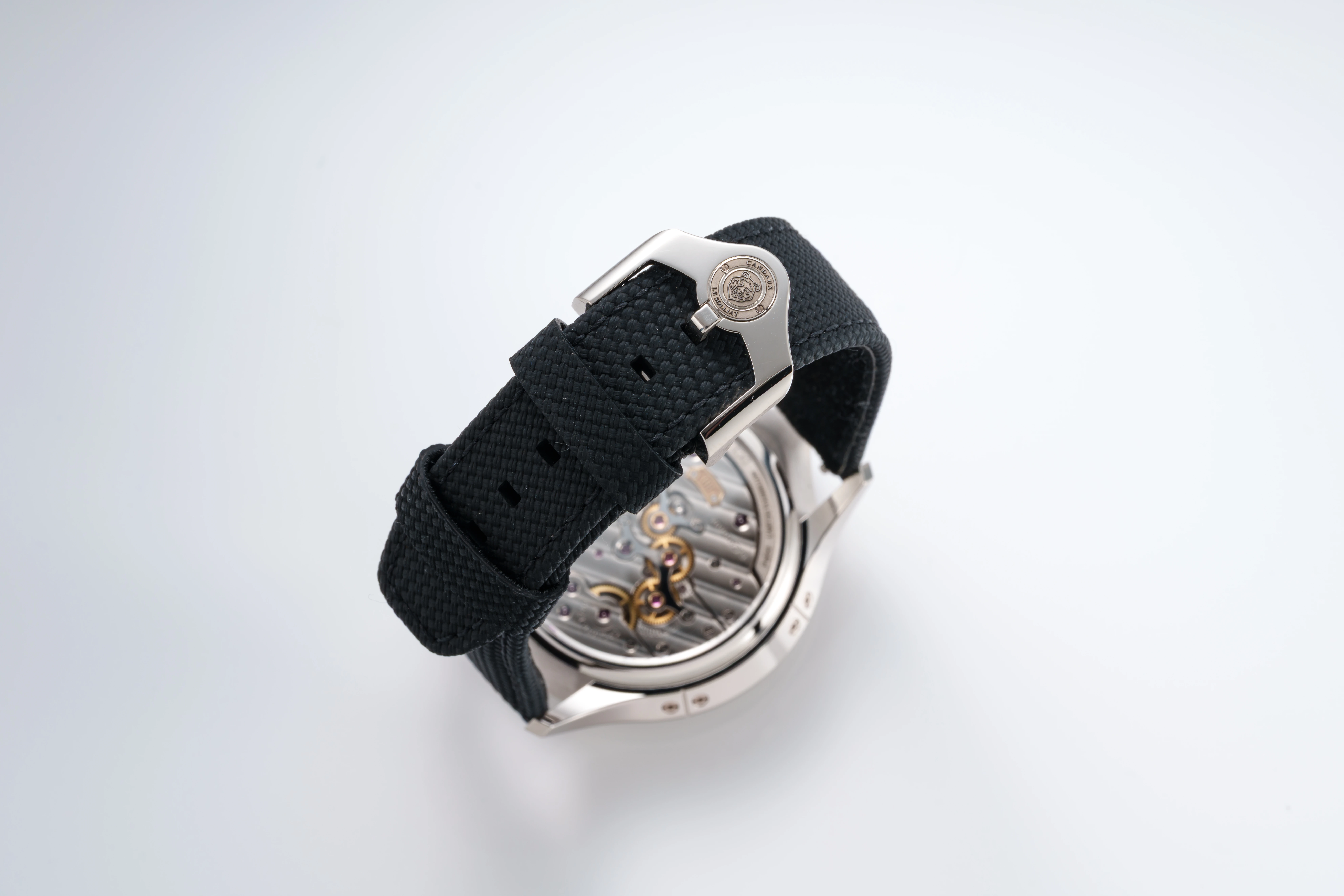
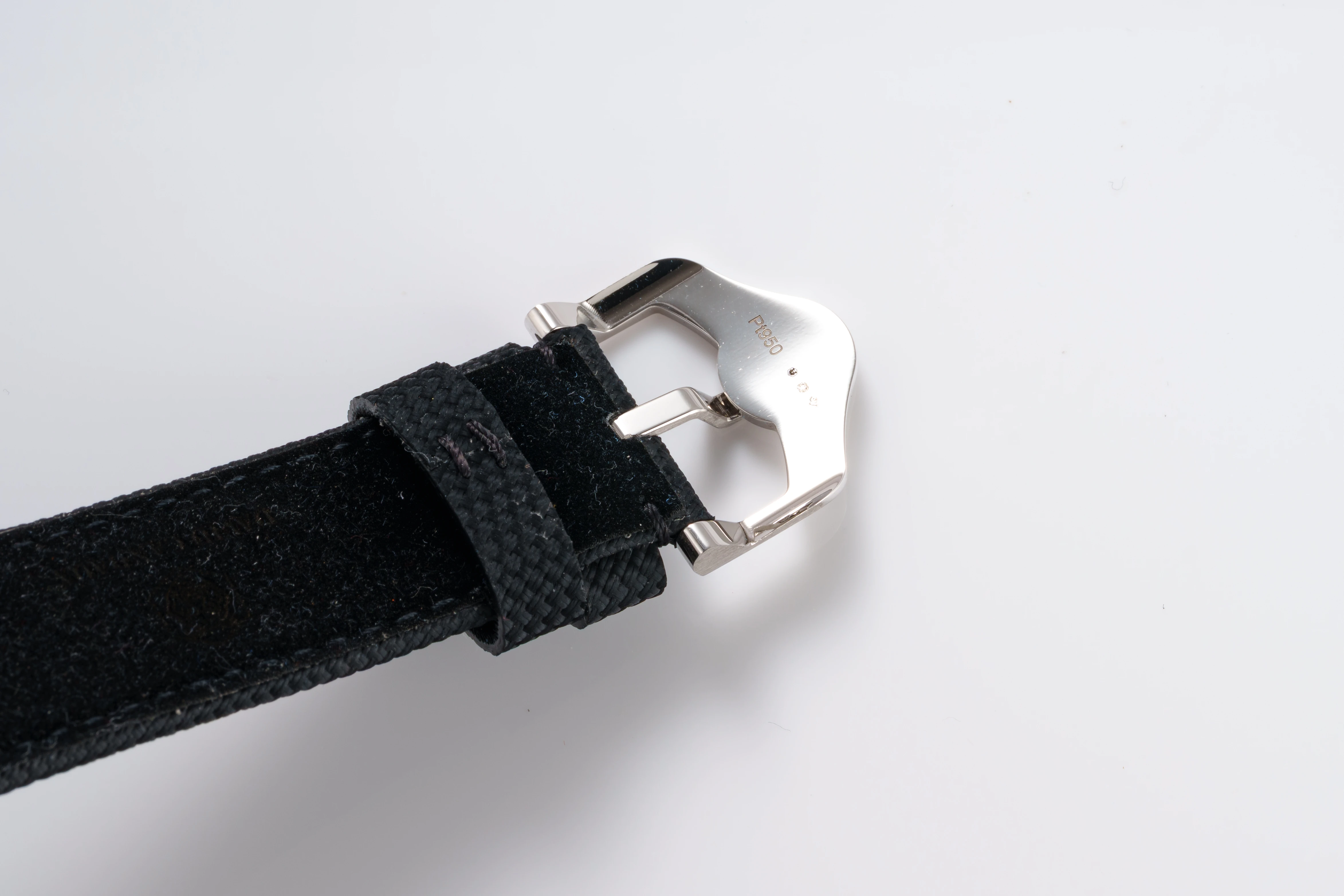
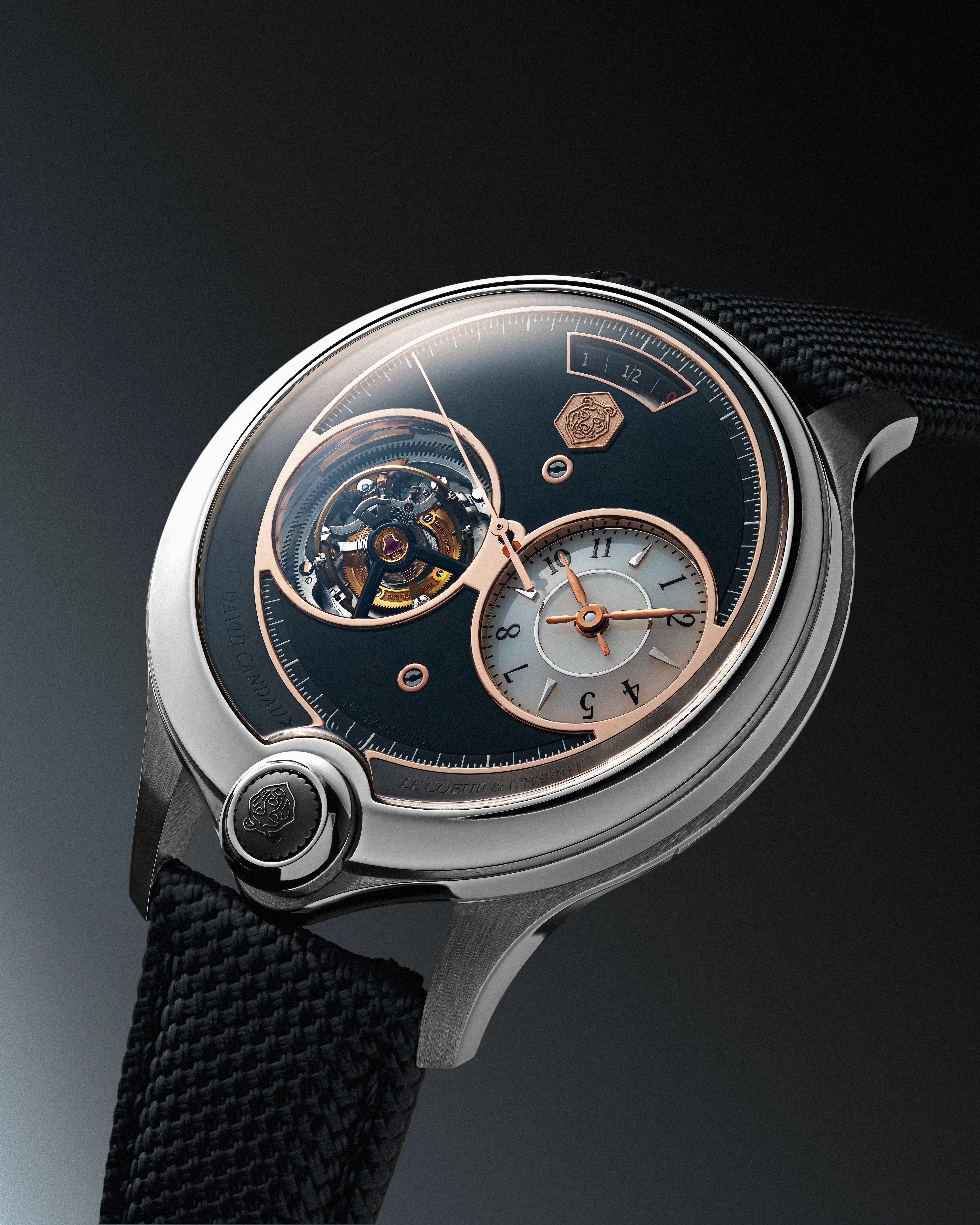
This DC1 in platinum, featuring an onyx dial and opal subdial, is one of the latest creations from David Candaux and is among the few designed in the tuxedo style. David rarely uses platinum for cases, typically favoring titanium or, less often, carbon fiber composite, stainless steel, or 18-karat rose gold. The platinum case of this DC1 gives the watch a noticeable weight on the wrist – a stark contrast to models made from lighter materials. Beyond the value of platinum, this watch undoubtedly appeals to connoisseurs who appreciate a timepiece with distinct wrist presence.
The defining feature of this DC1 is its tuxedo style, achieved through a striking color triad: the main dial is adorned with deep black onyx, complemented by the cool tone of the gleaming polished platinum bezel and the warm tones of rose gold framing the dial, subdials, and even the holes for the two screws securing the dial. Additional rose gold accents appear on the lion head logo and the hands. The main hours and minutes subdial, featuring a white opal background, provides a visual counterpoint to the symmetrically positioned opening of the spectacular inclined tourbillon, creating a harmonious composition.
Artisanal hand-finishing of movement components is a hallmark of David Candaux, a watchmaker from the Vallée de Joux, where this craft has a long tradition. He also prioritizes the chronometric quality of his DC1 watches, equipping the movement with components that significantly enhance precision. These include a 30-degree inclined flying tourbillon, a double barrel with low tension and fast rotation, a free-sprung balance with inertia regulated by screws, and a hairspring with a Breguet overcoil and Phillips terminal curve. The caliber automatically stops when the power reserve falls below a critical level to maintain its chronometric rate – another subtle yet crucial technical feature of this DC1 watch.

Condition report
| Box: | Yes |
| Papers: | Yes |
ADDITIONAL PHOTOS: