Golay Fils & Stahl

Don't hesitate to ask for any additional information, Alex is ready to assist and guide you in your decision
DETAILS
Golay Fils & Stahl is a respected Swiss brand, founded in 1837, specializing in high-end watches and jewelry. The business was established by David-Auguste Golay (1814–1895; known as Auguste), the son of Jacques-David Golay and Suzanne-Louise Meylan, both from the Vallée de Joux. In August 1837, Auguste married Susanne-Henriette Leresche, the daughter of a watchmaker, and that same year he founded his first company, Aug. Golay-Leresche à Genève, naming it after himself and his wife, as was common practice in Switzerland at the time. Auguste developed the business with a focus on the quality of his timepieces, including ultra-complicated and ultra-thin watches. He frequently exhibited his work internationally and received various medals and awards, including a medal at the first Great Exhibition in 1851 at London’s Crystal Palace. In 1870, his sons, Louis-Édouard (1840–1900) and Pierre (1842–1905), joined the company, and its name changed to A. Golay-Leresche & Fils. After Auguste’s death in 1895, management of the company passed to his sons, and in 1896 they formed a partnership with Edouard Stahl, an English-born jewelry merchant based in Geneva, and the company operated under the brand name Golay Fils & Stahl.
The brand was recognized as an important player in the watch market and ranked among the best watch manufacturers in Switzerland, both nationally and internationally. Its products included highly complex pocket watches, such as an open-face, minute-repeating perpetual calendar watch with moonphase, sunrise, sunset, and equation of time, made circa 1910 for the Maharaja of Patiala and recently sold at Phillips for CHF 647,700. The brand is also known to have produced watches for members of royal families and other celebrities, although these have appeared extremely rarely, if at all, on the market.
REASONS TO BUY
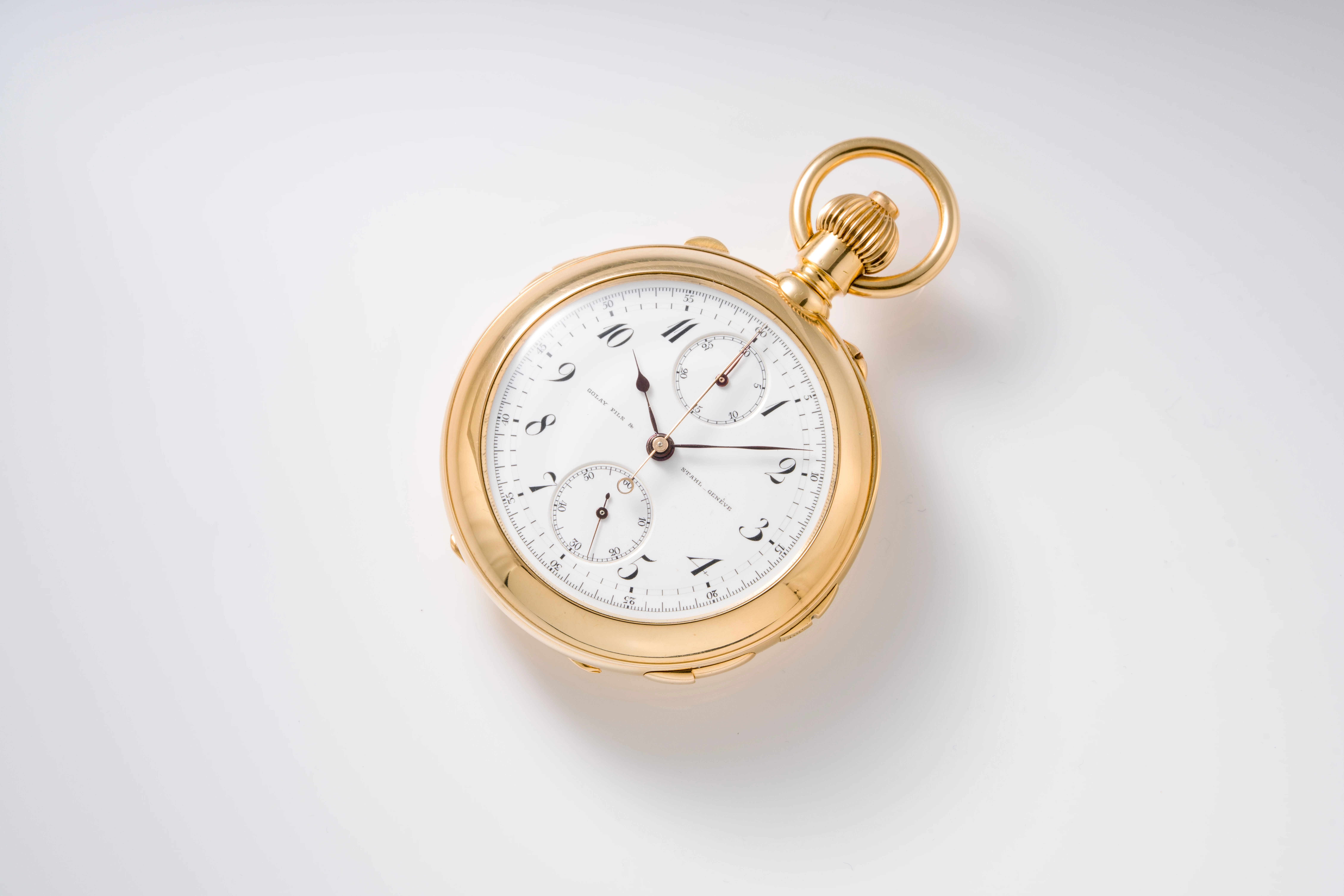
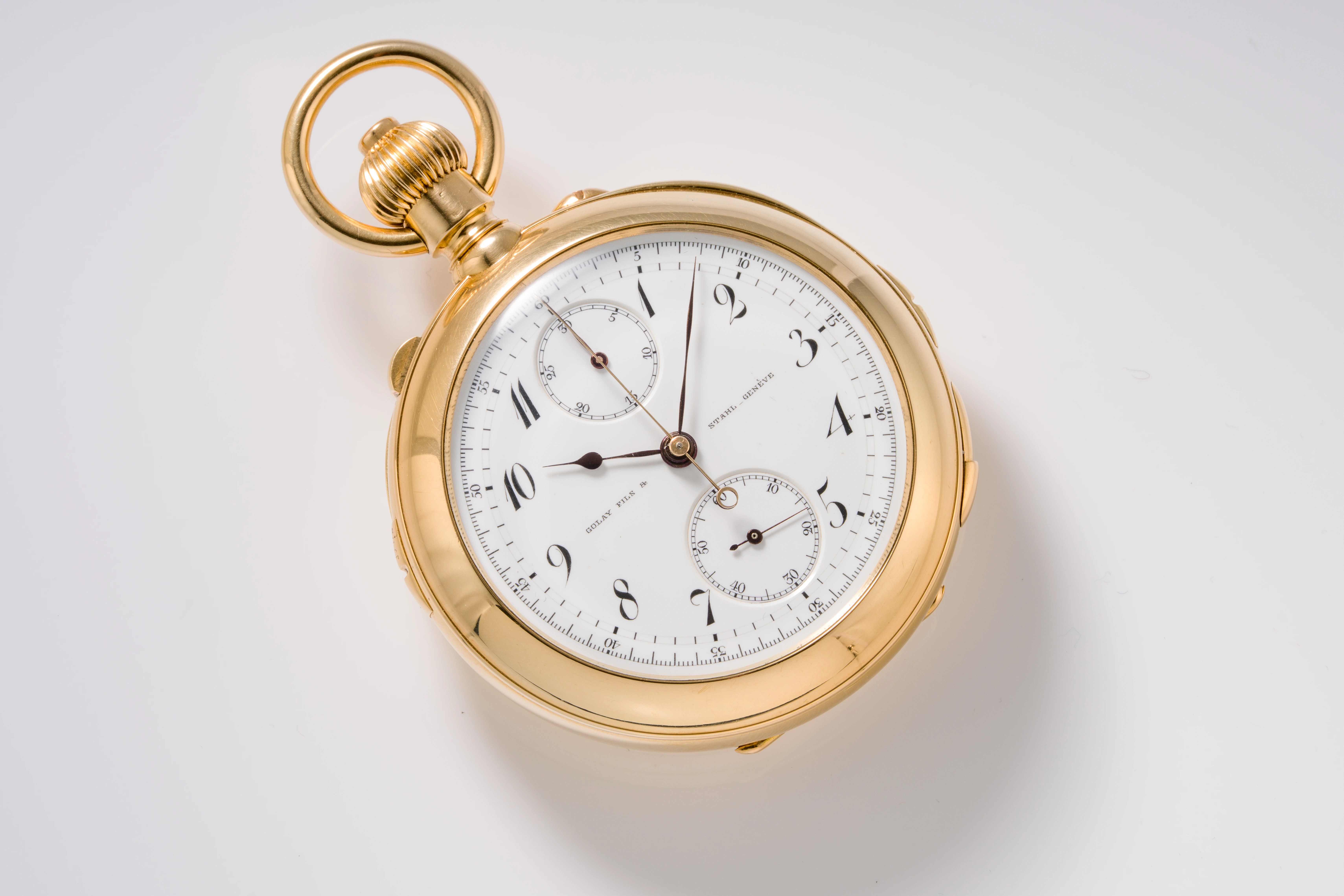
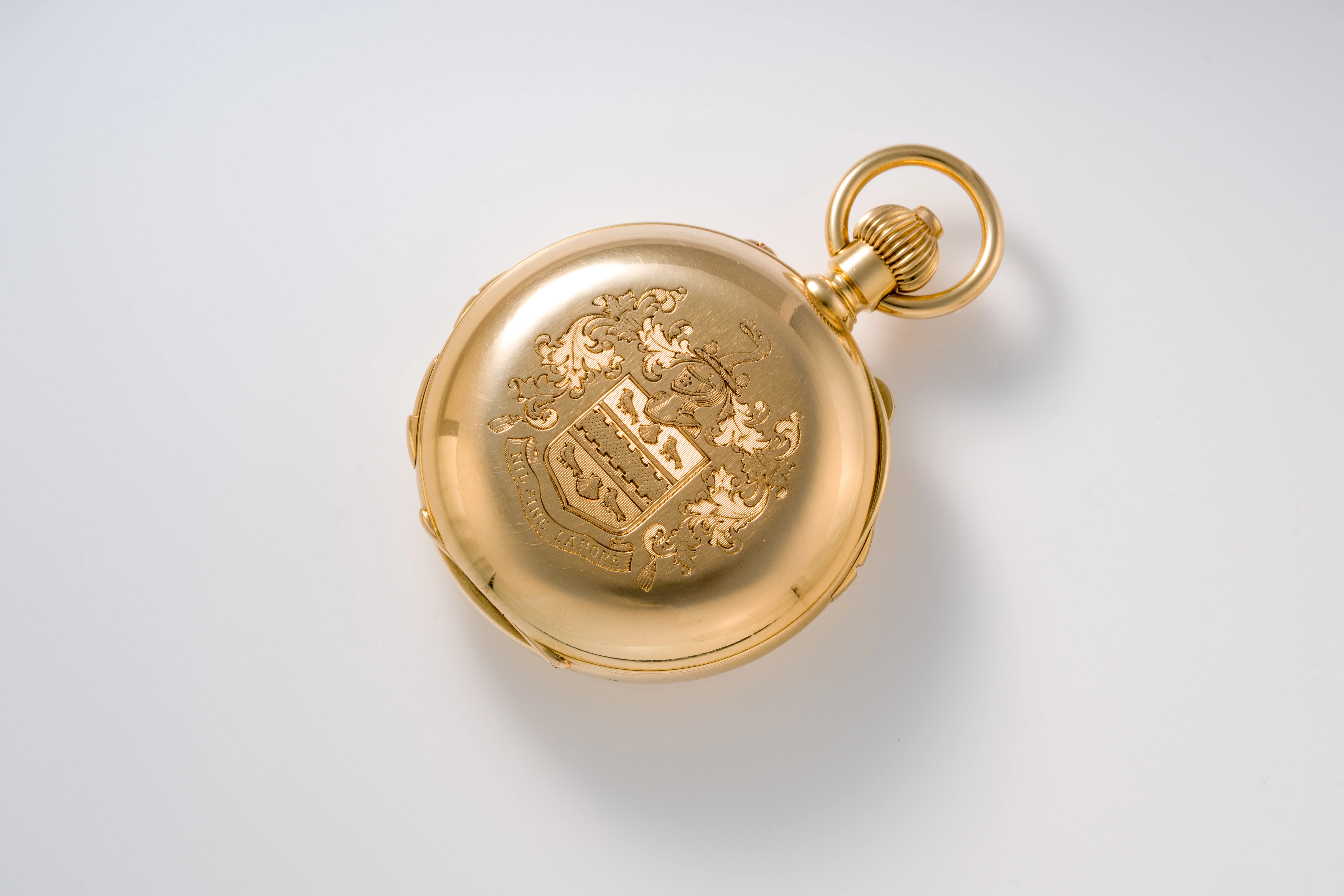
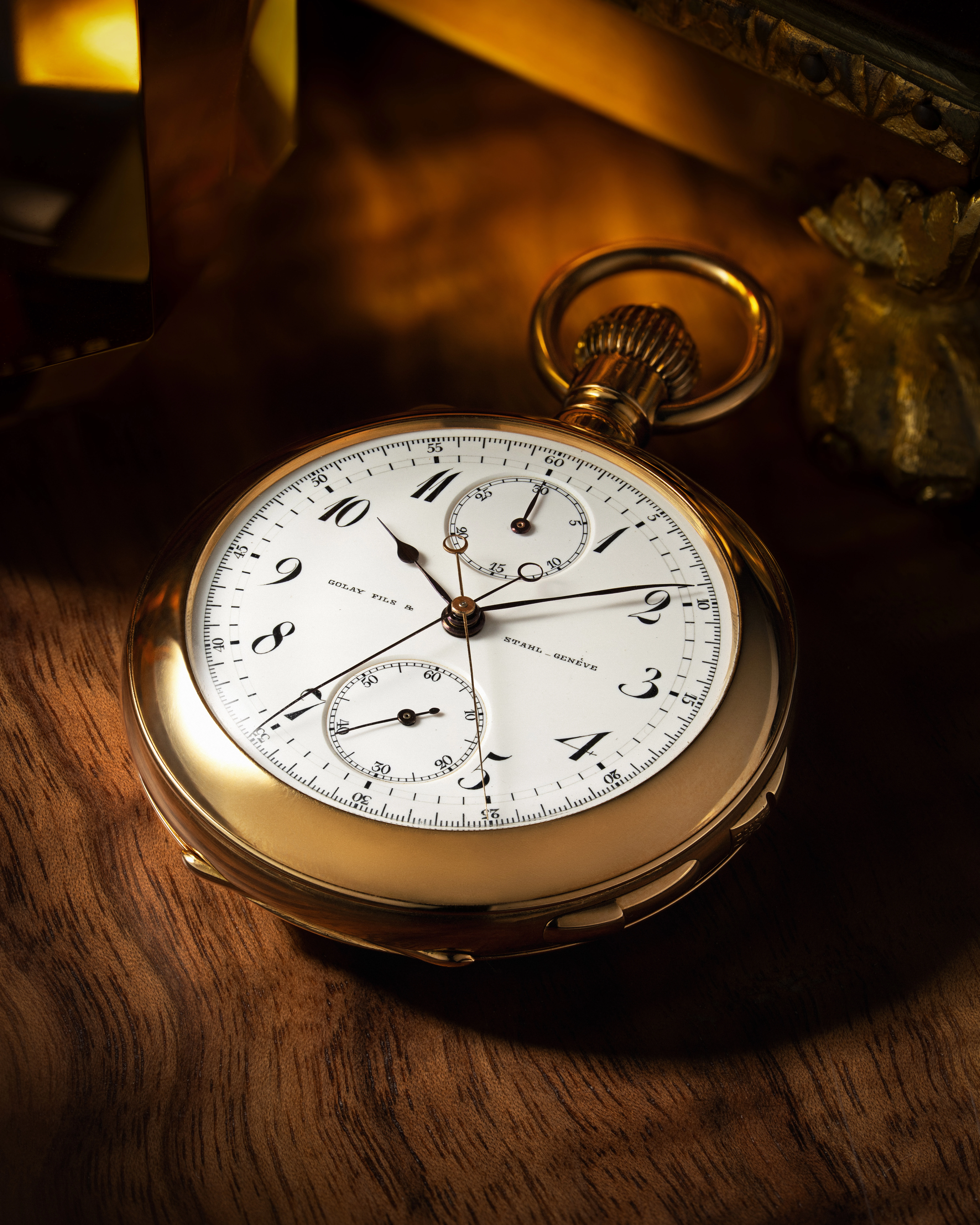
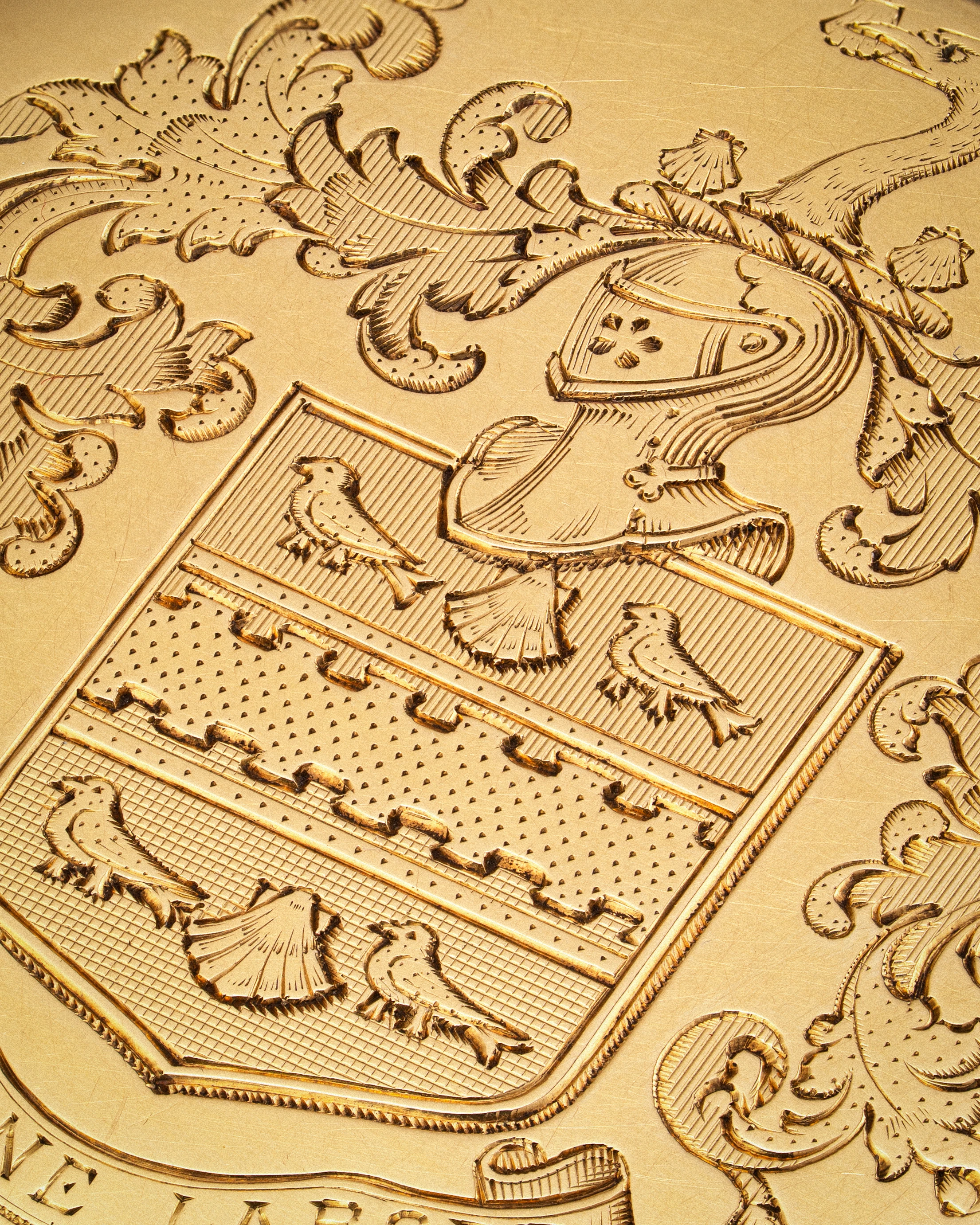
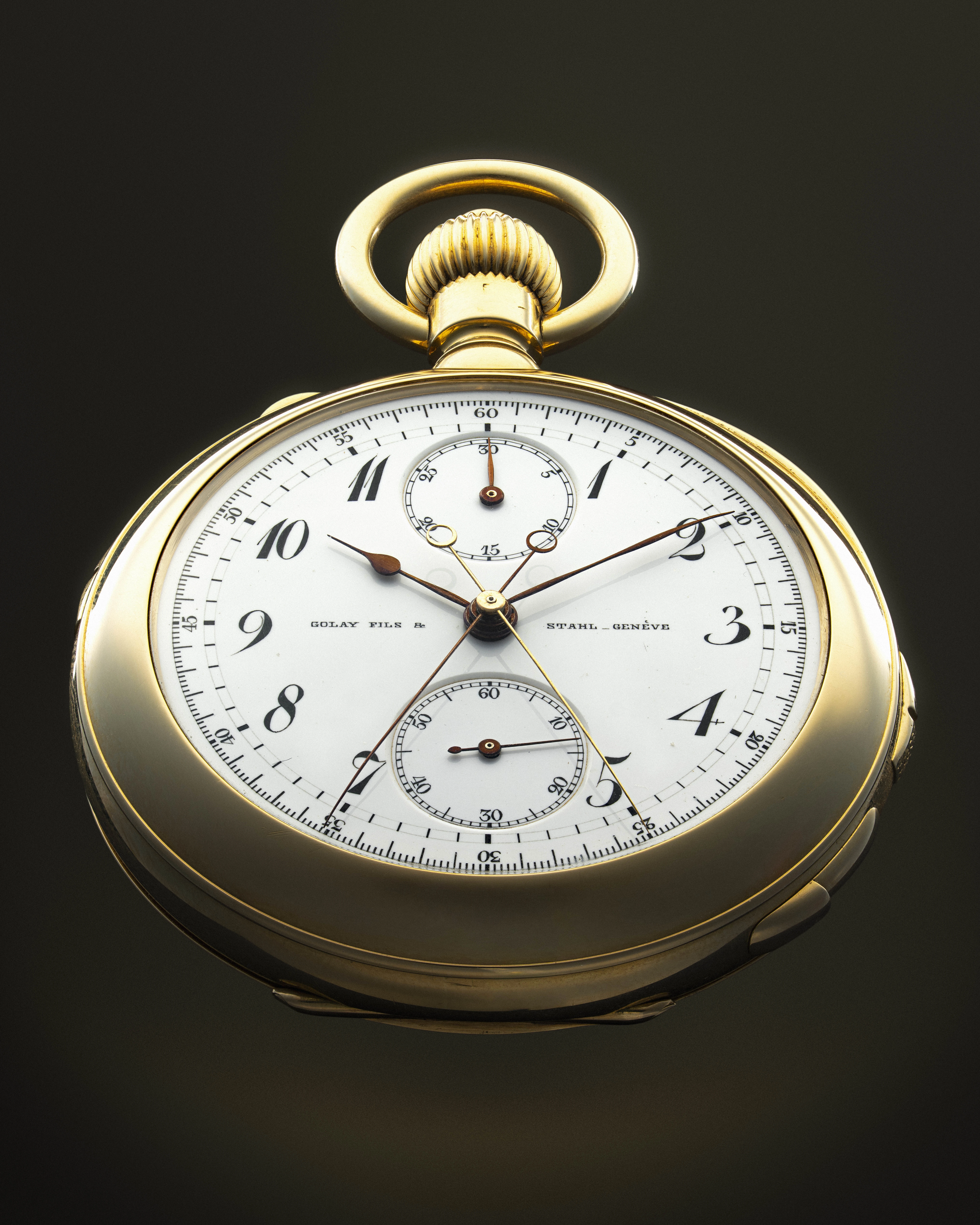
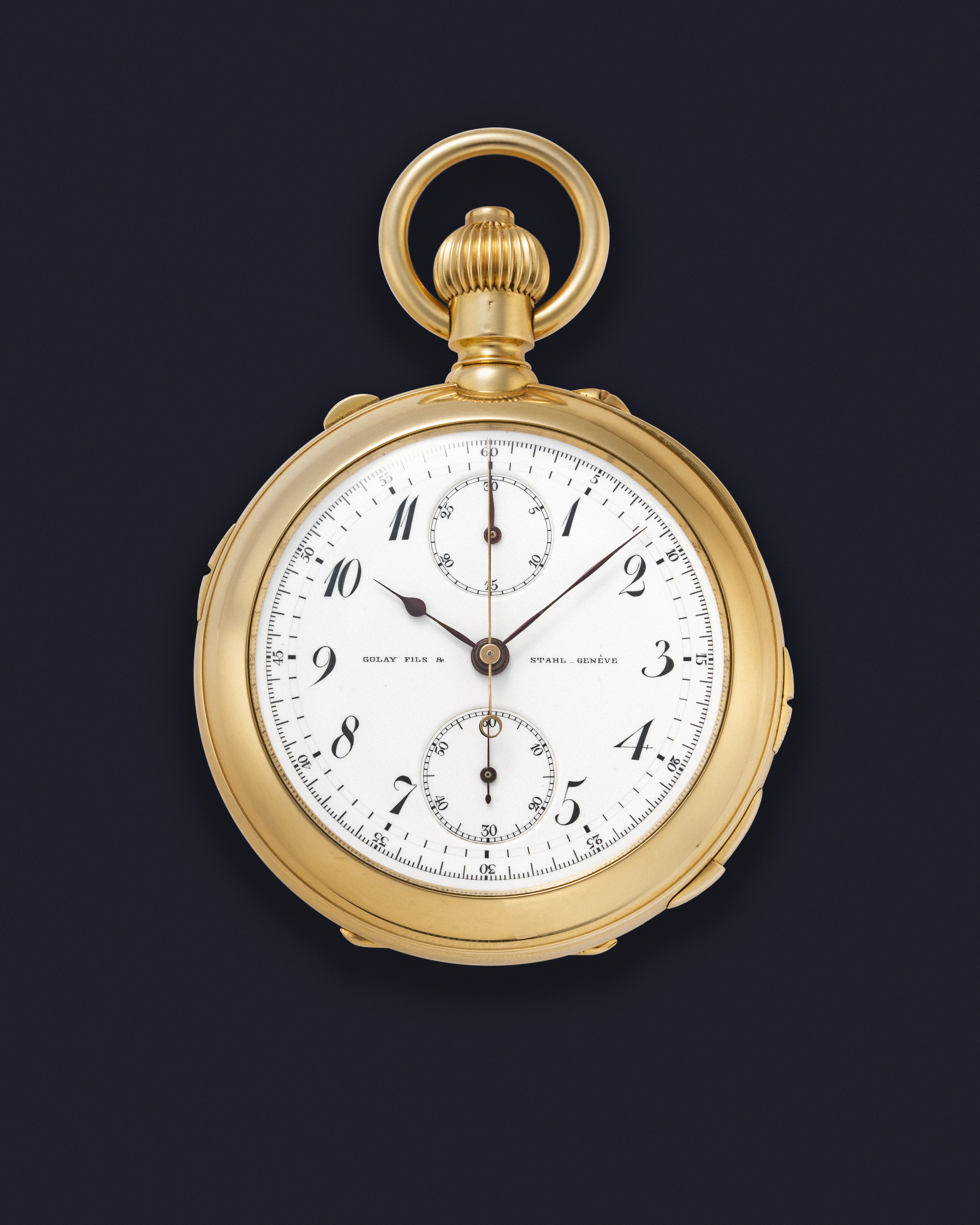
This Grande & Petite Sonnerie with Minute Repeater and Rattrapante Lépine pocket watch in yellow gold is an extremely rare, ultra-complicated timepiece from the exquisite Swiss watch and jewelry brand Golay Fils & Stahl, the historical successor to the 19th-century houses A. Golay-Leresche & Fils and Aug. Golay-Leresche à Genève. This brand was among the leading watchmakers of the 19th century and, in our opinion, unlike more established names, is underrated, even though the sophistication of its calm, classic style and the high quality of its calibers and designs, brilliantly presented in this watch, can only inspire admiration. Even at this high level of execution, several important technical features clearly stand out, including the combination of a technically modest dial design with a multifunctional caliber that is and appears extremely complex, the presence of a chronograph minute counter, and the open-face (Lépine) case. This watch deserves the most detailed examination, as every element has meaning and significance. The engraved inscriptions and coat of arms clearly reference Sir Joseph Beecham (1848–1916), a prominent British businessman and the presumed original owner of this watch, which only adds to its appeal.
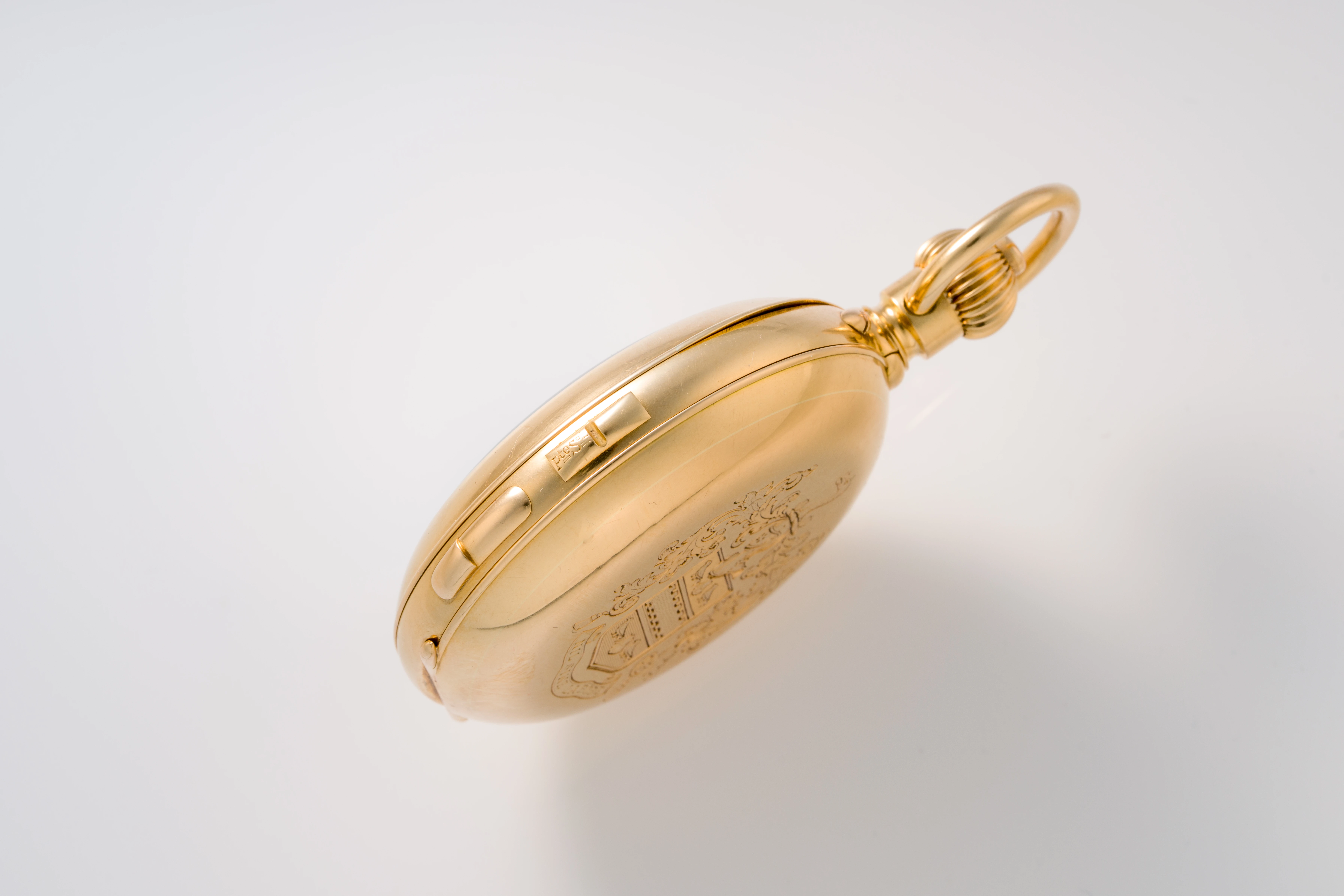
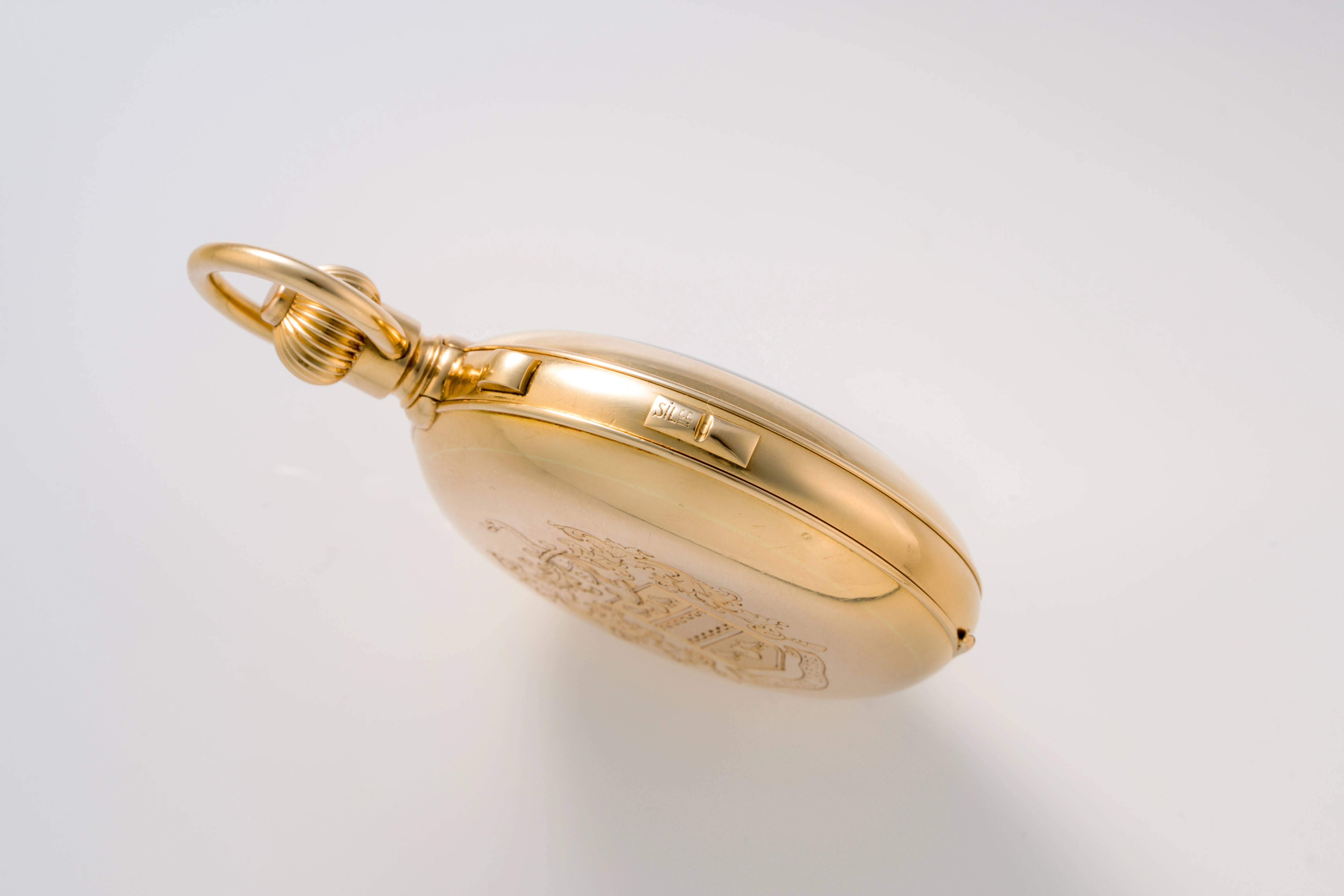
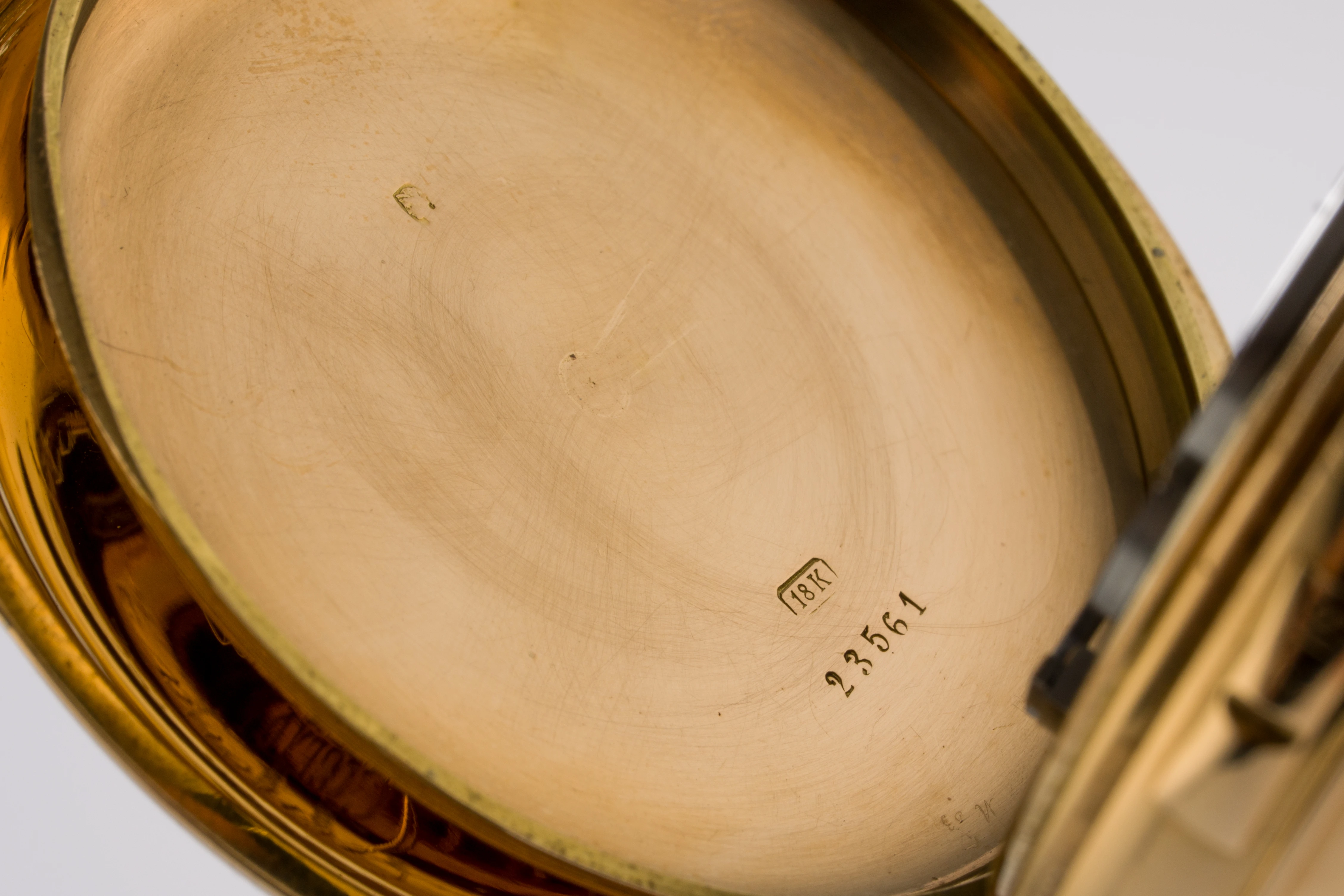
An additional link between this watch and Joseph Beecham is the escutcheon bearing the motto “Nil sine labore”, Latin for “Nothing without labor”, engraved on the caseback cover. Incidentally, this motto perfectly fits the watchmakers who created this piece.
ABOUT THIS WATCH
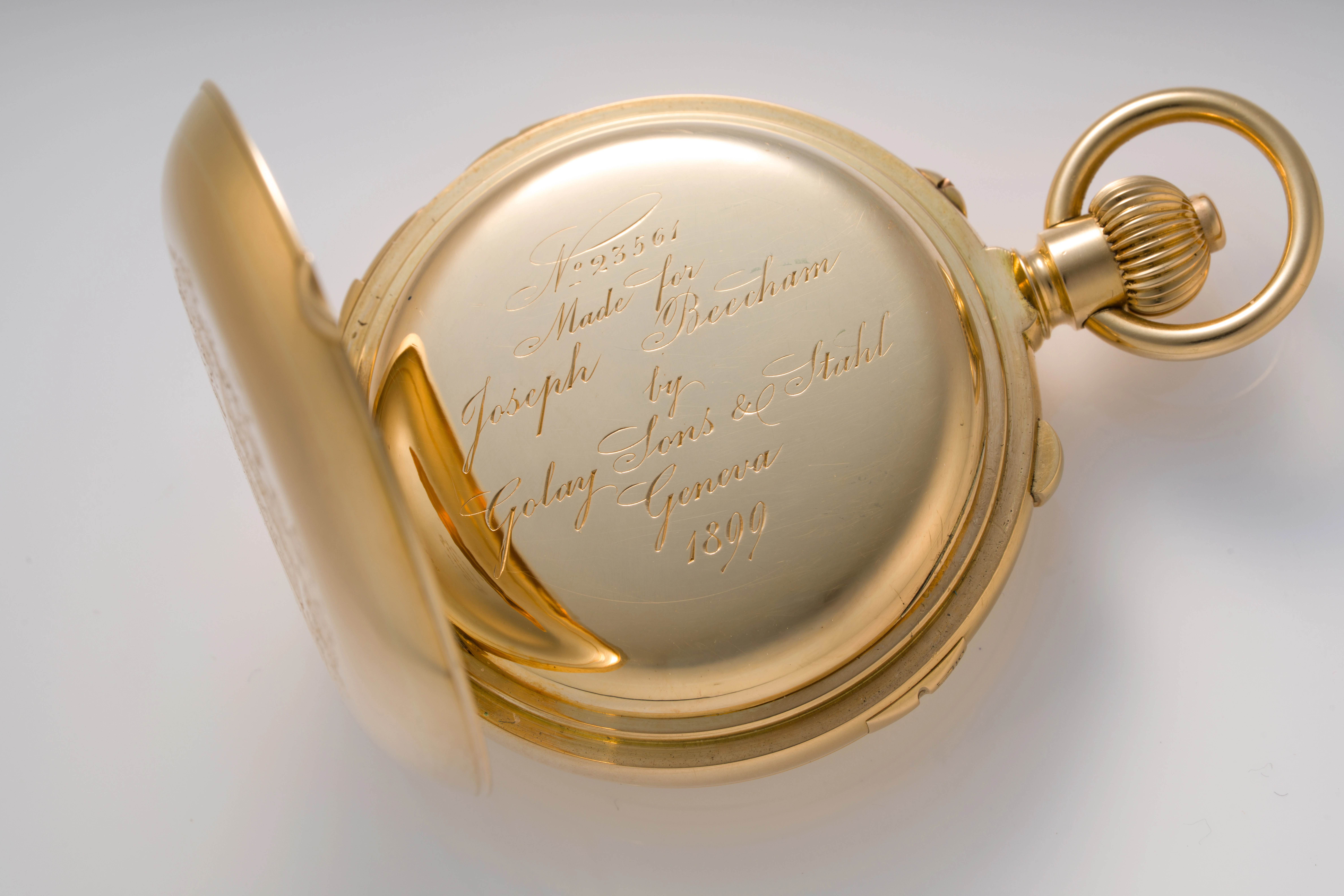
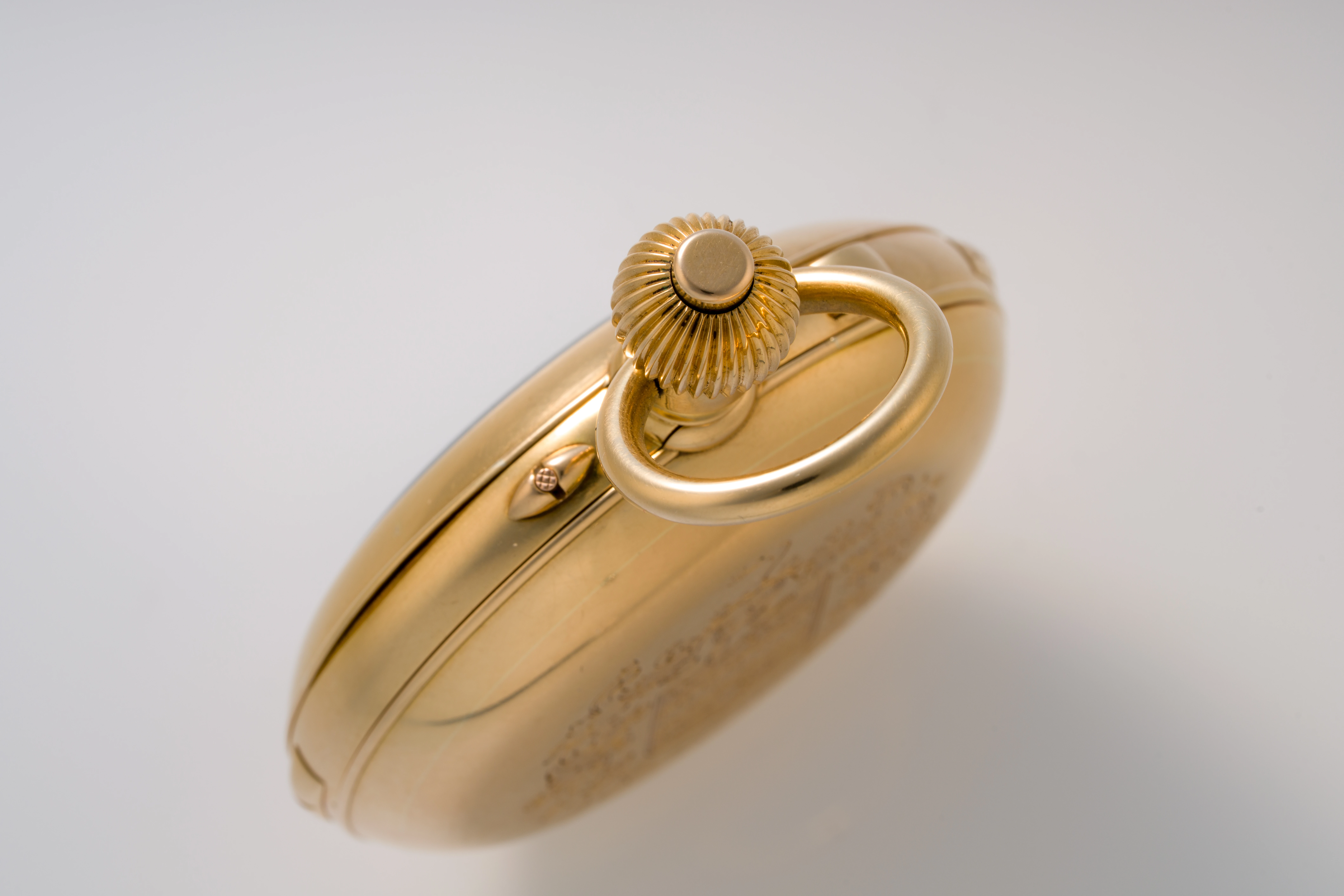
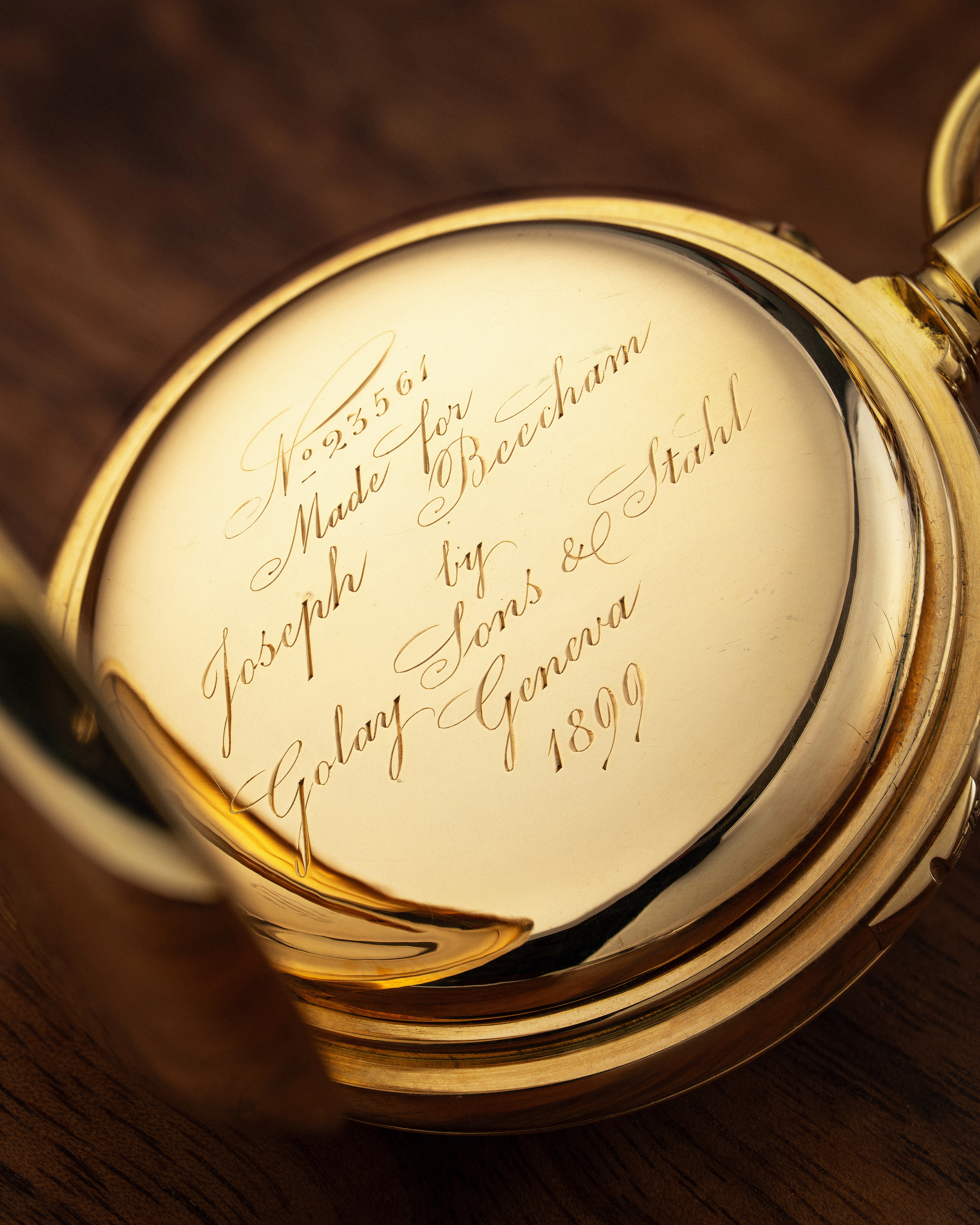
This highly complex pocket watch is one of those satisfying cases where its origins can be traced with a high degree of certainty. The commemorative inscription, “Made for Joseph Beecham by Golay Fils & Stahl, Geneva, 1899, No. 23561”, engraved on the outside of the case, refers to Sir Joseph Beecham (1848–1916), a British businessman involved in the production of medicines. Thanks to his efforts, a local pharmaceutical business founded in England eventually became a global brand.
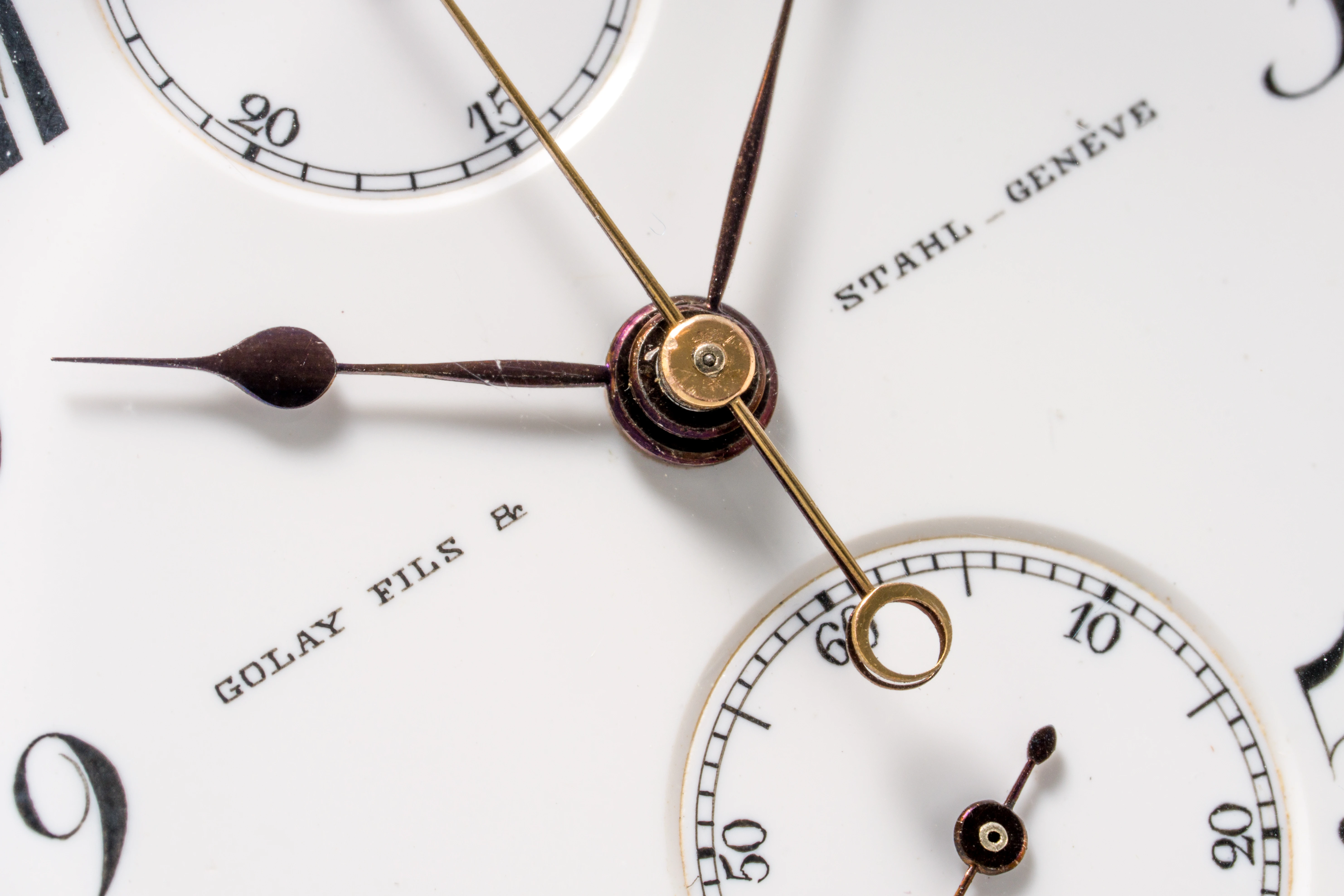
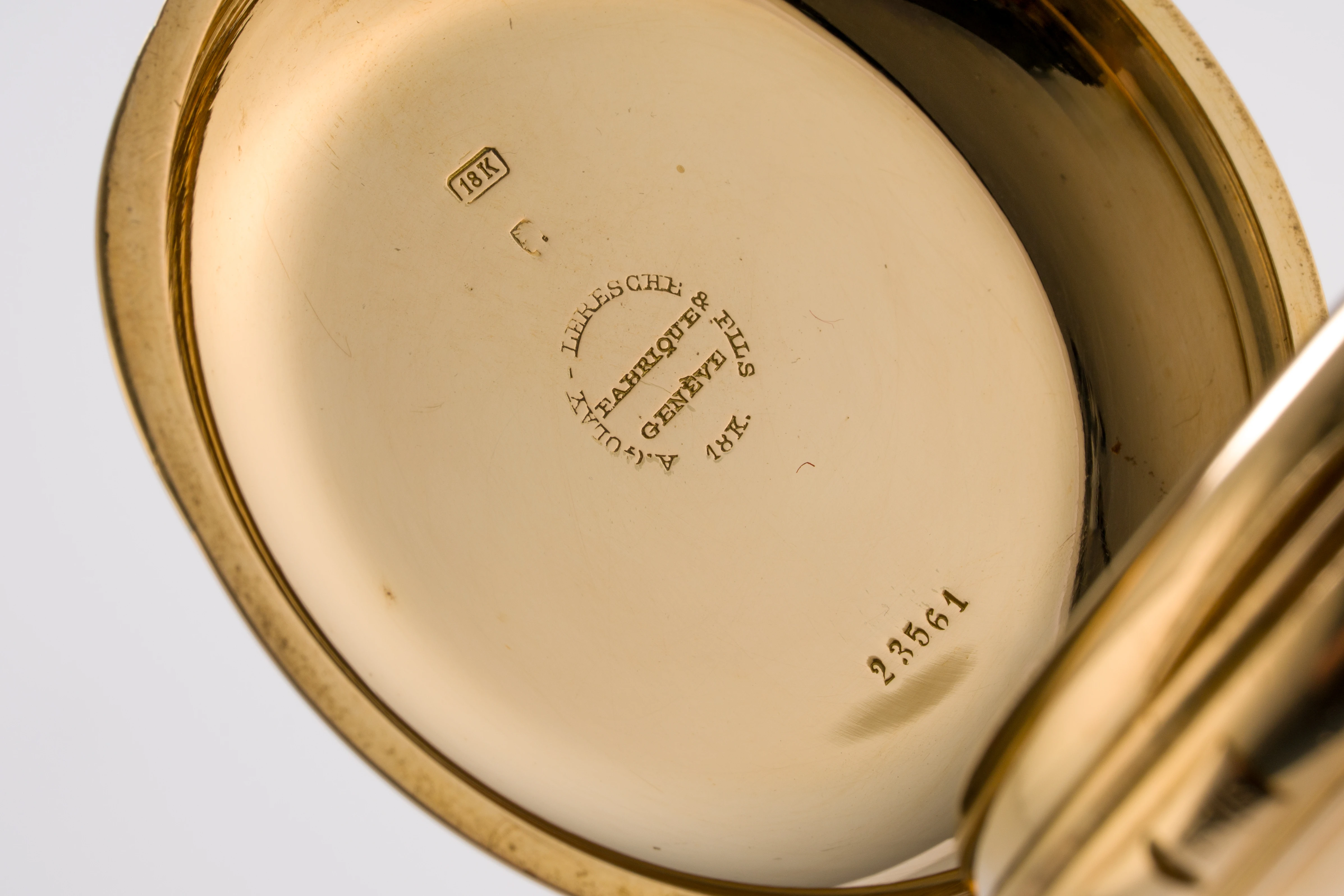
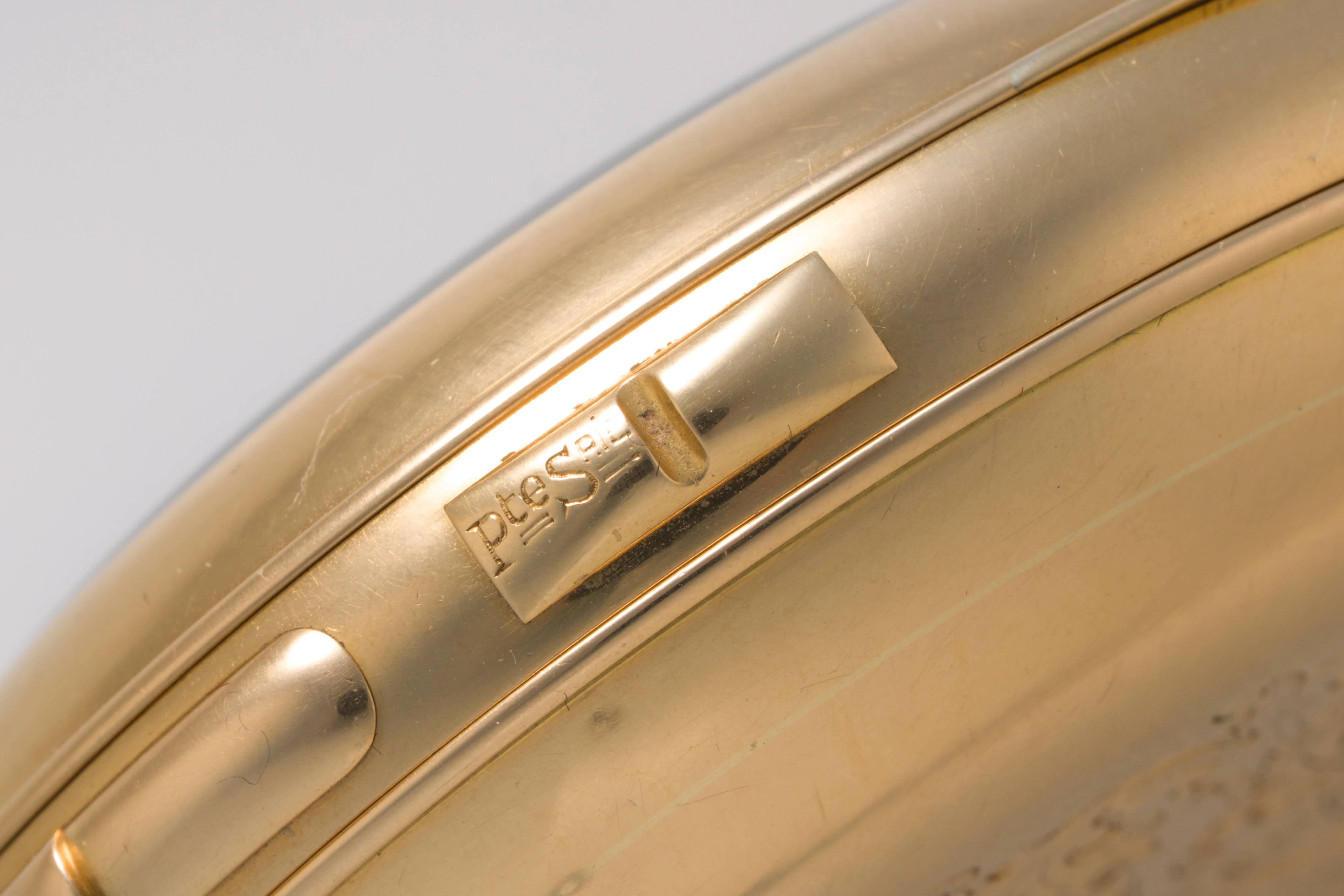
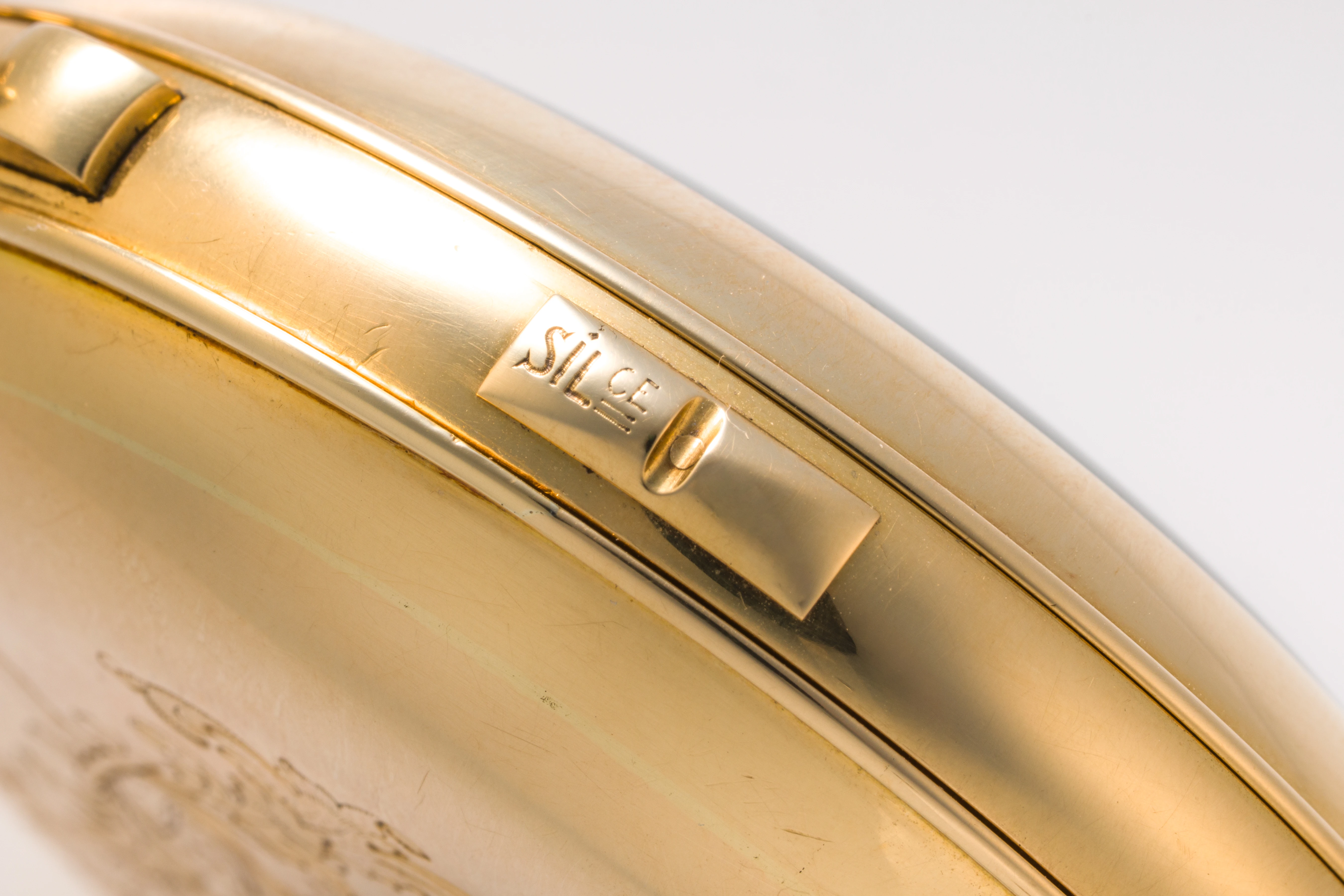
Work on this watch likely began no later than 1896, when the brand changed its name from A. Golay-Leresche & Fils to Golay Fils & Stahl. The earlier name is stamped on the inside of the caseback – a typical marking for this brand, also seen on its pocket watches from the late 19th century – while the later Golay Fils & Stahl name appears on the caseback and the white enamel dial.
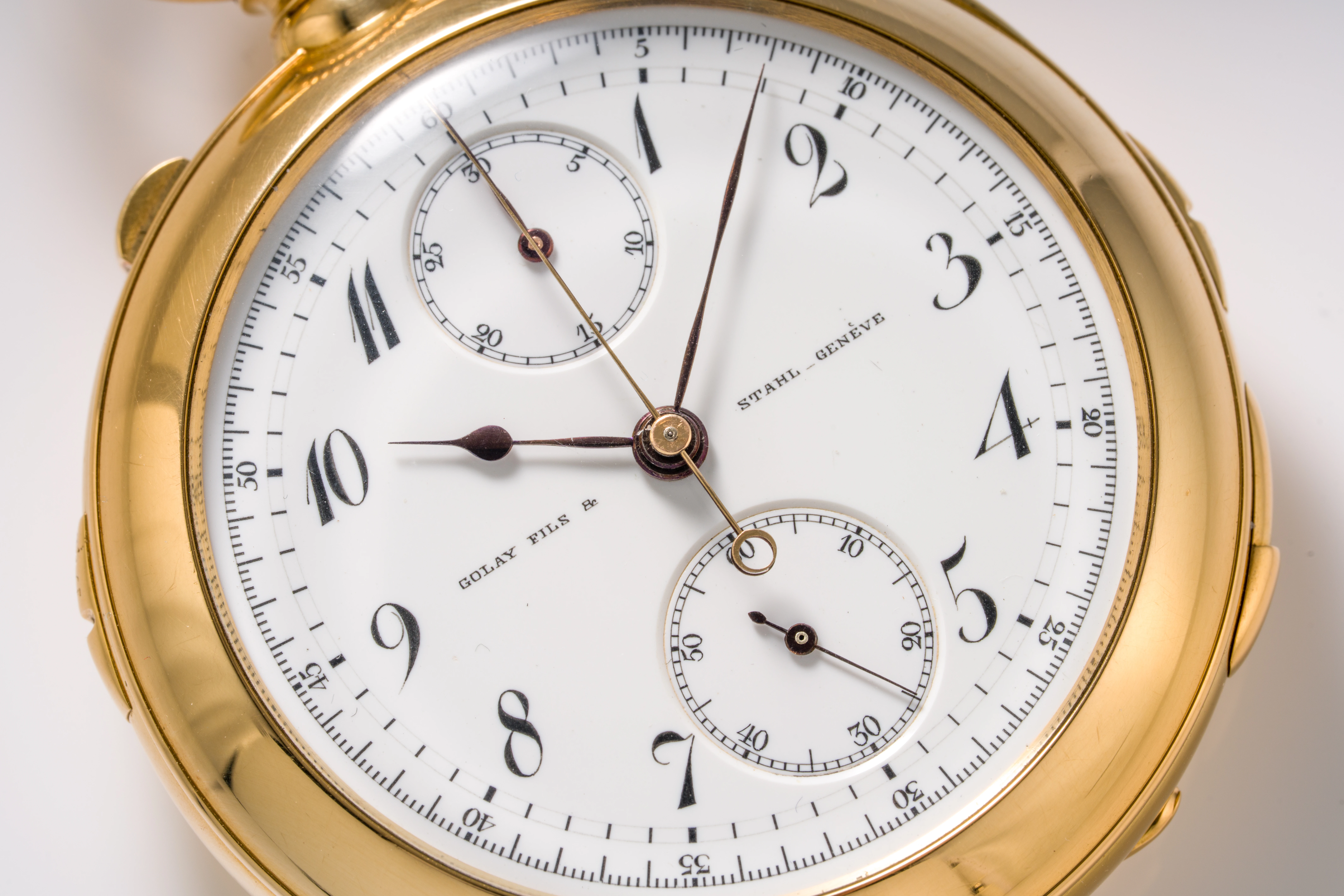
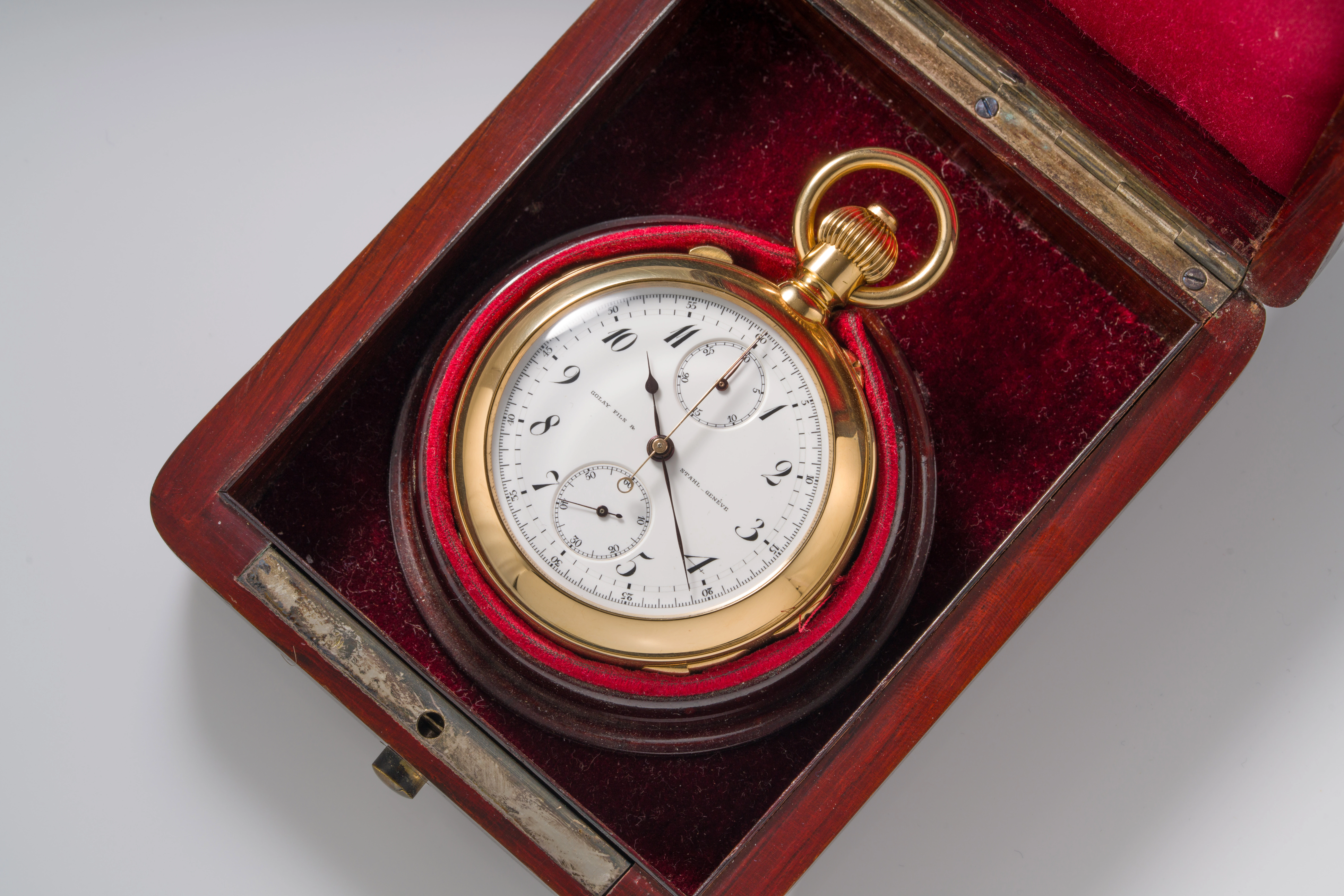
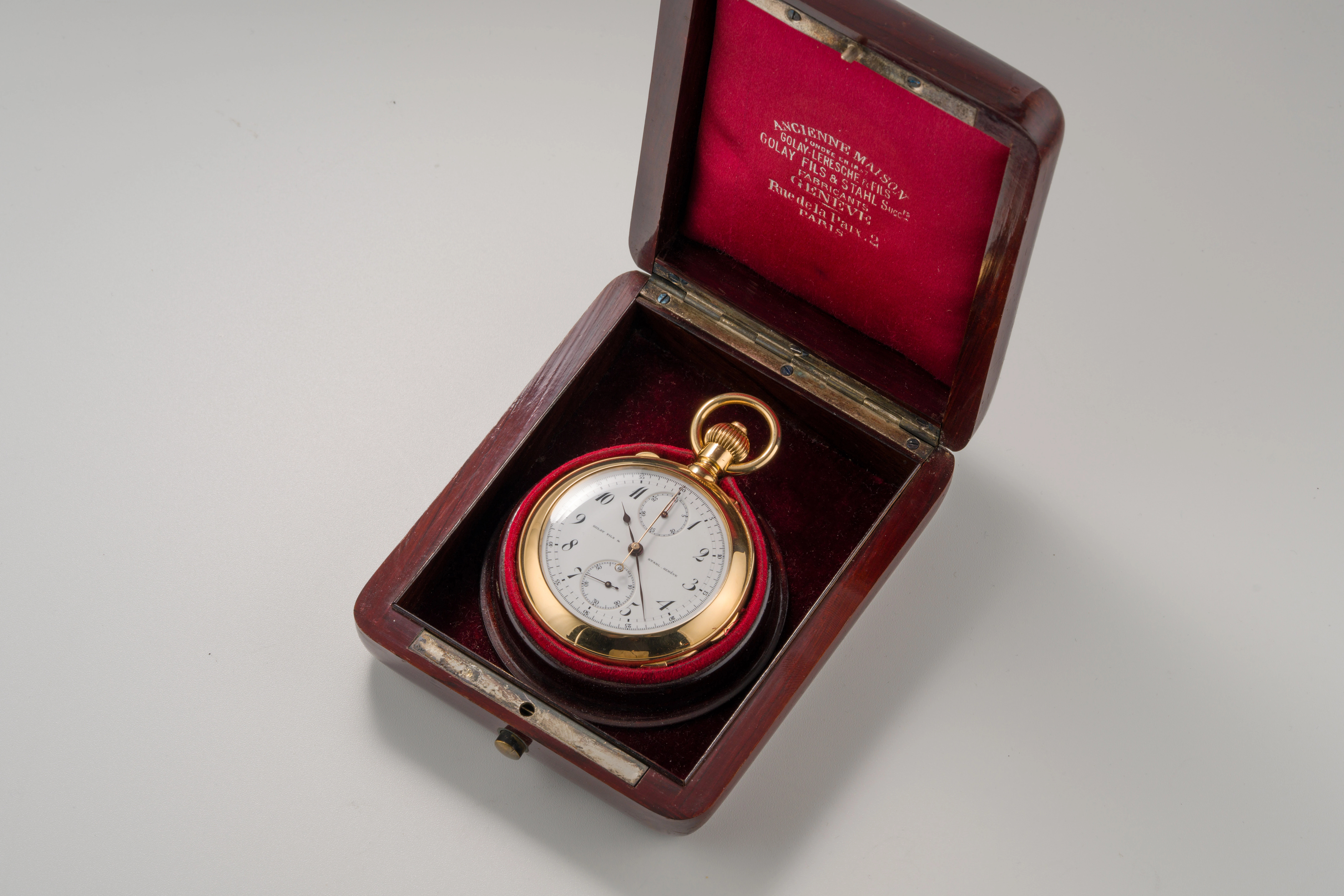
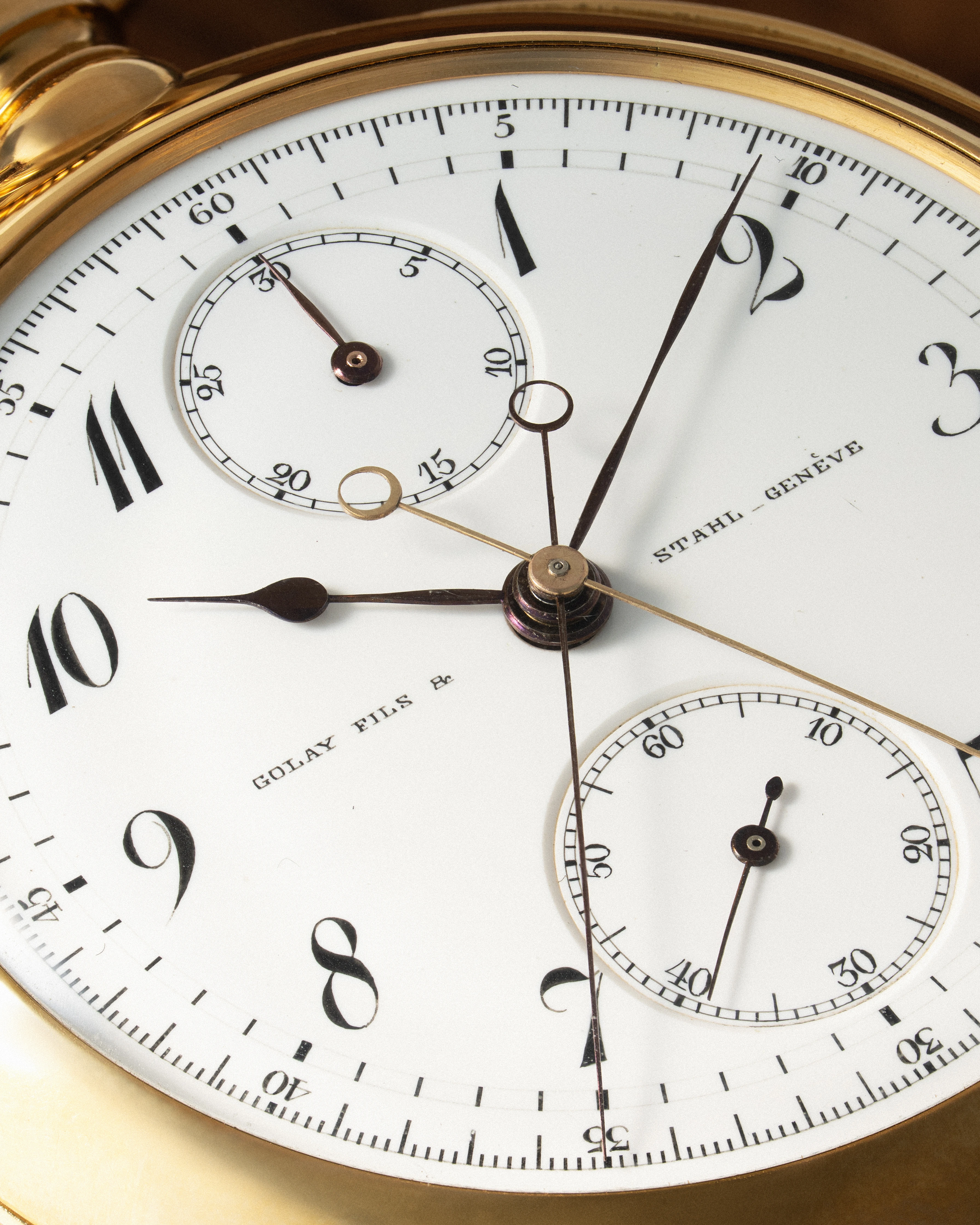
The highly complex four-complication movement of this watch boasts a number of features that elevate it beyond the ordinary pocket watches with one or two complications typical of the epoch. At first glance, the relatively simple white enamel dial with black Breguet numerals and two indications – a continuously running small seconds hand and a 30-minute chronograph counter – is remarkable. The simplicity of the design is aided by the absence of a perpetual calendar, which would make the dial of a complicated watch appear overly cluttered. This is complemented by a meticulously planned dial layout with full, carefully marked scales. Of particular note are the separate scales for the minute hand and the central seconds hands, the latter marked in fifth-of-a-second increments, consistent with the balance’s frequency. However, behind the modest dial lies a highly complex movement with grande and petite sonnerie, the ability to switch between grande and petite sonnerie, as well as chime and silence modes, complemented by a minute repeater and split-seconds chronograph. Unusually, the watch features a 30-minute chronograph counter – a relatively rare detail for split-seconds watches of the era. Another rare feature is that this high-complication watch was offered in an open-face case (Lépine) rather than a hunting case (savonette), which also departs from the standard design of complicated watches of the time.
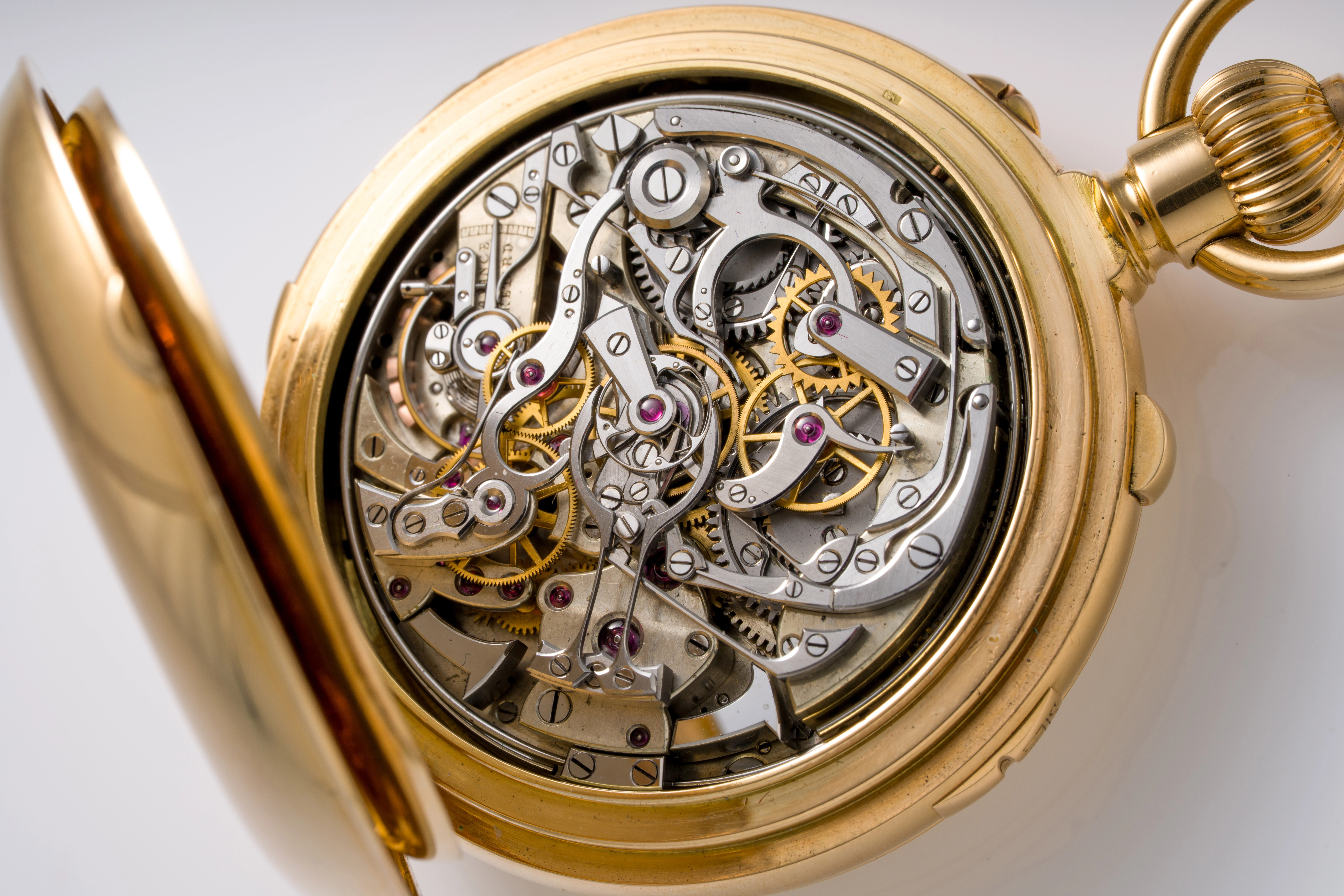
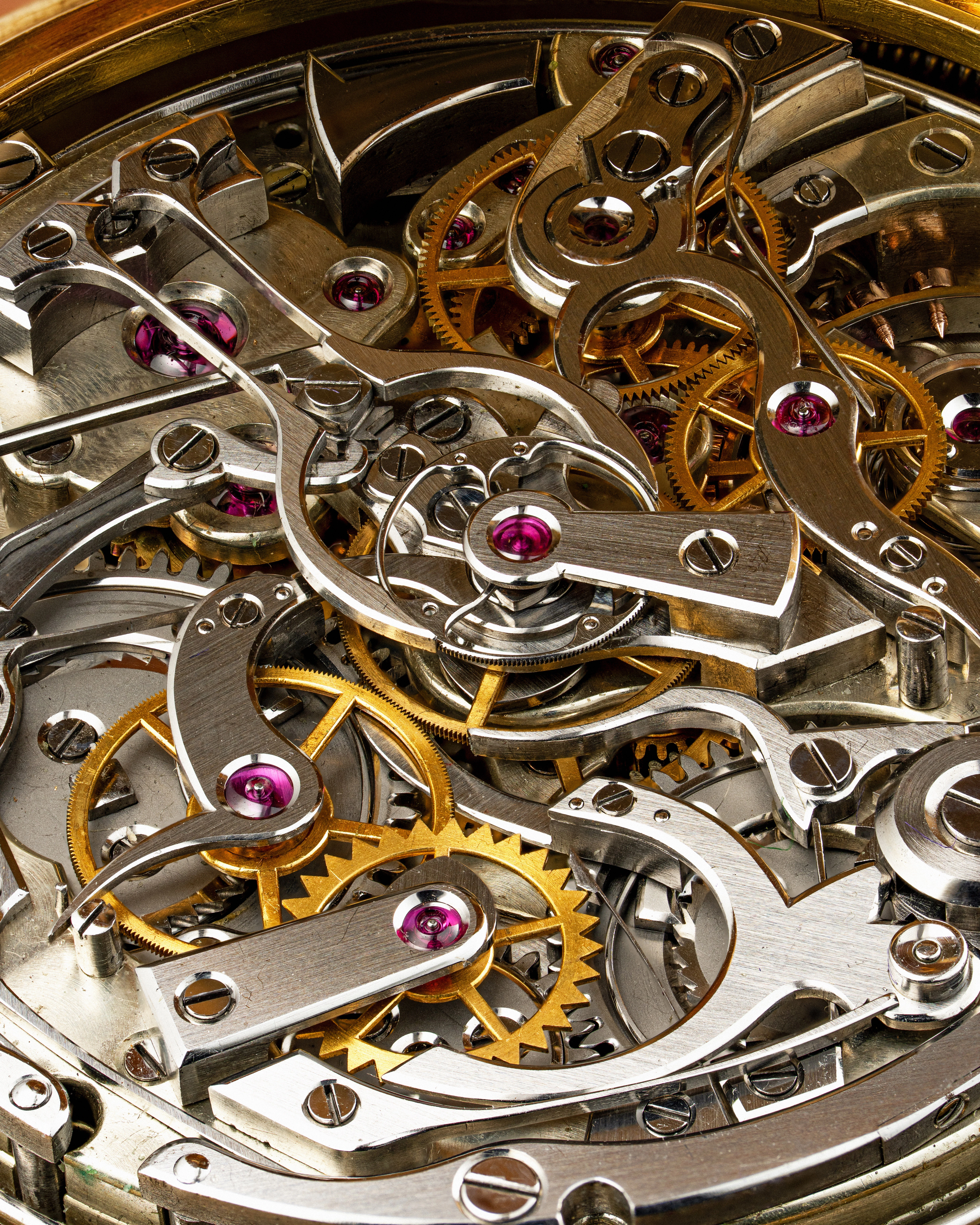
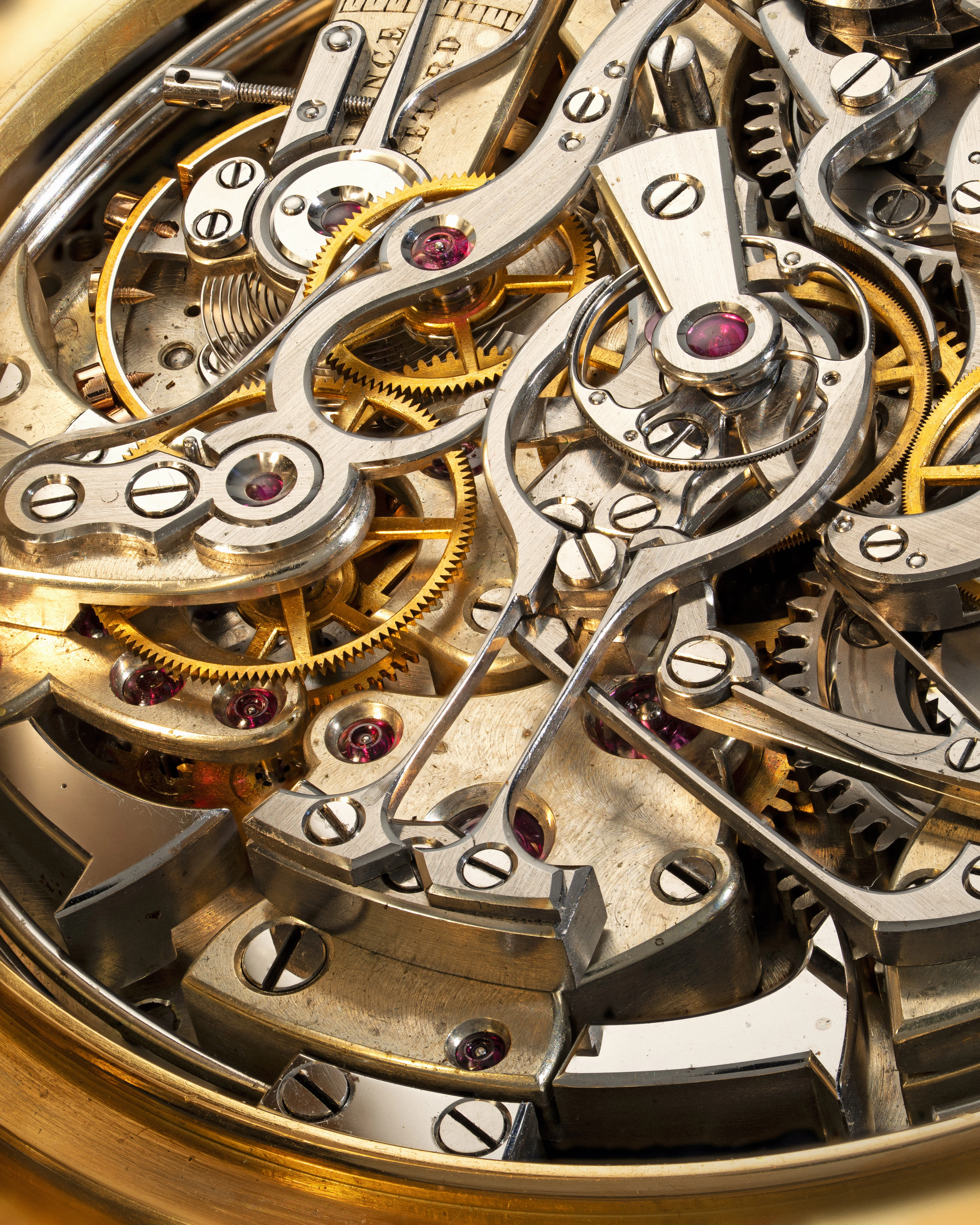
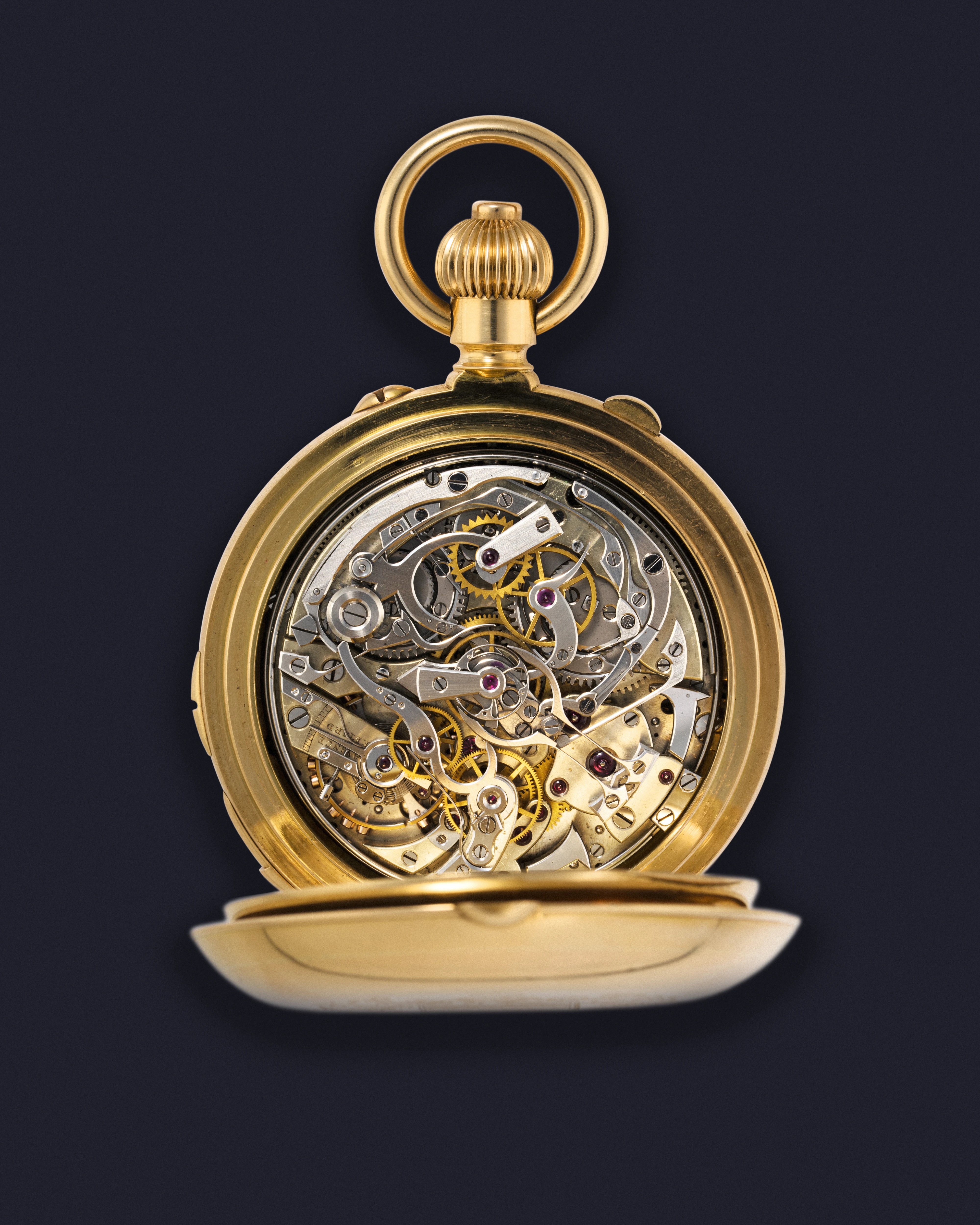
The pocket caliber, crafted in the traditions of Geneva and the Vallée de Joux, the two main global centers of haute horlogerie at the time, deserves special attention. The movement’s execution is captivating from both an aesthetic and a technical standpoint, and in a watch of such high quality as this example, these two aspects largely coincide. From the large, cut, bimetallic balance wheel and the hairspring with Breguet overcoil to the mirror-polished steel hammers of the striking mechanism, the caliber forms a microcosm of complex, multi-layered structures: a nickel-silver mainplate and bridges, steel springs and levers, filigreed wheels, large ruby jewels meticulously polished to a spherical shape, the cap of the column wheel, and the intricately curved pins of the levers – this rich tableau is always a delight to behold.

ADDITIONAL PHOTOS: