Haldimann

Don't hesitate to ask for any additional information, Alex is ready to assist and guide you in your decision
DETAILS
Beat Haldimann is an exception among independent watchmakers. He rarely participates in exhibitions, and sometimes it seems that he does not want his watches or himself to be advertised as an independent watchmaker because he believes – and we think with good reason – that connoisseurs of high-end collectors' watches will seek him out themselves. He and his small team in the Swiss town of Thun are dedicated to traditional watchmaking. Beat Haldimann’s vocabulary includes the principles of movement design laid down in the 19th century by the German watchmaker and technical genius Moritz Grossmann, and adherence to the principles of the Nordic style, including the delicate tourbillon cages of another famous German watchmaker, Alfred Helwig. Haldimann’s villa in Thun, which is the company’s headquarters and production workshop, is completely free of CNC machines, without which we can hardly imagine the modern production of luxury and collector's watches. All metal parts, including movement parts and case parts, are made and machined by hand on watchmakers' lathes and other traditional equipment. There are only a few watchmakers in the world who are willing and able to work in this traditional way.
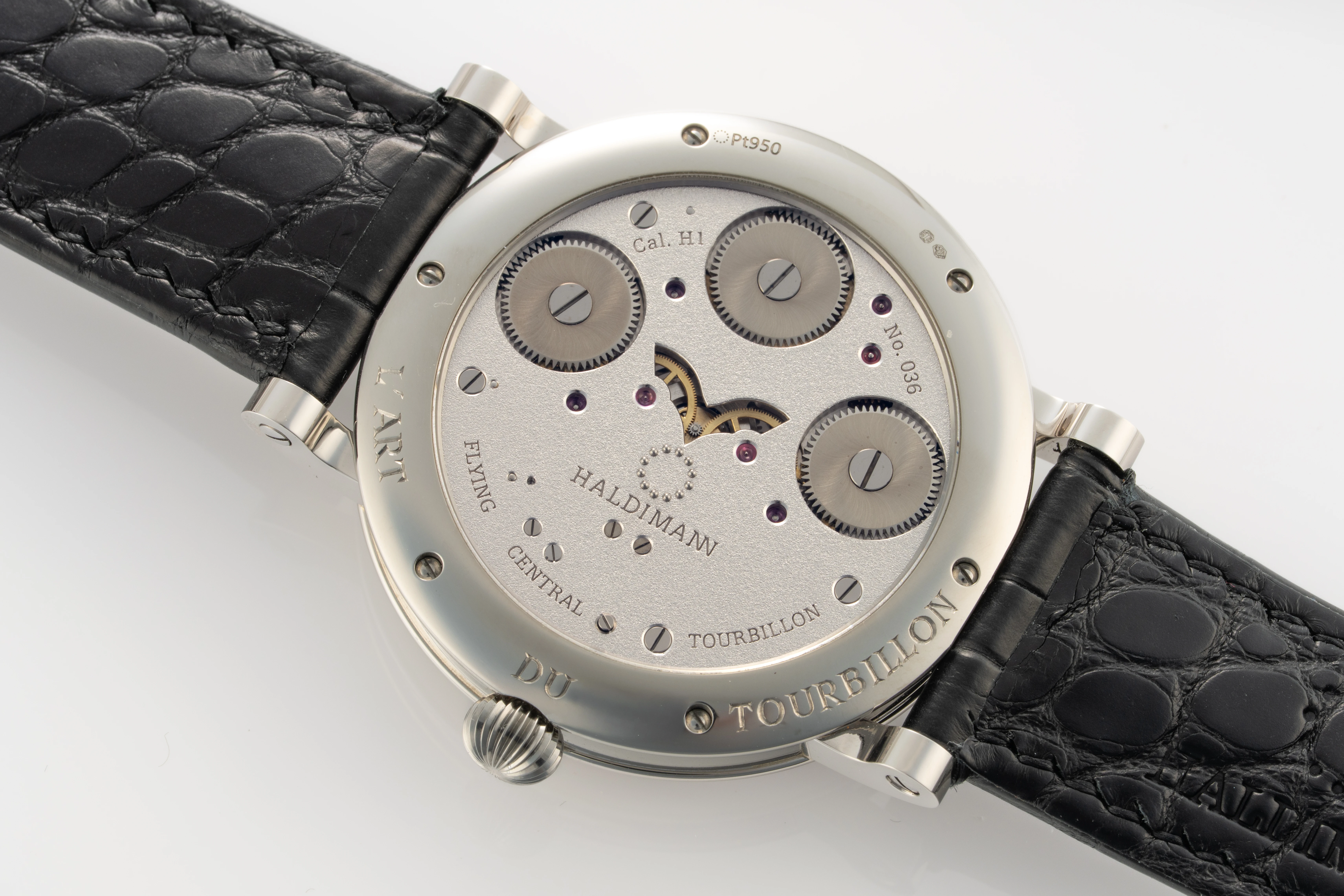
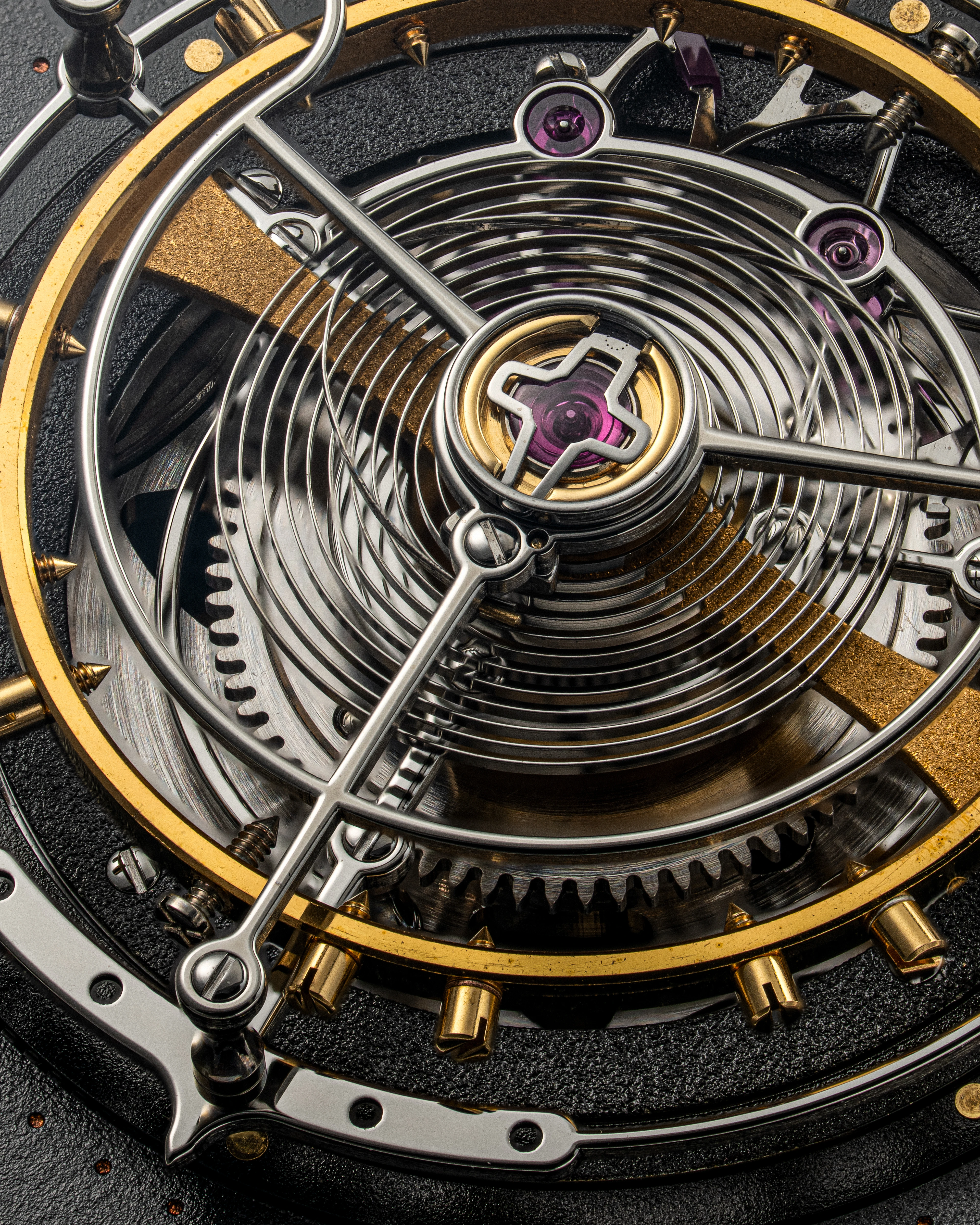
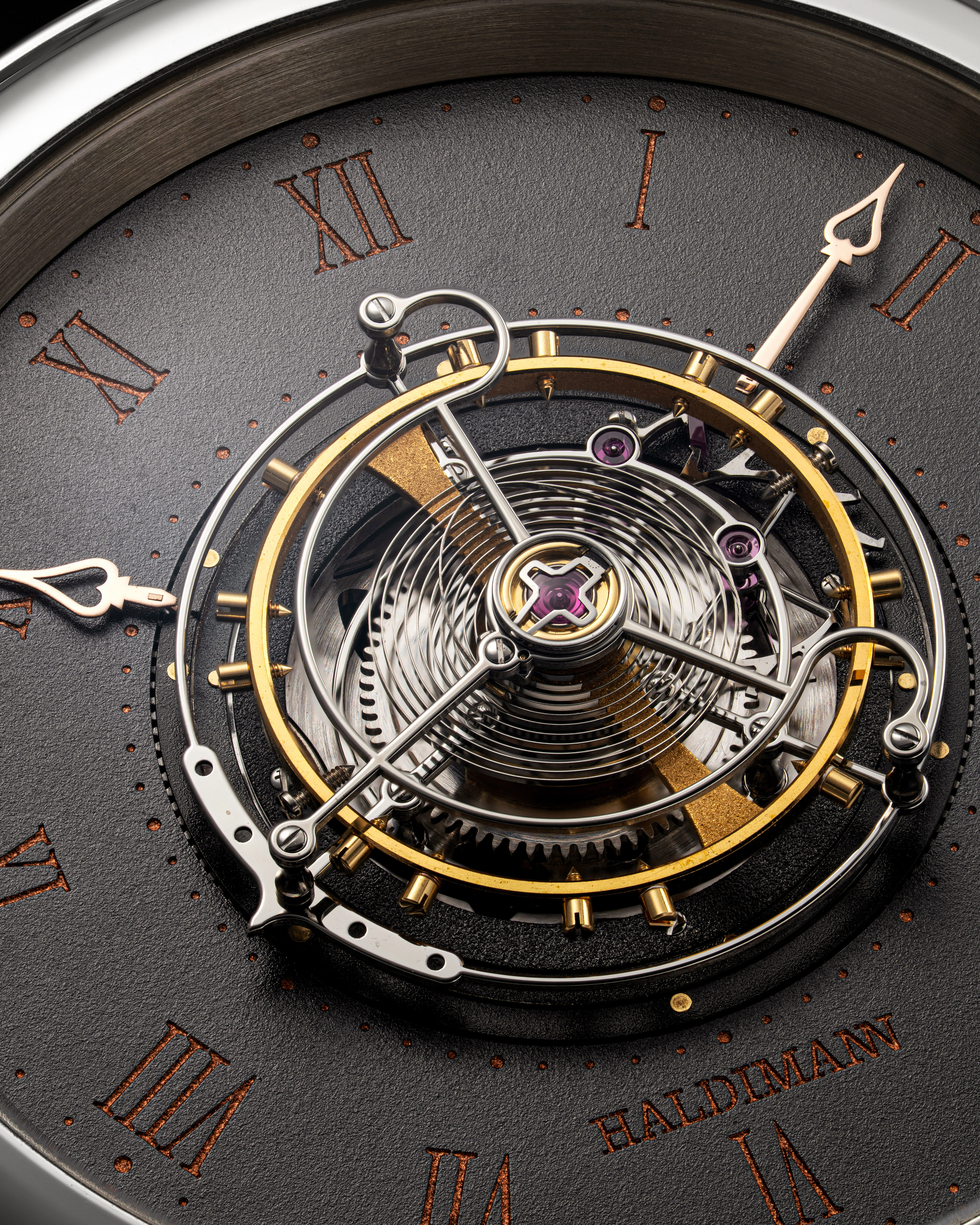
Mr. Haldimann entered the Olympus of watchmaking in 2002 with the H1 Flying Central Tourbillon, his first wristwatch with a tourbillon. Honestly, the appearance of a new tourbillon watch in those years would not have been remarkable if there had not been three “buts.” He combined three technical principles in the H1, and did so at an impressively high technical and design level. Firstly, it was a flying tourbillon. In homage to Alfred Helwig, who had developed his own version of this design for pocket watches in the 1920s, Mr. Haldimann created a tourbillon with a lyre-shaped carriage, which is very close to Helwig's tourbillon both technically and esthetically. Secondly, he made this flying tourbillon impressively large for a wristwatch, almost as large as a tourbillon on a pocket watch with a 16-ligne movement – the tourbillon diameter of the H1 is 17.8 mm. Finally, and most importantly, he placed the tourbillon in the center of the dial, forcing him to develop a special drive for the hour and minute hands that surrounds the tourbillon. Mr. Haldimann was not the first to place a tourbillon at the center of a wristwatch movement – Omega did this back in 1994 with its Central Tourbillon, featuring the self-winding caliber 1170, developed for Omega by Swiss watchmaker Maurice Grimm. But he transformed this concept into a piece of horological art, aptly underscored by the engraving “L’Art du Tourbillon” on the caseback of this H1 Flying Central Tourbillon No. 036. From a technical standpoint, his design should be regarded as superior because he solved a problem that plagued the Omega: the need to use two crowns, one for winding and one for setting the hands. The H1 Flying Central Tourbillon has a single crown that handles both winding and hand-setting.
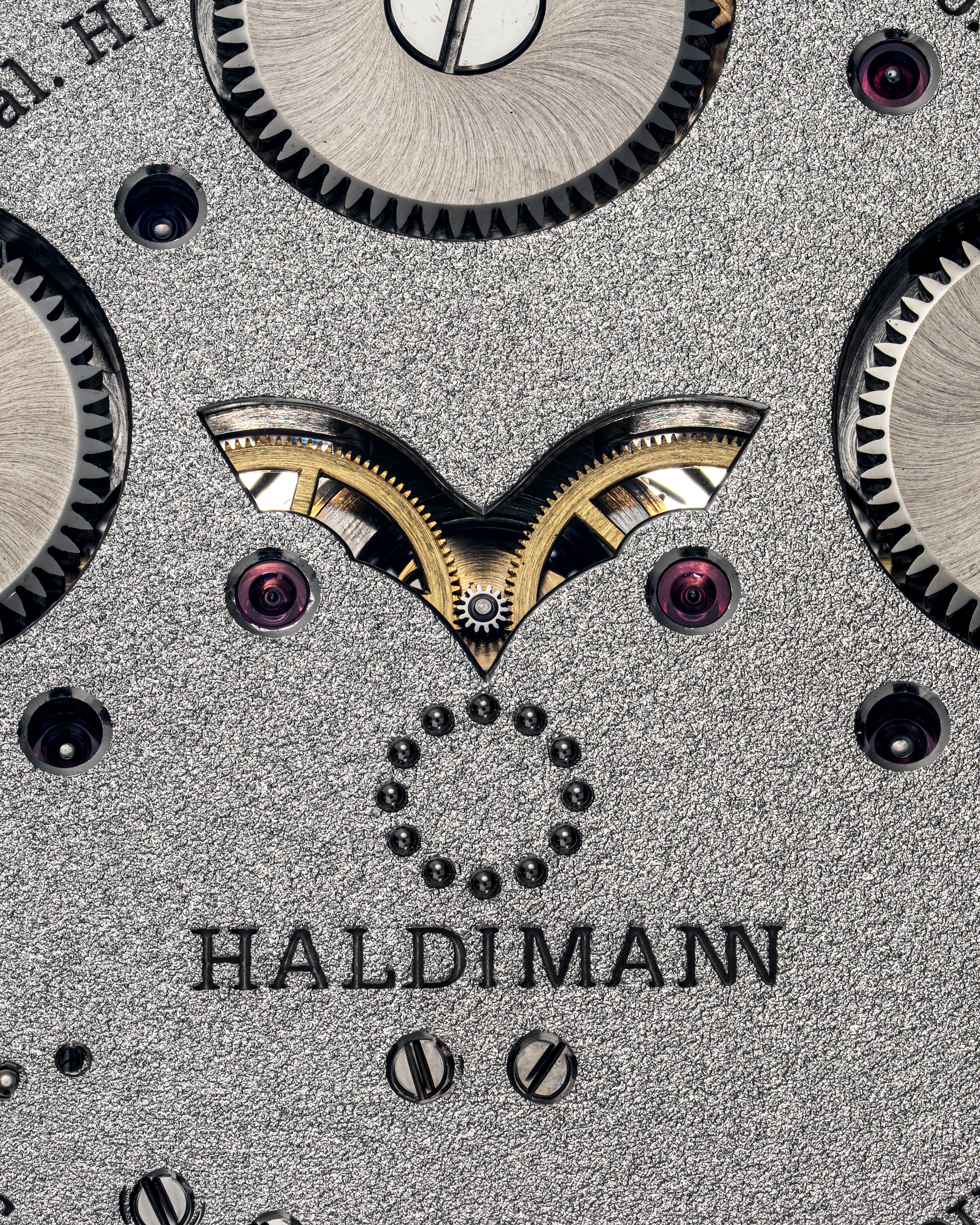
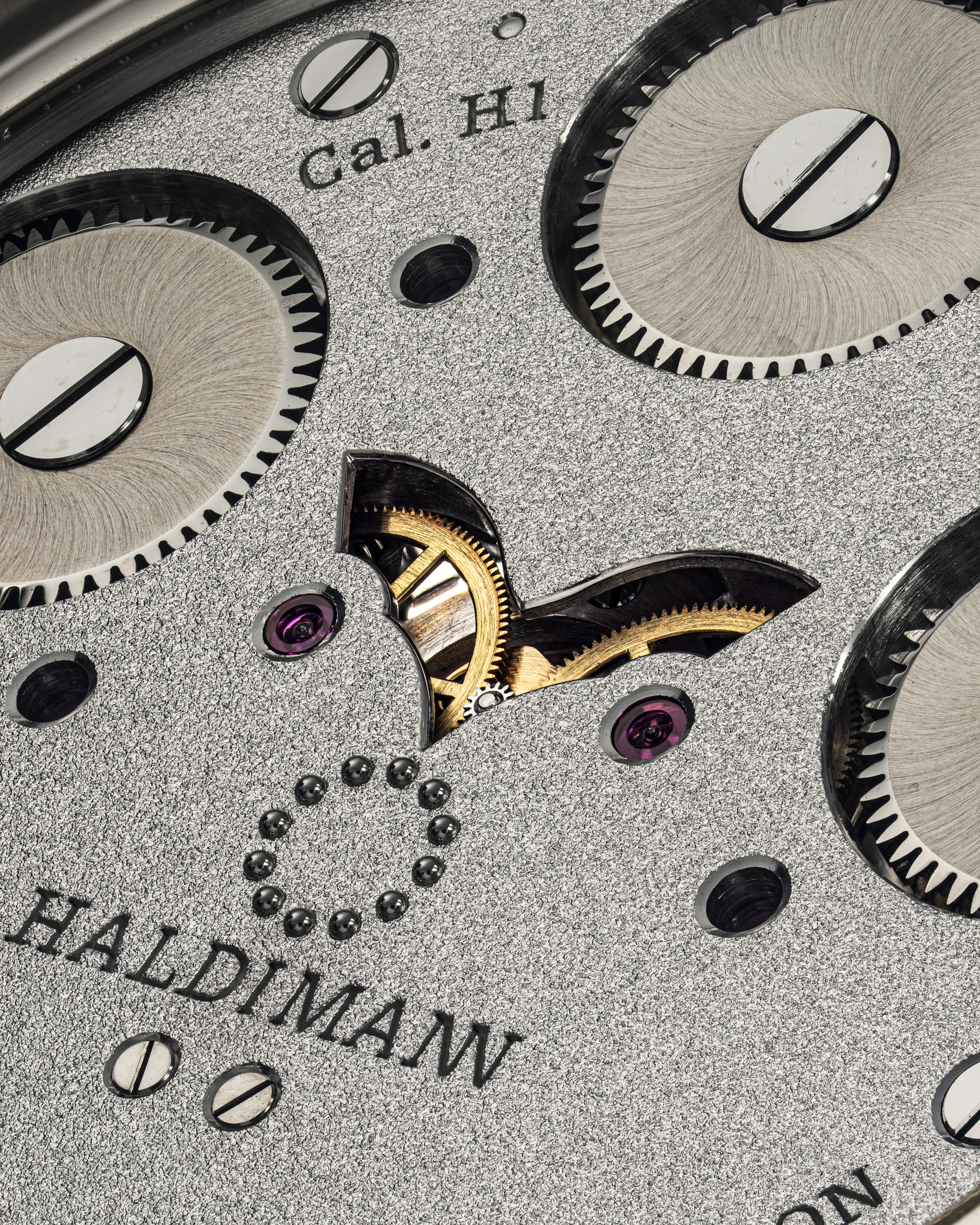
Along the way, Mr. Haldimann had to solve other problems, above all the problem of energy. The large tourbillon required a lot of energy, so he dedicated two of the watch’s three barrels to it. This also enabled him to design an elegant system with a symmetrical carriage drive. The third barrel is needed to turn the ring system of the hour and minute hands, which is inevitably massive and therefore energy-intensive. The installation of three barrels results in a very impressive picture, which can be seen on the caseback: Three mainspring barrel wheels with beautiful solarization and beveled teeth sit on a broad mainplate that spans the entire diameter of the movement, featuring texturing and engraved inscriptions without gilding. This is undoubtedly one of the best examples of minimalist movement design.
REASONS TO BUY
This Beat Haldimann second-generation H1 Flying Central Tourbillon No. 036 in platinum is truly worthy of a collector’s close attention. It stands as one of the rarest, most aesthetically striking, and technically exceptional tourbillons ever created by a modern independent watchmaker. The value of this timepiece is further elevated by the fact that Mr. Haldimann eschews computer-controlled technology, crafting his watches entirely by hand.
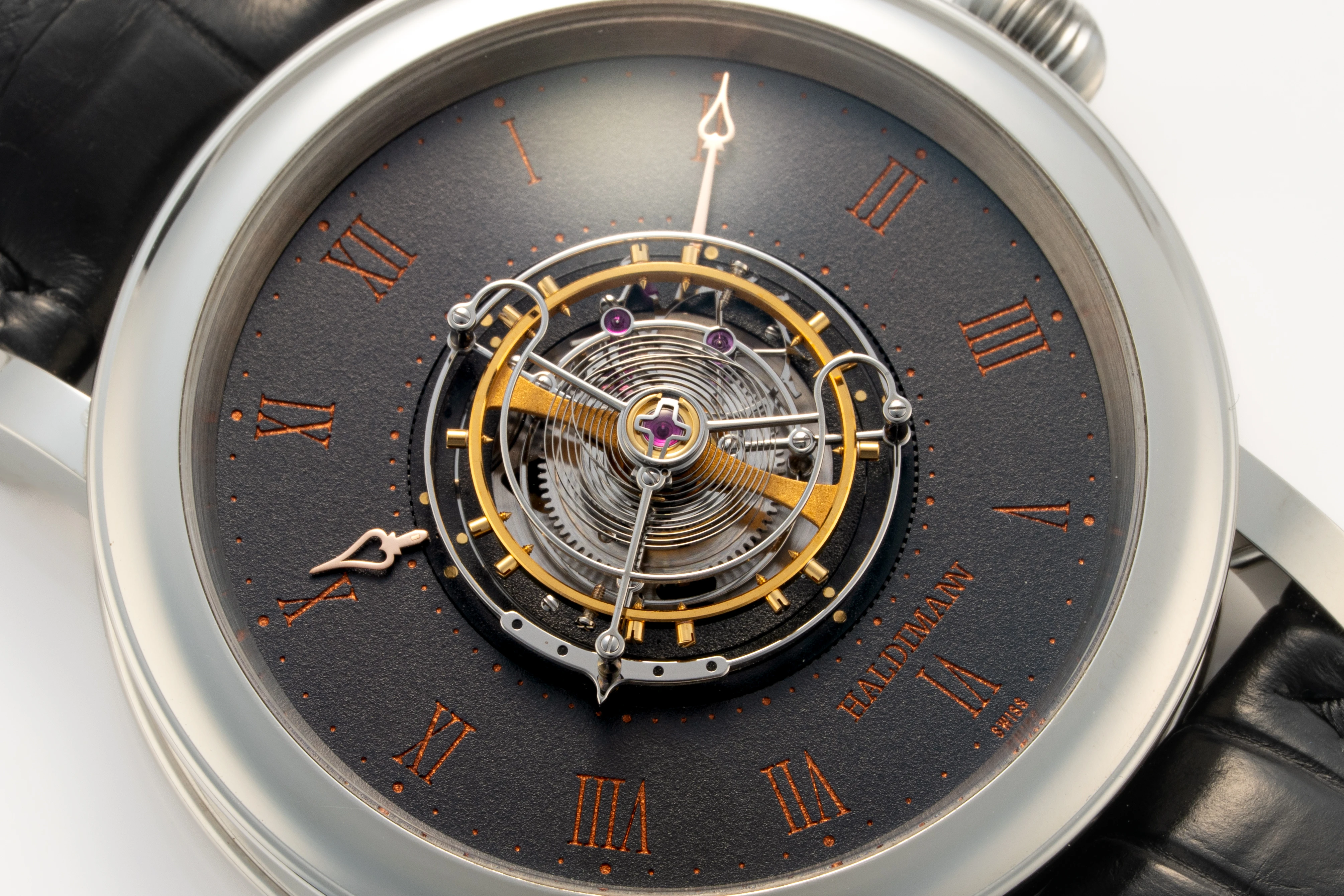
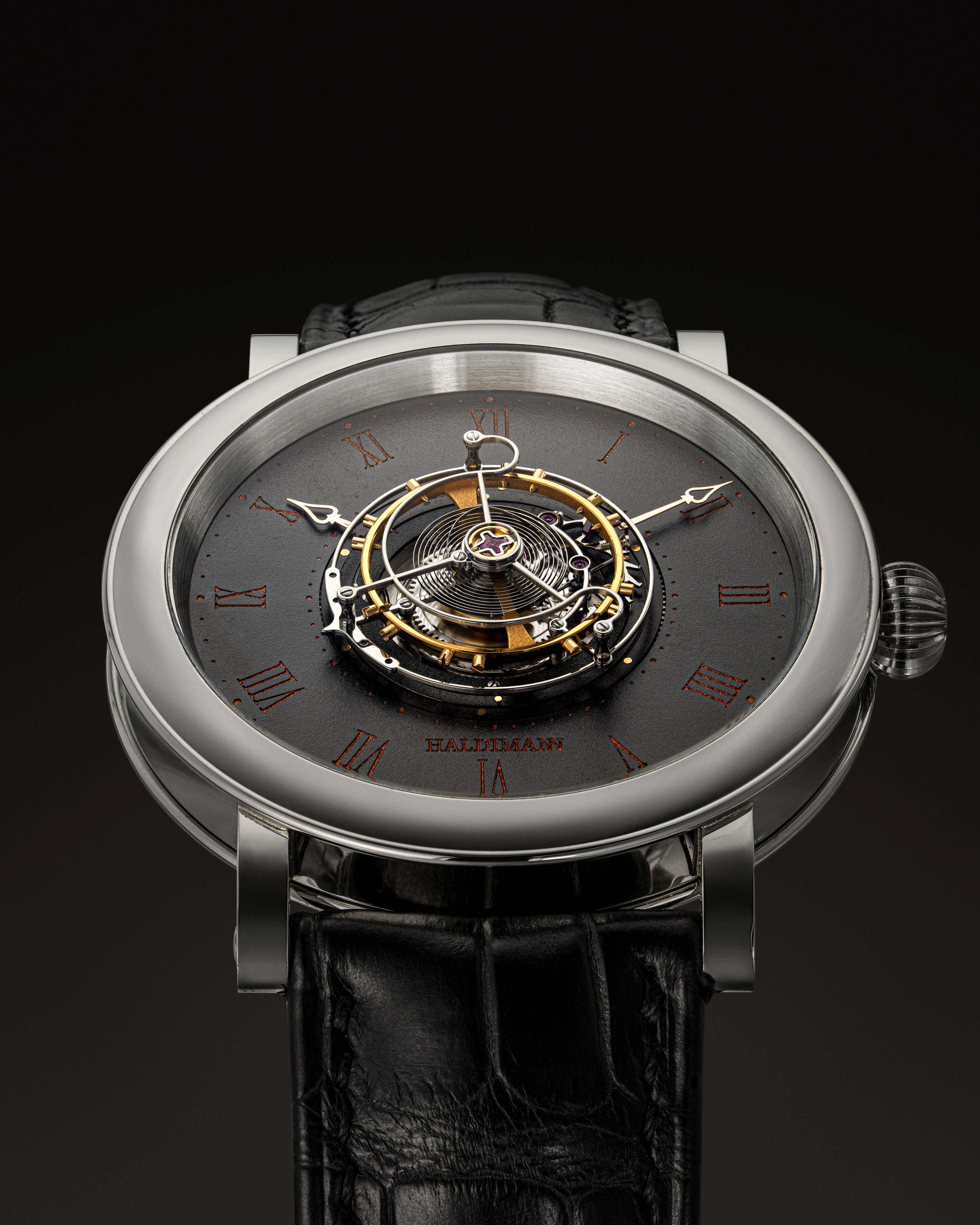
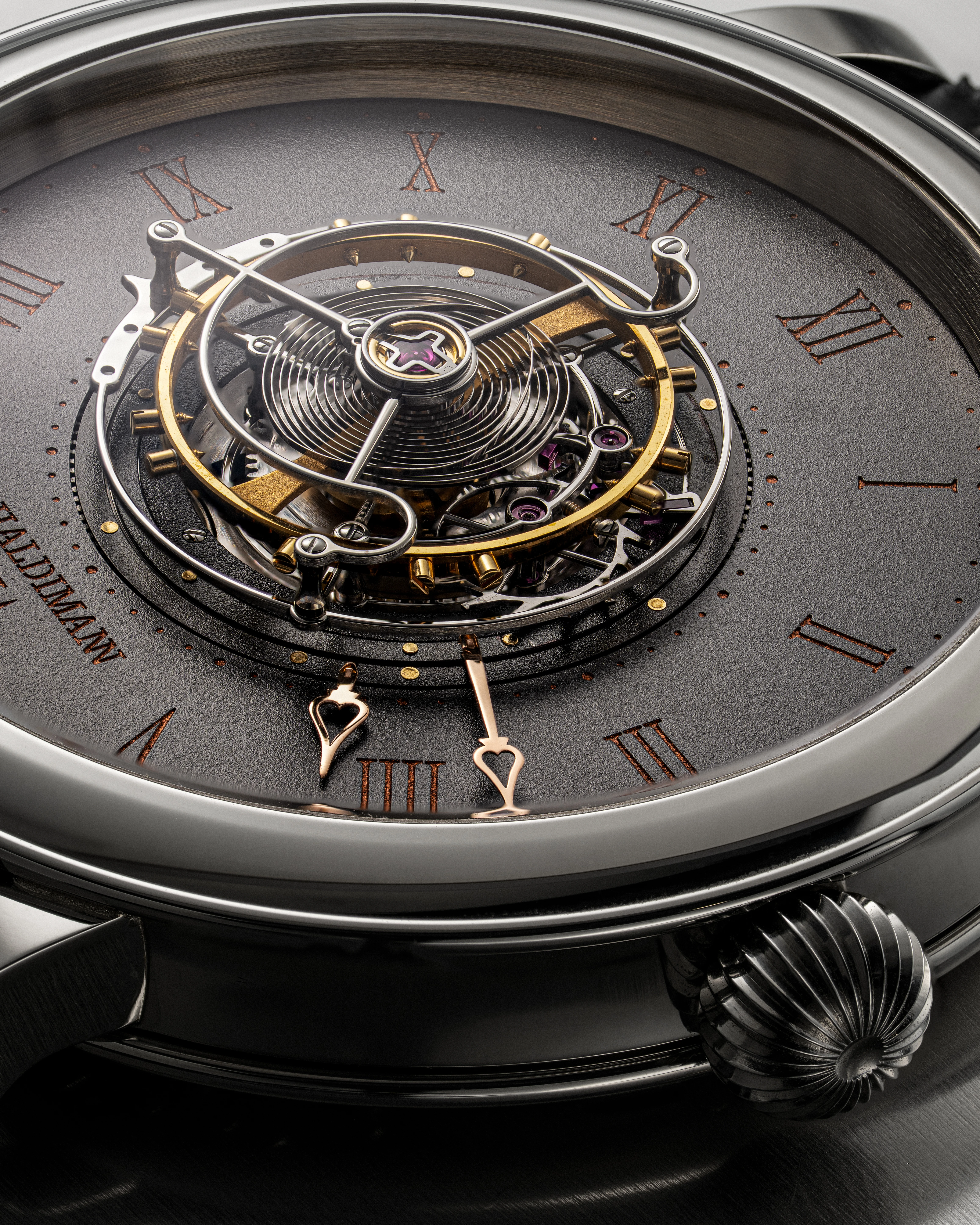
Consequently, the H1’s central flying tourbillon, rising prominently above the dial, is a true delight for the discerning connoisseur. Its exquisitely crafted and finished filigree tourbillon cage is, in this particular size, entirely unique among wristwatches.
This piece is among the earliest – if not the very first – to feature the second-generation movement, distinguished by a striking “bat-wing” cutout. This design element reveals the inner workings of the H1 caliber, previously hidden from view, adding a subtle yet highly significant detail that makes this watch all the more compelling.
ABOUT THIS WATCH
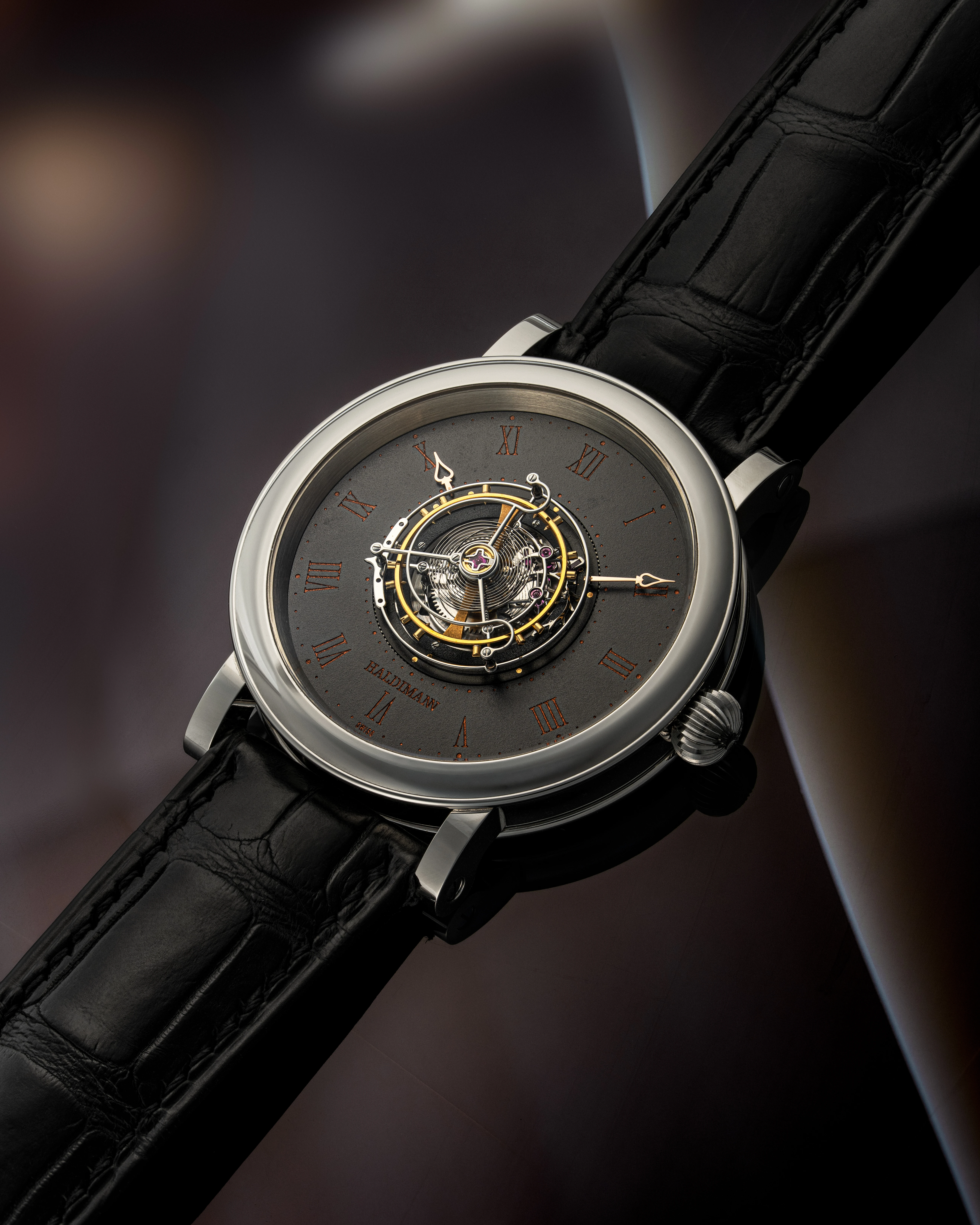
The Haldimann H1 is very comfortable on the wrist, mainly thanks to its size: with a diameter of 39 mm, it’s only 10.8 mm high – an excellent proportion for a complicated watch with a tourbillon that rises above the dial. The Empire-style case, with its straight lugs and sensual caseband featuring a highly polished, concave surface, is not only exceptionally comfortable but also has a very pleasant feel.
The slate grey dial with its pronounced frosted finish, engraved Roman numerals, and minute track clearly plays a secondary role compared to the central flying tourbillon that steals the show. Nevertheless, from our point of view, the dial itself is magnificent – this example is the only known H1 Flying Central Tourbillon with a striking, eye-catching copper-toned finish on the engraved logo, Roman numerals, seconds, and minute tracks.
This watch is among the earliest – perhaps even the very first – to feature a second-generation “bat wings” movement, characterized by a cutout in that distinctive shape that reveals two drive wheels for the central tourbillon. Mr. Haldimann executed this update to an exceptionally high standard, incorporating chamfered edges polished to form seven sharp inner corners – a detail that further underscores the superior quality of the H1 Flying Central Tourbillon. With this transition to a new generation, he also renamed the caliber from H-Zen-A to simply H1 and updated the style of the peripheral hands, replacing the Breguet-style hands with spade-shaped hour and minute hands – a choice that pairs perfectly with the engraved Roman numerals on the dial.

Specifications
| Ref | H1 |
| D= | 39 mm |
| Case material | Platinum |
Condition report
| Box: | Yes |
| Papers: | Yes |
ADDITIONAL PHOTOS: