Iwc

Don't hesitate to ask for any additional information, Alex is ready to assist and guide you in your decision
DETAILS
The Il Destriero Scafusia was developed for the 125th anniversary of International Watch Co. in 1993 and was intended as an alternative to several complicated mechanical wristwatches of the era, that had become the most compelling indicator of the public’s renewed interest in traditional mechanical watchmaking.
The launch of Il Destriero Scafusia, IWC’s most complicated wristwatch and one of the most complicated wristwatches in the world, was a calculated move by IWC and Günther Blümlein, the visionary head of the LMH (Les Manufactures Horlogères) holding company. In addition to IWC, LMH included Jaeger-LeCoultre and the then virtually unknown German watch brand A. Lange & Söhne, whose watch collection was being developed for its 1994 launch. It is believed that Günther Blümlein was inspired to develop Il Destriero Scafusia by the high-profile 1989 premiere of Patek Philippe’s Calibre 89 pocket watch, the most complicated pocket watch in the world at the time. The timing for such a project was opportune, as in 1991, the Blancpain brand – revived and essentially created from scratch by Jean-Claude Biver, another visionary of the modern watch industry – unveiled the ultra-complicated 1735 model, an extremely ambitious project that took six years to develop and was billed as the most expensive wristwatch in the world. A year later, in 1992, Audemars Piguet introduced the automatic Triple Complication model, combining a perpetual calendar, minute repeater, and chronograph. Around the same time, Franck Muller was annually unveiling complicated mechanical watches, which he called “world premieres,” including the Caliber 1992, then the world’s most complicated wristwatch.
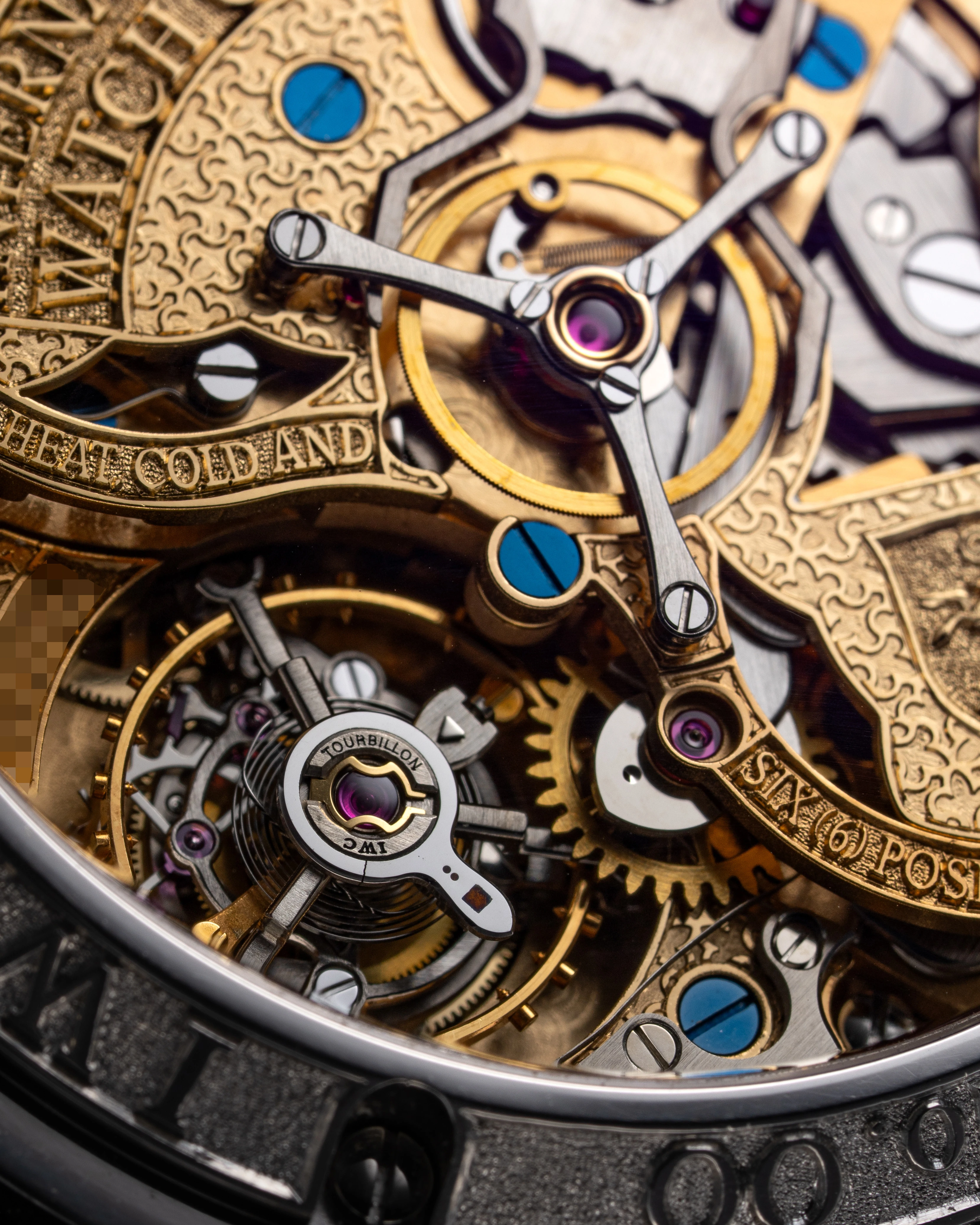
Il Destriero Scafusia was developed as a more complex version of IWC’s 1990 Ref. 3770, known as the Grande Complication, which featured a chronograph, minute repeater, and perpetual calendar. Il Destriero incorporates several unique innovations, starting with the brand’s signature perpetual calendar with a four-digit digital year display, developed by IWC technical expert Kurt Klaus; a minute repeater module created for the brand with the assistance of renowned watchmaker Robert Greubel; and the contribution of independent Austrian watchmaker Richard Habring, creator of the split-seconds module, who also developed the flying tourbillon with a lightweight titanium cage for the Il Destriero project. Also noteworthy is the base movement of this highly complex design – the tested and proven Valjoux 7750 calibre, which appears in Il Destriero in a modified version without the automatic winding module, but with an integrated tourbillon.
Only 125 limited-edition Il Destriero Scafusia watches were produced, mostly in yellow gold with white silvered dials, and a few in platinum. The limited edition is complemented by a small number of unique models with black dials or gem-encrusted cases.
REASONS TO BUY
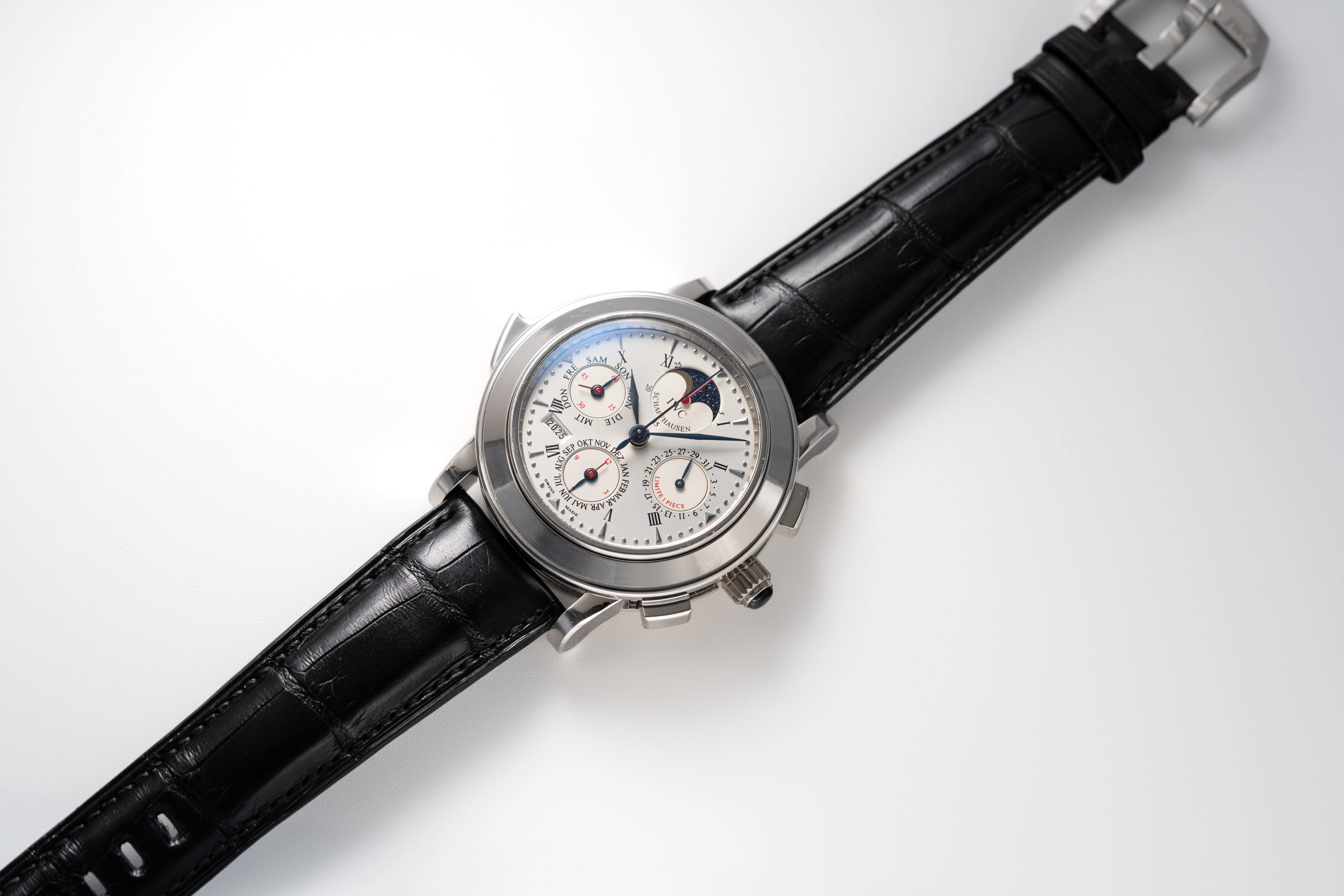
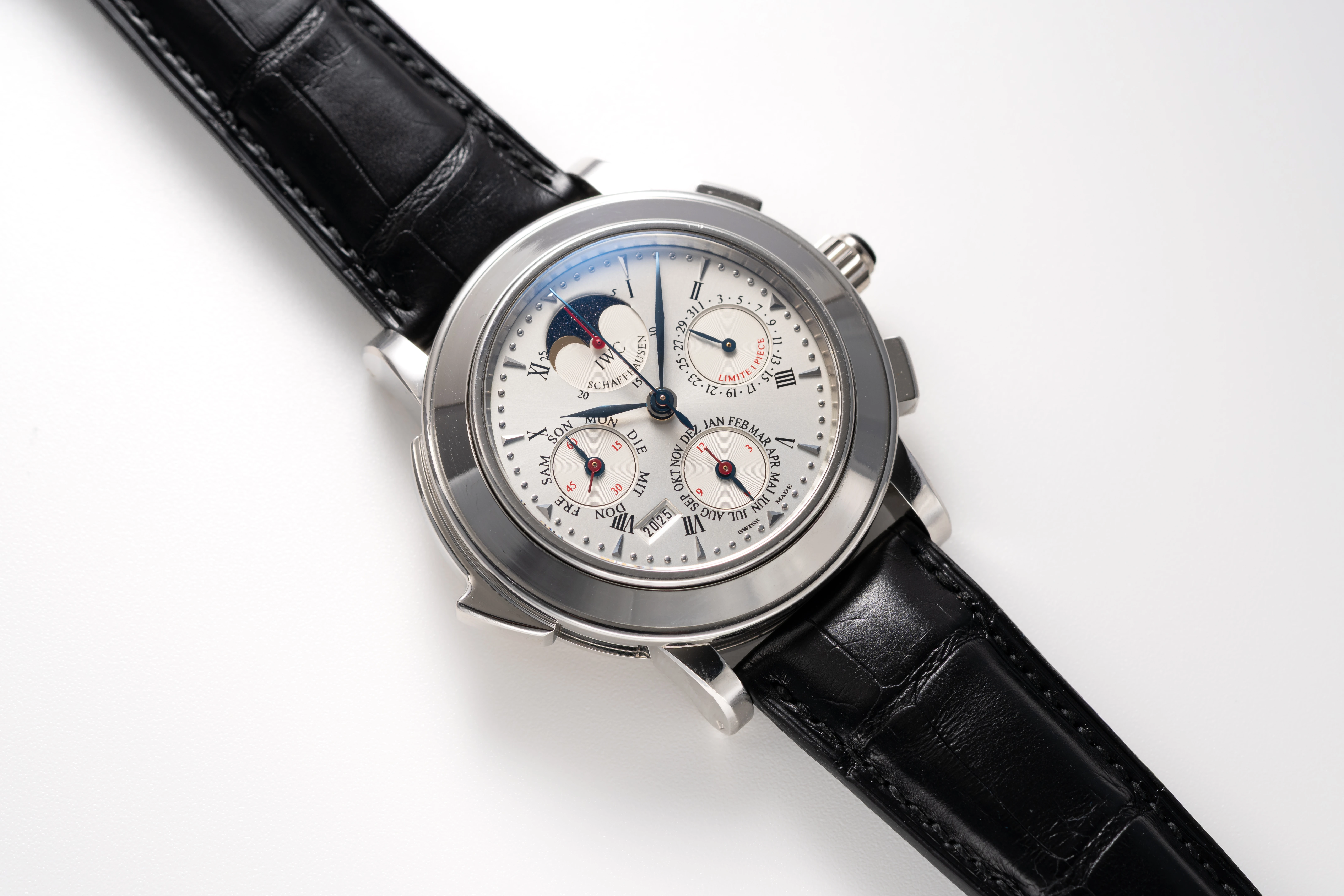
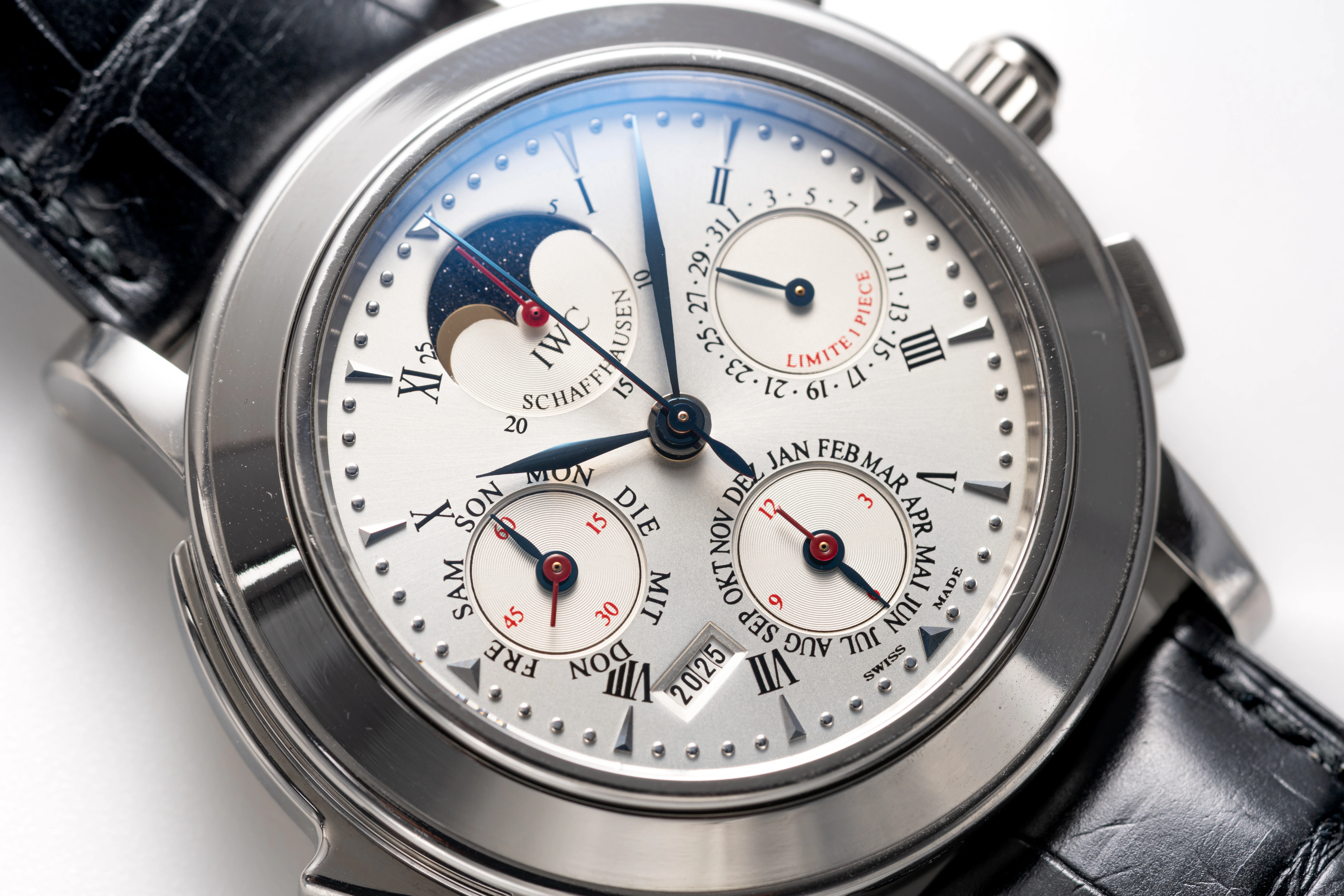
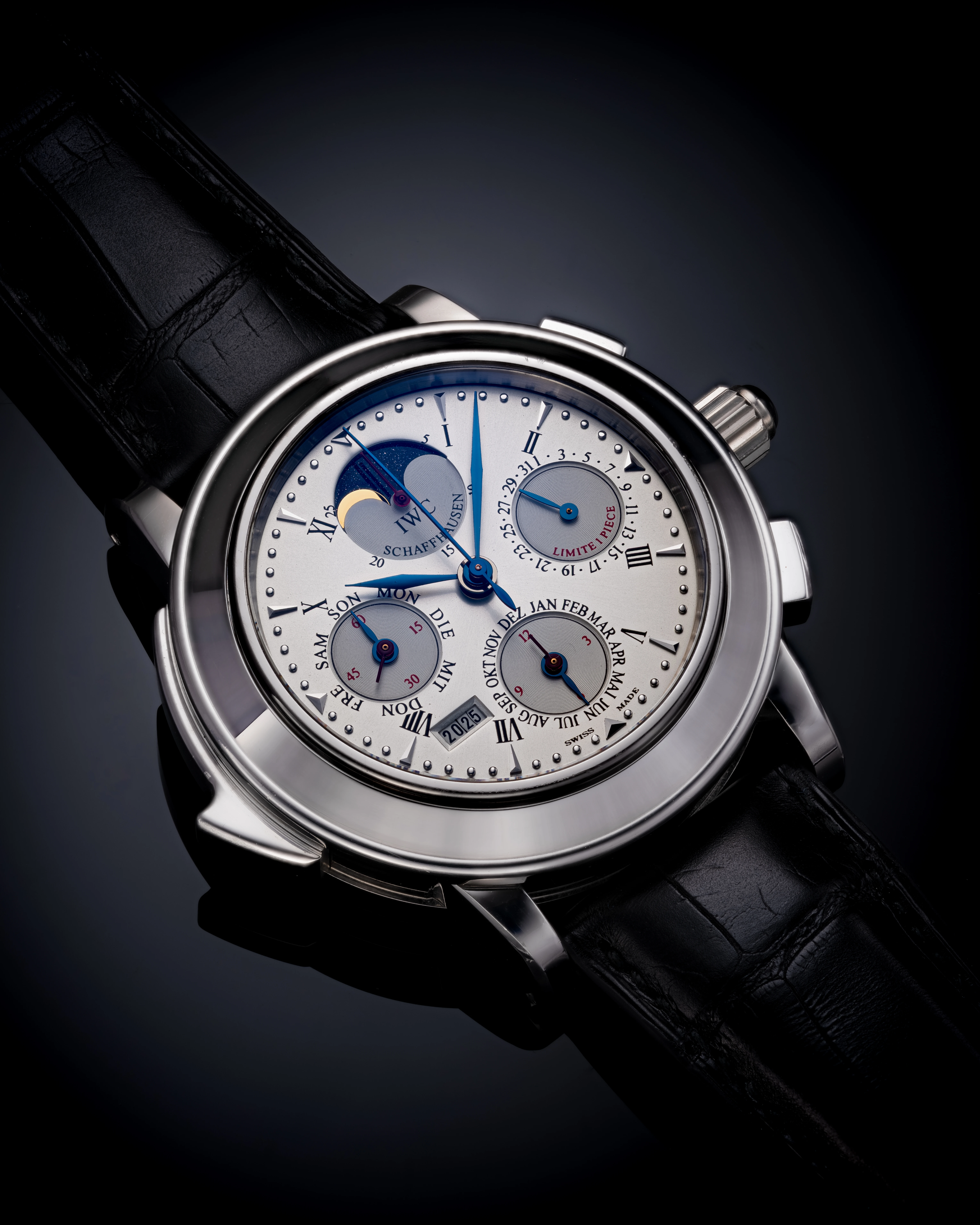
This Il Destriero Scafusia Piece Unique “00” in platinum is especially notable as one of the extremely rare unique pieces in the history of the Il Destriero Scafusia edition, launched to commemorate the 125th anniversary of the IWC Schaffhausen brand. Technically, this model belongs to the category of super-complication wristwatches, surpassing the Grande Complication standard – which traditionally requires a minute repeater, perpetual calendar, and split-seconds chronograph – through the inclusion of a tourbillon. This robust technical foundation is enhanced by exceptional design features, making this watch a unique edition worthy of the title Jahrtausend watch. In every respect, this watch offers compelling appeal to discerning collectors as an extraordinary and important timepiece in the modern history of IWC Schaffhausen.
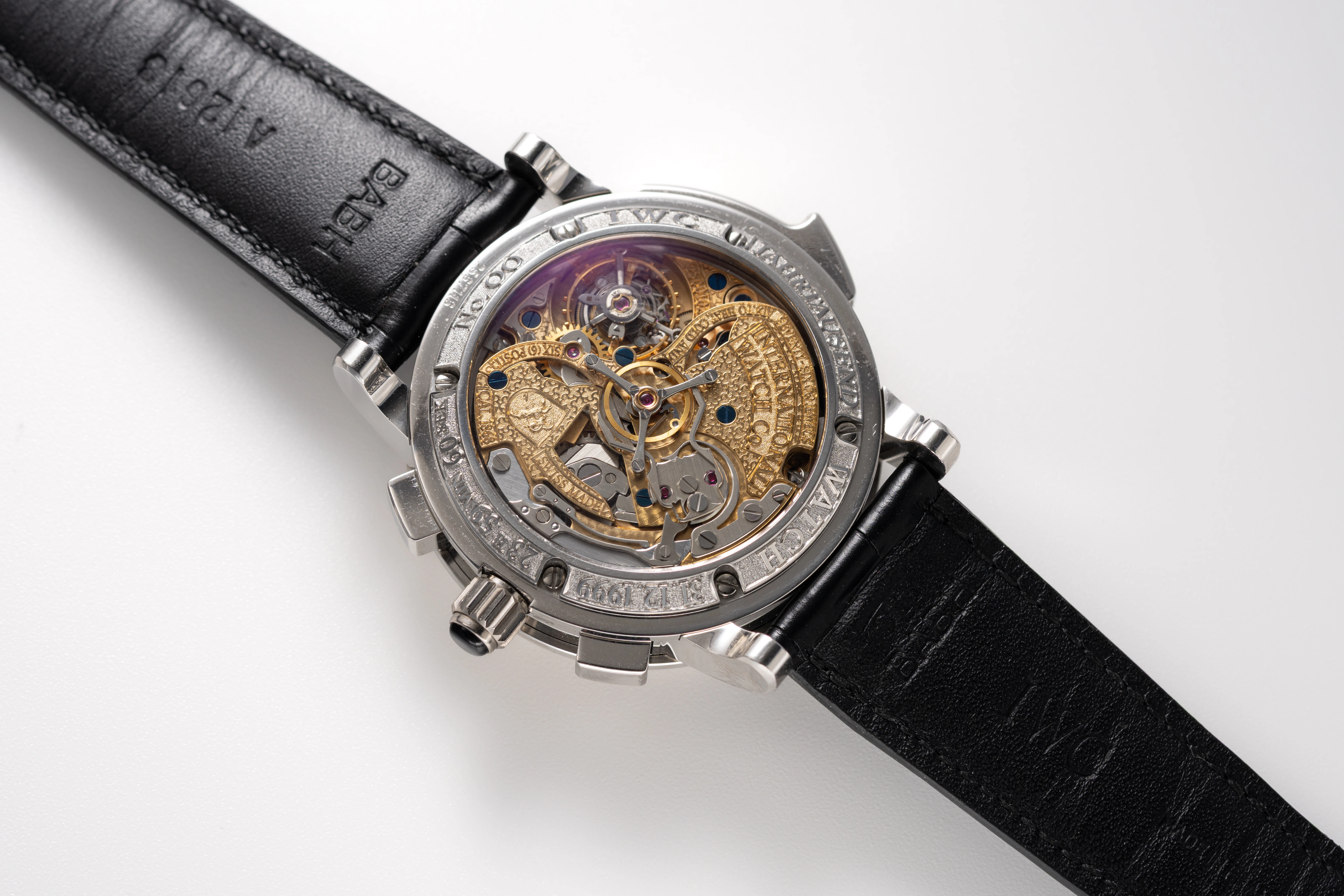
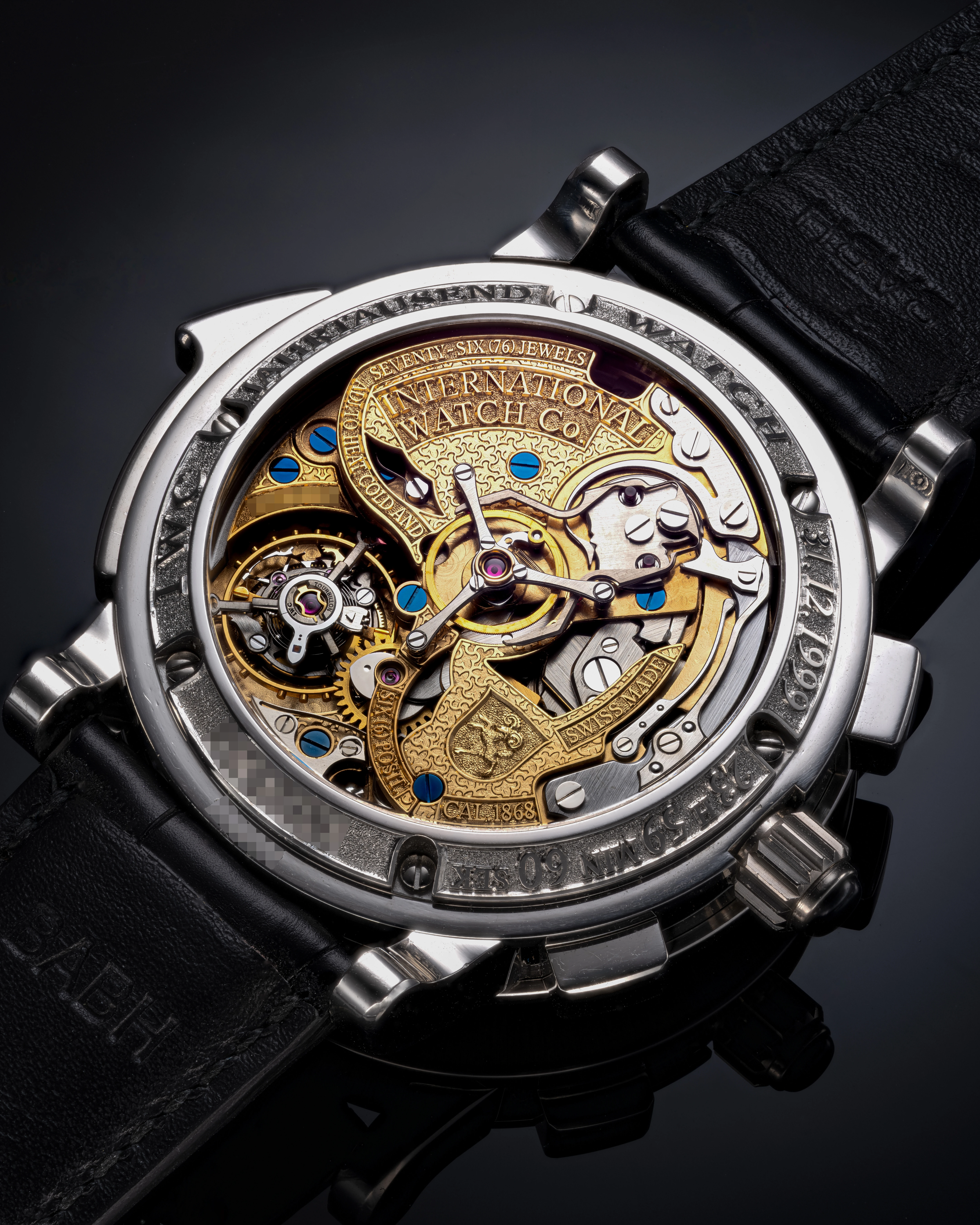
This watch is one of those extremely rare, unique releases that, in a sense, completes the story of Il Destriero Scafusia. This custom-made timepiece recalls a little-known feature of the limited edition. Launched in 1993 for the 125th anniversary of International Watch Co. in a limited edition of 125 pieces, Il Destriero Scafusia was scheduled for completion on 31 December 1999 at 11:59:59 pm, one second before the year 2000. It is reasonable to assume that this fact seemed highly symbolic to the customer, who asked IWC to reserve the last remaining second of 1999 for his unique piece. While we cannot say with certainty that all the details unfolded exactly in this way, the watch itself clearly hints at this: on the caseback, instead of the standard engraving for a limited edition, there are two different engraved inscriptions: “No.00 IWC Jahrtausend watch” and “31.12.1999 23h 59min 60sek”.
ABOUT THIS WATCH
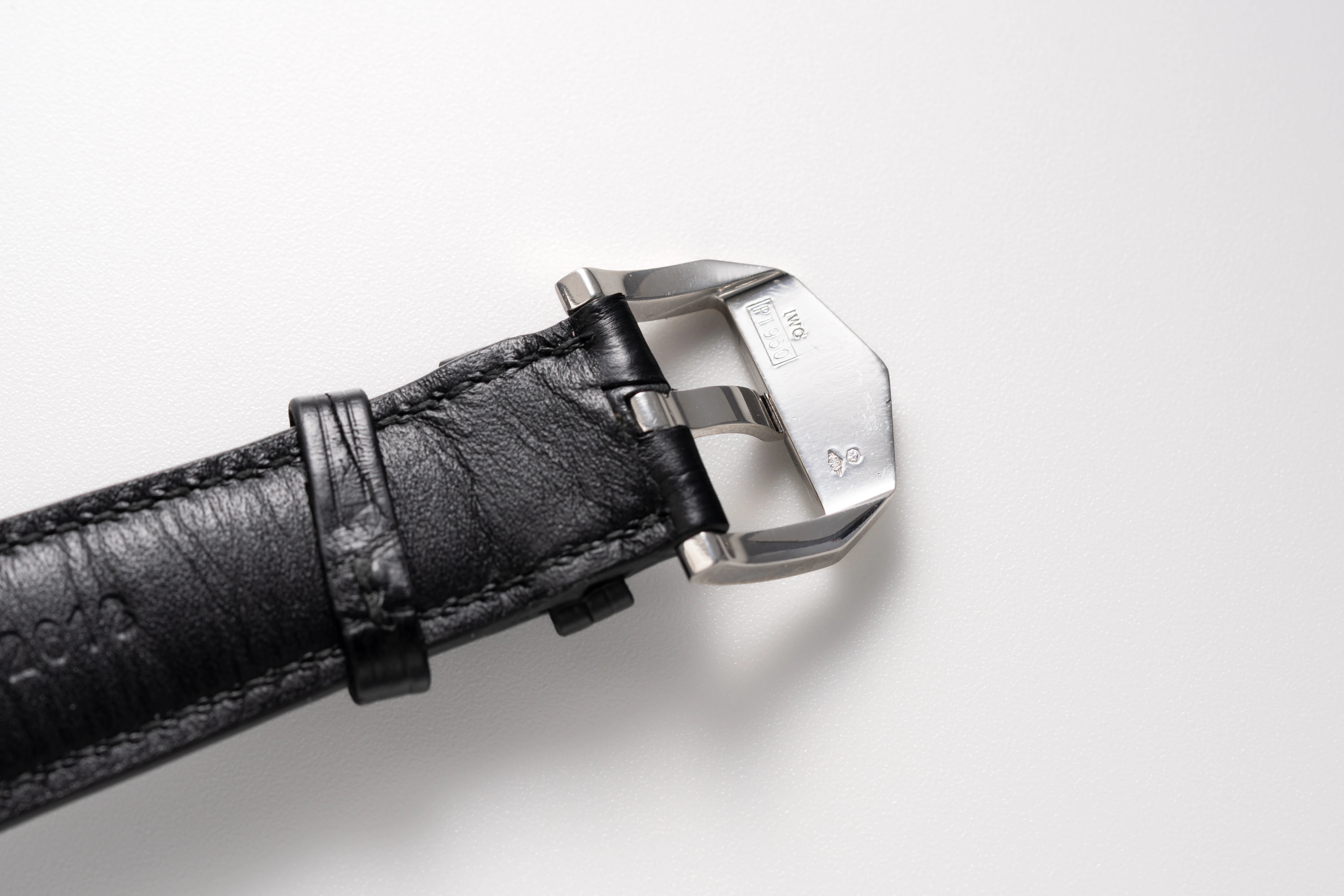
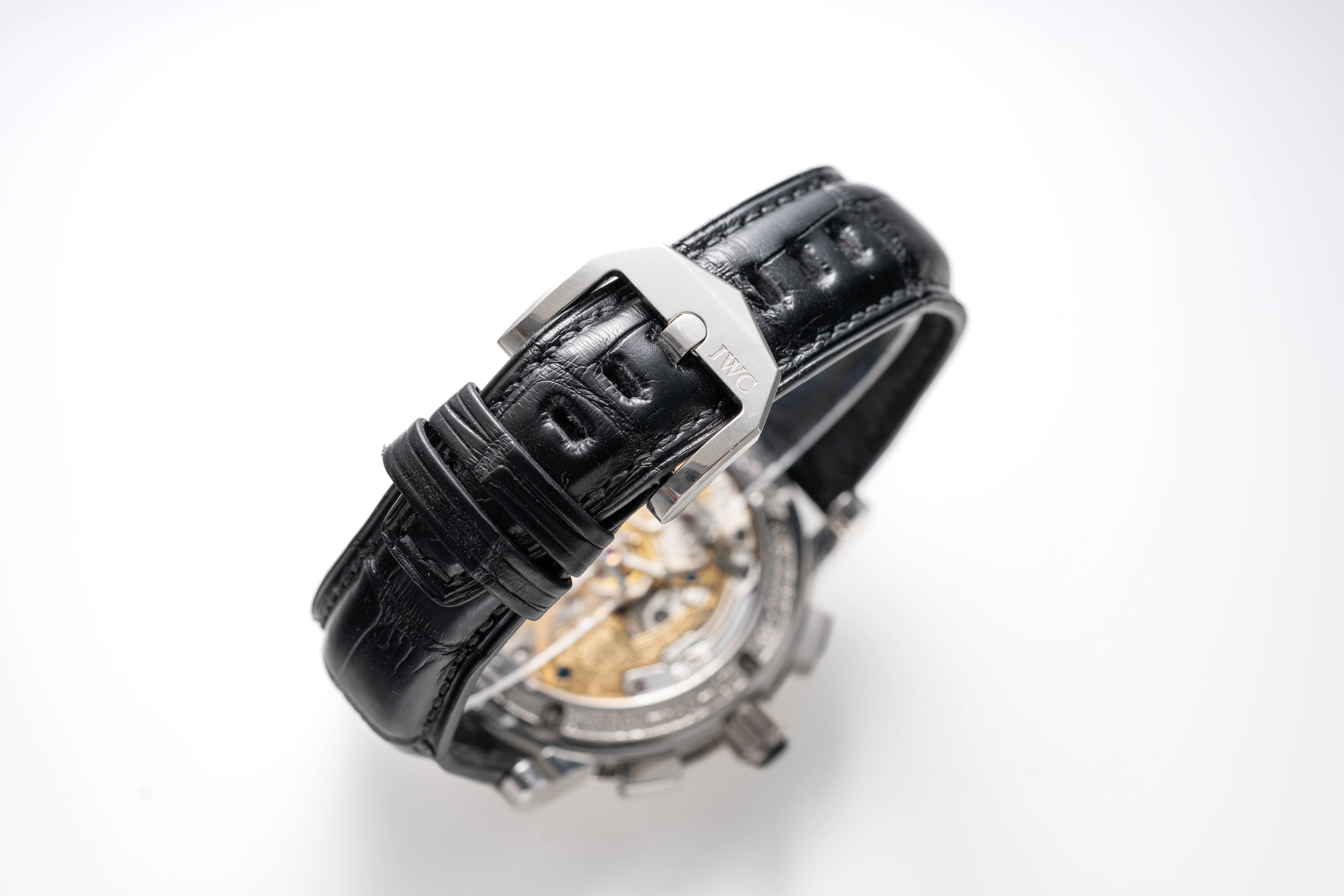
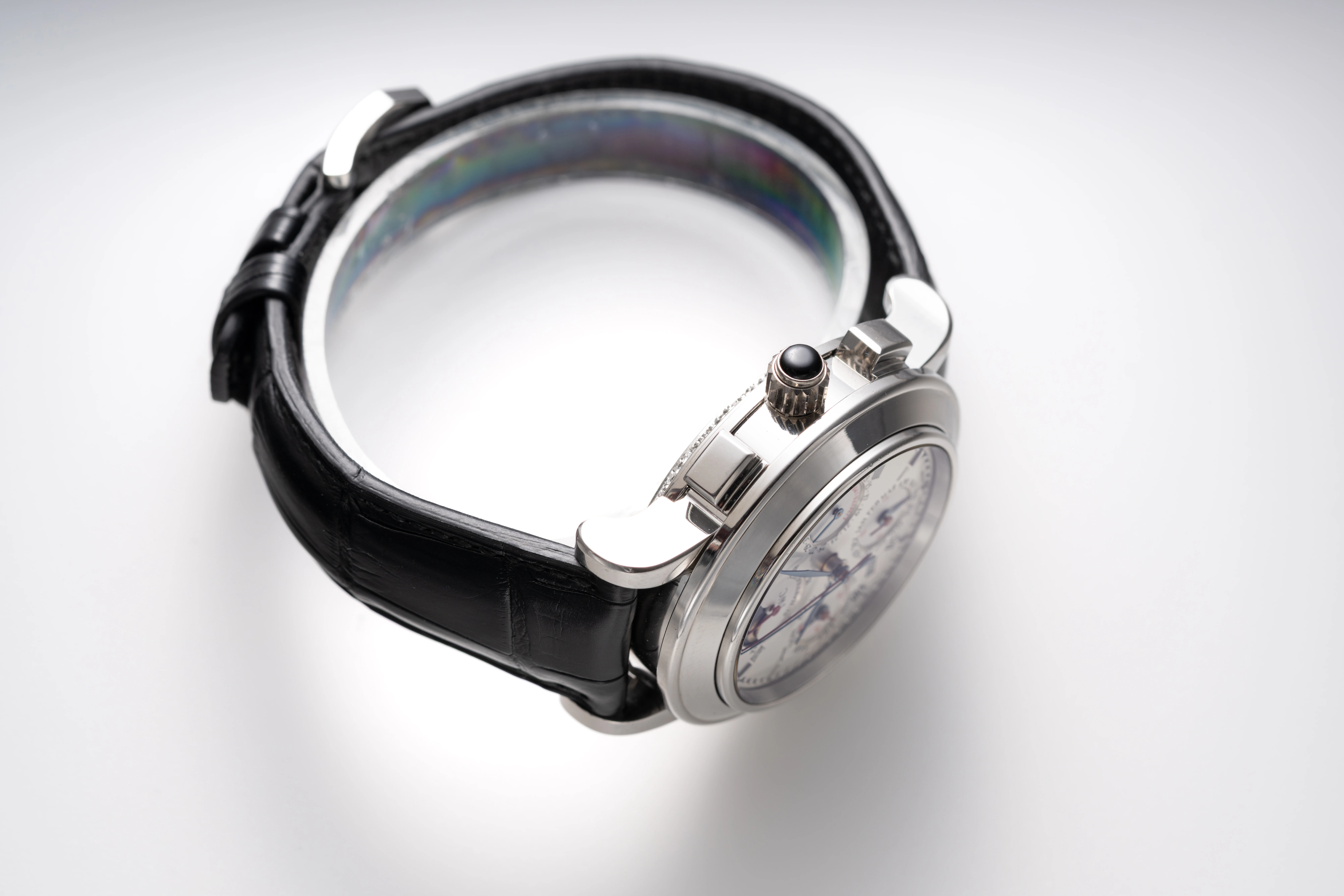
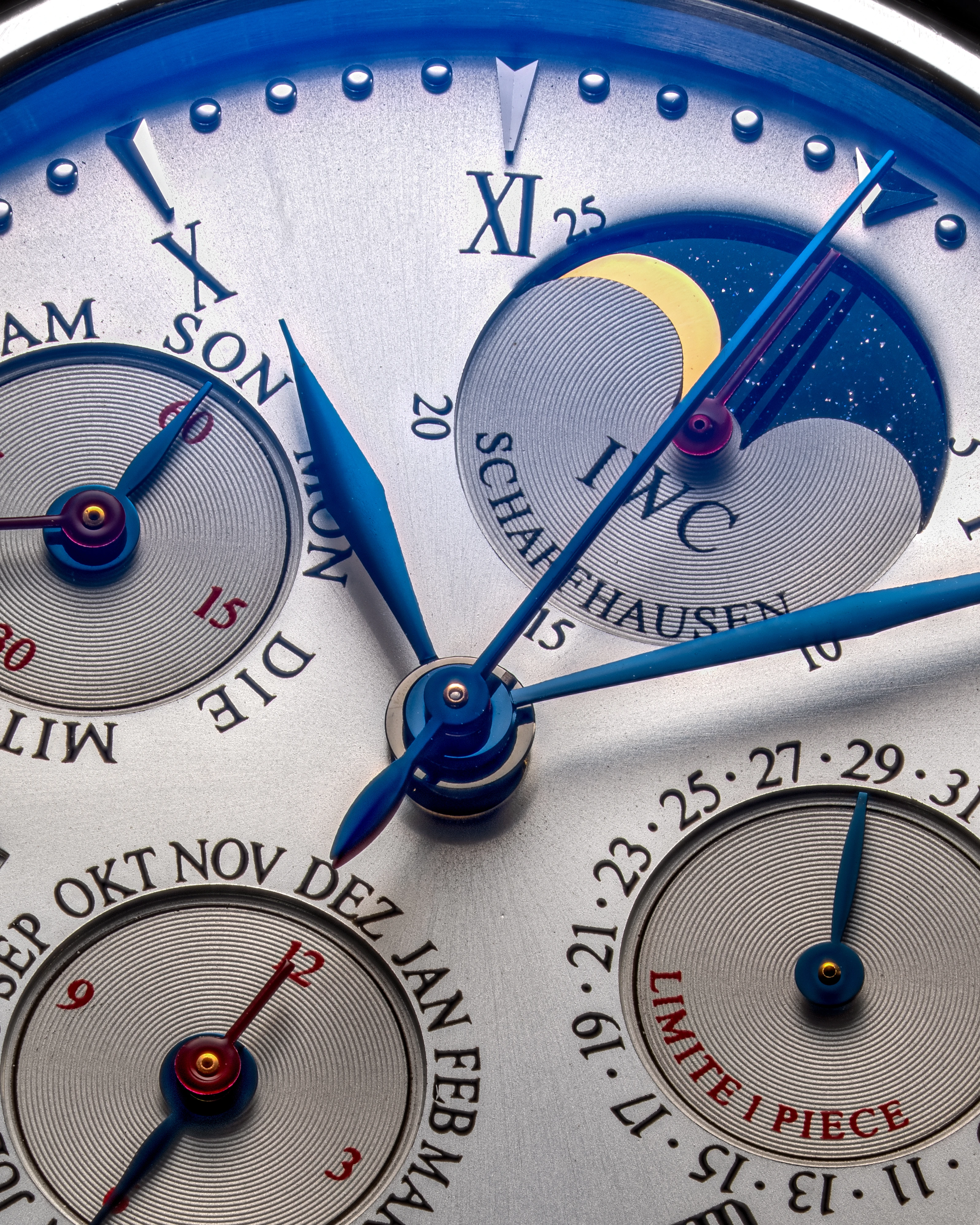
At the express request of its original owner, this watch is to be called the “millennium watch” – the Jahrtausend watch. This example features a platinum case, an extremely attractive option even without considering its other unique design elements. The movement, calibre 1868, is as captivating as that of the limited-edition models. A glance through the sapphire caseback reveals gold-plated bridges, hand-engraved with a relief motif that evokes the movement of a luxurious Baroque pocket watch. The bridges form a symmetrical three-dimensional arrangement, drawing attention to both the split-seconds module mounted above the bridges and the tourbillon, which is housed on a recessed level. The luxurious finish of the movement components does not detract from the dial, which, like the case, features several unique details. The first thing that catches the eye is the applied hour and minute indices, which replace the railway-style outer scale. The absence of detailed markings on the sub-dials creates a distinctive atmosphere, while the inscription “Limité 1 Piece” in place of the familiar “Tourbillon” found on the limited edition’s sub-dial at 3 o’clock serves as the finishing touch to the design of this important and undoubtedly ambitious project.

Specifications
| Case | Platinum |
| Strap | Black crocodile-leather strap |
| Dial | Silver (German calendar markers) |
| D= | 42.20 mm |
| Year | Circa 1990s |
Condition report
| Box: | No |
| Papers: | Yes |
ADDITIONAL PHOTOS: