Franck Muller

Don't hesitate to ask for any additional information, Alex is ready to assist and guide you in your decision
DETAILS
Franck Muller began his watchmaking career as a restorer, offering his services to collectors. In particular, he worked for the Stern family, owners of the Patek Philippe brand, who had assembled a vast collection of vintage and antique timepieces for a future museum. In 1987, he started offering watches he made himself, based on historic calibers and ébauches, a common practice among independent watchmakers at the time. He primarily produced complicated watches, including tourbillons, minute repeaters, perpetual calendars, chronographs, split-seconds chronographs, and various combinations of these.
The fact that this watch is signed “Franck Genève” suggests that it is an extremely rare example from the period when Mr. Franck Muller was producing watches early in his career, primarily between 1984 and 1992, as he used this signature only during that time. It is possible that some pieces signed “Franck Genève” were completed by him in 1992, as it is common for an independent watchmaker to have a lead time of several months, and there are many cases where this can stretch to a year or even longer. Meanwhile, Franck Muller’s career took a sharp turn — 1991–1992 marks the beginning of the Franck Muller brand. He founded the brand in partnership with Vartan Sirmakes, a jeweler and owner of a watch case manufacturer that also produced gemstone inlays for renowned Swiss watch brands. The brand name appears on the dials in the “Franck Muller Genève” version, which seems to indicate continuity with the early stage of the watchmaker’s career.
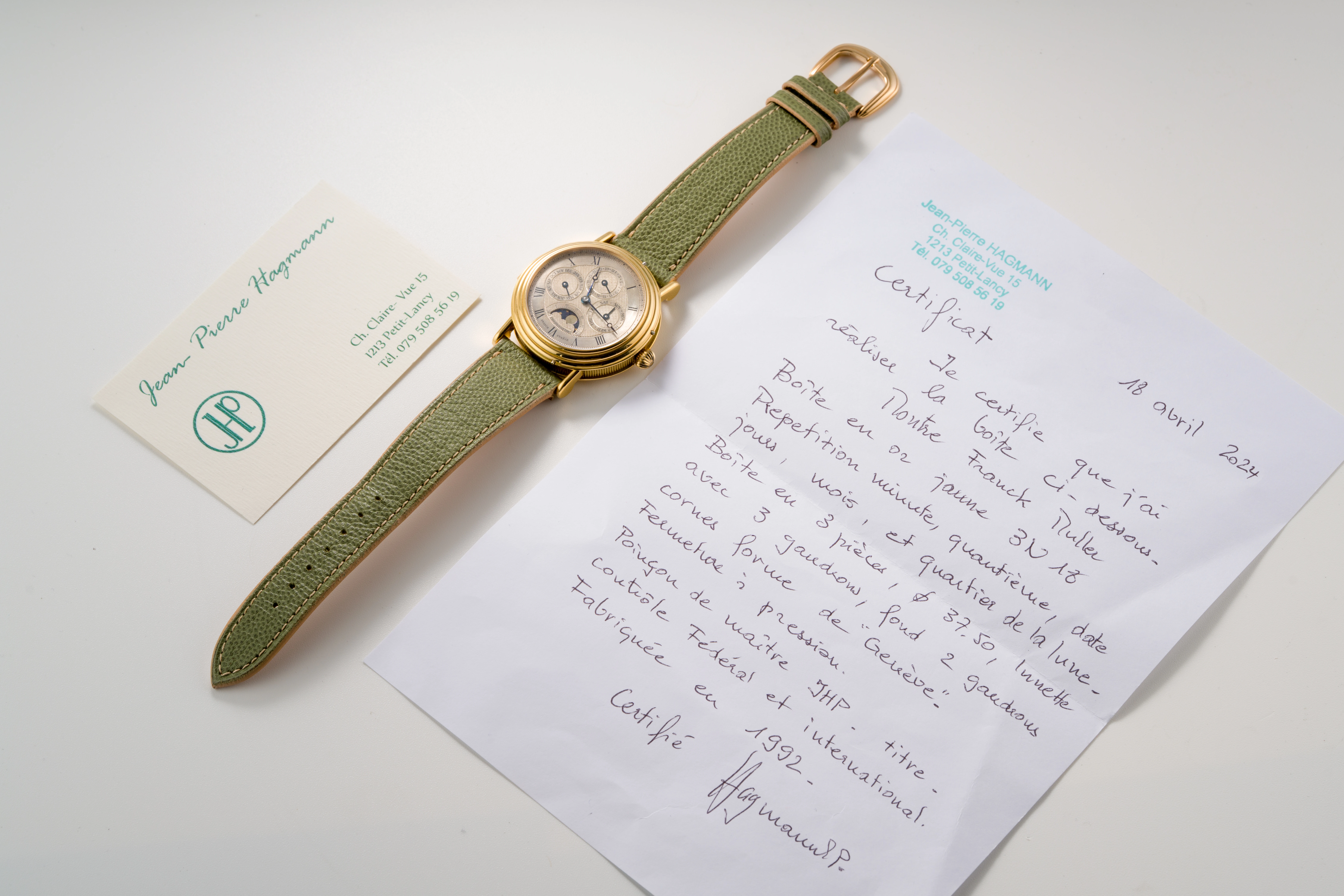
It’s worth noting that before launching his business in partnership with Vartan Sirmakes, Mr. Franck Muller commissioned cases for his watches from Jean-Pierre Hagmann, a renowned Geneva casemaker for the most prestigious brands. His collaboration with Hagmann is one of the most appealing aspects of the watches produced during Franck Muller’s early period. Another important aspect of this period – which naturally deserves a central role, as it remained significant later on – was the production of extremely complicated wristwatches.
From the very beginning, Mr. Franck Muller earned a reputation for creating complex, highly sophisticated watches. He started with the development of a tourbillon watch in 1983, followed by a tourbillon watch with a “jumping” hour hand in 1986—a type of hour hand used in many of Abraham-Louis Breguet’s pocket watches; a minute repeater and tourbillon watch in 1987; a minute repeater, perpetual calendar, and tourbillon watch in 1989; a split-seconds chronograph and tourbillon in 1990; a minute repeater with world time in 1990; and a double-face Janus with a monopusher chronograph and world time in 1991.
Subsequently, under the Franck Muller brand, he continued to produce a series of increasingly complex and unusual models. Beginning in the mid-1990s, he expressed this specialization with the slogan “Master of Complications”, which remains the Franck Muller brand motto. This phrase appears consistently in catalogs, advertising, and engravings on the casebacks of the brand’s watches.
REASONS TO BUY
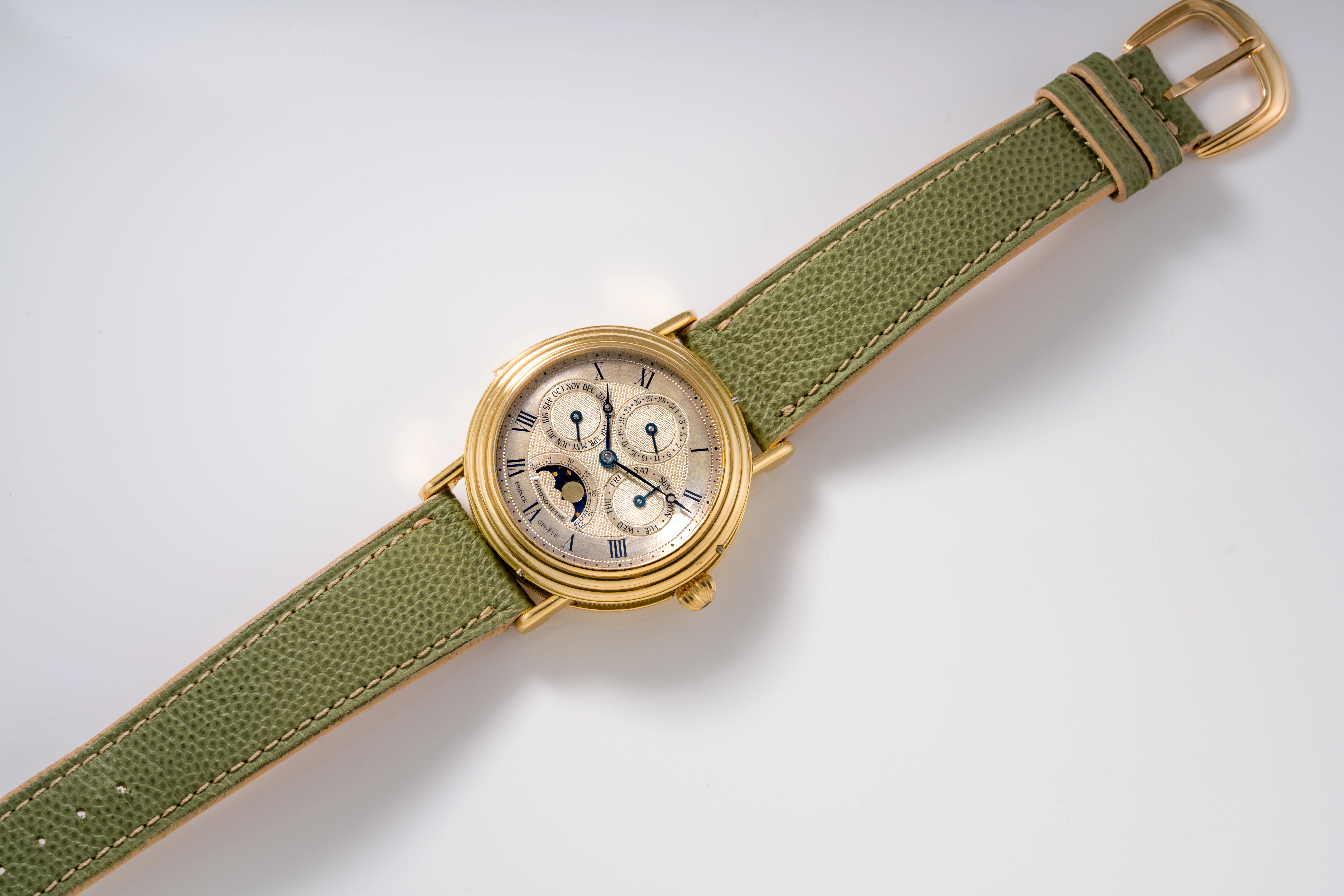
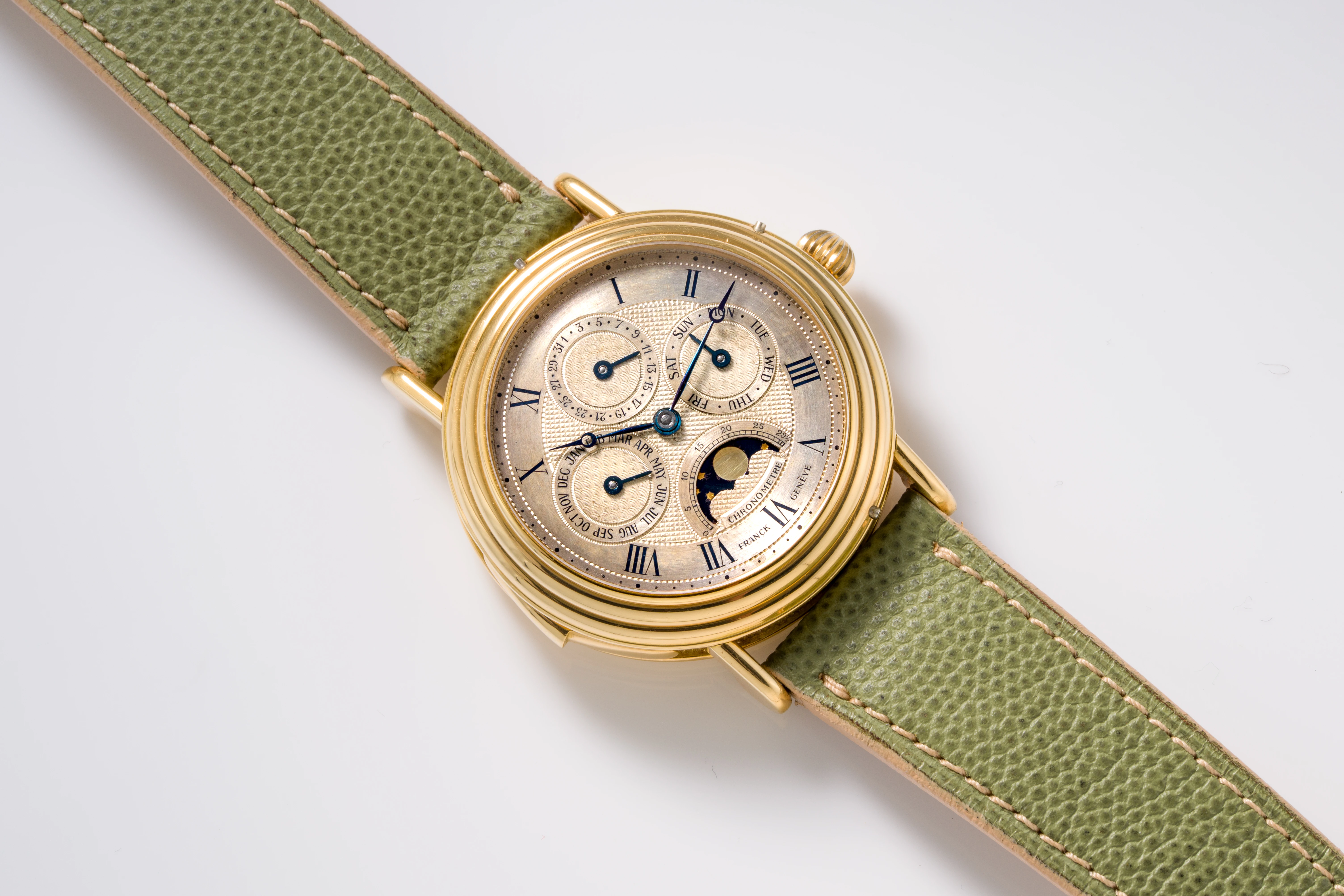
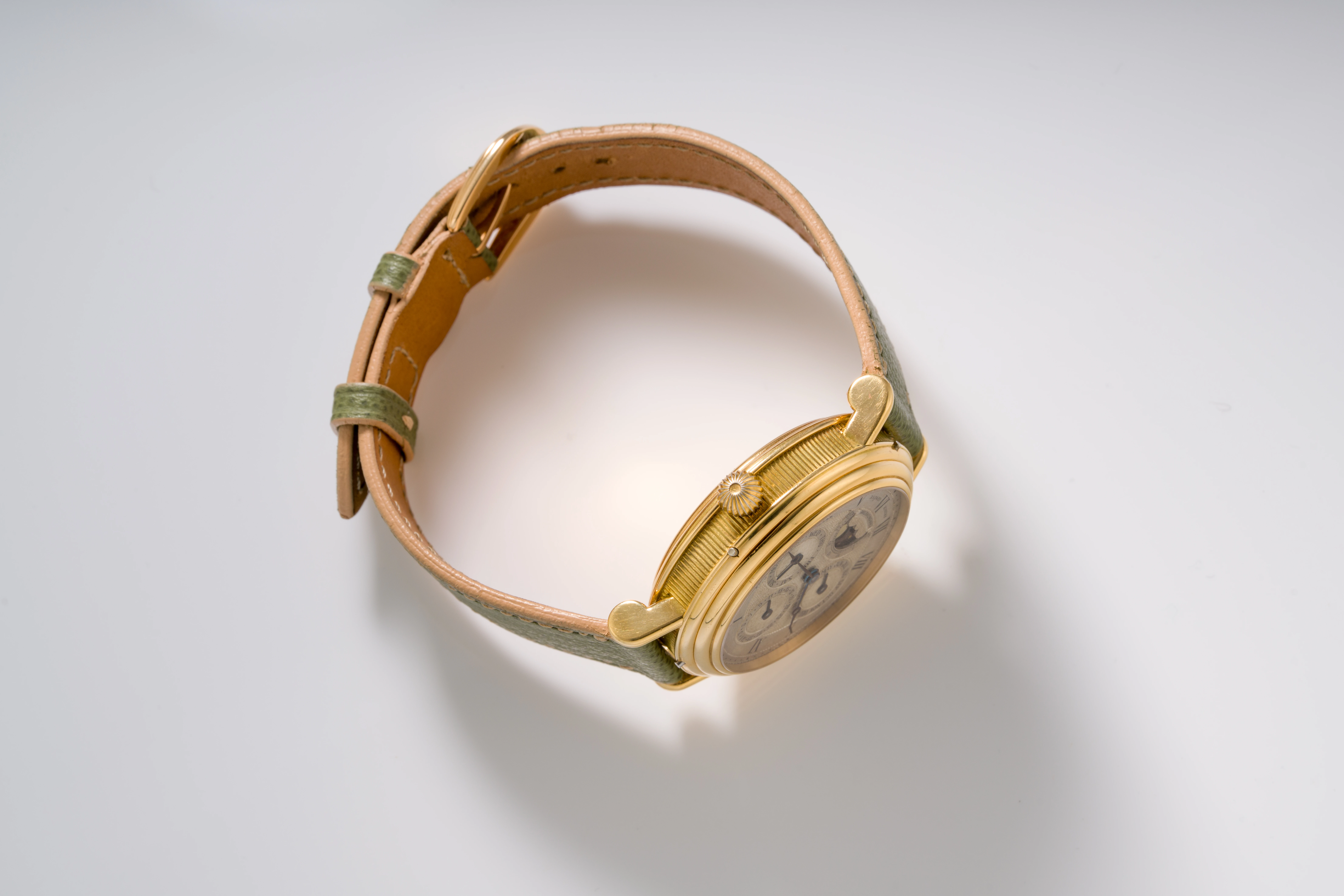
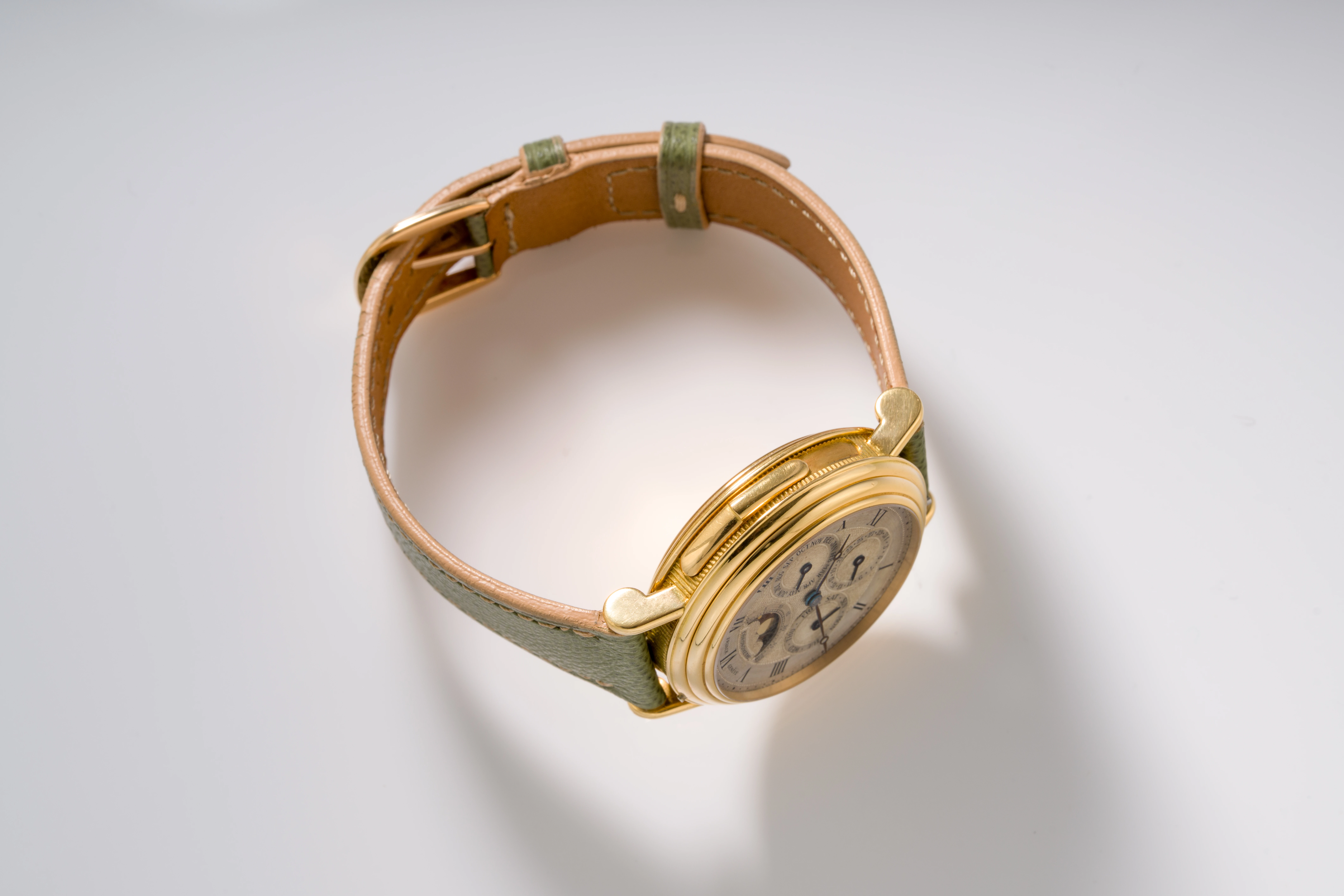
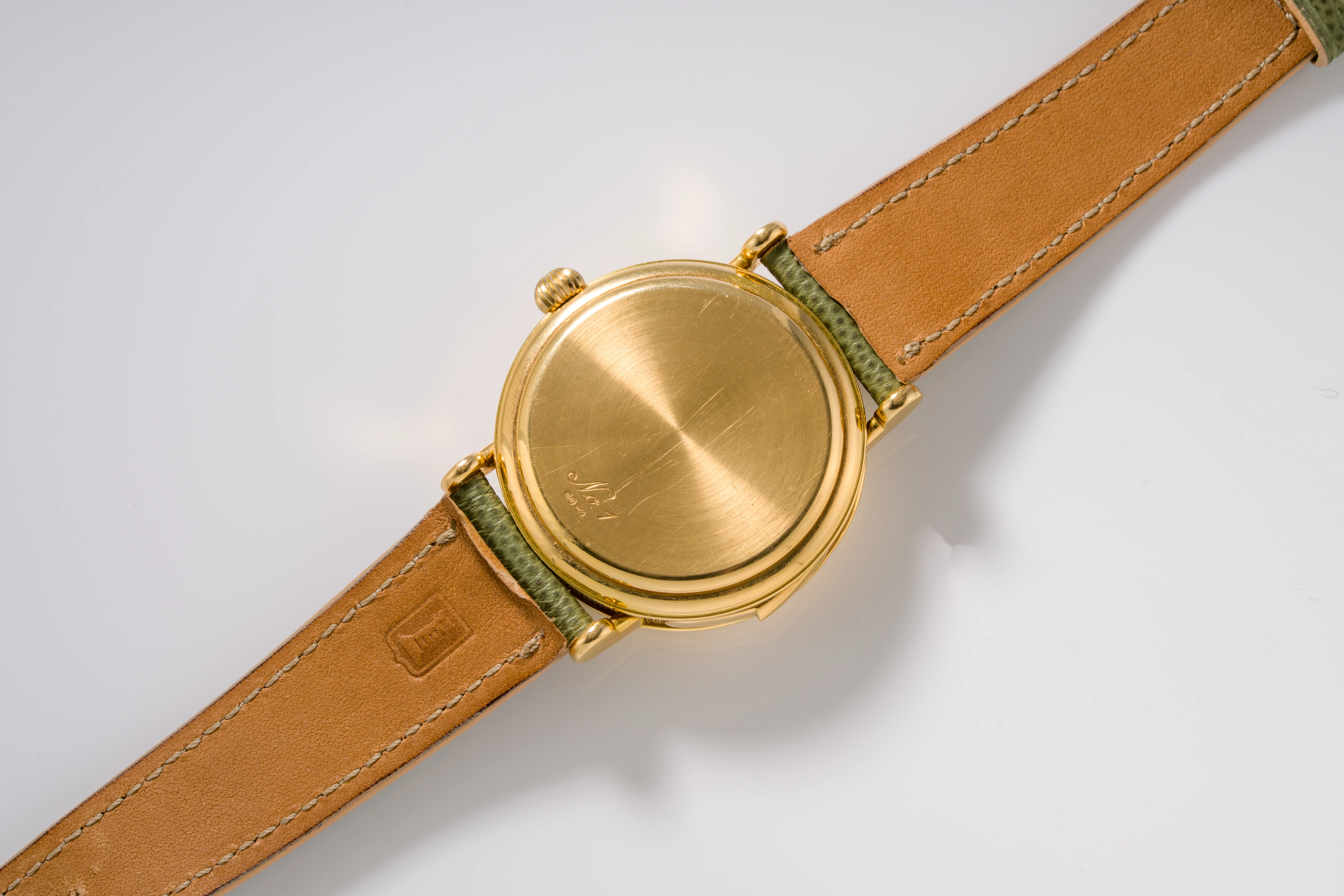
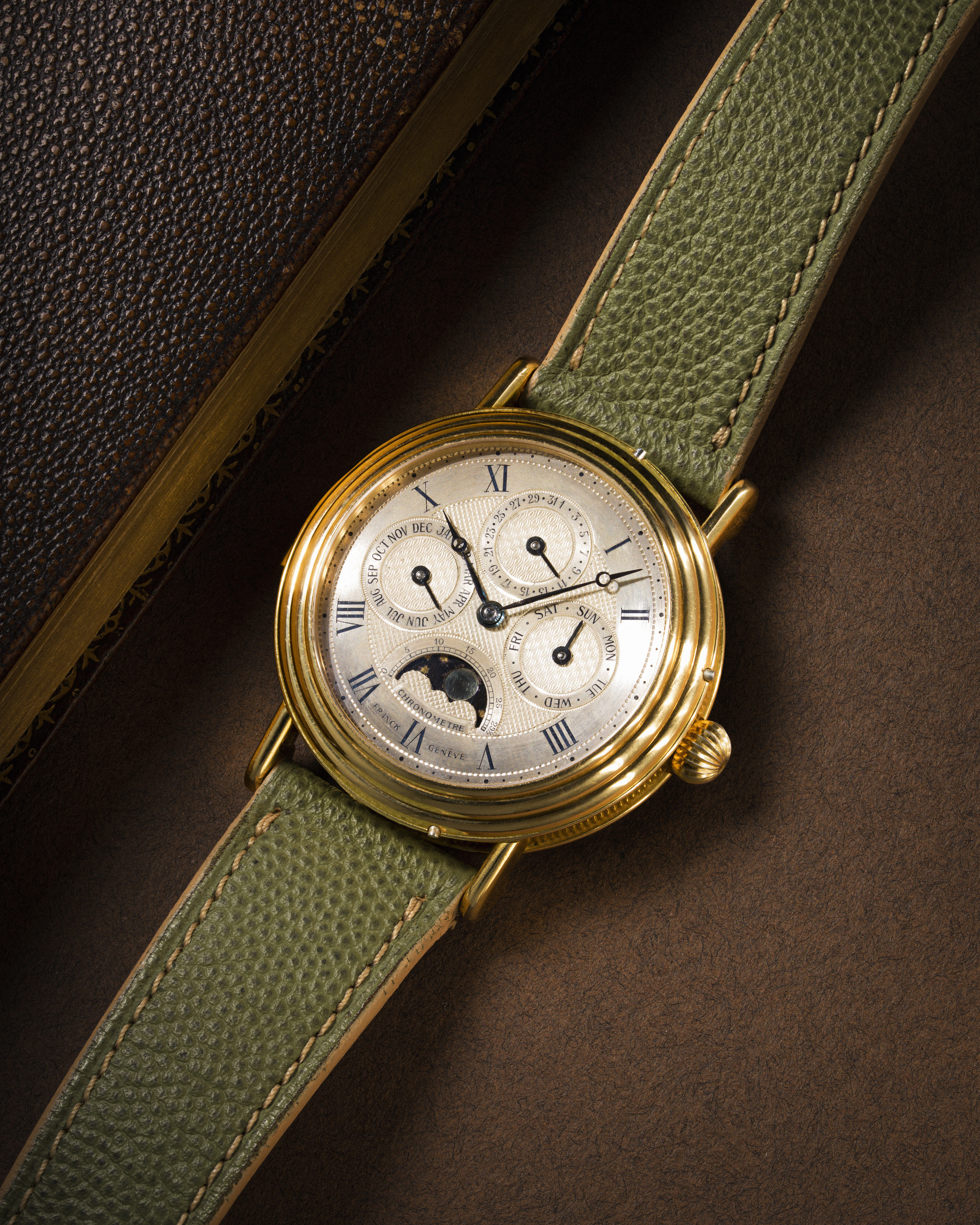
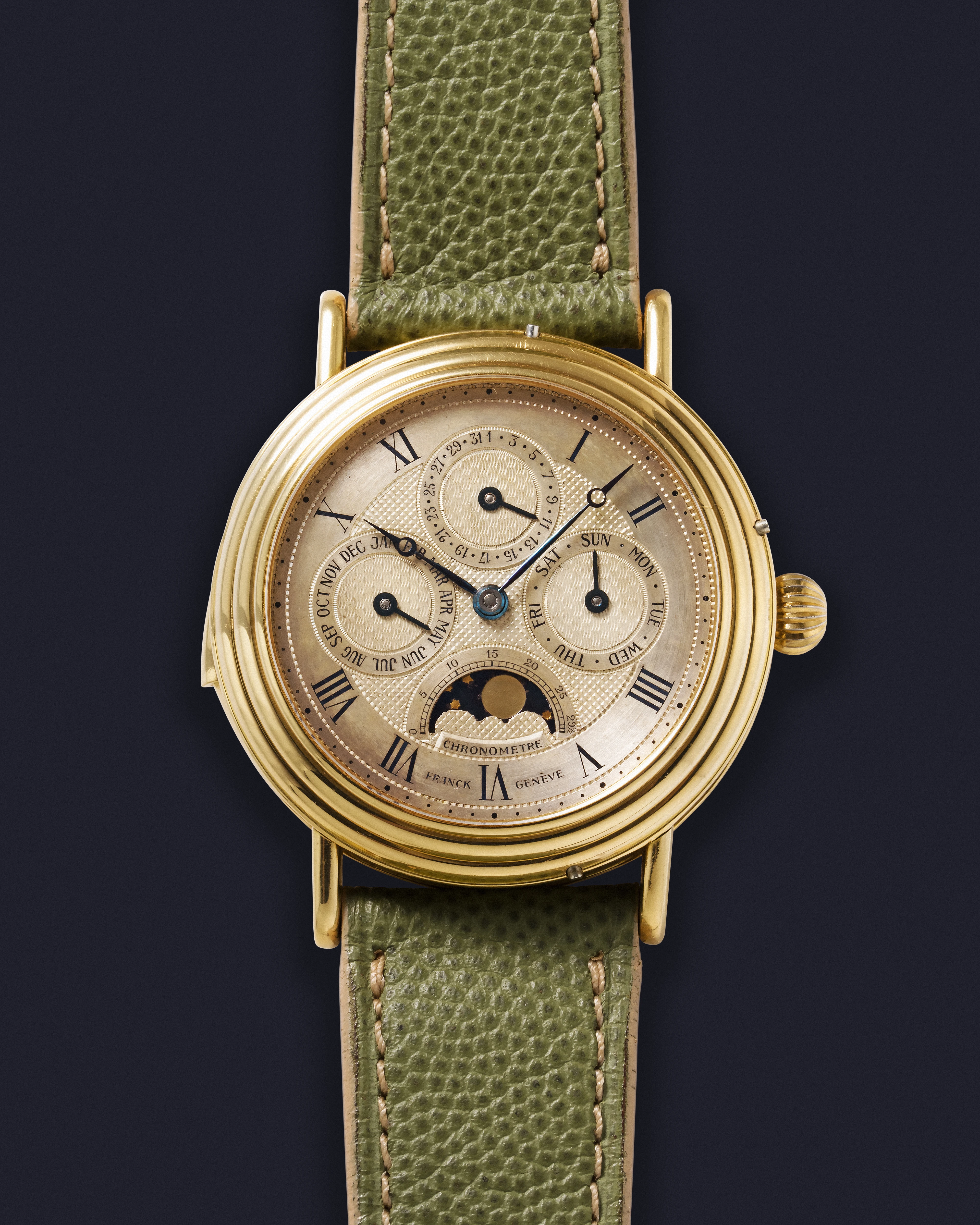
This Minute Repeater Perpetual Calendar No. 1, signed “Franck Genève” and completed in 1992, with a 37.5 mm yellow gold case, is an early and highly complicated wristwatch by watchmaker Franck Muller from his “pre-brand” period. Beyond its hand-wound movement, which combines two traditional complications – a minute repeater and a perpetual calendar with moonphase – the undeniably attractive features of this watch include its silvered guilloché dial with hand-engraved, black-filled inscriptions and indexes, as well as its gold case. The case is crafted in an unconventional interpretation of Empire style by outstanding case maker Jean-Pierre Hagmann, with the characteristic fluted caseband, triple-pomme bezel, double-pomme caseback, and spherical crown, which give the watch a distinctly classic aura. This style remains relevant today not only because of its clearly recognizable historical roots, but also thanks to the modern trend toward vintage and neo-vintage watches in moderate sizes.
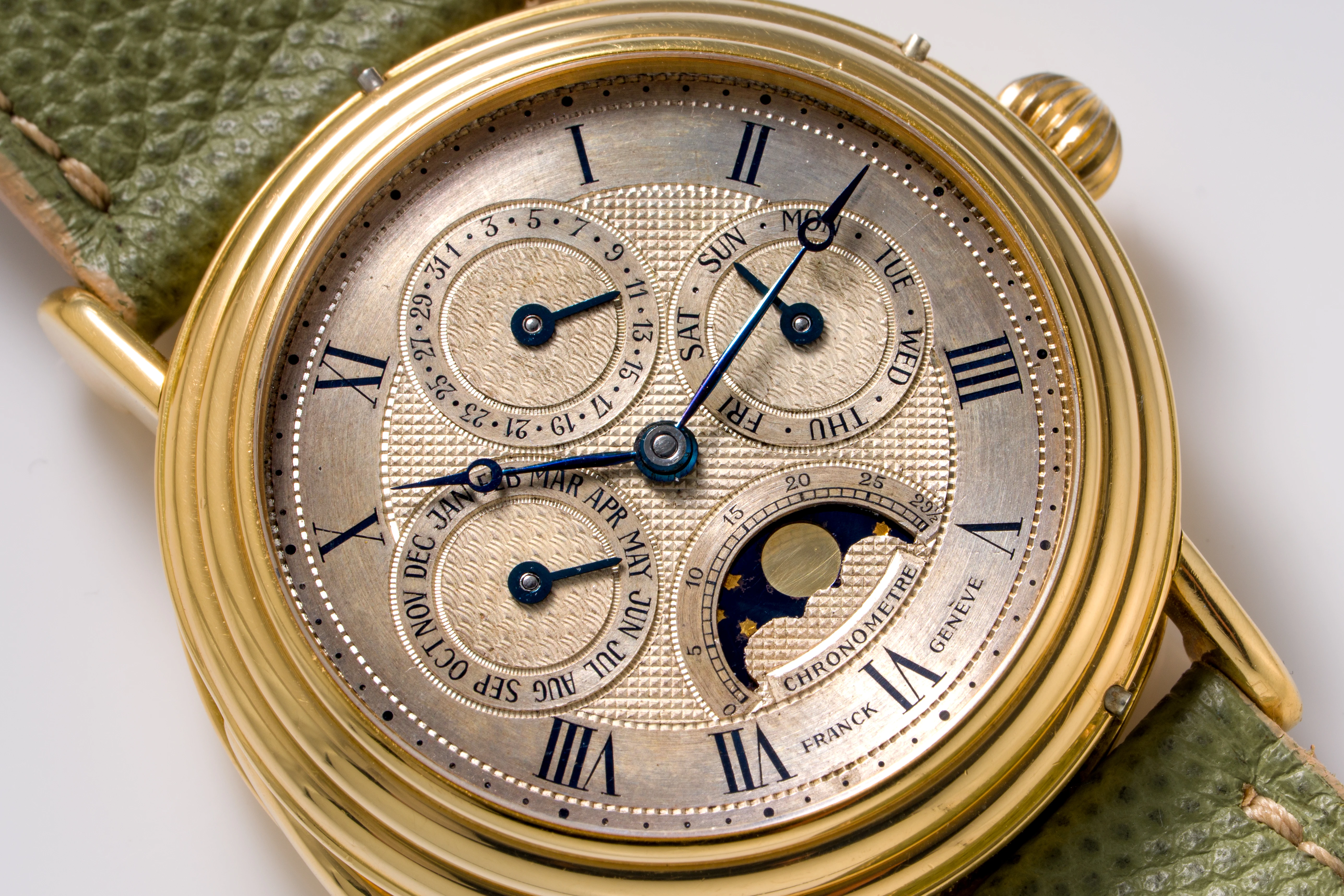
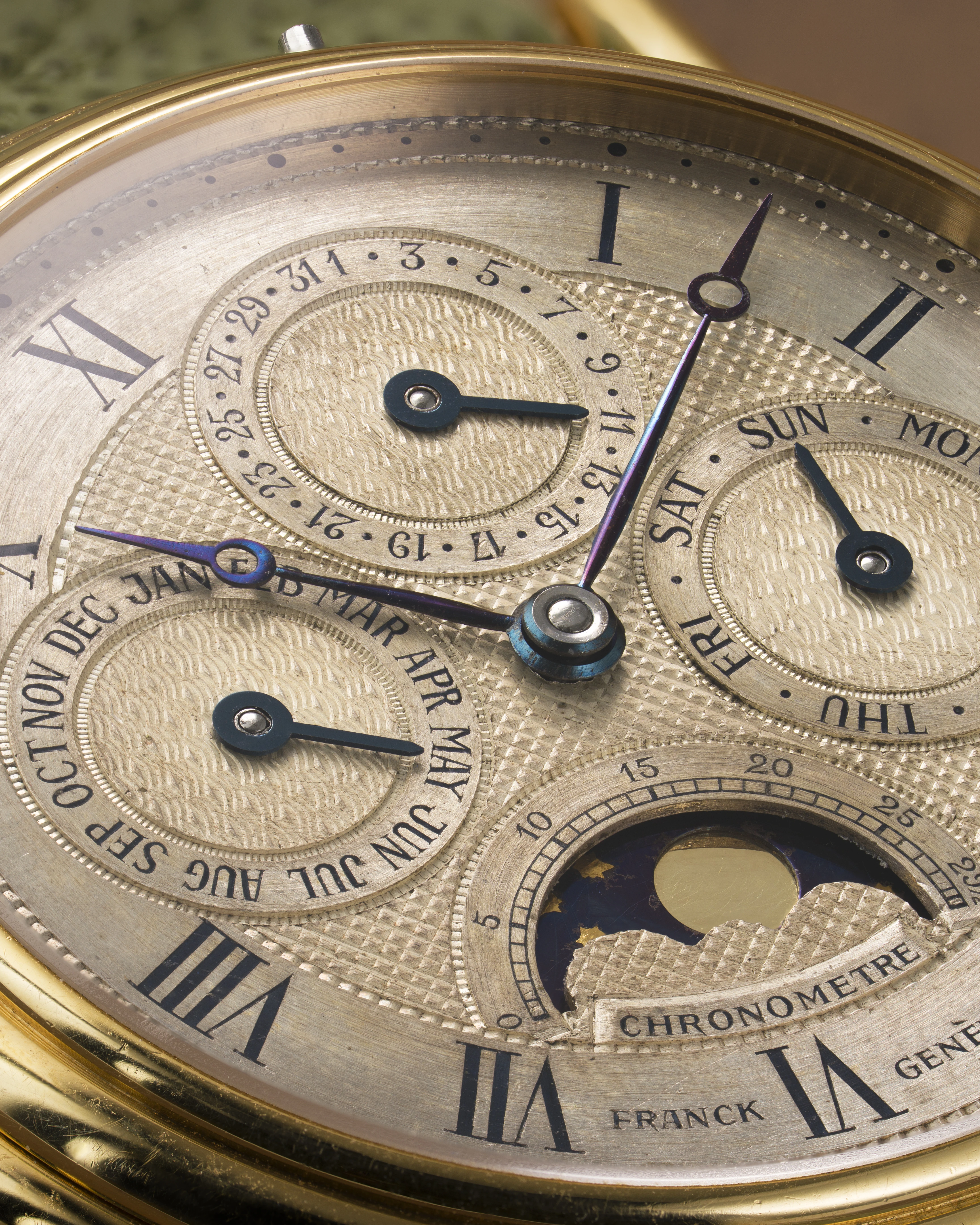
Two standout features caught our attention, both crucial for understanding the distinctive status of this watch. First, there’s the perpetual calendar mechanism without a leap year indicator – a common practice among early perpetual calendars from leading brands, including Patek Philippe and Audemars Piguet, especially given that early wristwatches with perpetual calendars are very rare. In our experience, this is the only Franck Genève perpetual calendar without a leap year display. Second, there’s the “Chronometre” inscription, engraved at the bottom of the dial in a specially reserved cartouche. The special certification needed for a watch to be called a chronometer was extremely rare in complicated mechanical watches of the era. As far as we know, Mr. Franck Muller sent a watch for this certification, which requires special regulation and adjustment of the movement, only once, producing an early tourbillon model from 1986.
ABOUT THIS WATCH
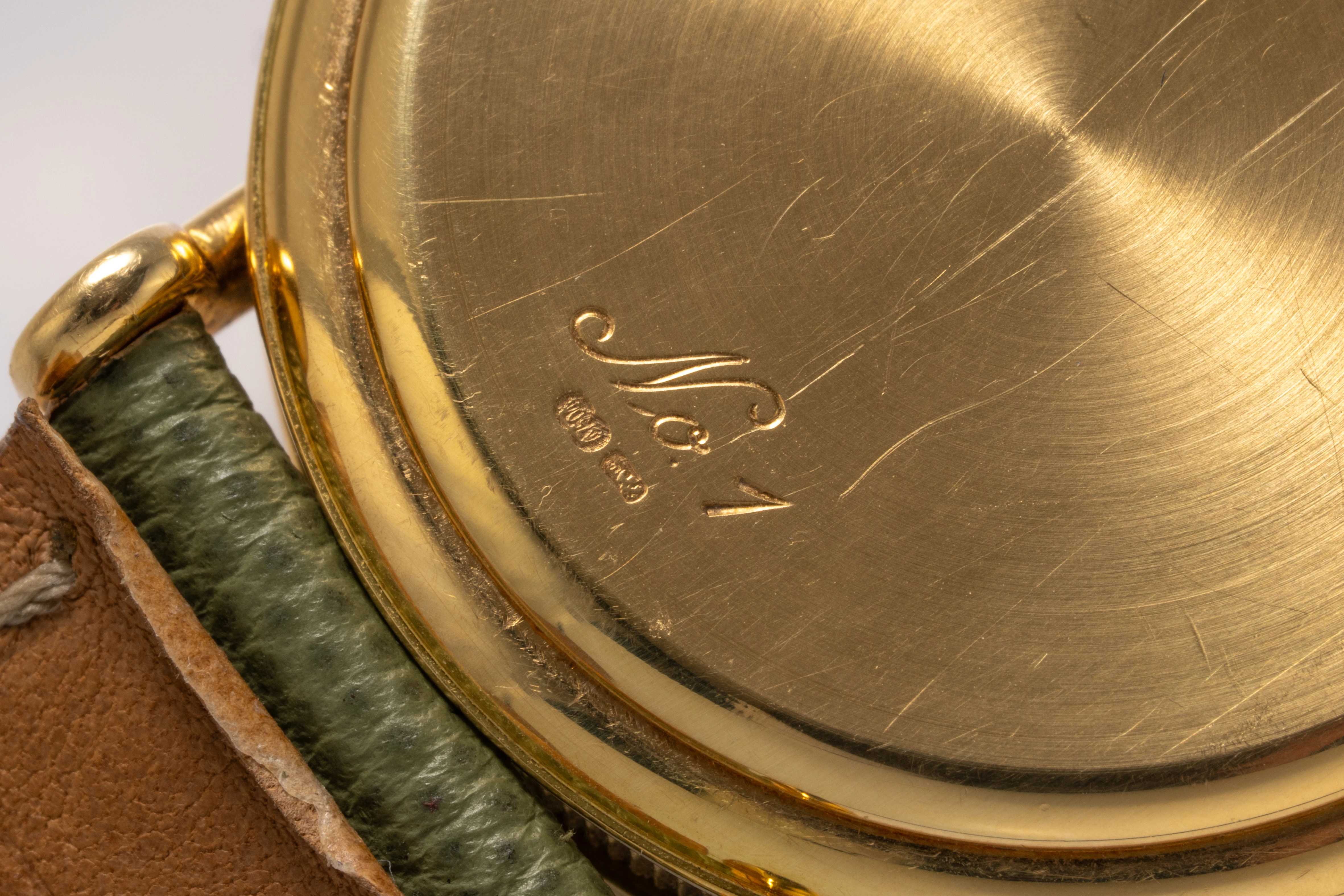
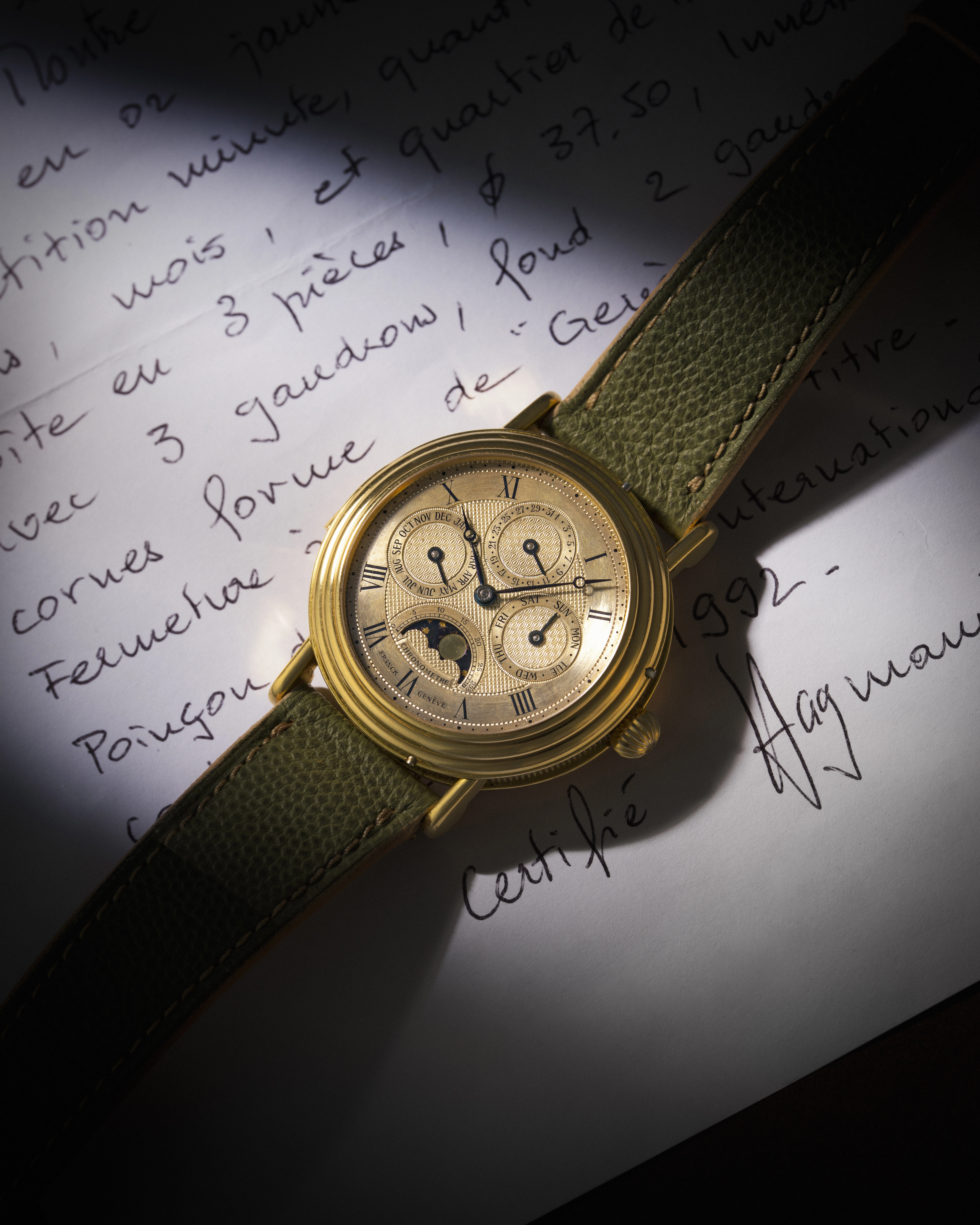
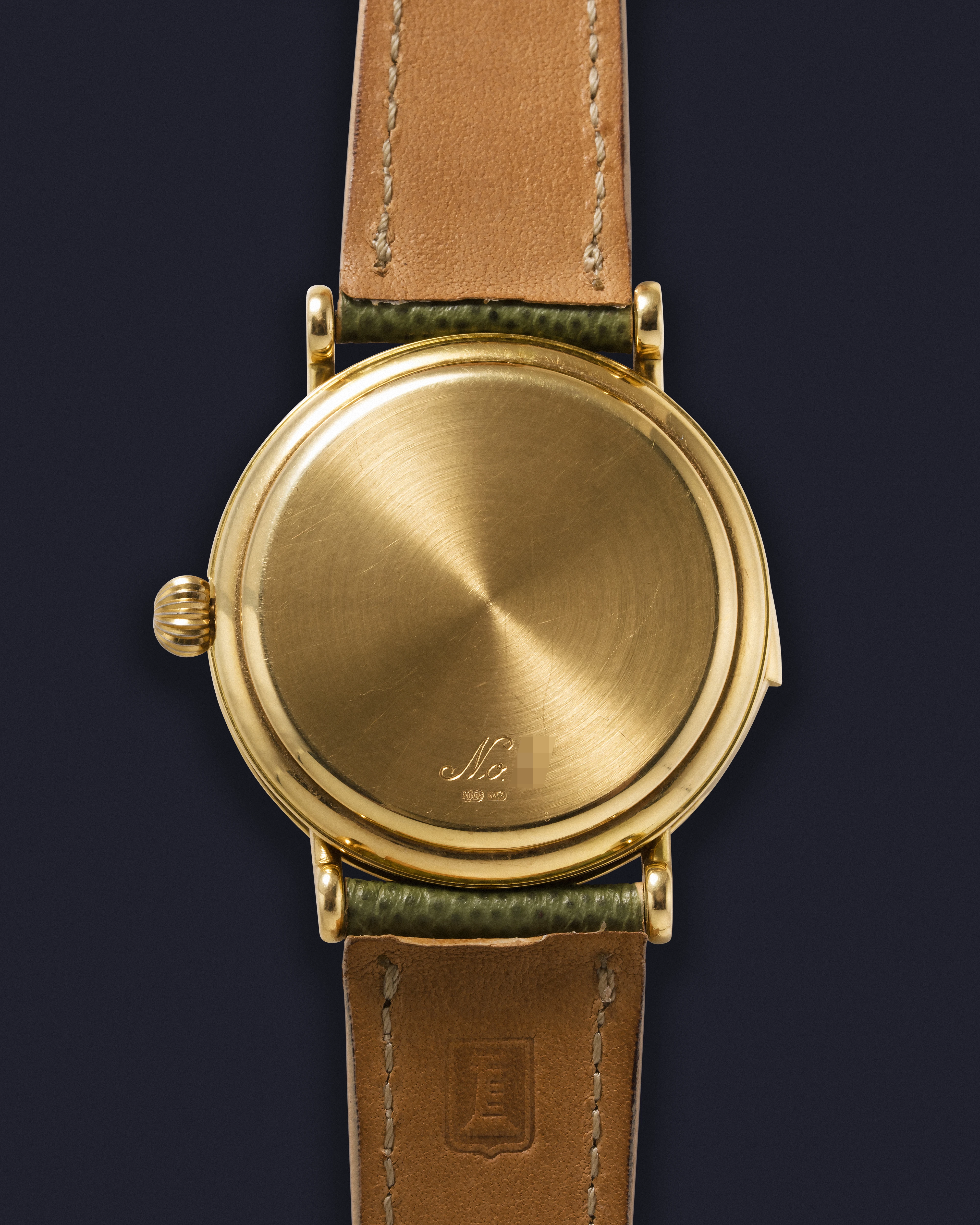
This watch is a rare and impressive example of an early Franck Muller double-complication wristwatch. Sotheby’s notes that it was assembled in 1992 as a unique piece and bears a No. 1 engraving on the solid-gold caseback. We assume the watch was commissioned earlier and delivered to the client according to the exact agreed-upon specifications, including the “Franck Geneva” signature. The historical context includes the certificate of origin for the watch case, written by Jean-Pierre Hagmann, which lists 1992 as the year of manufacture.
The watch case is crafted in the Empire style, a preferred aesthetic for both Jean-Pierre Hagmann and Franck Muller in his early days. The caseband features fluting (carrure cannelée), which, combined with the thin, straight lugs, clearly evokes the Breguet style, recently revived by the brand with the active participation of Daniel Roth. However, elements such as the triple-pomme bezel (Jean-Pierre Hagmann calls it a “lunette avec 3 gaudrons”), the double-pomme caseback (“fond 2 gaudrons”), and the spherical crown reminiscent of classic pocket watches keep this watch from being a literal reproduction of the Breguet style.
The guilloché silvered dial with Clous de Paris pattern, along with “vieux pannier” guilloché on the calendar counters, “filet sauté” outlines, circularly brushed chapter rings, and, crucially, hand-engraved, black-filled inscriptions and indexes, returns us back into the universe of Abraham-Louis Breguet. Blued “pomme de Breguet” hands complete the picture.
The hand-wound movement is based on a minute repeater caliber with a perpetual calendar module that displays the date, day of the week, month, moonphase. Judging by the arrangement of the perpetual calendar counters, it appears to be the same rare module used in Gérald Genta, Daniel Roth, and Urban Jürgensen watches of the era.

ADDITIONAL PHOTOS: