Urban Jurgensen

Don't hesitate to ask for any additional information, Alex is ready to assist and guide you in your decision
DETAILS
The historic Urban Jürgensen & Sønner brand was founded in 1773 by Urban Jürgensen, a Danish watch and chronometer maker, and celebrated its 250th anniversary in 2023. The brand is renowned for its exceptionally refined pocket watches, clocks, and pocket chronometers. From the beginning of the 20th century, the company gradually fell into decline, effectively turning into an antiquarian watch showroom and service workshop in Copenhagen. In 1979, Peter Baumberger, a passionate watch collector and entrepreneur, began reviving the brand in collaboration with distinguished British watchmaker Derek Pratt, making it famous for fine mechanical wristwatches as well. The modern Urban Jürgensen collection, produced from 1979 to the present, has never been mass-produced and is aimed primarily at select connoisseurs and collectors.
Peter Baumberger discovered the Urban Jürgensen shop by chance while visiting Copenhagen in 1976, during the 200th anniversary of the Danish Watchmakers’ Guild. Christian Gundesen, then the owner of Urban Jürgensen, had prepared a small exhibition of historical watches, instruments, and documents in his shop window. Drawn to the display, Peter visited the store, and this marked the beginning of his acquaintance with the owner, who, as it turned out, was considering selling the business. First Gundesen and later Gerhard Scheufens, the subsequent owner of the brand, wanted to hand it over to a Dane inclined to respect Urban Jürgensen’s great heritage. To convince them to sell the brand to a non-Danish company, Baumberger, who was of Swiss descent and had a solid watchmaking background (he was a trained watchmaker who studied at the Swiss-German Watchmaking School in Solothurn from 1955 to 1959), had to present his vision for the brand’s future. Apparently, this wasn’t just a business plan, in whatever form it was presented, but also watch samples that had to match the level of a respected brand.
REASONS TO BUY
Peter Baumberger is known to have planned to revive the Urban Jürgensen & Sønner brand with a series of pocket watches, and to realize this plan he decided to enlist the help of Derek Pratt. By then, Baumberger had already supported Pratt’s development of a pocket watch caliber with a tourbillon and a constant-force escapement. In 1979, Baumberger presented Gerhard Scheufens with proof of Pratt’s abilities: a Pratt pocket watch that could easily have borne the inscription “Urban Jürgensen & Sønner Copenhagen”. We speculate that this was not only Pratt’s pocket tourbillon, but also other pocket watches based on antique Urban Jürgensen movements. This seems like a logical scenario (though not proof in the strict sense), and in support of it we can consider the Urban Jürgensen/Derek Pratt perpetual calendar pocket watches numbered 3001 and 3002 from the famous 3000 series of complicated pocket watches. The 3000 series include perpetual calendars and more complicated timepieces with different combinations of minute repeater, chronograph, split-seconds, and perpetual calendar, as well as some of Derek Pratt’s tourbillons. Both No. 3001 and No. 3002 have a feature that is unusual for the rest of the 3000 series: their guilloché dials do not bear the brand name, so it is quite reasonable to imagine them as prototypes of what watches from a revived Urban Jürgensen brand might have been like.
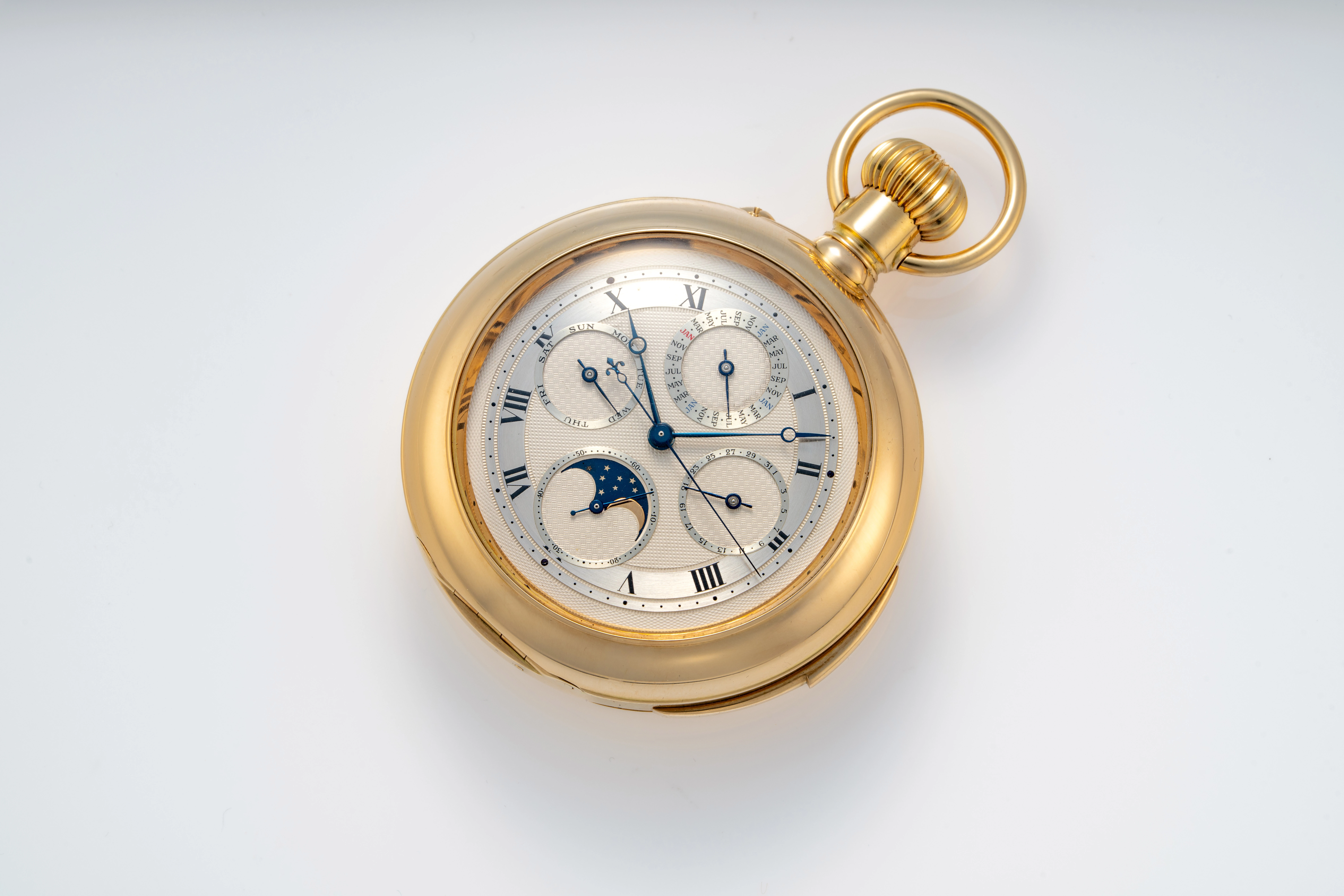
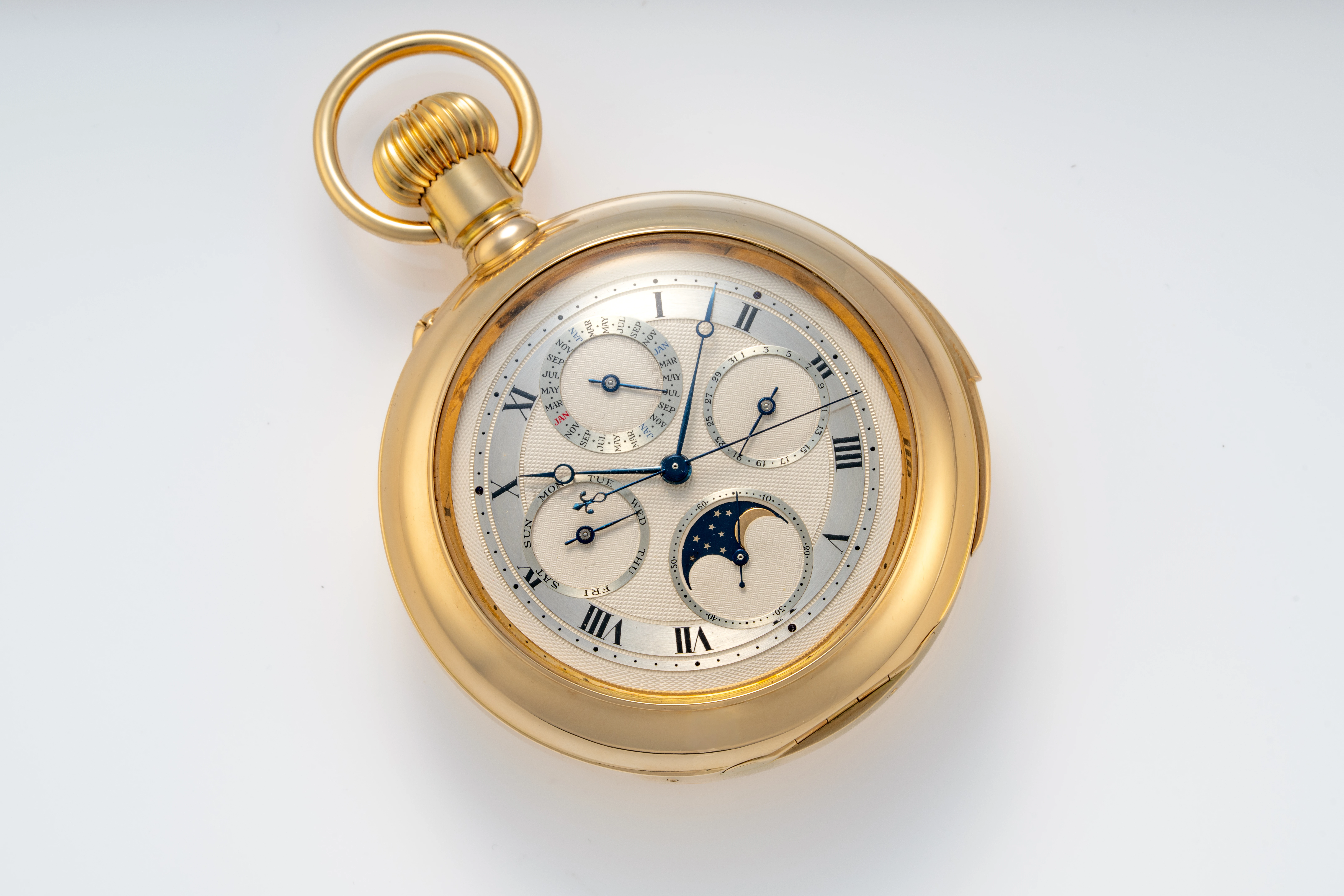
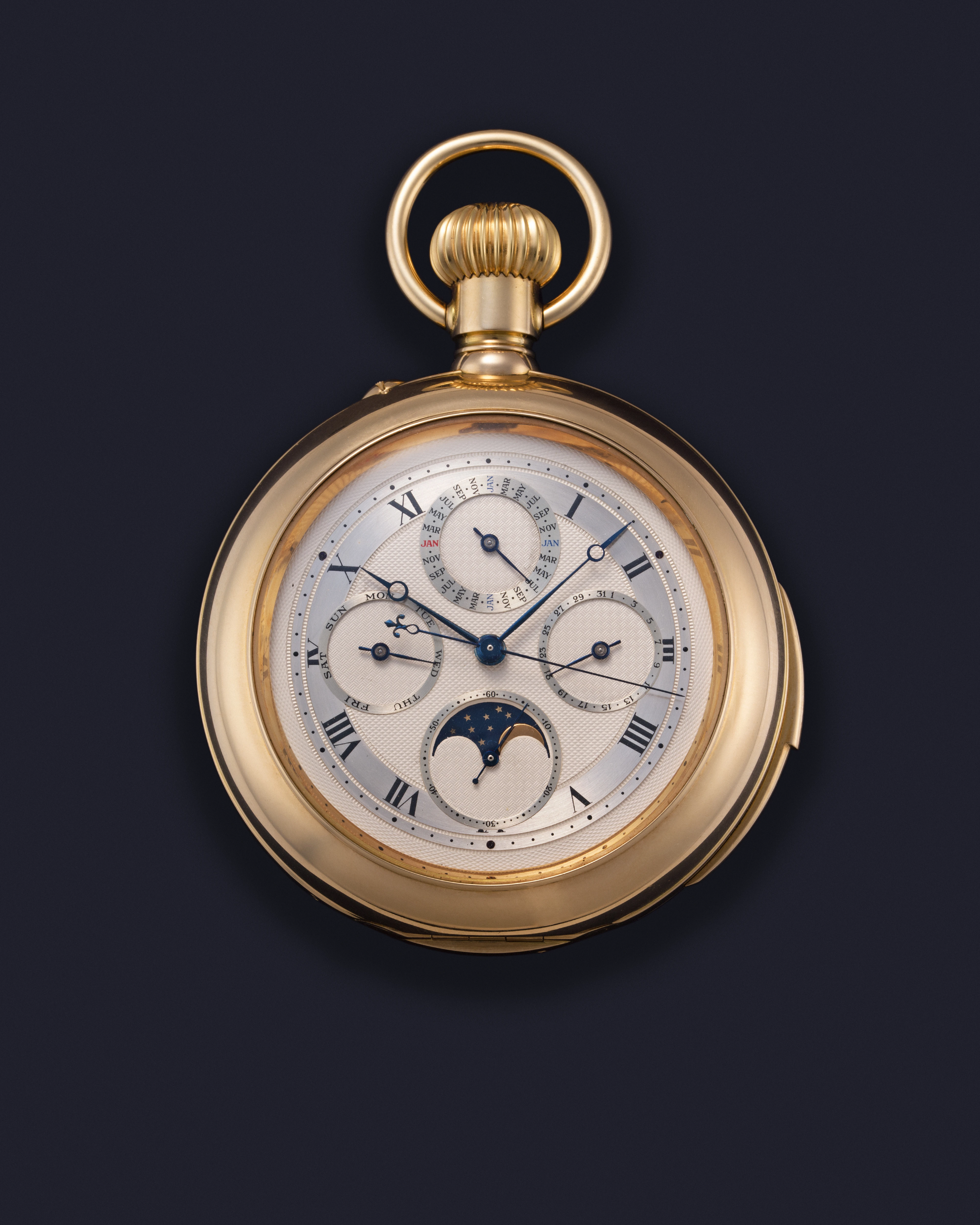
We believe this No. 3009/3001 triple-complication open-face pocket watch in yellow gold, featuring a minute repeater, perpetual calendar, and chronograph, is a very important example of the early 3000 series of Urban Jürgensen by Derek Pratt. The early serial number, the superb guilloché dial without the brand name, and the overall high quality. Watch No. 3009/3001 represents an outstanding early example of the famous and historically important 3000 series, and is the only high-quality pocket watch by this brand with a minute repeater, perpetual calendar, and chronograph without a minute counter to appear on the market.
ABOUT THIS WATCH
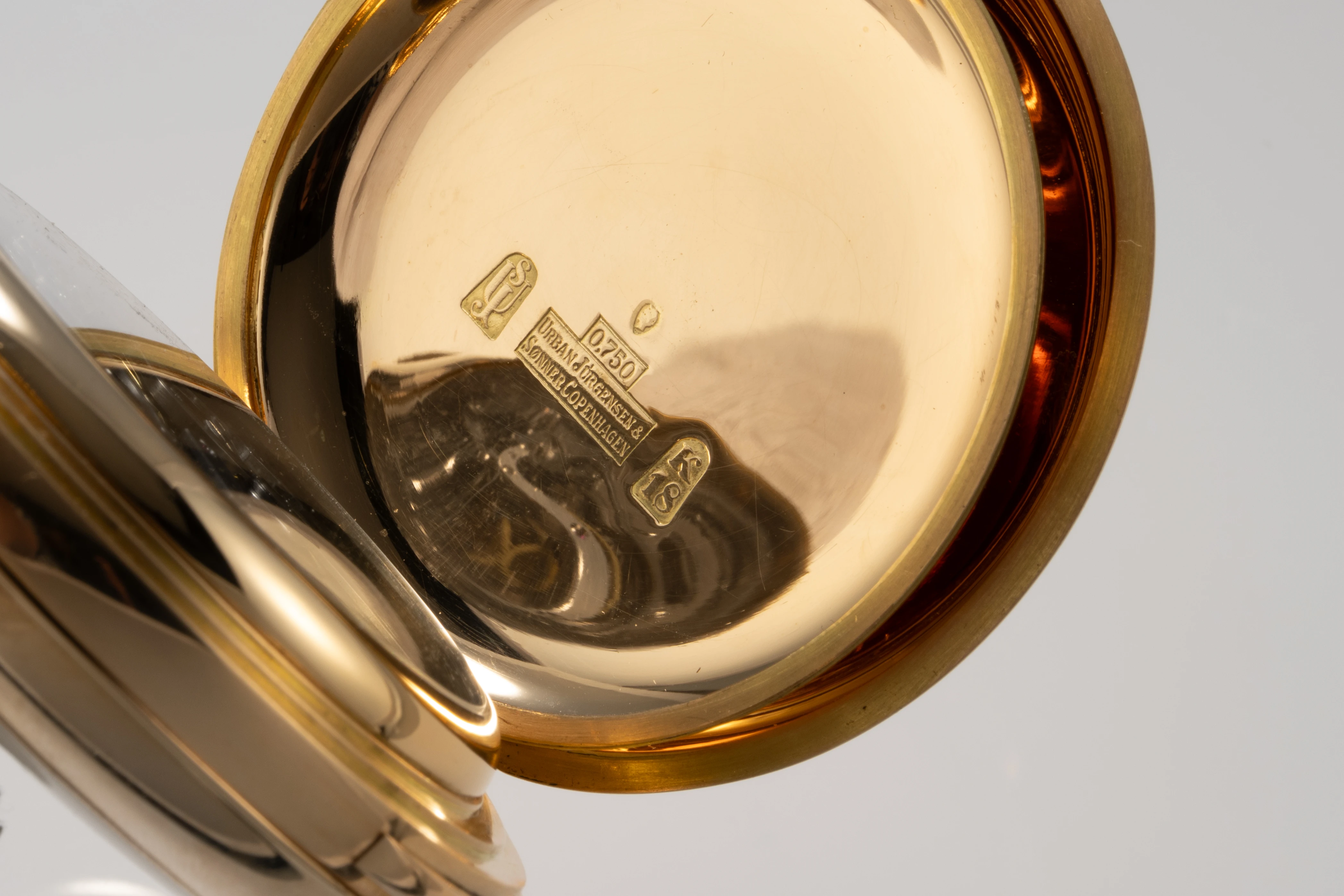
This watch, No. 3009/3001 (movement No. 3009, case No. 3001), has the same feature – the absence of the brand name on the dial – making it similar in this respect to watches Nos. 3001 and 3002. Christie’s, which sold No. 3001, notes that the movement was manufactured between 1910 and 1915 and encased in 1978. No. 3001 is engraved on the movement; Christie’s does not specify whether the case is marked with a number. Sotheby’s, which sold No. 3002, does not specify whether the number is applied to the movement, the case, or both.
The present timepiece has different case and movement numbers, which is not unusual for the 3000 series, as it used antique movements by Urban Jürgensen, and sometimes Jules Jürgensen (this feature is known for Nos. 3016 and 3019). In this regard, it should be noted that the choice of such numbers for the 3000 series may have been prompted by the existence of antique Urban Jürgensen watches from the late 19th and early 20th centuries – for example, the minute repeater and split-seconds chronograph No. 3007 (dated circa 1910 by Antiquorum) and the small minute repeater No. 3011 (dated 1895 by Antiquorum). Importantly, there are no known cases of the same numbers being used in both the 3000 series and the antique watches.
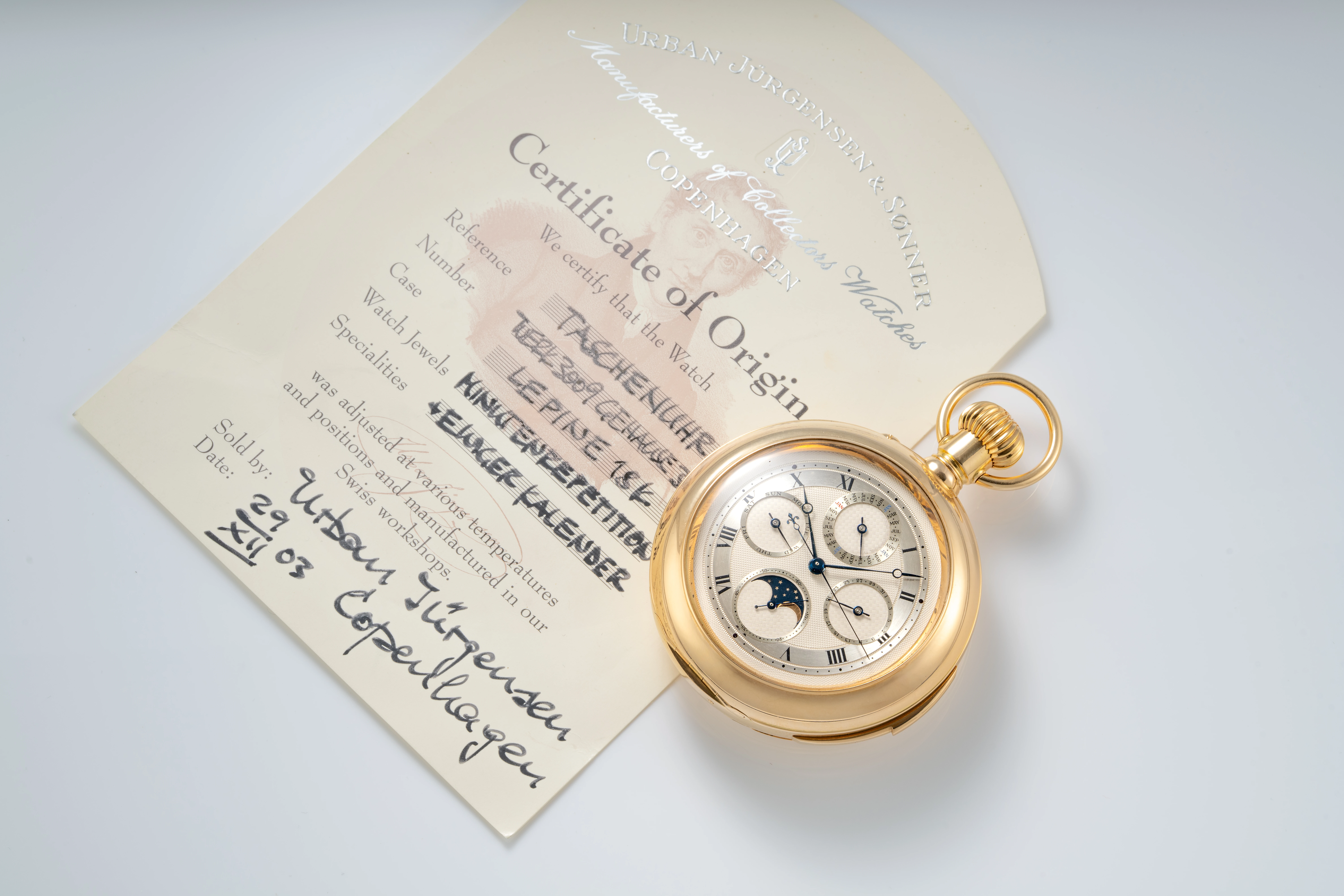
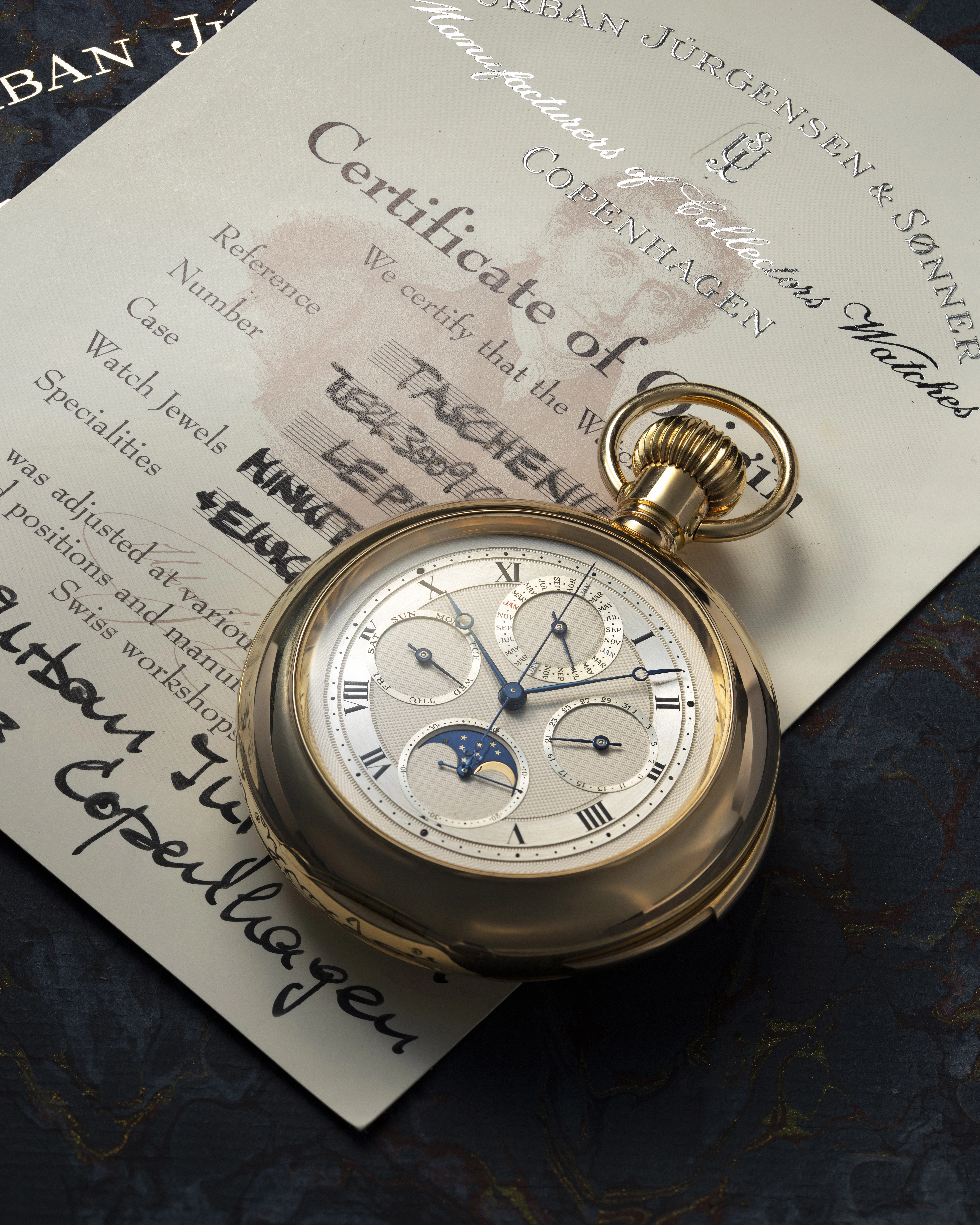
We suspect that the present Urban Jürgensen No. 3009/3001, whose authenticity is confirmed by a Certificate of Origin issued by Urban Jürgensen, may be one of the pieces presented in 1979 by Peter Baumberger to the brand’s then-owner. Even if it is not, this in no way detracts from No. 3009/3001’s undeniably appealing status as an important early watch in the 3000 series, which marked the beginning of the brand’s revival in the late 1970s and early 1980s.
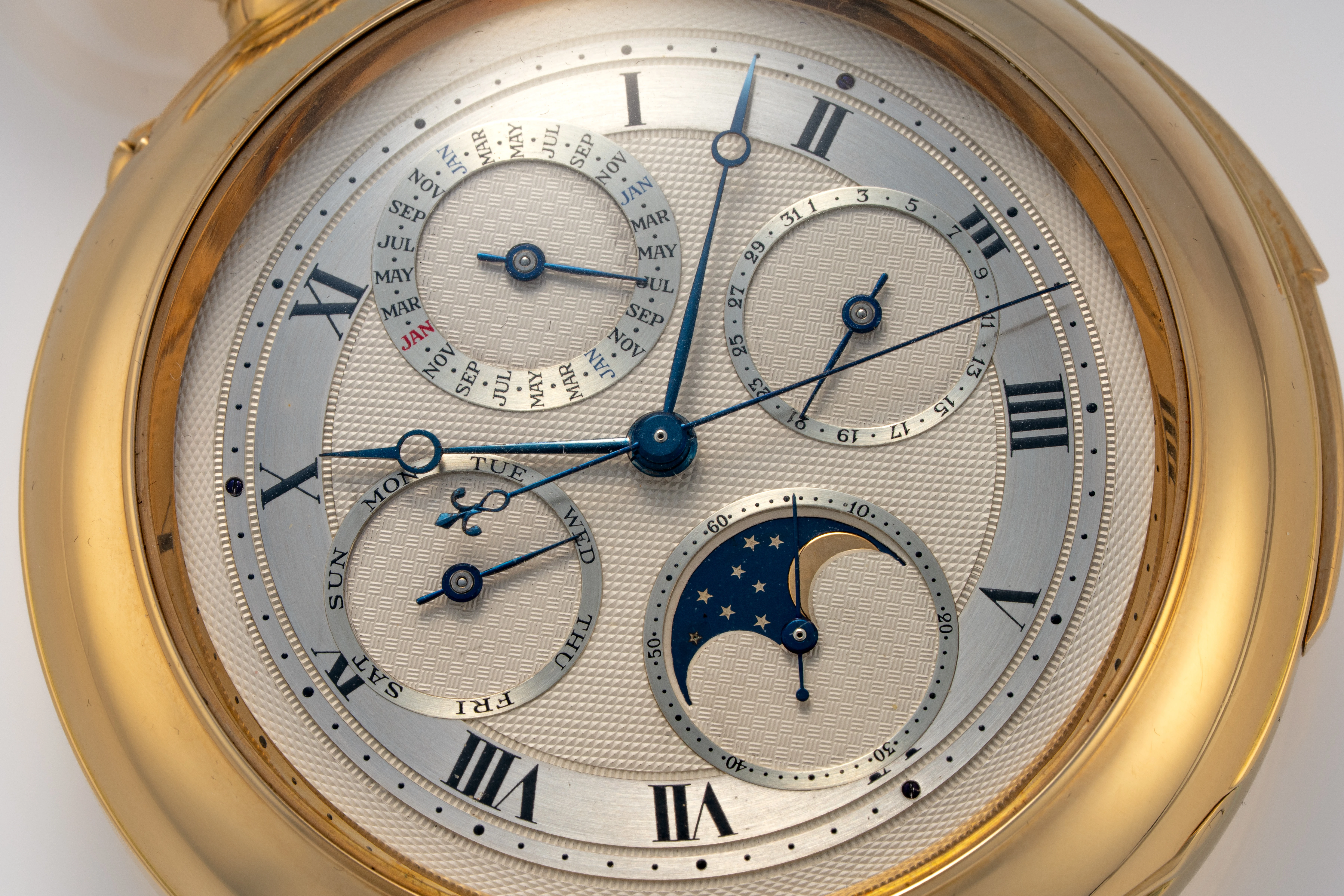
This watch is extremely rare in the 3000 series, as it features a rare, and possibly unique, combination of complications: a minute repeater, a perpetual calendar, and a chronograph without a minute counter. The only known example similar in functionality is watch No. 3013 (dated circa 1900 by Phillips), which is additionally equipped with a minute counter. It also differs from No. 3009/3001 in that it features day-of-the-week and date counters in apertures, a feature typical of later 3000 series pieces.
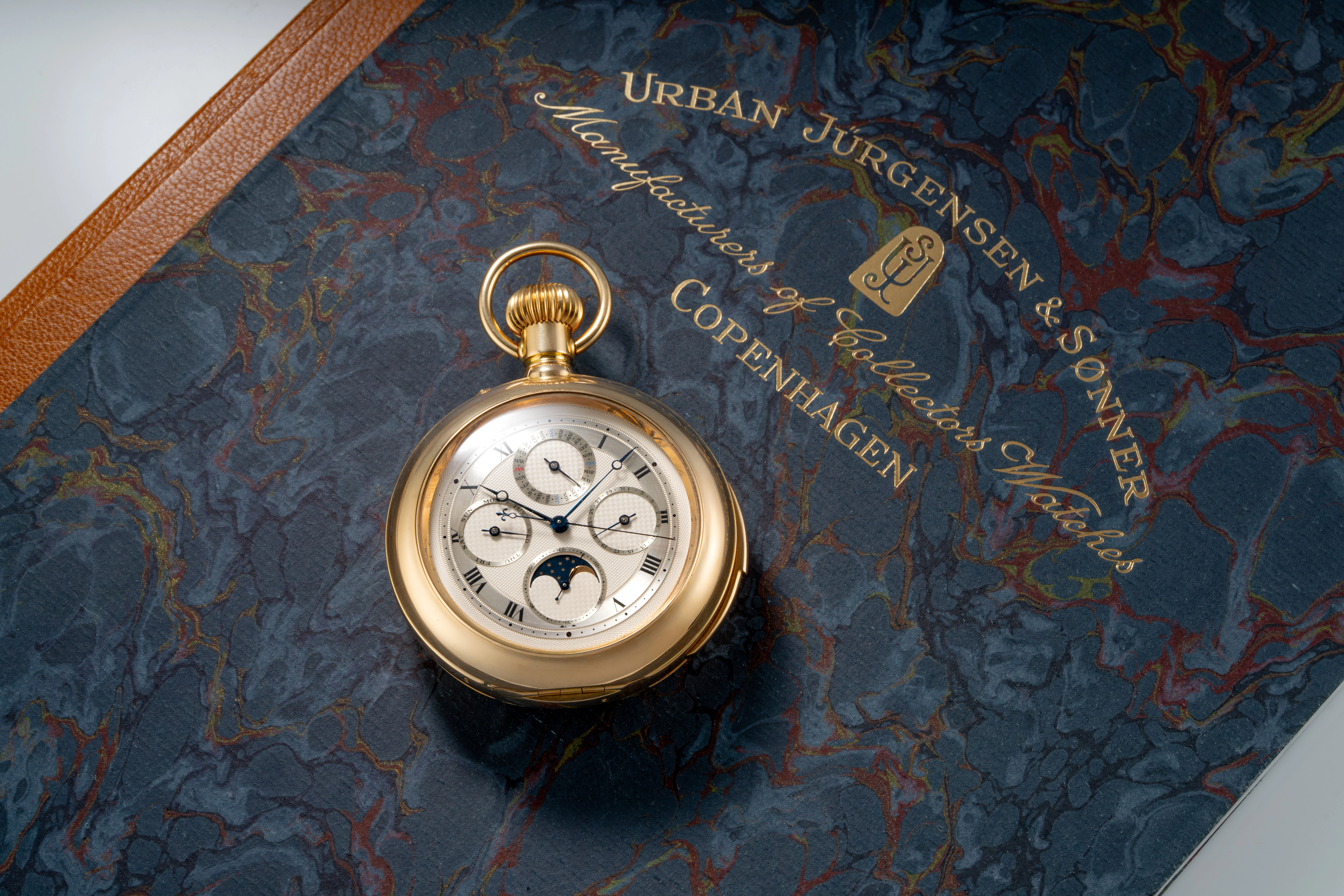
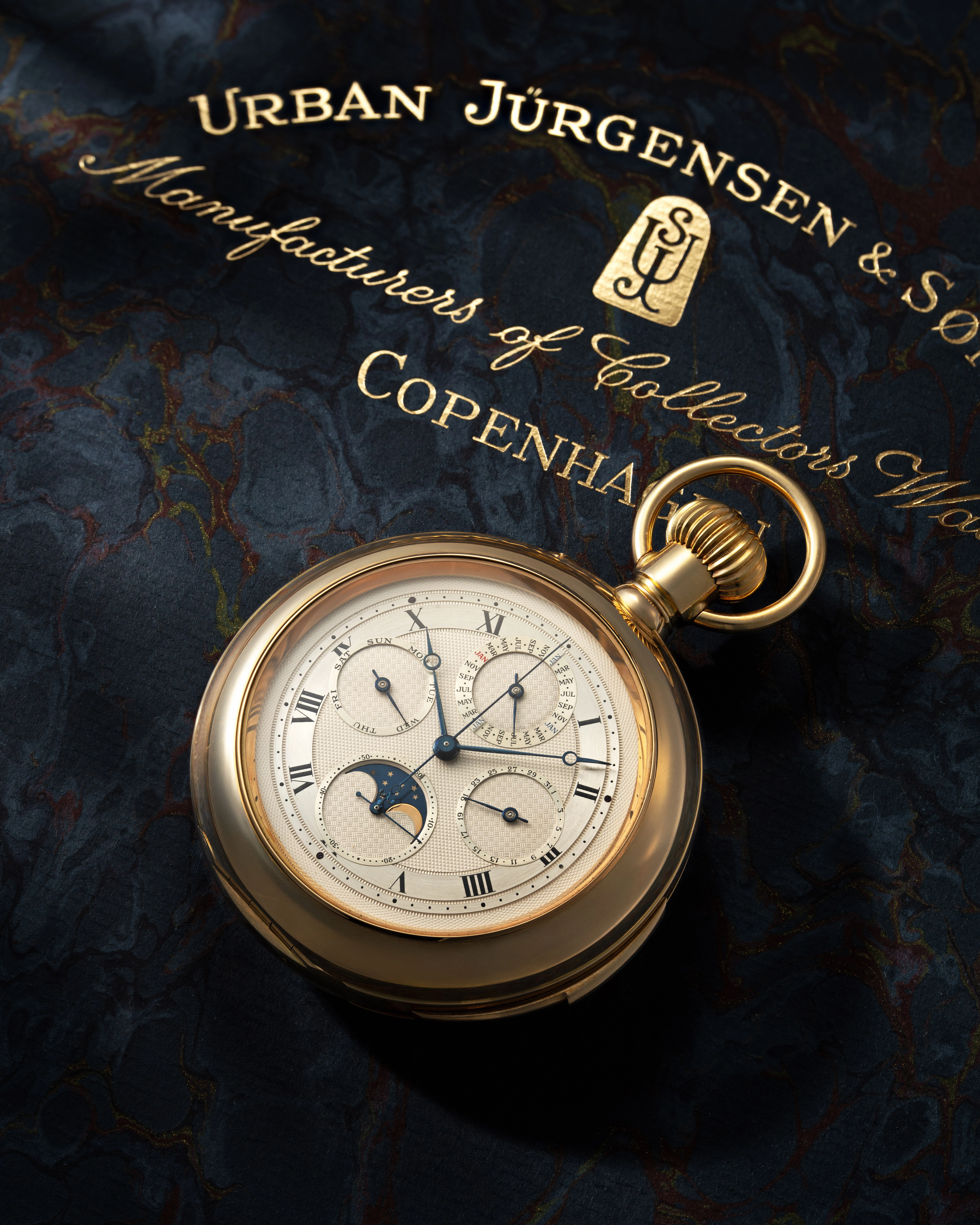
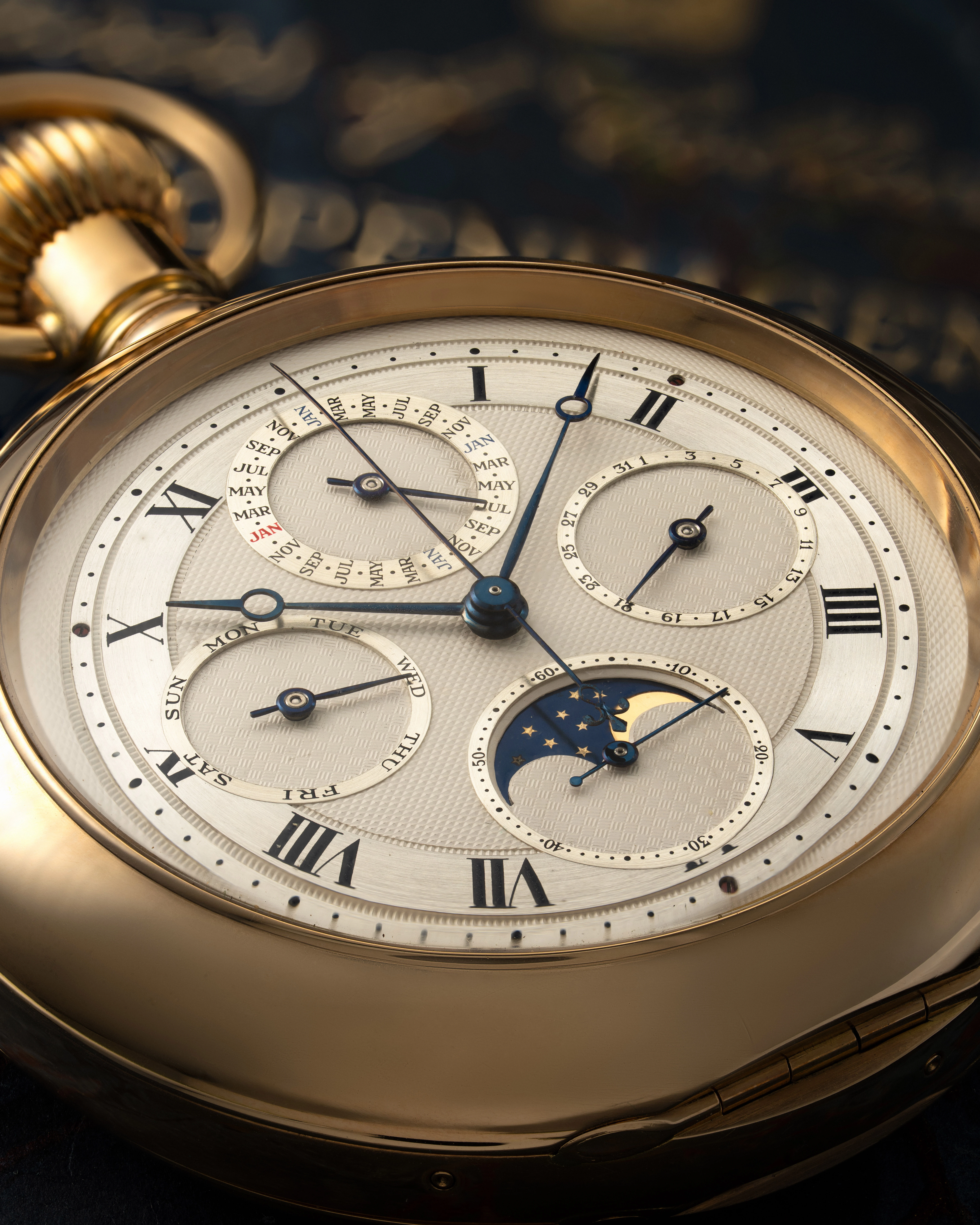
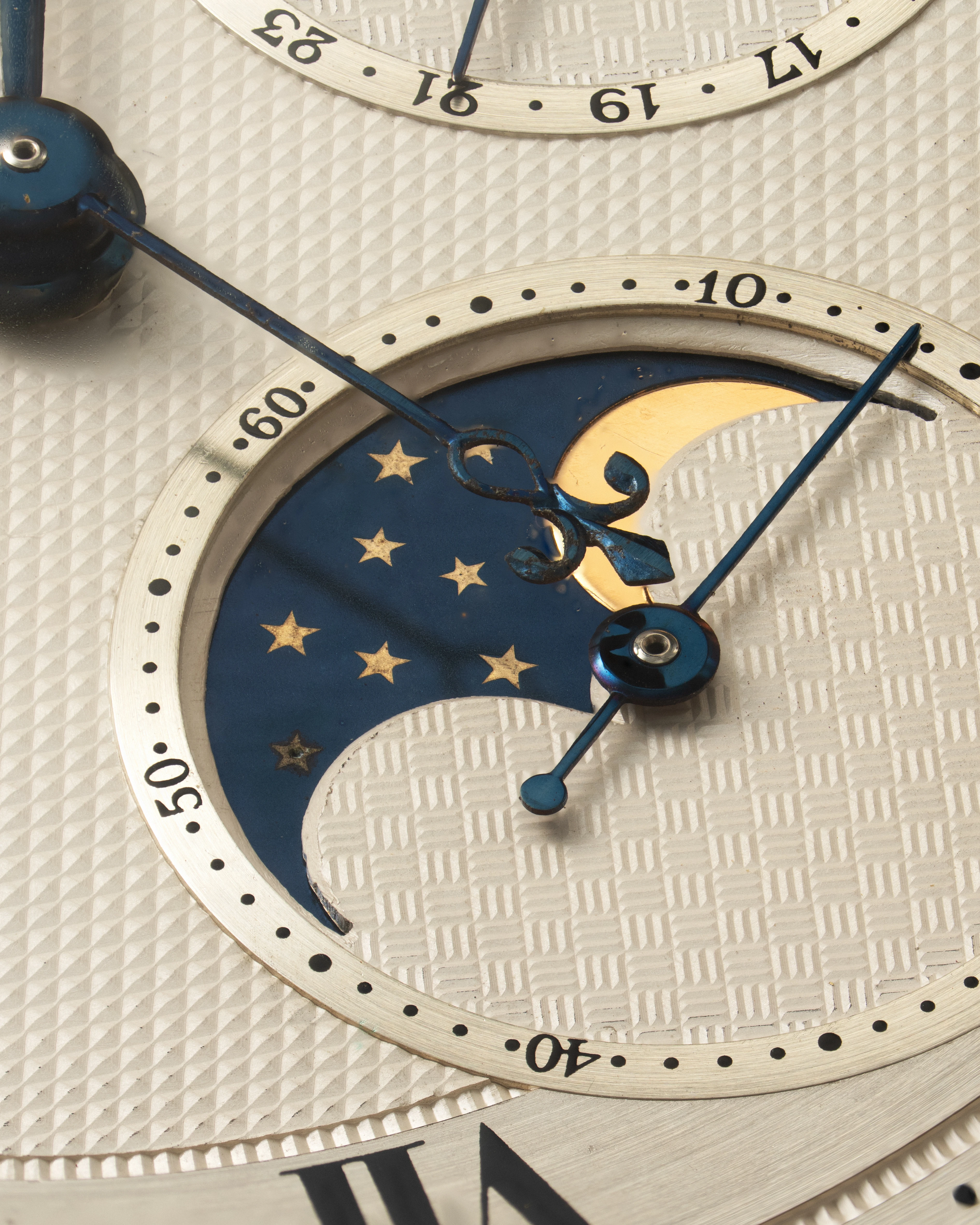
No. 3009/3001 retains the traditional dial layout, with four counters oriented to the cardinal points. This classic design is enhanced by meticulous guilloché work combining three patterns: the lozenge of the main dial, the vieux panier of the counters, and the cremaillère outlines. We assume the guilloché dial was executed personally by Derek Pratt, since in the early days of the revived brand his primary responsibilities included producing and finishing the movement, dial, and hands. Pratt was a recognized expert in all these processes, from design through final finishing. Features that caught our attention include the blued steel hands, forming a set typical of Derek Pratt’s complicated pocket watches and considered perfect in both shape and length, and the month counter markings, with January in leap years marked in red and January in blue for other years – a marking confidently identified, for example, on the Urban Jürgensen by Derek Pratt Nos. 3013 and 3021.
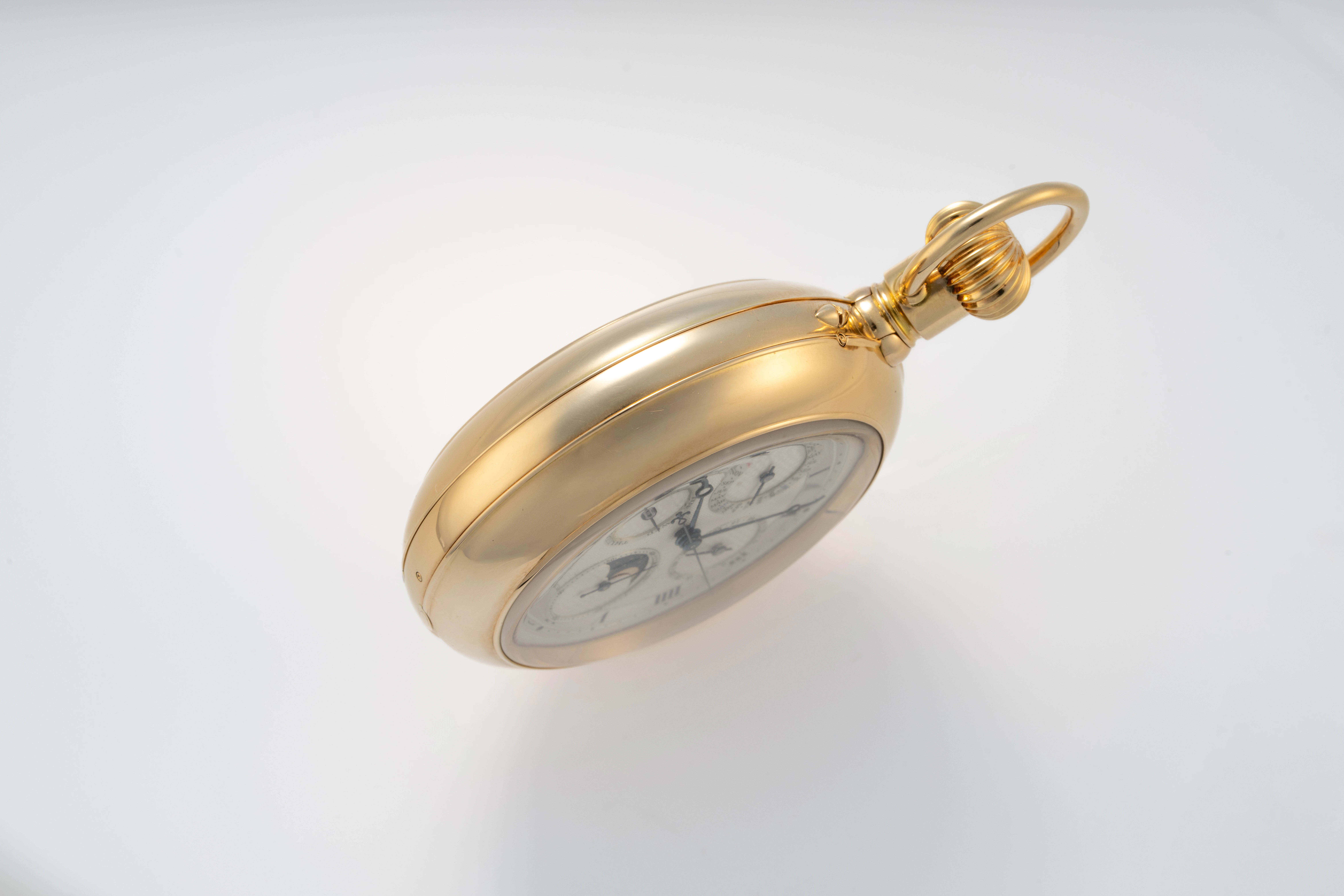
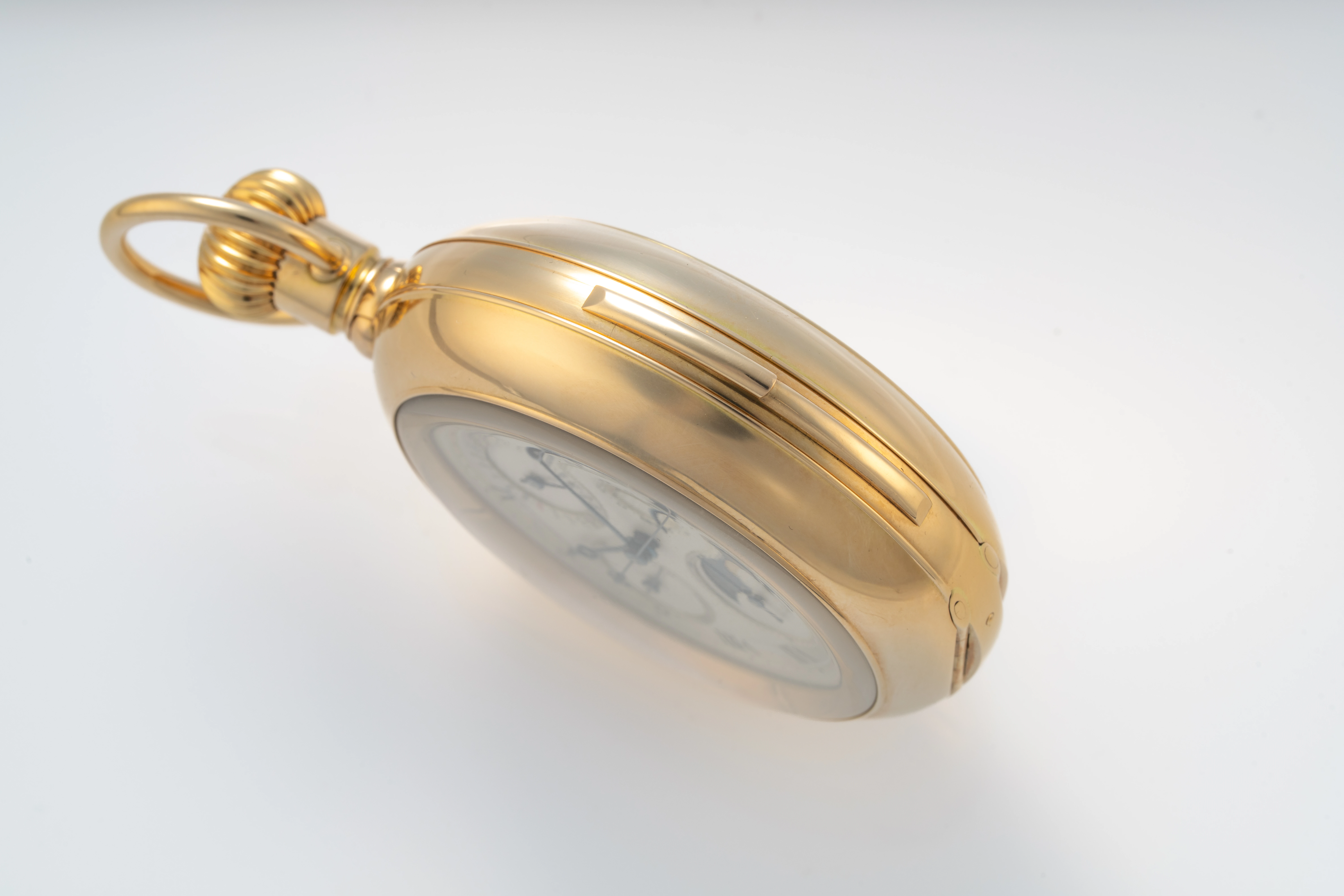
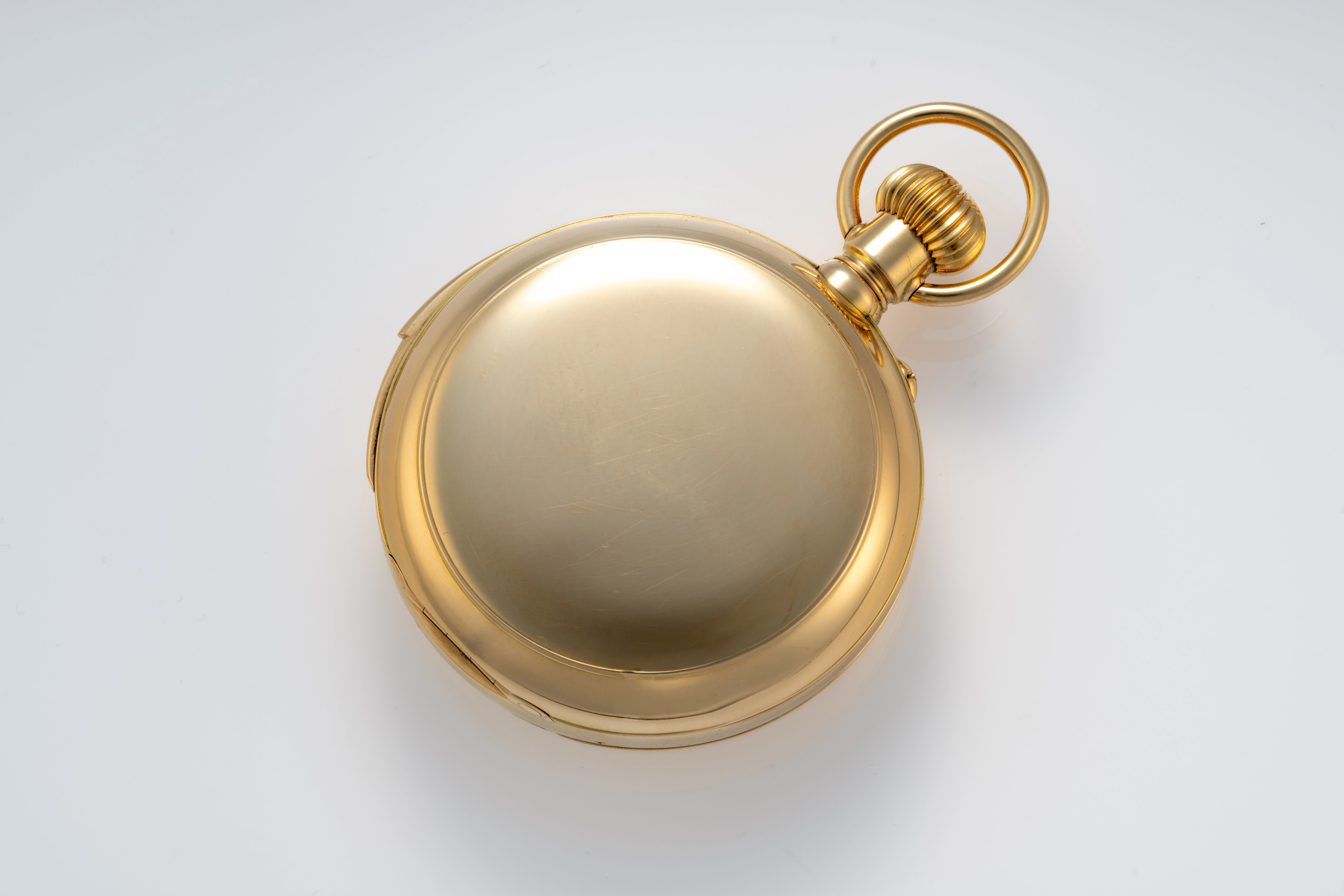
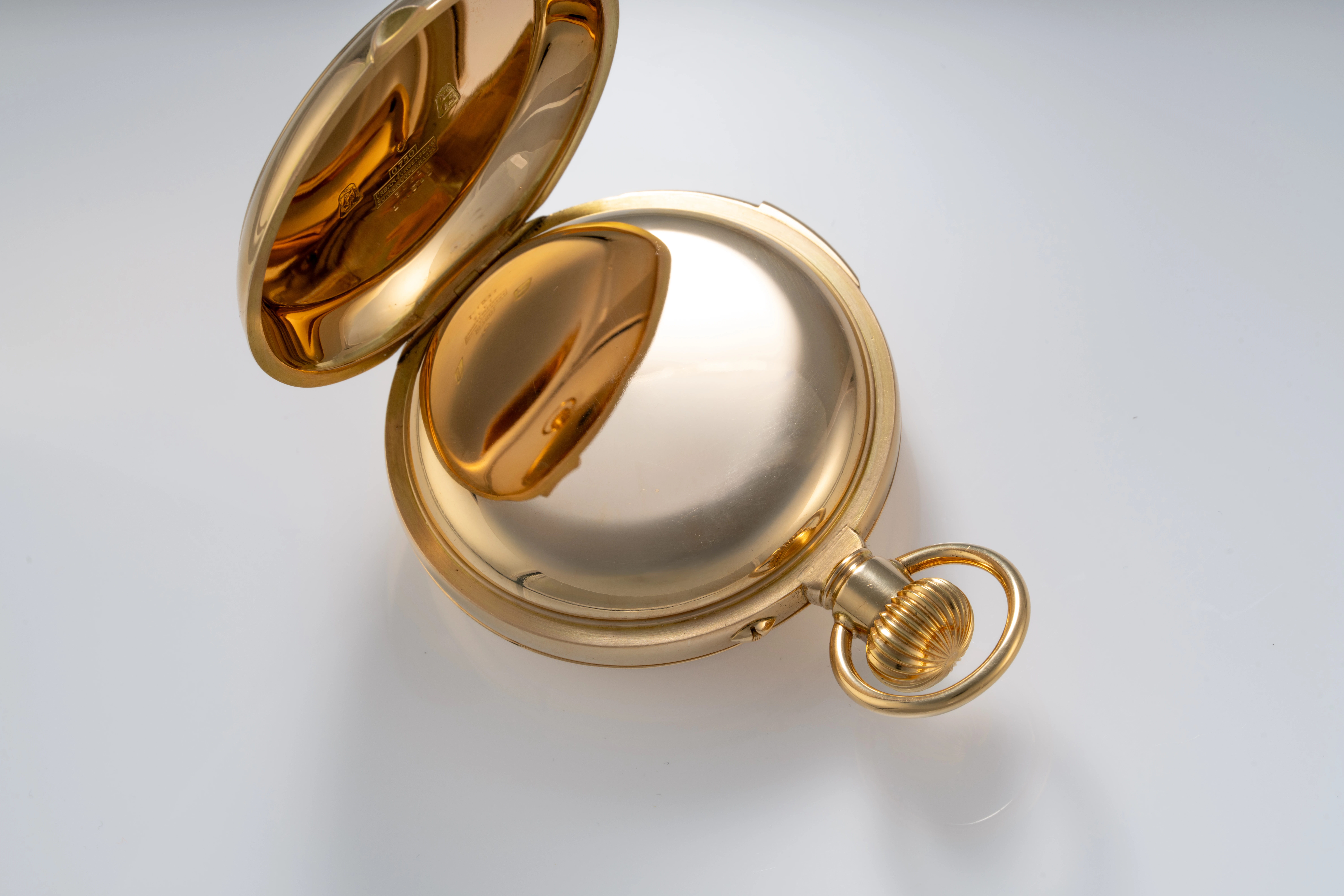
Another key feature of No. 3009/3001 is the harmonious combination of the guilloché dial and the gold case, crafted in a pebble-like style and defined by the soft, rounded profile of the caseband and its two covers – without sharp edges or overly simple cylindrical or conical surfaces – making it a work of art in its own right. The perfectly rounded case profile gives the timepiece the uniquely emotional appeal of a classic pocket watch at its best. In our opinion, No. 3009/3001 is one of those rare examples where a relatively thick, complex movement not only does not hinder the creation of an extremely attractive design, but actually enhances it.
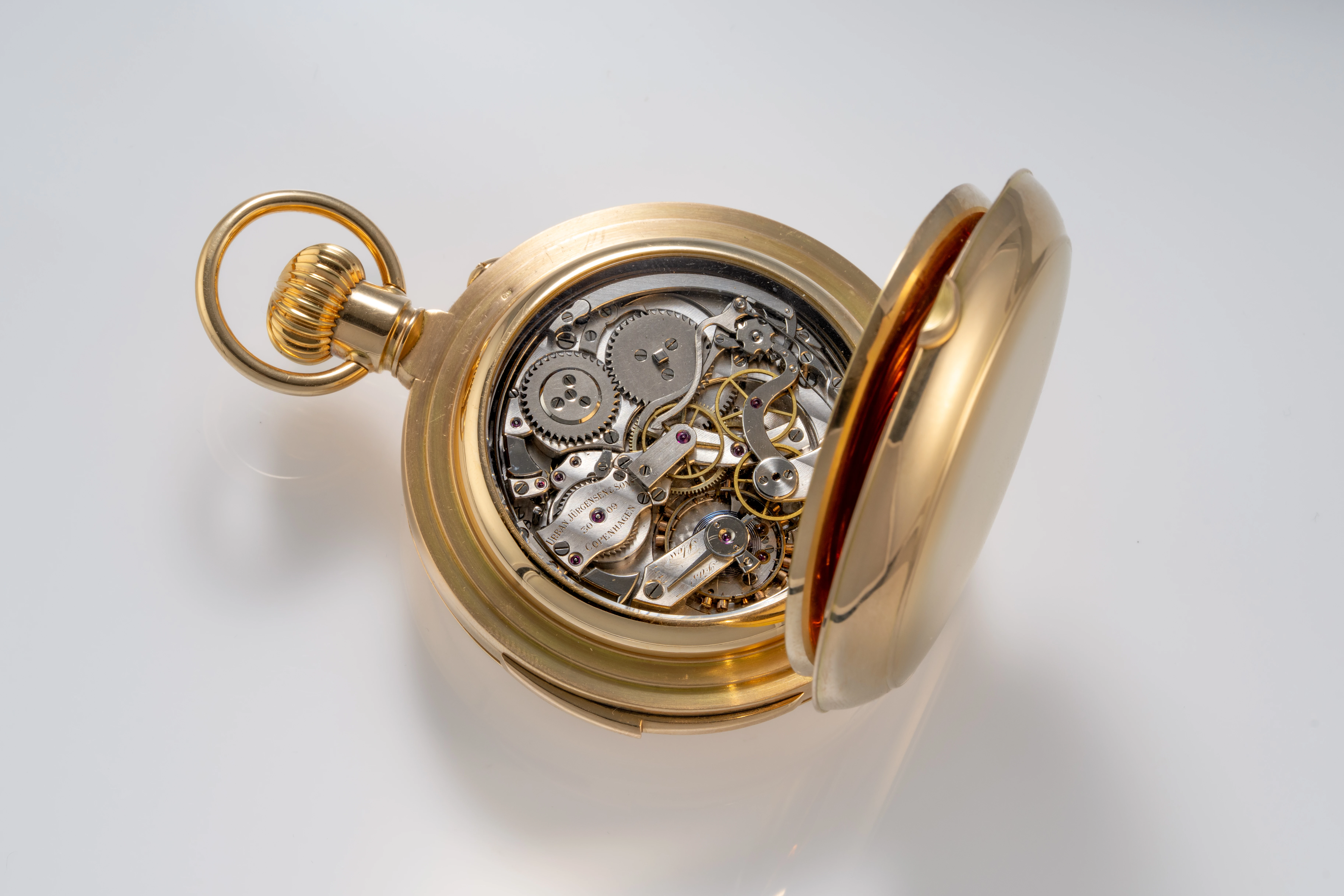
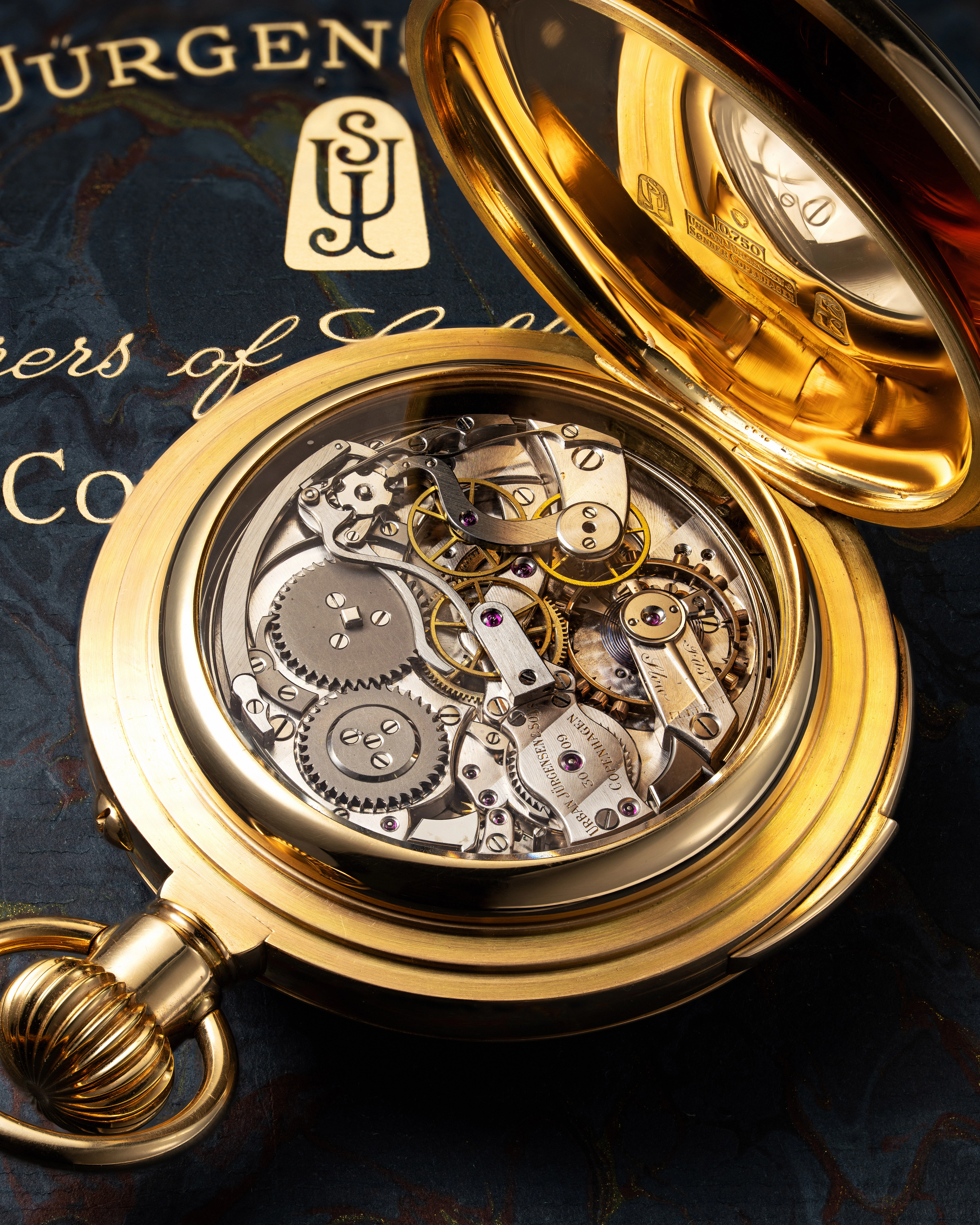
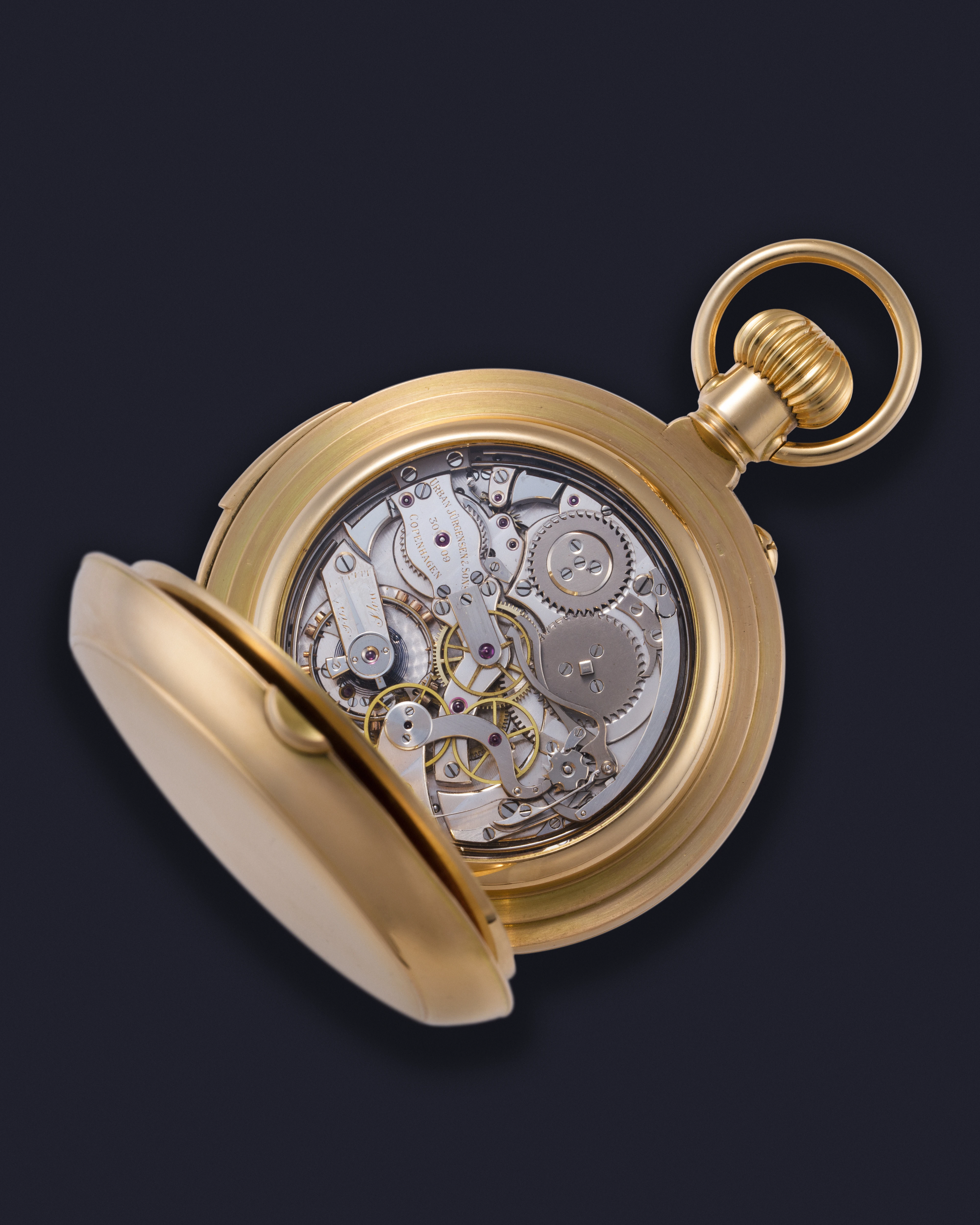
Finally, movement No. 3009/3001 deserves special mention. Technically, this combination of complications, including a minute repeater, perpetual calendar, and chronograph, is designated a Triple Complication, a classic example of the genre of complicated Swiss watches from the late 19th and early 20th centuries. Details such as jeweling to the center, an intermediate wheel jewel on the chronograph lever, wolf teeth on the winding wheels, and a balance spring with a Breguet terminal curve attest to the high-quality execution. Every component in this masterpiece, from the bridges to the screws, demands a great deal of attention and manual labor, including adjusted tolerances, polishing, brushing, applying Côtes de Genève and anglage on the bridges, flat-polishing some steel parts, engraving inscriptions, and more. We don’t have detailed information about the condition of the movement or the ébauche when it arrived in Pratt’s hands or about the specific improvements he had to make, but the result is exactly what you’d expect from a high-quality, collector-grade pocket watch in every respect.
To the best of our knowledge, Derek Pratt made about 16 perpetual calendar pocket watches with various added functions between 1978 and 2000. Our research shows that the present example is the only known timepiece featuring a minute repeater, a perpetual calendar, and a chronograph without a minute counter, and that this pocket watch has never been offered at auction before and is, moreover, the first example of this model to appear in public to date.

ADDITIONAL PHOTOS: