F.P. Journe

Don't hesitate to ask for any additional information, Alex is ready to assist and guide you in your decision
DETAILS
With the Ruthenium Collection, which was launched in 2001 and produced until 2003, François-Paul Journe ended the production of watches with movements traditionally made of brass with galvanic coatings. Instead, since 2004, almost all of the brand's new watches have been fitted with 18k rose gold movements, which are produced without plating. Naturally, movements made of solid gold seem more valuable and desirable, as movements of this type are a rarity in watchmaking. Nevertheless, collectors and connoisseurs of F. P. Journe watchmaking are showing a steadily growing demand for watches with brass movements that represent the early days of the brand. Their interest is fueled by the fact that the total number of F. P. Journe watches with brass movements is estimated at around 2,000 pieces and they are achieving ever better results at auction.
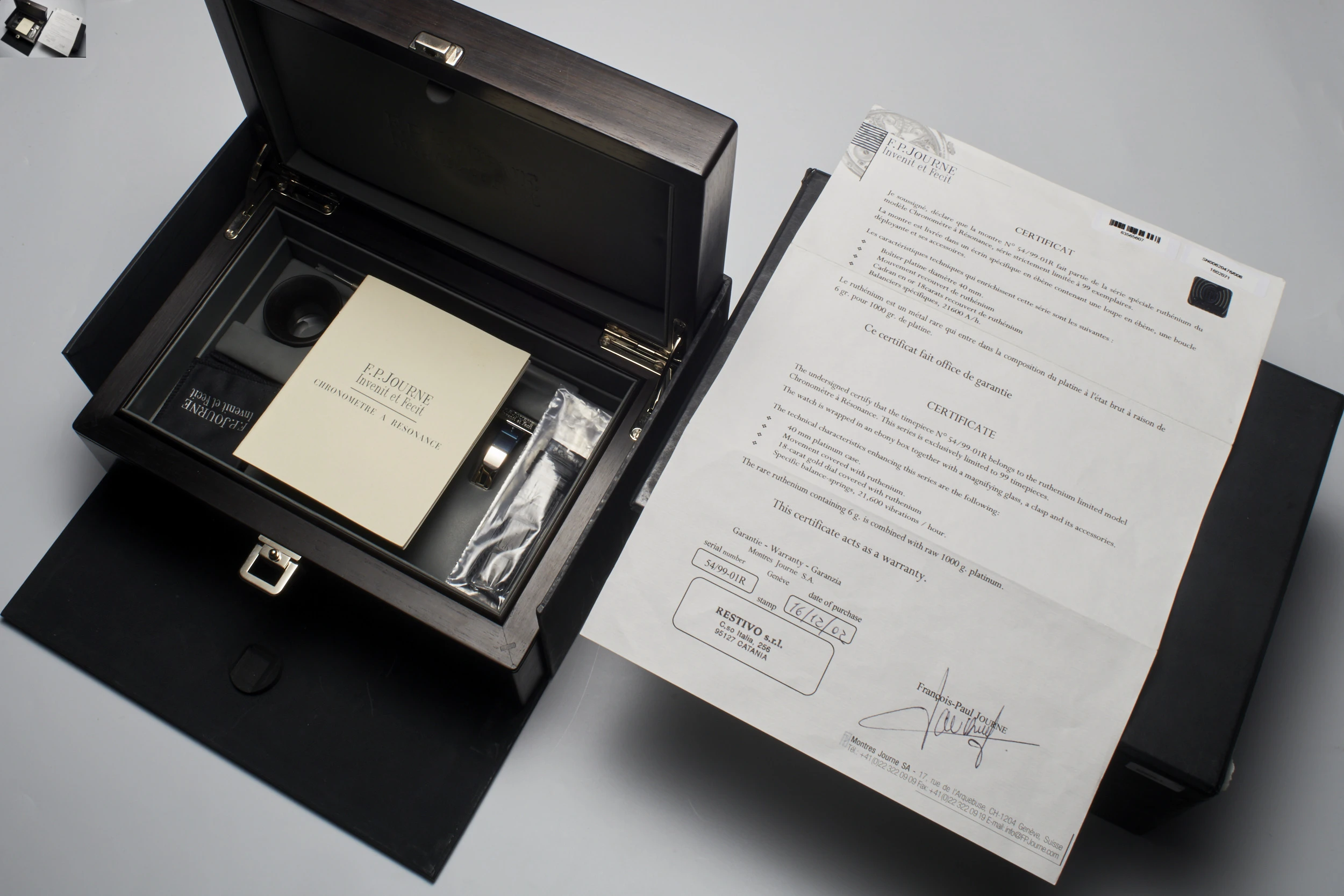
The Ruthenium Collection was the first limited edition collection by F. P. Journe and consists of five platinum models: Tourbillon Souverain, Chronomètre à Résonance, Octa Chronographe, Octa Jour et Nuit and Octa Calendrier, each limited to 99 pieces and numbered. Both the gold dial and the brass movement are coated with ruthenium, hence the name of the collection. In addition, for the first time, F. P. Journe has used a 40 mm case for the watches in the collection, which is larger than the 38 mm case that the brand has produced since its inception.
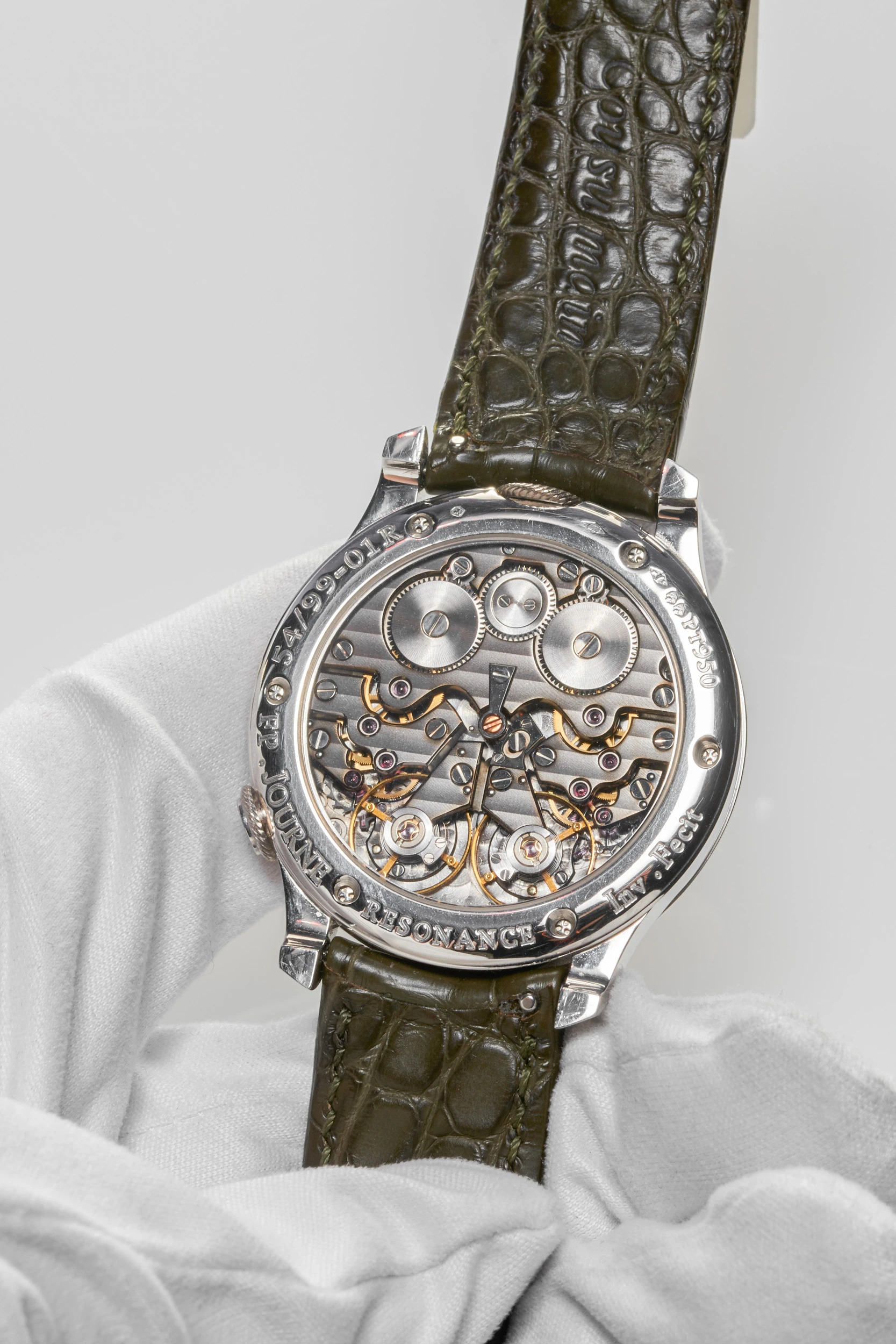
François-Paul Journe is one of the few watchmakers to have developed a wristwatch with a twin movement and a resonance effect. Resonance is a physical phenomenon of interaction between two independent systems, characterized by oscillations at frequencies close to each other. In the case of strong resonance, both systems begin to operate at the same frequency, i.e. in relation to watch movements, the two movements connected by the resonance effect begin to vibrate synchronously. Mechanical resonance in clocks was discovered in the 17th century by the famous Dutch scientist Christian Huygens, then the French clockmaker Antide Janvier was able to apply this phenomenon for the first time in a pendulum clock in 1780, and Abraham-Louis Breguet implemented it in a pocket watch in 1814. François-Paul Journe began experimenting with resonance in his early pocket watch in 1983, but success in applying this physical phenomenon to watchmaking did not come until later, when he developed the Chronomètre à Résonance wristwatch in the late 1990s. Its resonance caliber uses the aerodynamic interaction of the balances of the twin movement. Only this brand currently offers resonance wristwatches that are produced in series.
REASONS TO BUY
This Chronomètre à Résonance appears to be an extremely attractive opportunity to acquire a beautiful, rare and complicated watch from the historic Ruthenium Collection, a famous limited edition that was to mark the end of the use of traditional brass movements in F. P. Journe watches. The combination of the characteristic symmetrical double-dial design unique to the F. P. Journe collection and the unique resonance caliber with Arabic numerals, designed by François-Paul Journe himself, undoubtedly contributes to the appeal of this watch.
Production of the Chronomètre à Résonance began in 1999, and by 2004 between 467 and 487 pieces of this model with brass movement had been produced, including the watches in the Ruthenium Collection (according to estimates by Osama Sendi, alias The Journe Guy).
ABOUT THIS WATCH
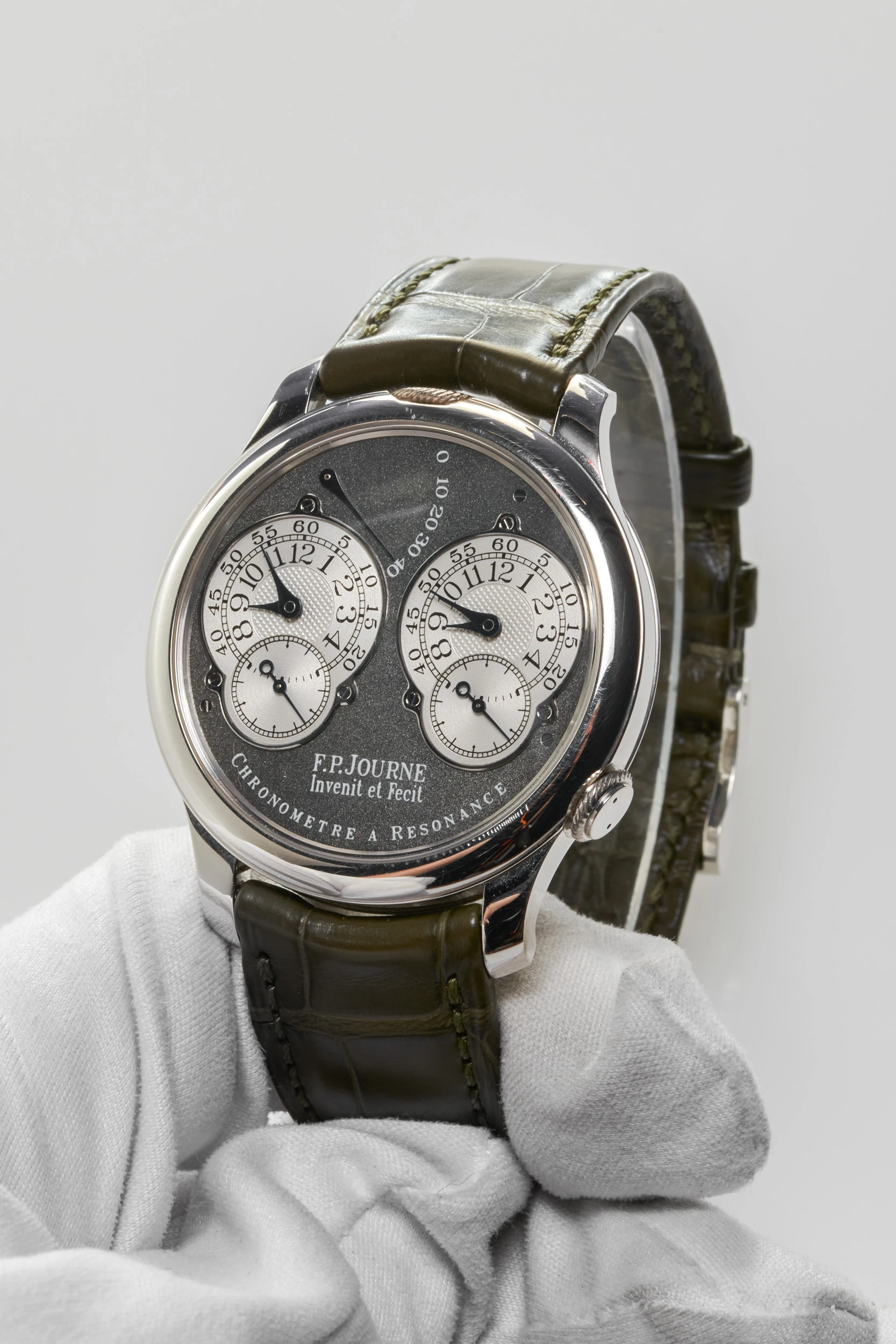
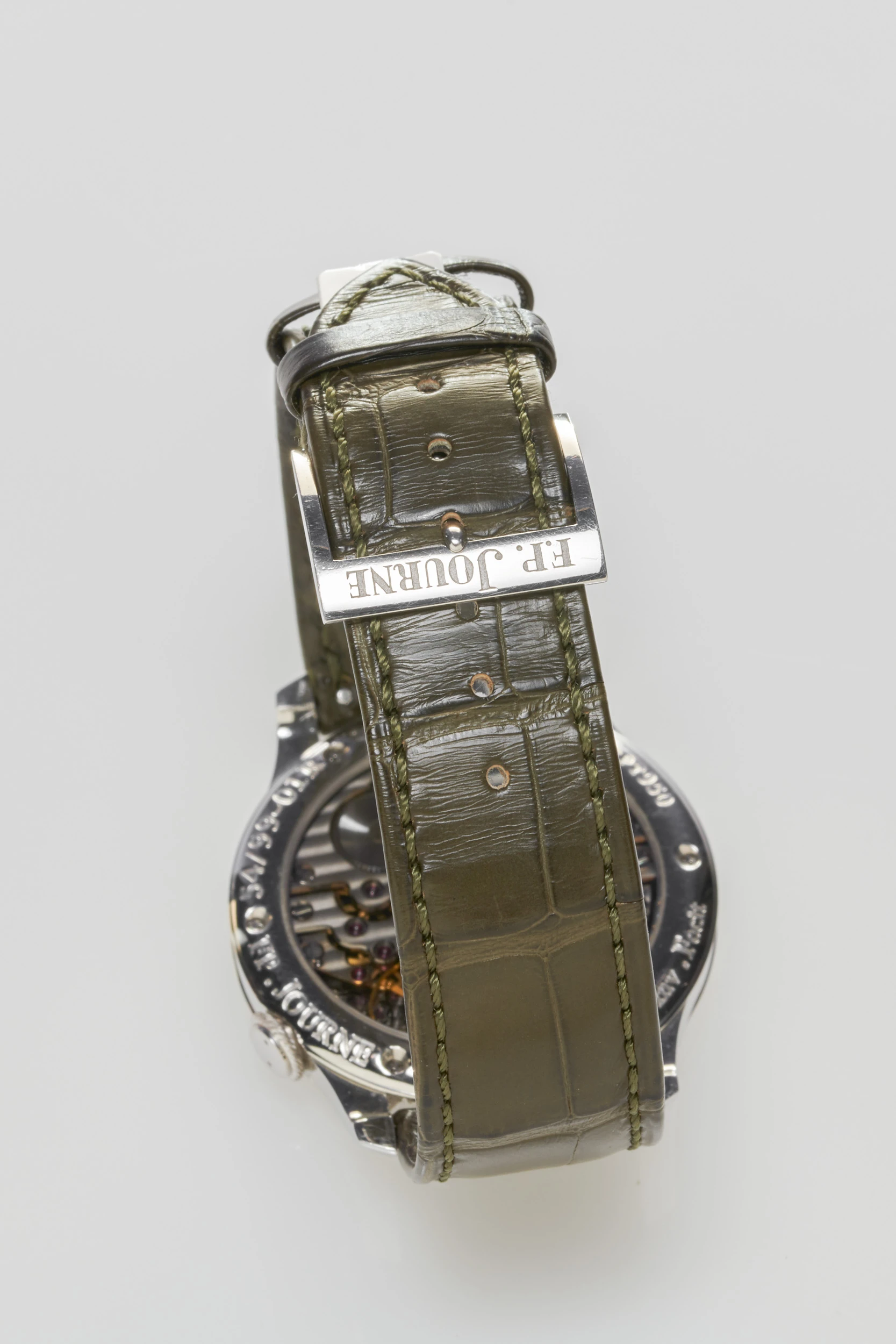
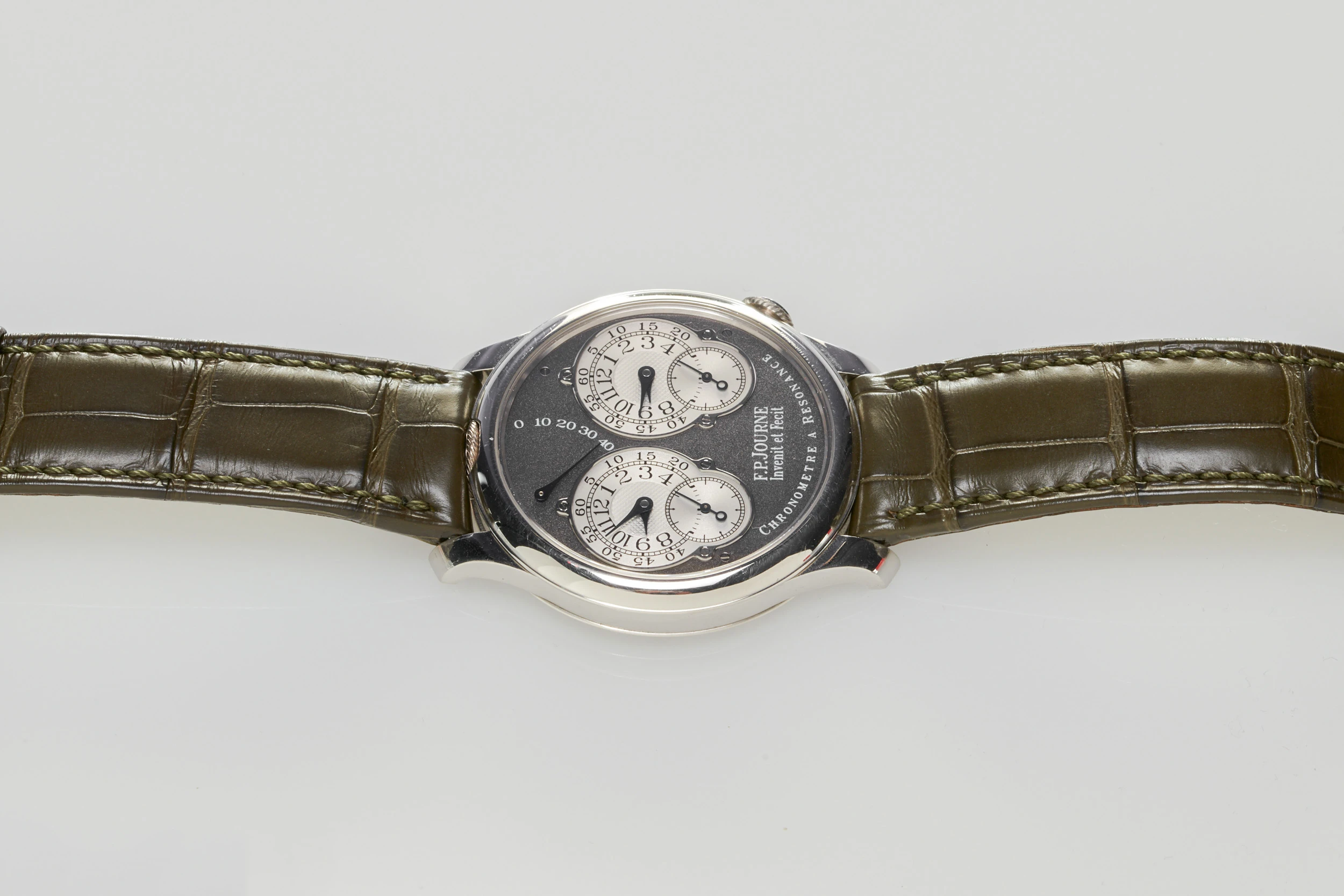
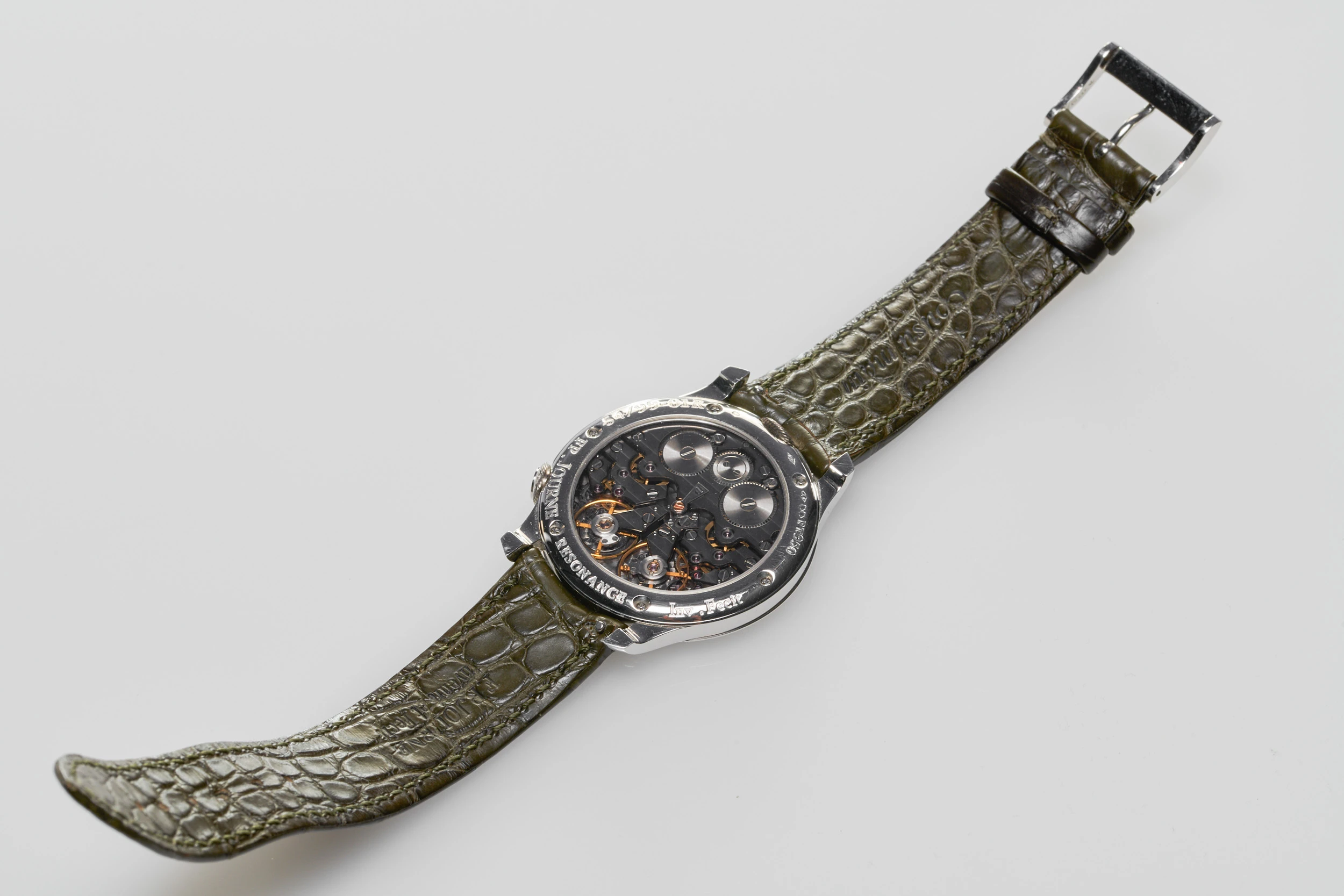
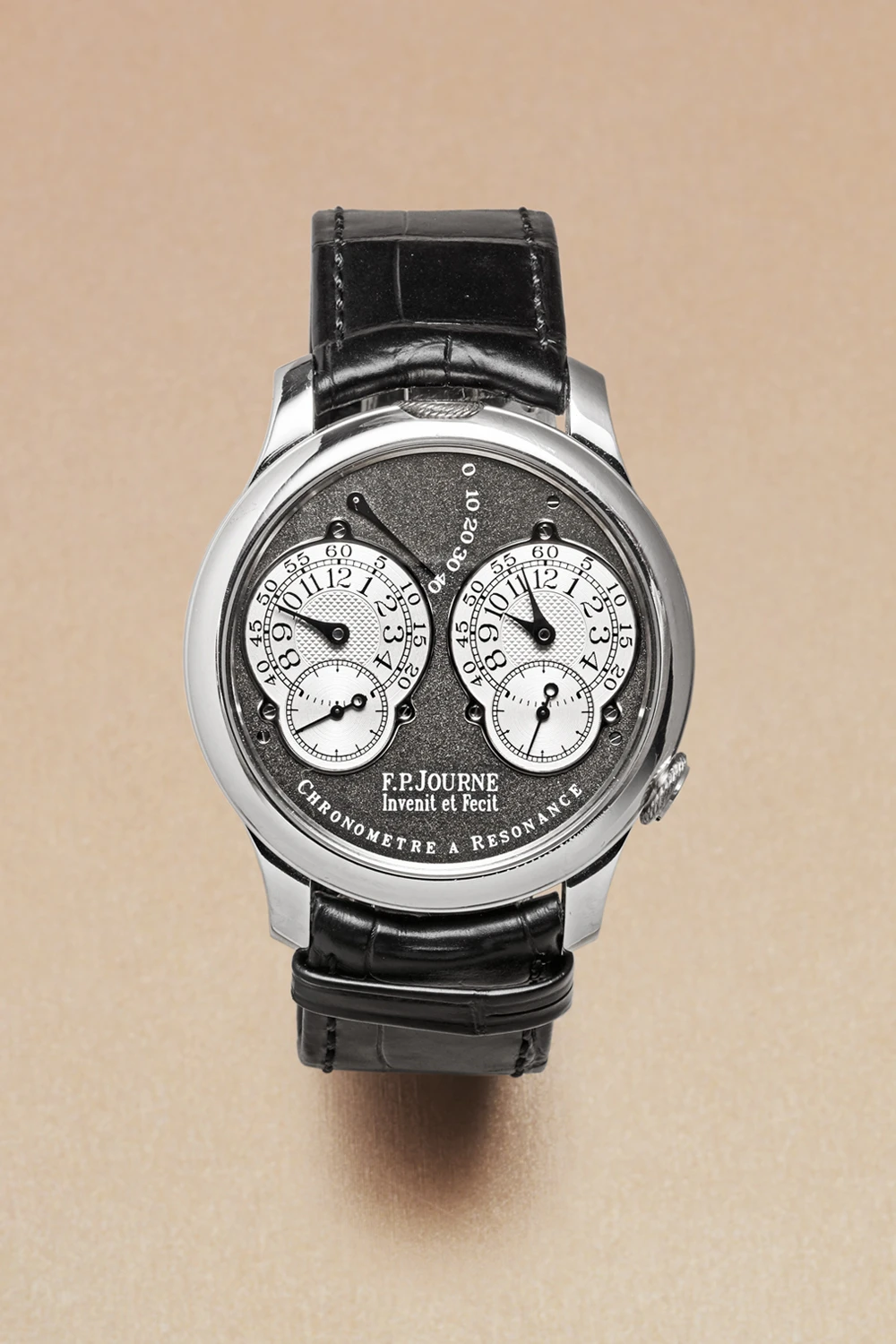
This Chronomètre à Résonance Ruthenium Collection in 950 platinum is equipped with a hand-wound caliber 1499.3 developed to exacting standards and meticulously finished in all parts, including chamfering and polishing, with a ruthenium-plated brass mainplate and bridges decorated with perlage and Côtes de Genève. Caliber 1499 and its versions are used exclusively in the Chronomètre à Résonance watches, which have been launched since 2000 in different design variants and with modifications to the display system. The Chronomètre à Résonance Ruthenium Collection uses the original layout with two symmetrical 12-hour dials produced in the same form.
Another interesting feature of this watch is the way in which the power reserve indicator is marked, in the tradition of 19th century chronometers. The hand indicates the time that has elapsed after the movement has been fully wound, i.e. when the movement is fully wound, it points to zero.
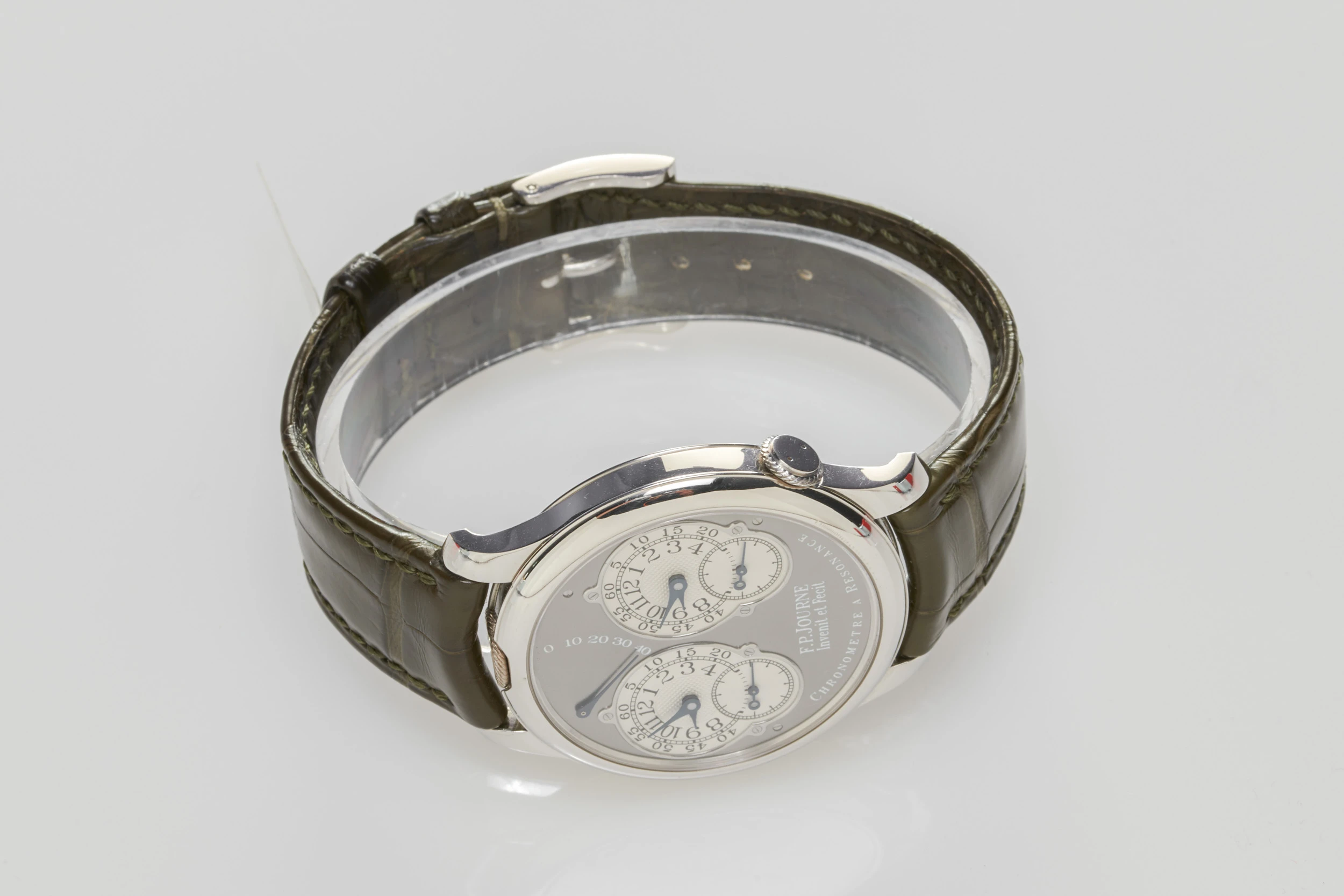
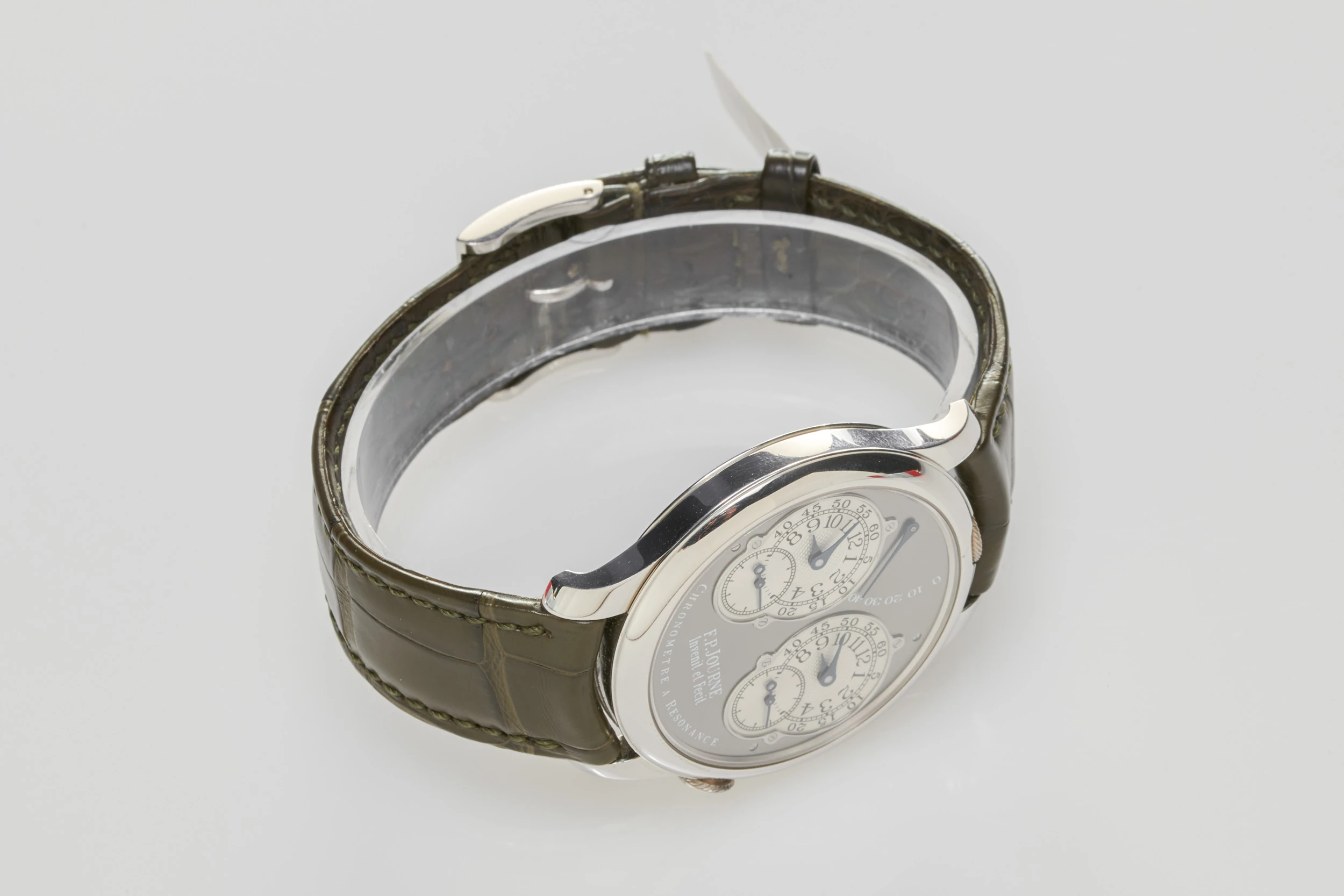
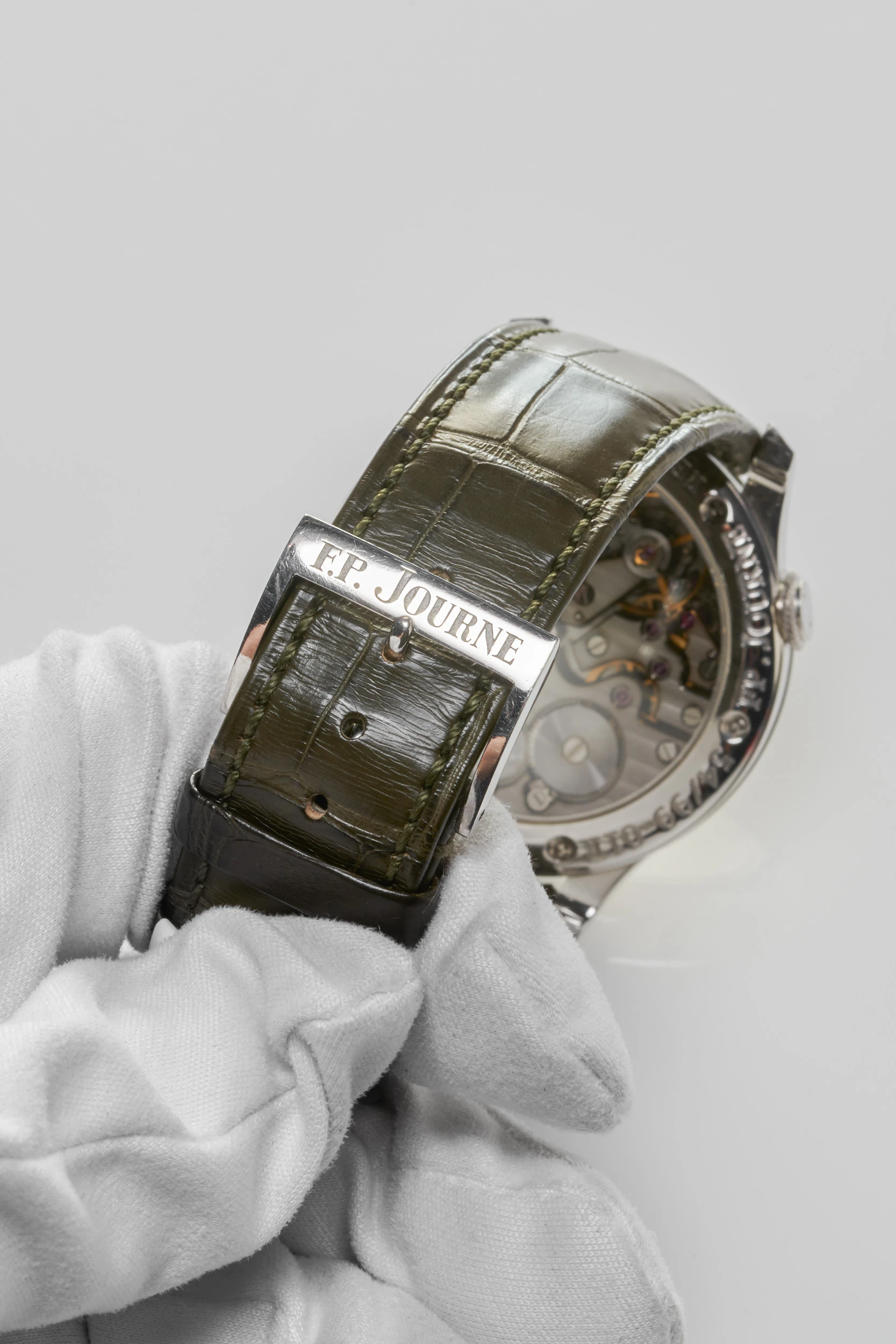
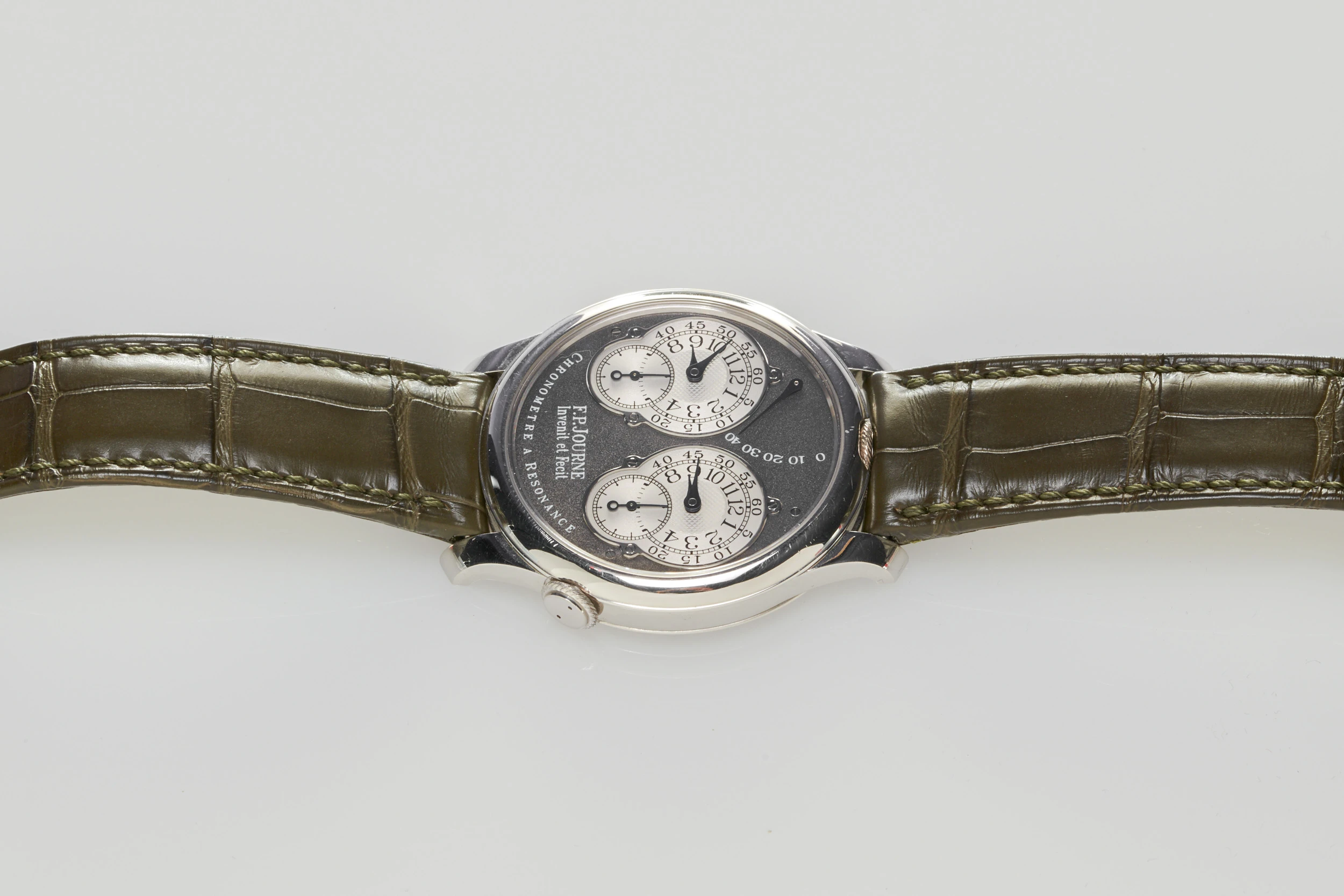
The characteristic dial of the Chronomètre à Résonance Ruthenium Collection with ruthenium finish and two applied silver sub-dials makes this watch remarkable and recognizable. The symmetrical branded dial with Arabic numerals and blued drop-shaped hands reflects the functionality of a complex mechanical movement that is highly appreciated. The elegant, slim platinum case and the F. P. Journe platinum buckle enhance the value of the watch and emphasize its aesthetics.

Specifications
Condition report
| Case: | Good, only small signs of use |
| Dial: | Very good |
| Movement: | Very good, all function working well |
| Amplitude (Dial on top/Lift angle 52): | ca. 290 degrees |
| Accuracy (Dial on top): | ca. - 5 sec / day |
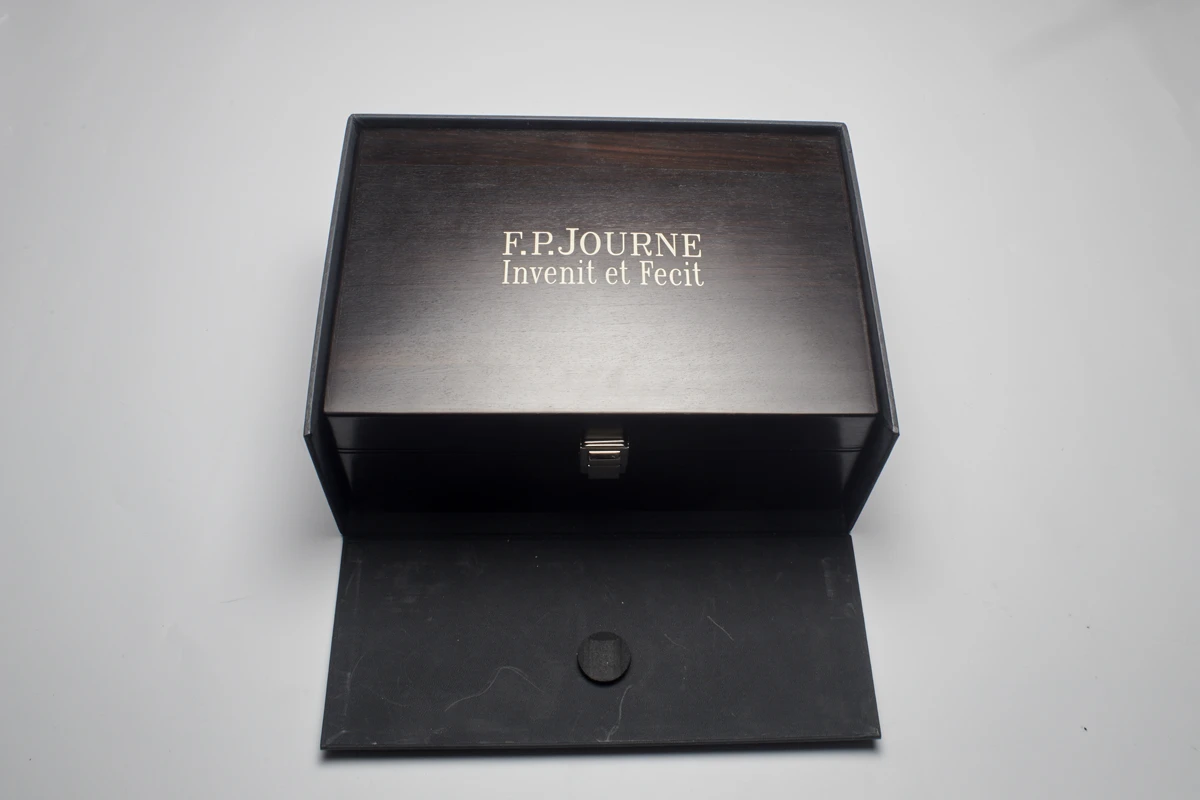
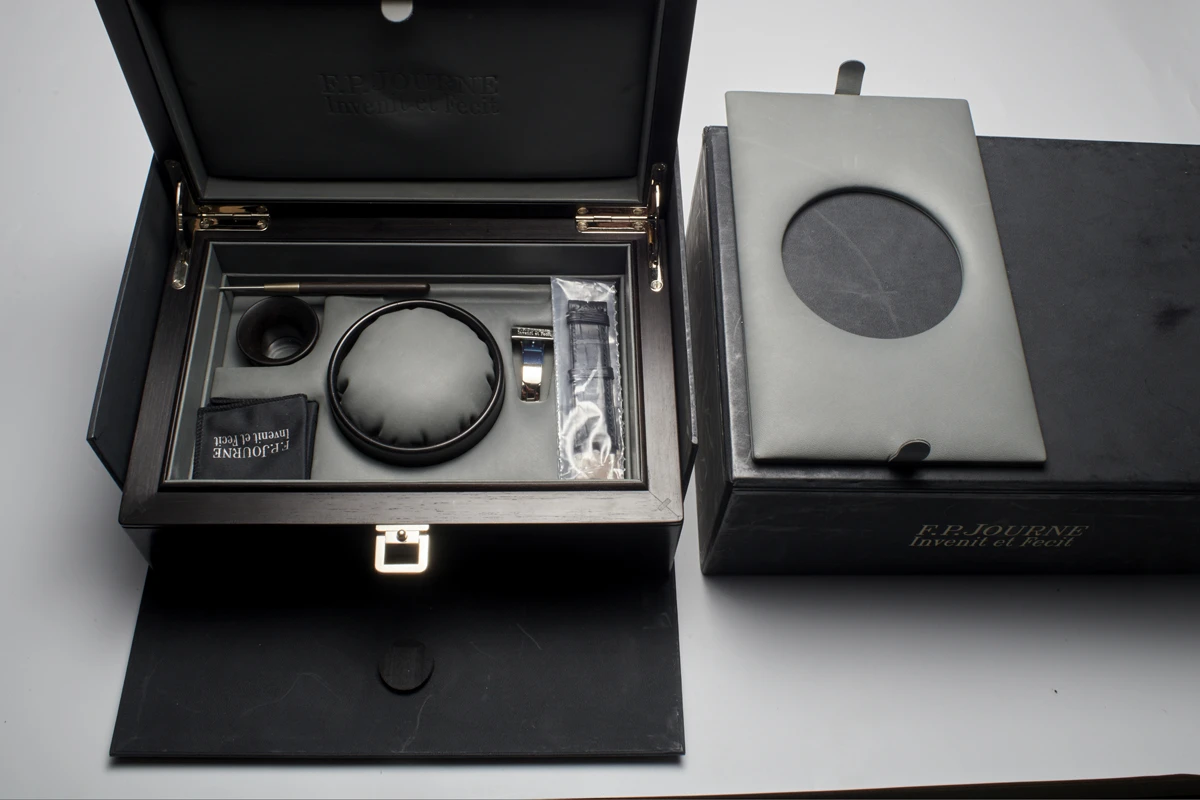
| Box: | Yes |
| Papers: | Yes |
ADDITIONAL PHOTOS: