David Candaux

Don't hesitate to ask for any additional information, Alex is ready to assist and guide you in your decision
DETAILS
David Candaux’s career follows a typical path for an independent watchmaker: he began working for a major brand, moved on to freelancing, and eventually founded his own brand. He started at Jaeger-LeCoultre, which is fitting since he was born and raised in the Vallée de Joux, known as the “valley of watchmakers”, where the brand is based and where David Candaux still creates watches today. At Jaeger-LeCoultre, he contributed to the development of complicated timepieces, including the Hybris Mechanica à Grande Sonnerie super-complication wristwatch, the most complex wristwatch in the brand’s portfolio, which made his name well known – if not to the general public, then at least to experts and connoisseurs. In recent years, however, the brand has shifted its PR activities away from its talented watchmakers, focusing instead on building its own image. David Candaux is also remembered for numerous inventions, holding 13 patents with Jaeger-LeCoultre, including the best-known so-called “trebuchet hammers”, used in the striking mechanism of the Hybris Mechanica à Grande Sonnerie and several other repeating watches from the brand – a feature it continues to use today, typically without crediting its creator.
In 2011, David Candaux left Jaeger-LeCoultre to pursue a freelance watchmaking career. His notable works include designing the extraordinary Ivresse caliber for the small brand Badollet, relaunched in 2006, technical developments for Ferdinand Berthoud and Dimier 1738, participating in the extraordinary HM6 “Space Pirate” project for MB&F. He founded his D. Candaux Le Solliat atelier in 2017 and, that same year, presented the 1740 First 8, his brand’s inaugural tourbillon watch, produced as a limited edition of eight pieces, with this watch serving as the starting point for the series. The “1740” in the name of the watch and its caliber has a historical touch, as it refers to the first year a watchmaker was officially documented in the Vallée de Joux. David Candaux has chosen this movement as the basis for developing the brand’s collection, particularly for its first regular model, later named the DC1.
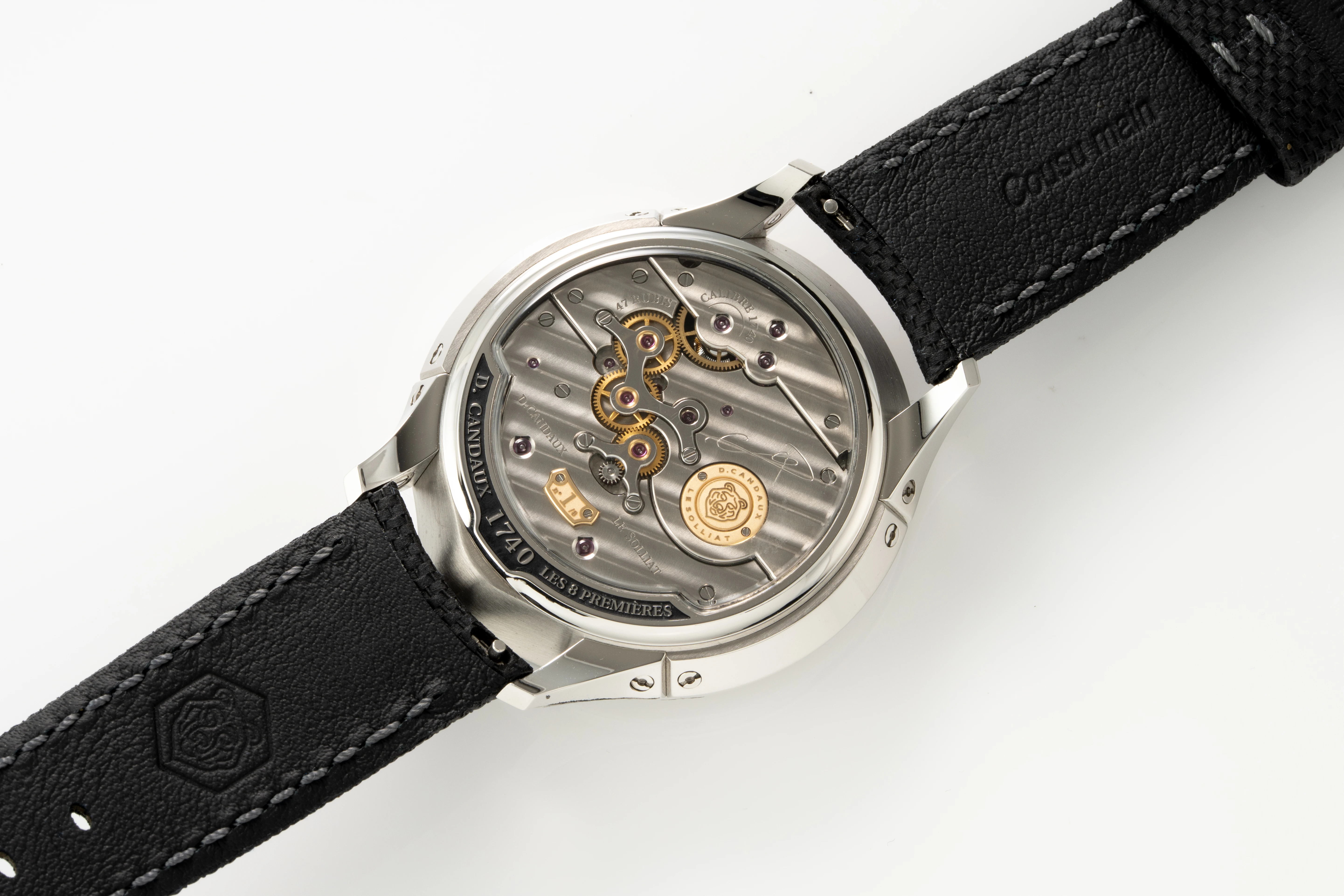
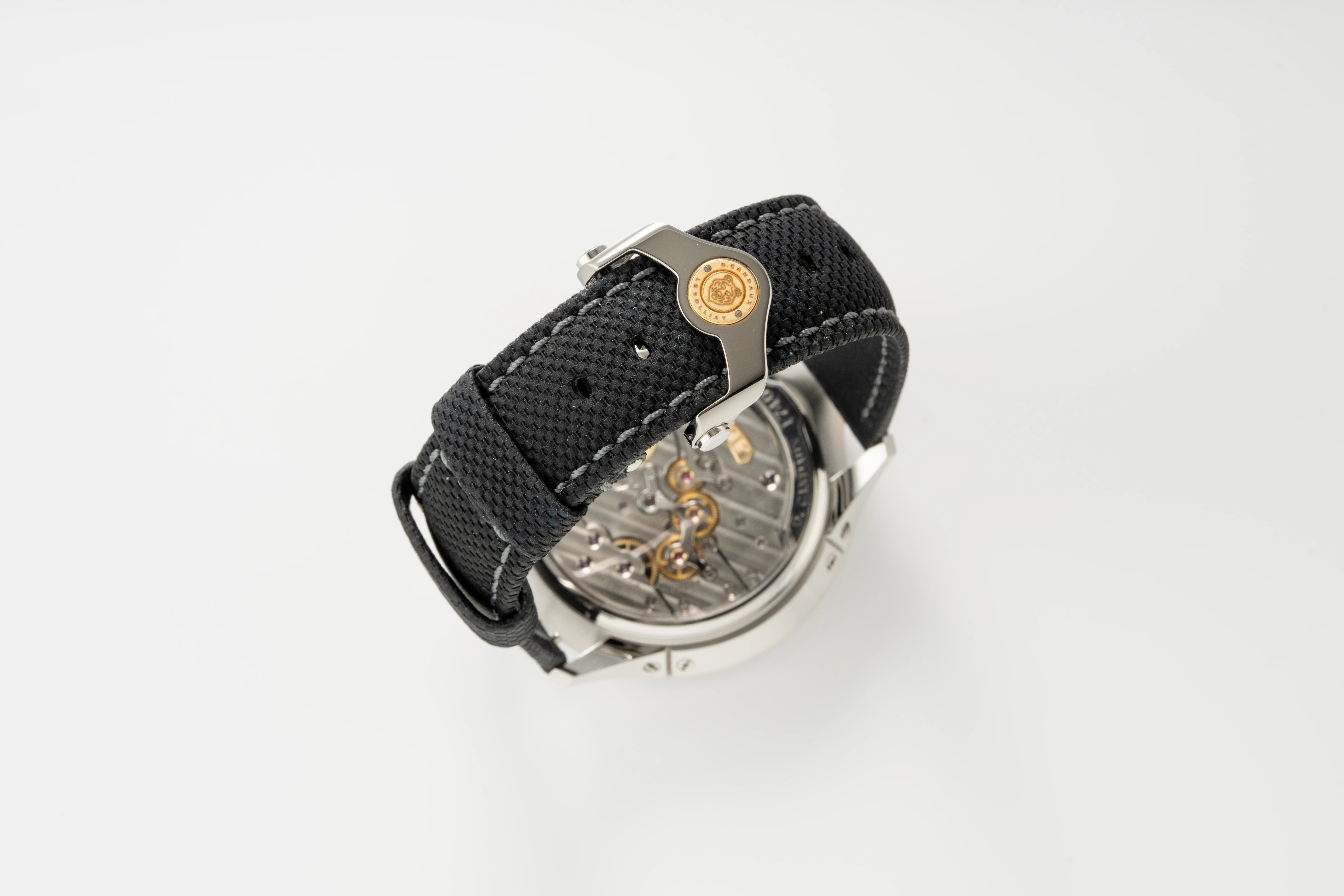
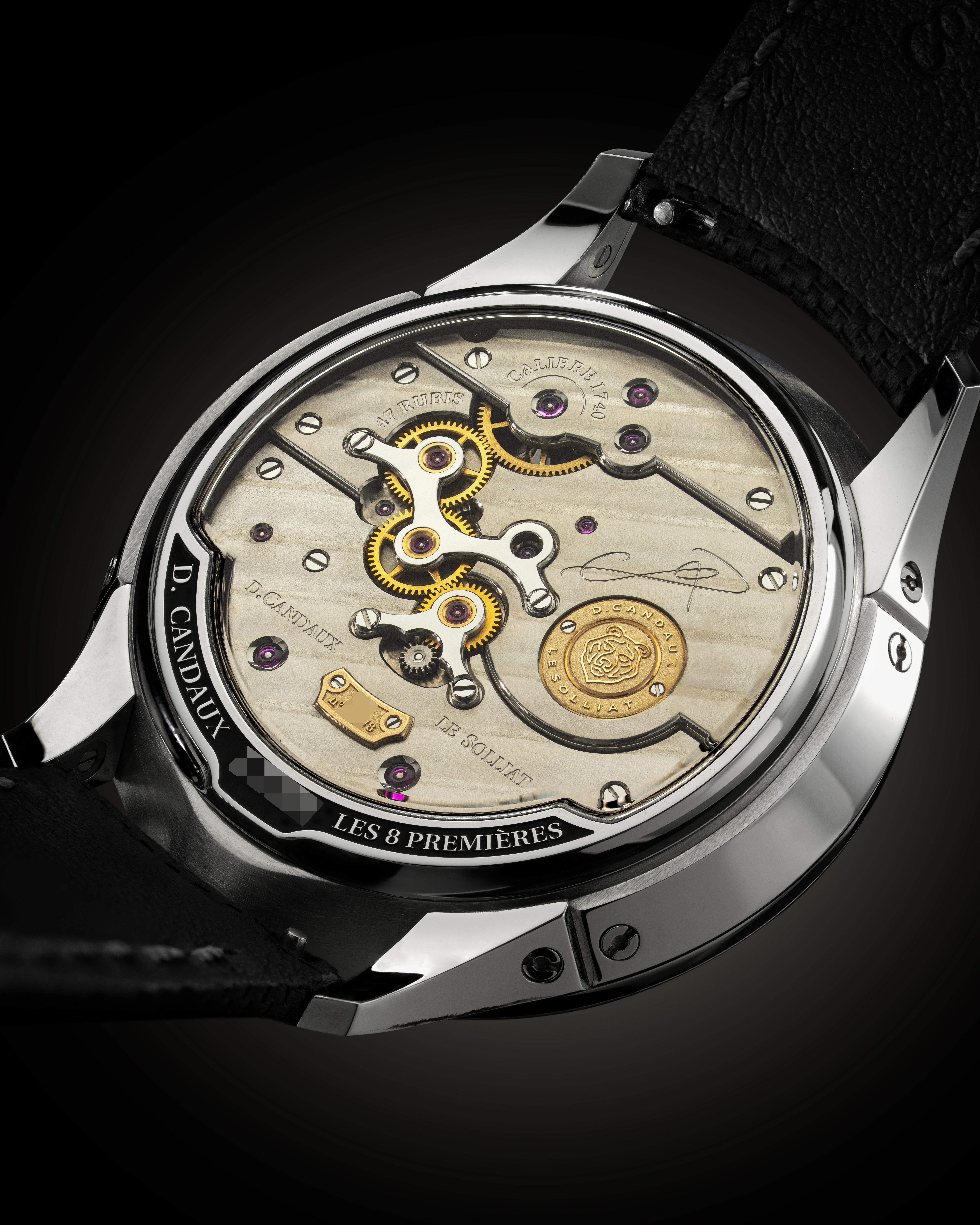
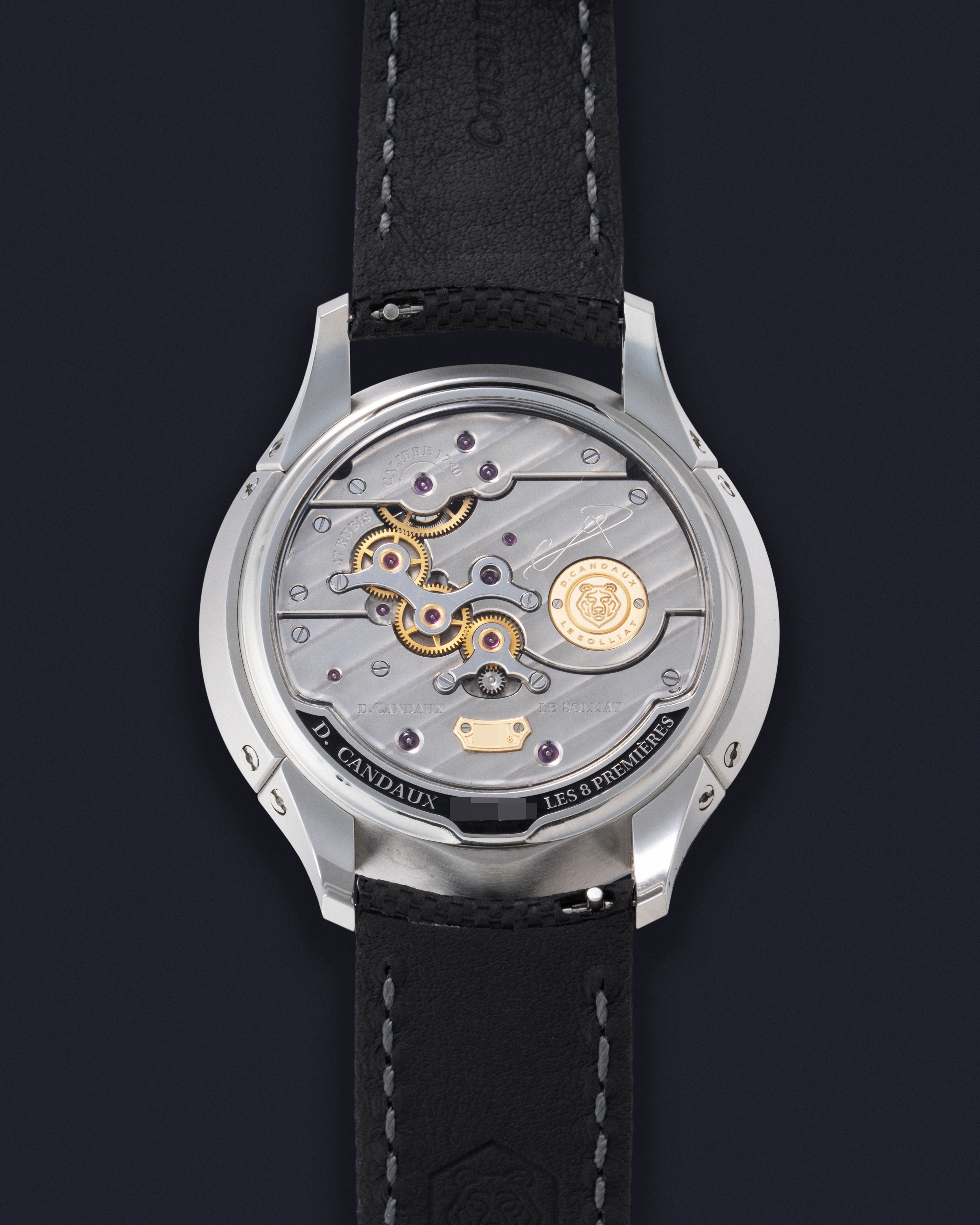
Caliber 1740 offers extraordinary technical features, as you’d expect from such a creative and technically skilled watchmaker as David Candaux. It exemplifies independent watchmaking at its finest. The mainplate and bridges are made from uncoated titanium. The bridges feature a côtes du Solliat striped finish, designed by David and produced entirely by hand. These exceptionally attractive, iridescent broad stripes cannot currently be produced by machine. The bridges are chamfered, and the bevels are polished by hand, including the intricate finishing of the many sharp inner corners. The bridges are further adorned with two gold plates, secured by screws, bearing the watch’s serial number and his lion-head emblem in relief.
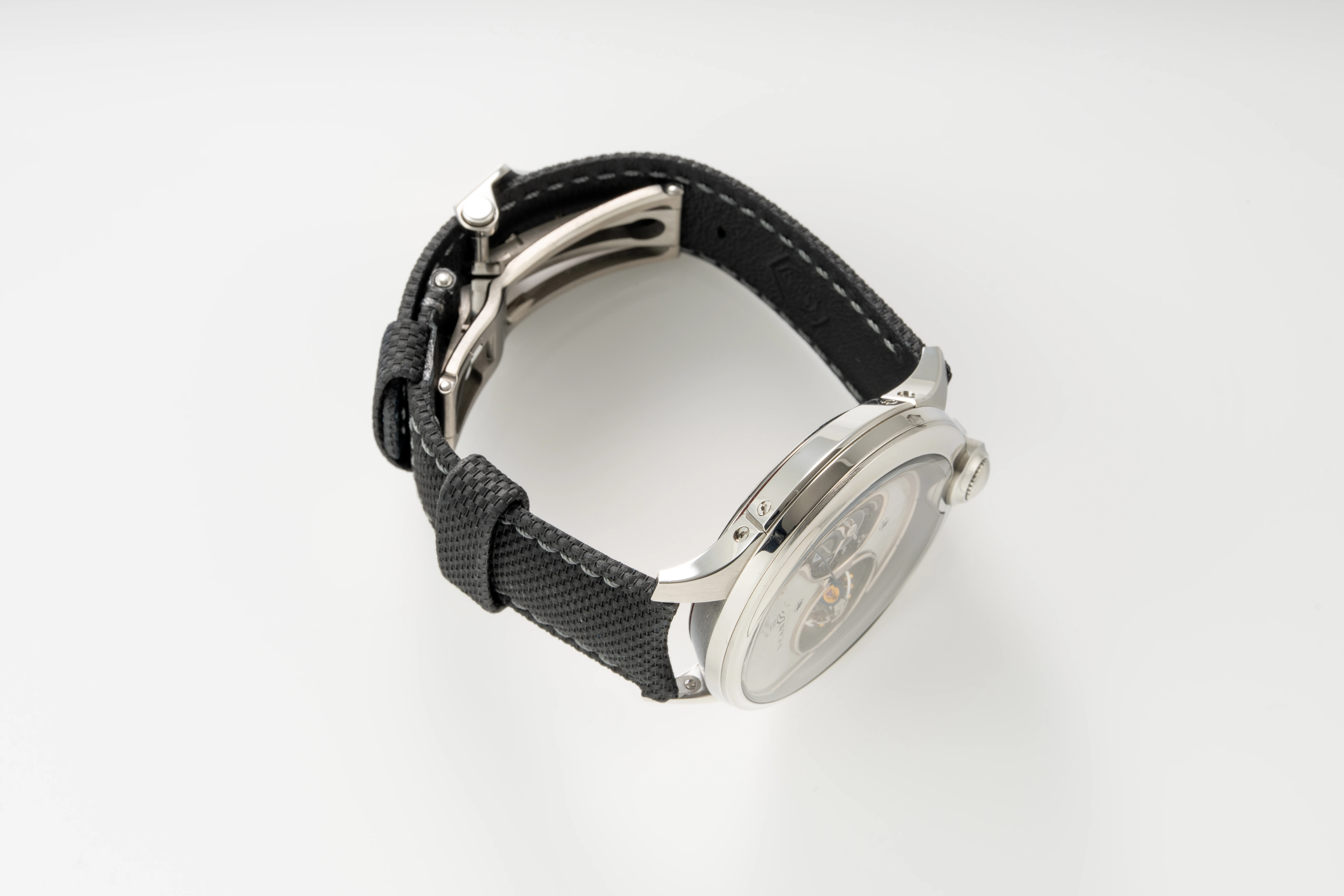
The caliber features an uncommon inclined stepped profile, with all components positioned at a three-degree angle relative to the caseback plane. As a result, the reverse side of the movement reveals a unique stepped arrangement of bridges. The three-degree inclination, sloping down toward the crown at 6 o’clock, is reflected in the watch’s design, angling the dial toward the eye when the watch is worn on the wrist. Rate accuracy is ensured by a hairspring with Breguet overcoil installed in a 30-degree inclined flying tourbillon, which, like the other components, is also set at a three-degree angle to the case – hence the tourbillon’s “bi-plan” designation.
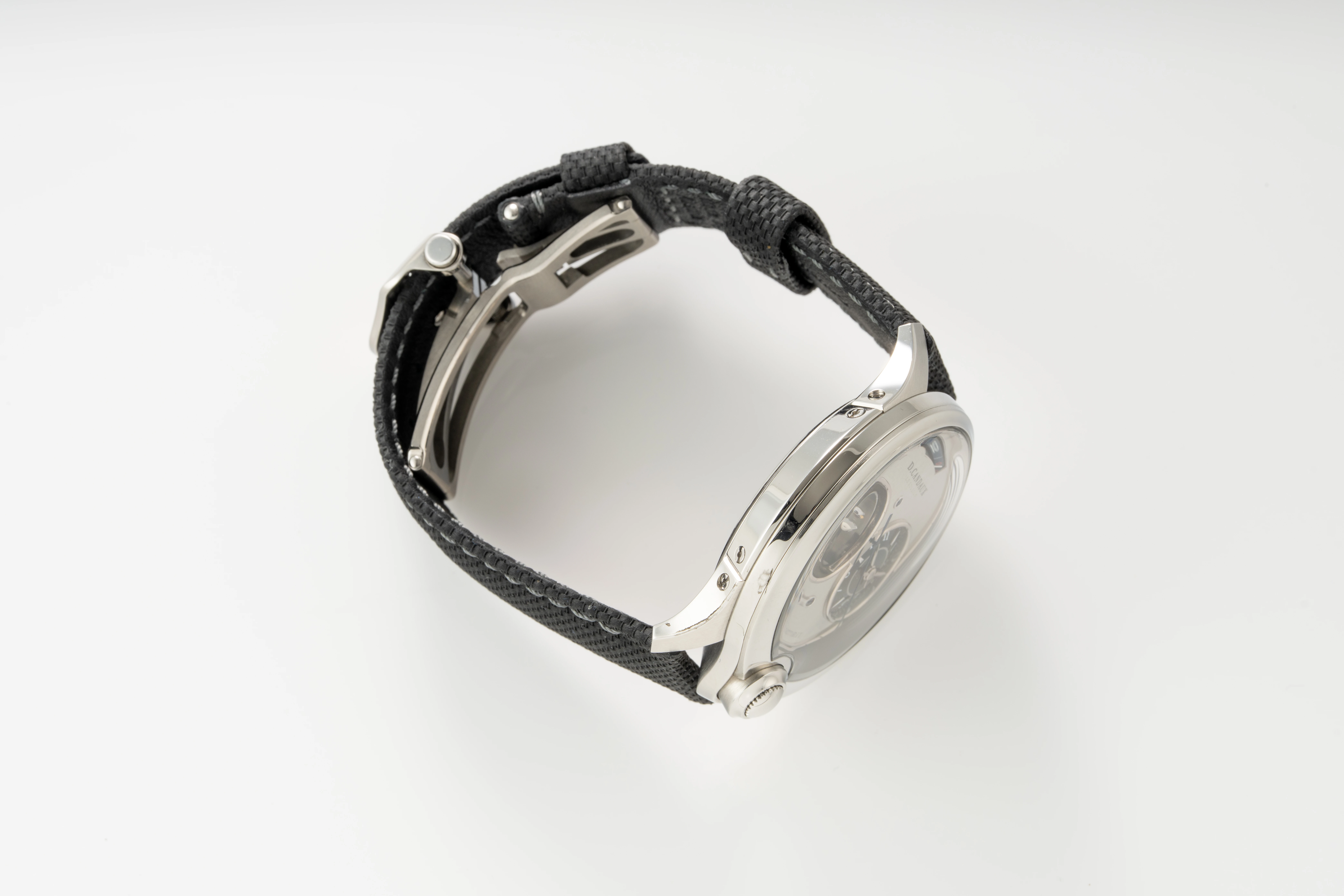
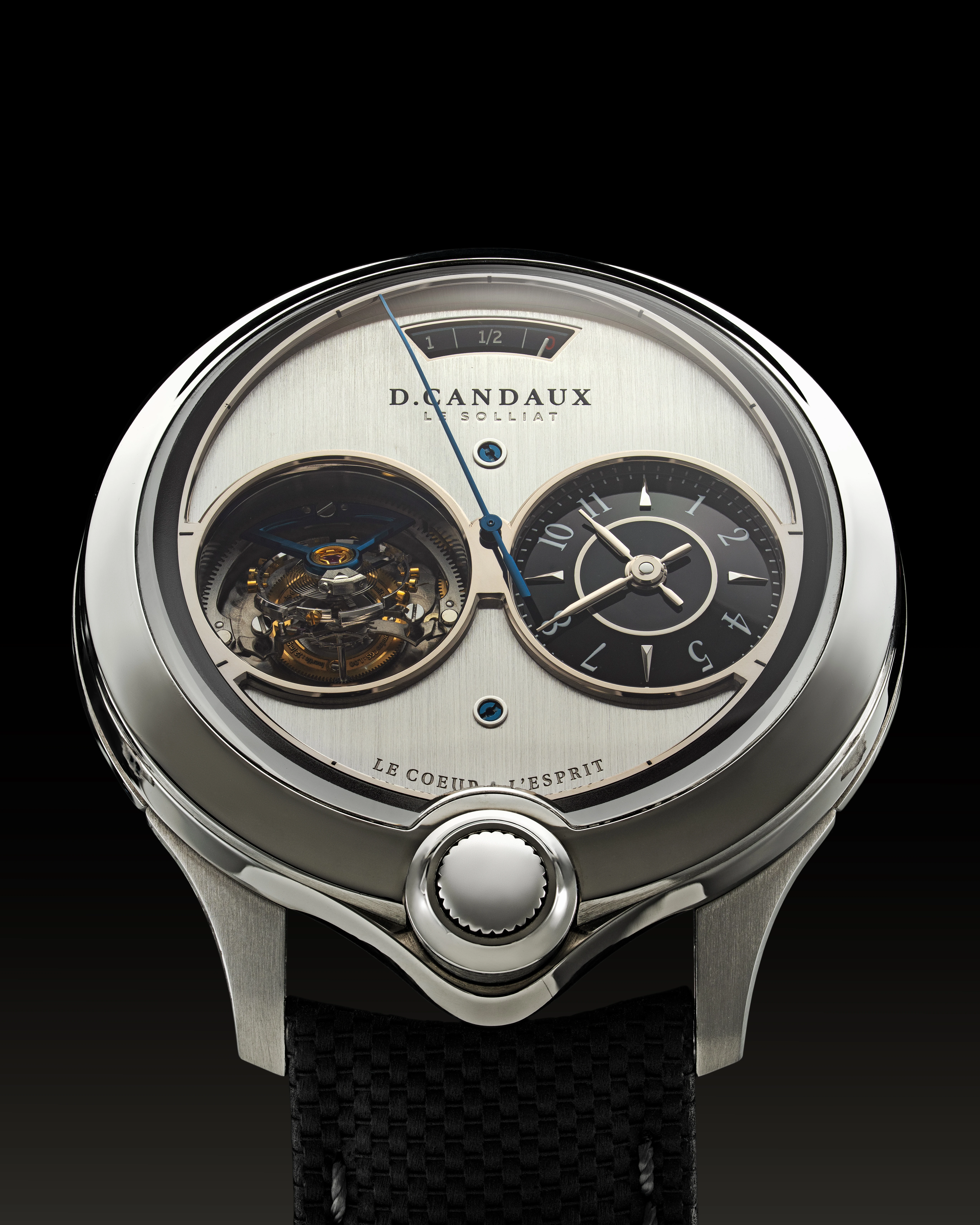
In addition to its exceptional caliber and symmetrical dial and case layout, another distinctive design feature of the “1740” (DC1) is its vertical crown, which David Candaux calls the “Magic Crown”. This patented crown usually sits recessed and flush with the top of the case and must be released by pressing it to engage its three-position function: neutral, time-setting, and winding. The Magic Crown creates a clean, symmetrical profile, further enhanced by a unique rounded protrusion on the lower part of the case, which demands significant investment to produce and finish due to its complex shape.
REASONS TO BUY
This 1740 First 8, the inaugural tourbillon watch from independent watchmaker David Candaux, is undoubtedly an important timepiece. It deserves the utmost attention, as it is possibly the only example of the brand’s first limited edition, executed in a modest technical style rarely used by this Swiss watchmaker. This watch showcases the best aspects of watchmaking from the Vallée de Joux, combining high mechanical expertise, superb finishing, a caliber with extraordinary complication, thoughtful design, and excellent presence on the wrist. The exquisite brushed platinum dial gives this watch a distinctive mood, unique status and undeniably high value, making it a remarkable collector’s item. The tourbillon, the king of complications, is showcased in spectacular fashion with an inclined flying design, a free-sprung balance wheel, and a hairspring with a Breguet overcoil. The distinctive vertical crown, a hallmark of David Candaux watches, adds further appeal by creating a sleek, symmetrical design and an out-of-the-ordinary user experience.
When launching this limited edition, David Candaux clearly considered several options and ultimately settled on the version with a sandblasted salmon dial (our study shows this configuration on three of the four known examples: No. 3/8, 5/8, and 8/8), while this example, No. 1/8, as far as we can tell, is the only one of its kind. It is interesting to note that this style, without mentioning platinum as the dial material but featuring a silver-tone, vertically brushed dial, was intended by David Candaux as an unlimited sequel to the 1740 First 8, to be called the “1740.” He apparently abandoned this plan in favor of the 1740 Half Hunter without center seconds but with guilloché decoration, unveiled in 2018, and we can assume the vertically brushed dial design was used in early timepieces only once, in the 1740 Pièce Unique.
Another note: David Candaux originally coined the name “1740,” and only later changed it to “DC1”. In 2018, he released a new version of the “1740” design called the 1740 Half Hunter (this design was later designated DC6), and only since 2019 has he used the modern naming conventions: DC1, DC6, DC7, and so on.
ABOUT THIS WATCH
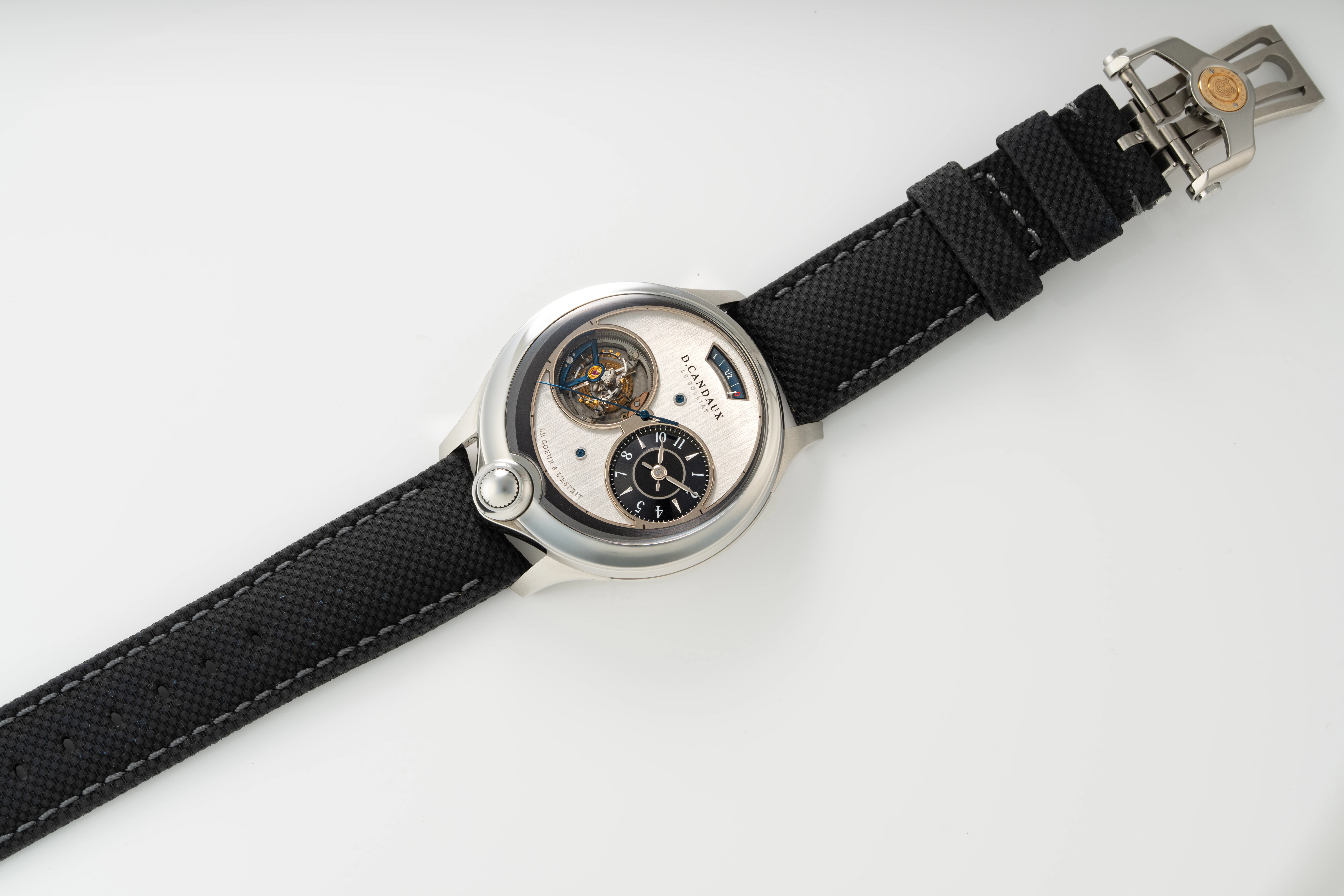
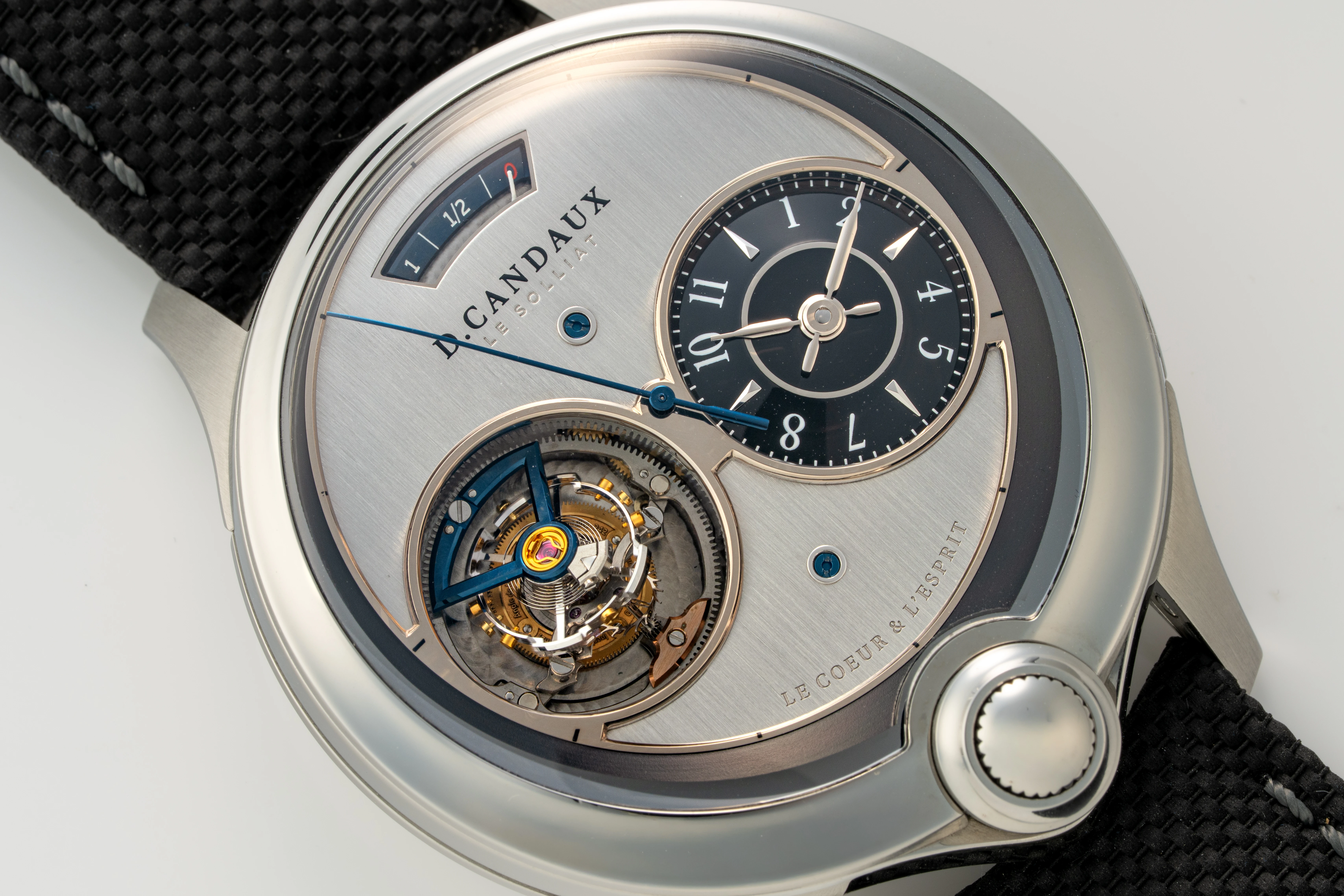
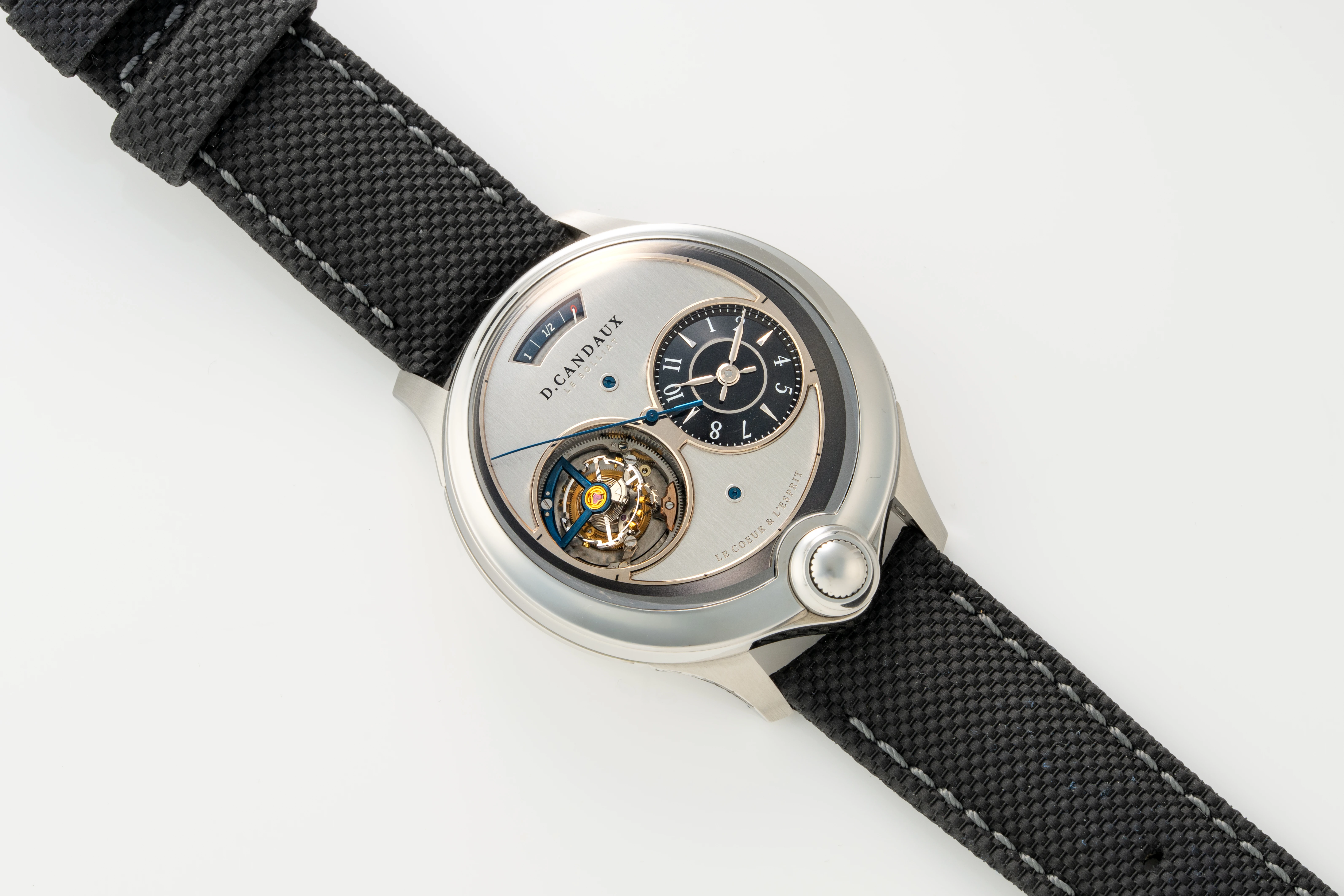
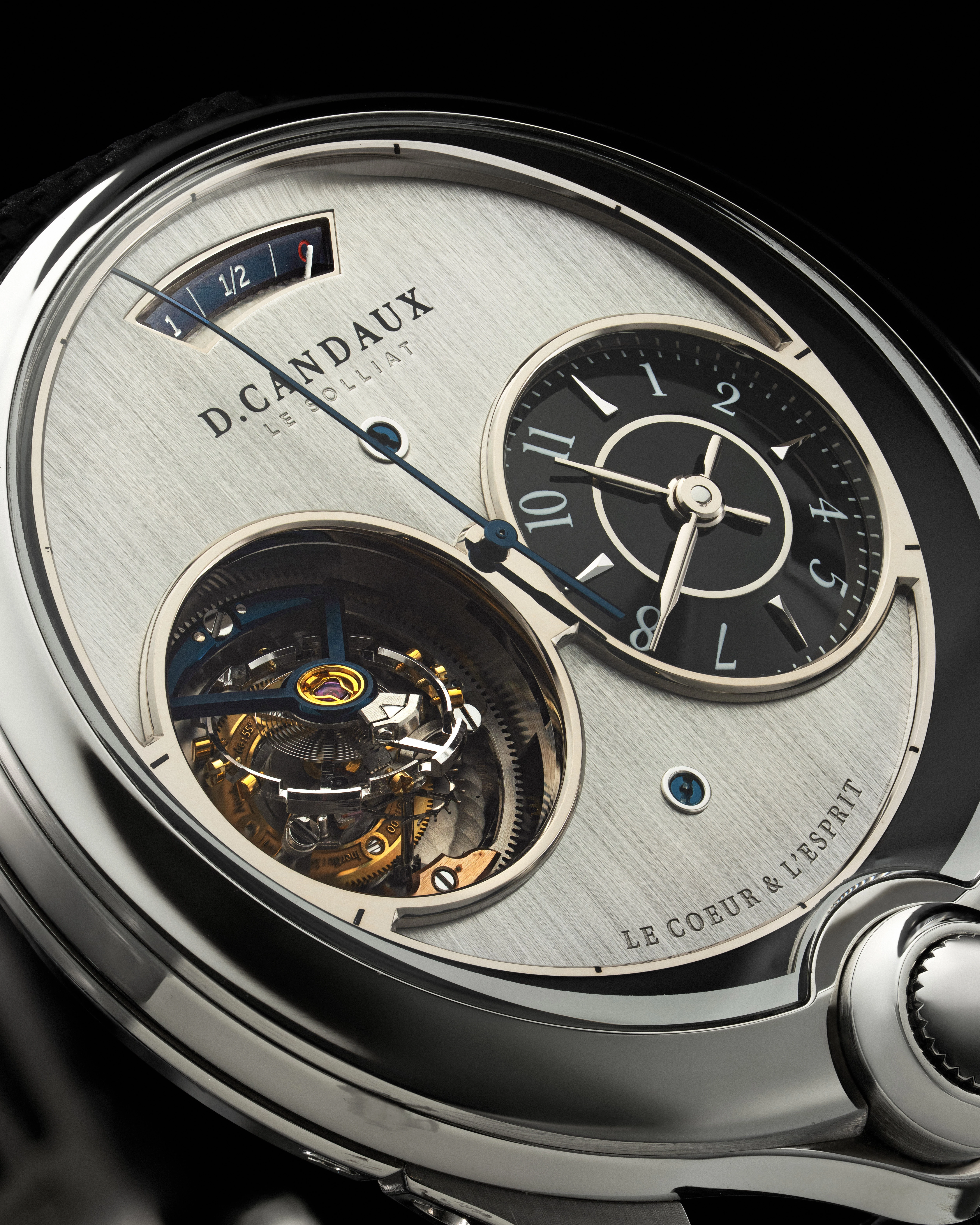
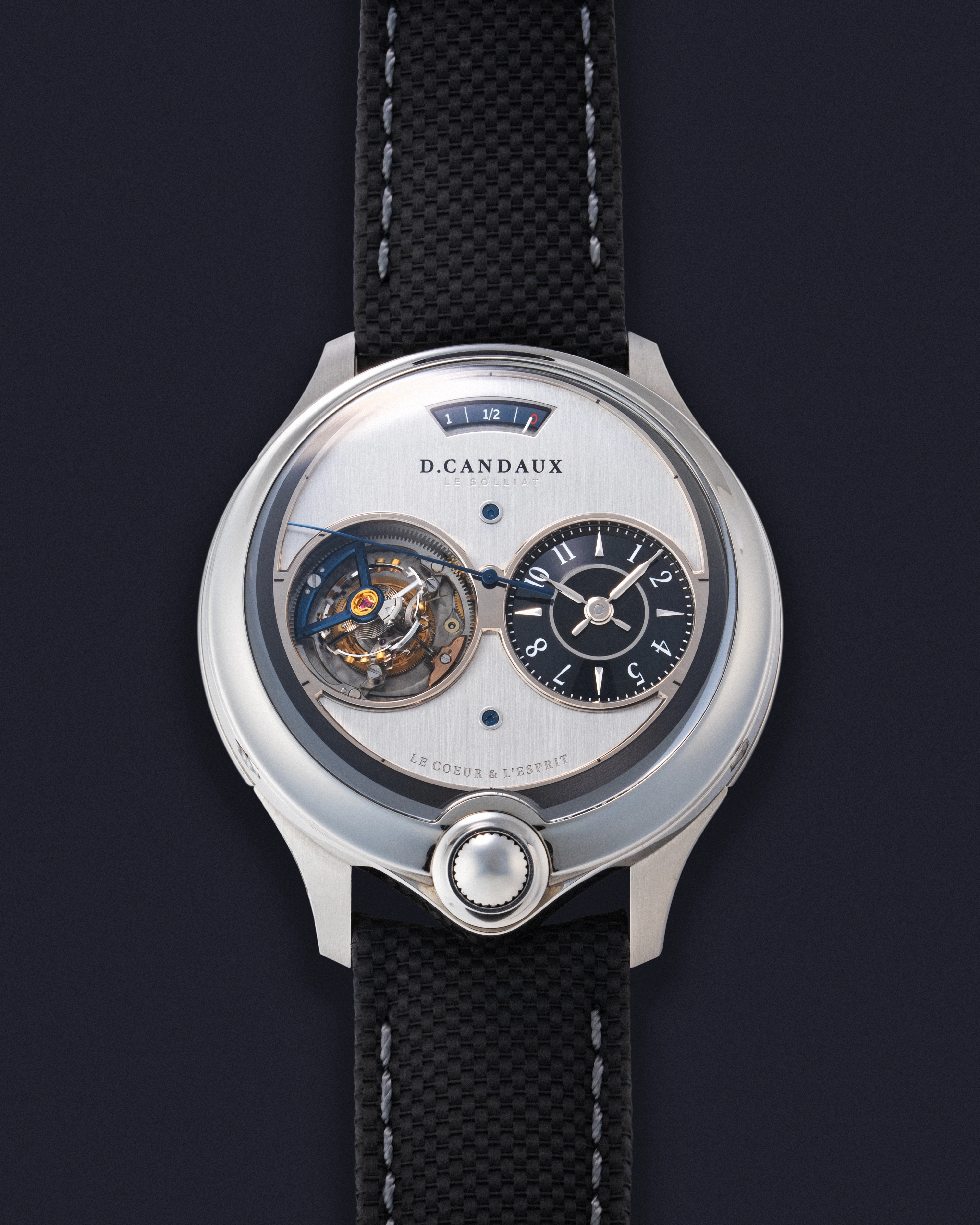
This 1740 First 8 in stainless steel with a solid platinum dial comes from the inaugural 1740 First 8 limited edition, and we consider it a historically important watch because it marked the beginning of this series and has distinctive design features. The widely known version of the 1740 First 8 features a sandblasted salmon dial in rose gold, reminiscent of the color palette of early models in the F.P. Journe collection, and is regarded as the standard version of the edition. This 1740 First 8 watch, however, features a different style, with a solid platinum dial finished with vertical brushing.
Featuring a solid platinum dial with vertical brushing and a black subdial for the hours and minutes, this watch achieves a technical mood rare in the David Candaux collection; given the precious platinum dial, it feels truly extraordinary. The black subdial at 3 o’clock contrasts sharply with the light platinum background of the main dial and provides a visual counterpoint to the symmetrically positioned opening for the spectacular inclined tourbillon. The finishing touches are the arched power-reserve aperture and the signature Magic Crown, which form a vertical axis. The vertical crown on this early watch does not yet feature the embossed David Candaux lion-head emblem; a crown of this type was introduced only in 2018. Together, these design elements create a well-balanced, harmonious composition.
Artisanal hand-finishing of movement components is a hallmark of David Candaux, a watchmaker from the Vallée de Joux, where this craft has a long tradition. He also prioritizes the chronometric quality of his watches, equipping the movement with components that significantly enhance precision. These include a 30-degree inclined flying tourbillon, a double barrel with low tension and fast rotation, a free-sprung balance with inertia regulated by screws, and a hairspring with a Breguet overcoil. The caliber automatically stops when the power reserve falls below a critical level to maintain its chronometric rate – another subtle yet crucial technical feature of this DC1 watch.

Specifications
| Ref | DC1 |
| D= | 43 mm |
| Case material | Stainless Steel |
Condition report
| Box: | Yes |
| Papers: | Yes |
ADDITIONAL PHOTOS: