Charles Frodsham

Don't hesitate to ask for any additional information, Alex is ready to assist and guide you in your decision
DETAILS
Charles Frodsham (1810–1871), an English watchmaker, manufacturer of marine chronometers and founder of the company Charles Frodsham & Co. (1834), which was known for the production of high-quality precision watches. In addition to marine chronometers, the technology of which was developed to a very high standard by Charles Frodsham and some of which were in use for a century or more, the Frodsham company is known for its precision deck chronometers, pocket watches and clocks, including pocket tourbillons (which were usually supplied by Nicole, Nielson & Co. ), carousels, chronographs, split-seconds chronographs, minute repeaters and other complications, all produced in a uniform style and according to uniform technical design principles with high manufacturing standards. Many of Charles Frodsham's chronometers were put through their paces at the Kew Observatory and later at Teddington, including the tourbillon pocket chronometer No. 09182, which received the highest mark ever awarded to an English watch at Kew, 93.9 out of 100.
REASONS TO BUY
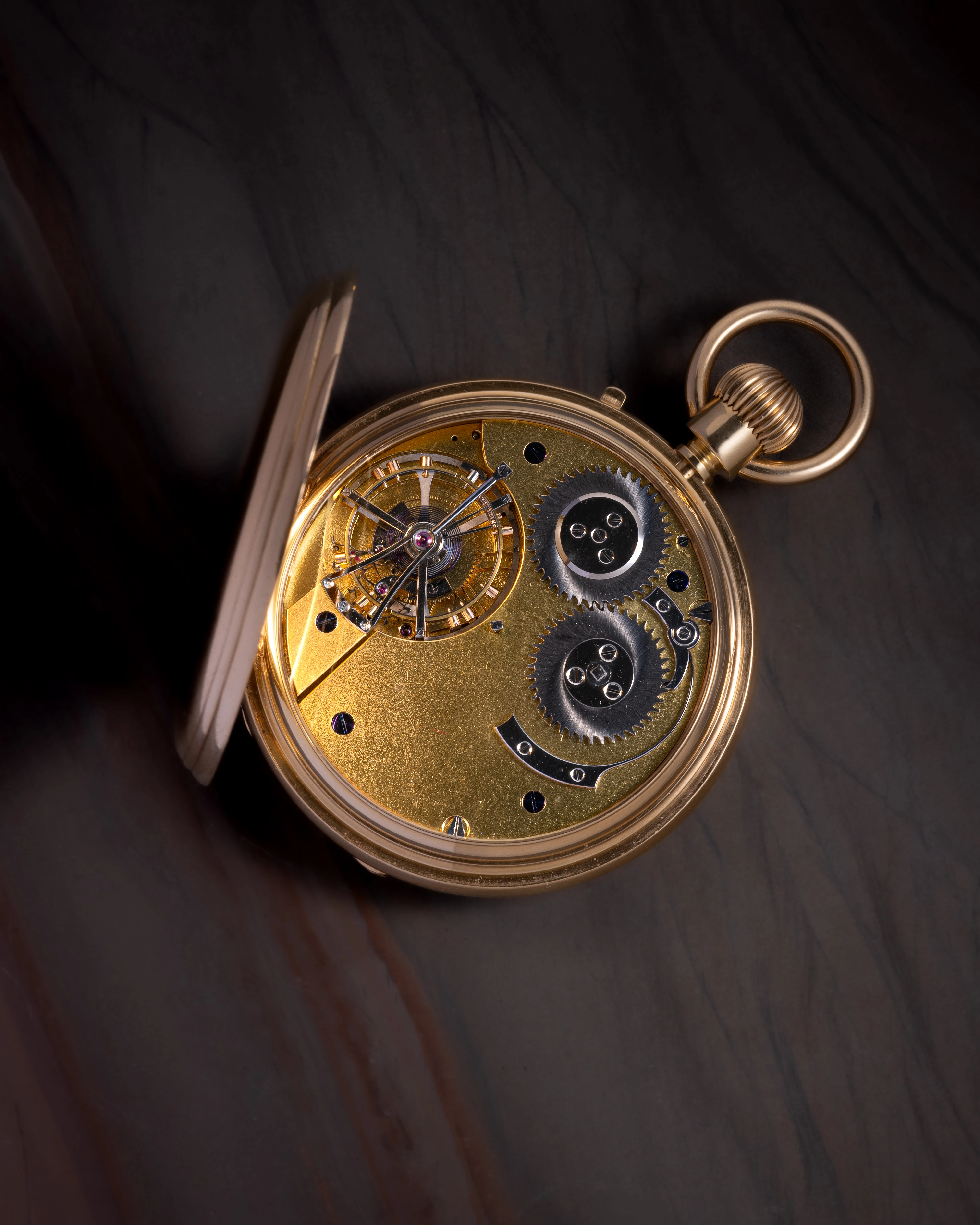
This Charles Frodsham tourbillon pocket watch with Silvain-Mairet lever escapement is certainly one of the rare and sometimes unique watches handcrafted by the finest watchmakers that attract the most discerning and educated collectors. This watch is one of the most exquisite and unusual watches to bear the name of Charles Frodsham, one of the most important British watchmakers, on its dial. In addition to its fascinating technical features, which include the construction of the tourbillon cage and bridge, similar to Albert Pellaton-Favre's movements, and the Silvain Mairet-type lever escapement, this watch is also characterized by Charles Frodsham's unique style, which is one of this watchmaker's most important and attractive historical values.
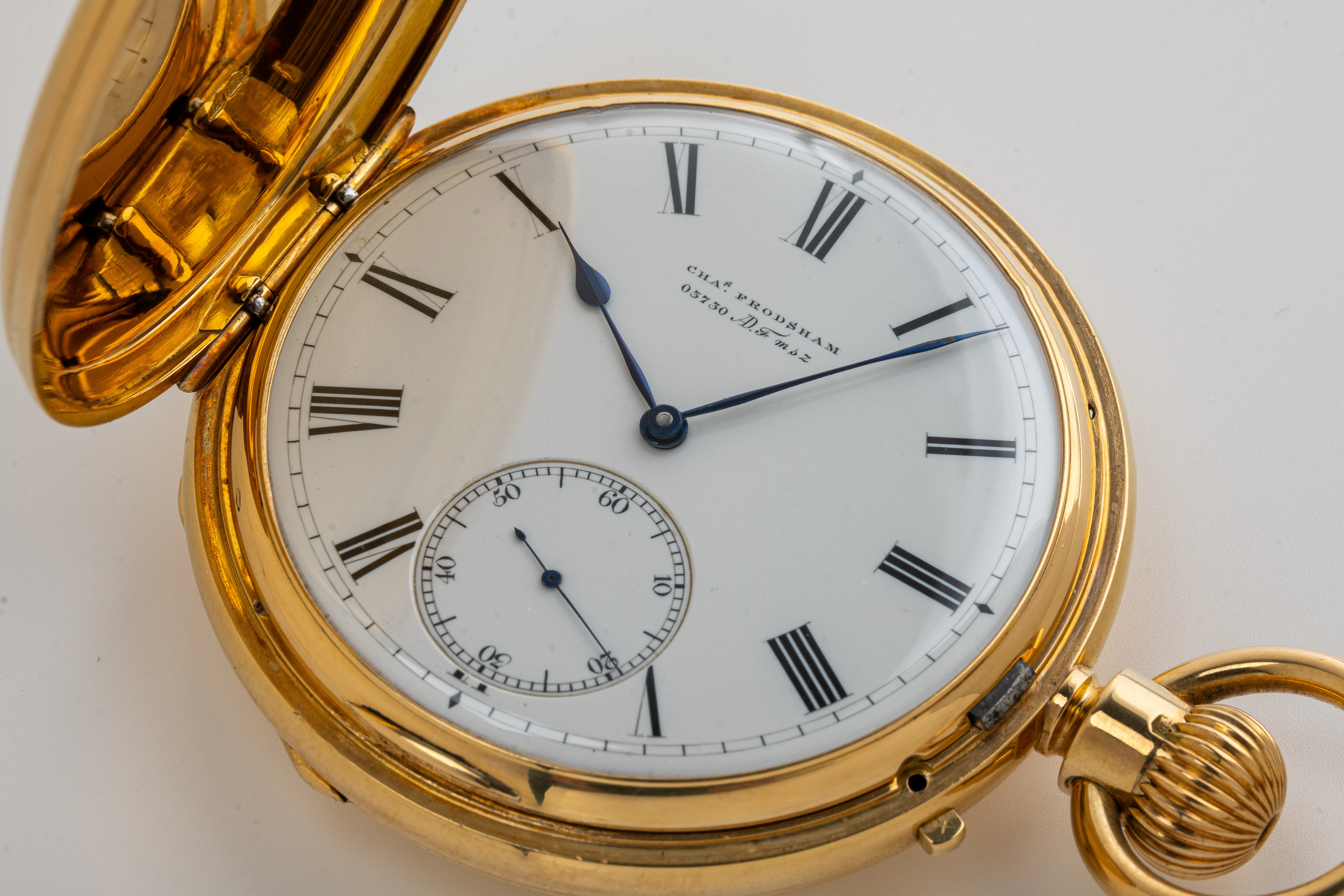
The dial number 03730 places the watch between 1865 and 1870 (according to frodsham.com), but given the very rare tourbillon movement, which may have been unique to this watch, the date could be later. Frodsham.com explains this in a dedicated post on Instagram:
“The gold case is by Frederick Samuel Matthews, and the lever escapement with impulse delivered on the escape wheel teeth is from Mairet. Pictures of the piece were sent to Richard Stenning, watchmaker and co-director of the watchmaking firm Charles Frodsham. He believes it is likely an example of what is colloquially known as “Locle-style tinkering” — a form of artisanal assembly typical of the La Chaux-de-Fonds region. Several details deviate from 19th-century watchmaking norms: the double signature on the dial (only one was typically used at that time), the absence of a signature and serial number on the movement plate, no indication of location on either the dial or plate, a typeface more characteristic of French styles, and a serial number too low for a piece bearing the Frodsham name — particularly since Frodsham appears first on the dial, suggesting it should match entries in their official manufacturing records. Furthermore, the use of a lever tourbillon appears to postdate the watch’s presumed period”.
ABOUT THIS WATCH
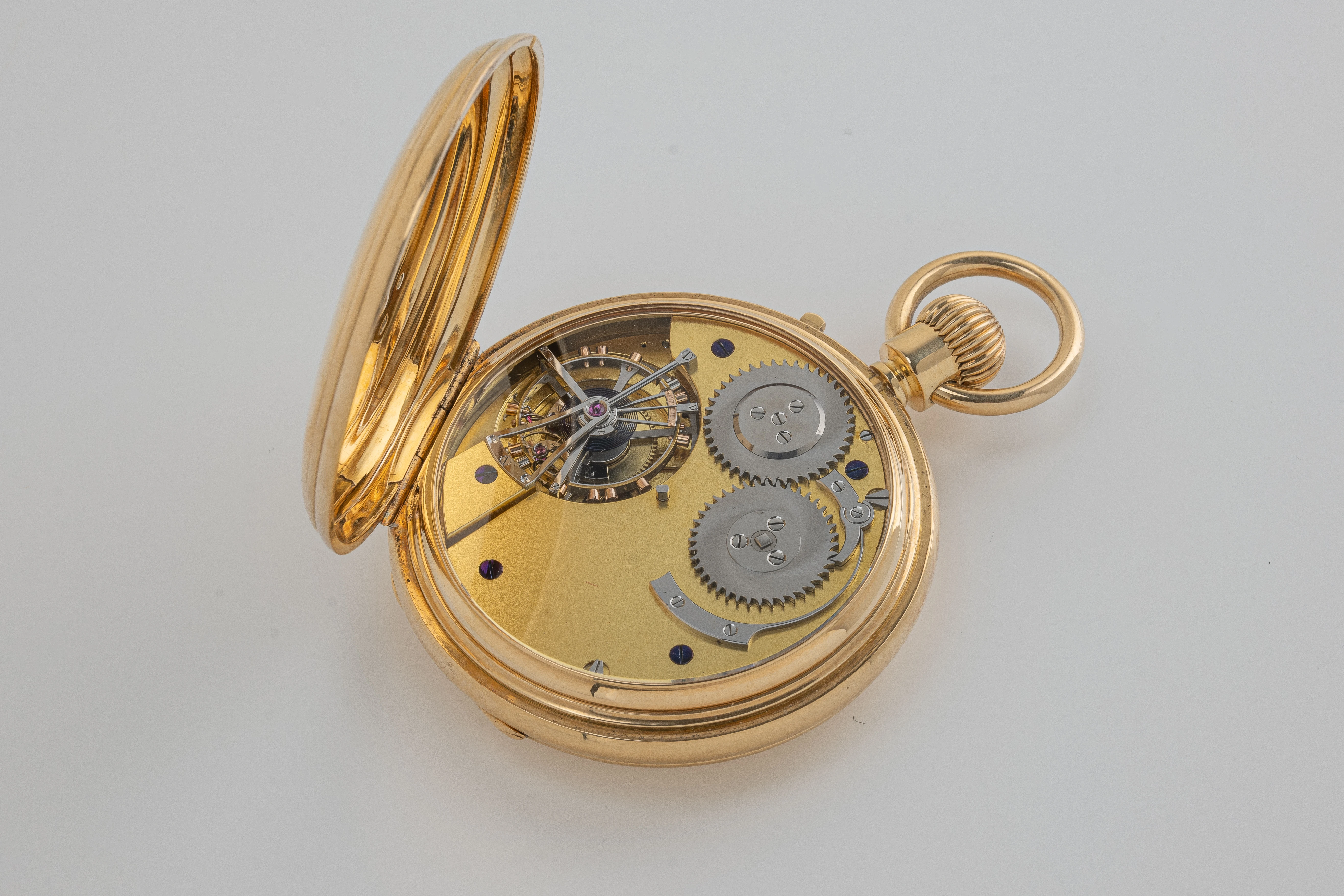
The design of the caliber of this watch is typical of Charles Frodsham's style, but also of the pattern used mainly by Albert Pellaton-Favre and his son Jämes-César Pellaton, the famous makers of tourbillons for pocket watches. Although they most commonly used the pattern of bridges known as the Pellaton type, they also adapted the design to other styles, notably the English style with gilded and frosted 3/4 plate and the lower part of the tourbillon bridge. Also noteworthy are the “gull's beak” pawl of the winding wheel and the characteristic arrangement of crown wheel and winding wheel with solarization finish, which is typical of Pellaton calibers. The wolf teeth on these wheels are also not unexpected - in some Pellaton movements we find this tooth shape, which is generally considered a sign of a movement of the highest quality. The similarities continue in the tourbillon cage and the tourbillon bridge. The tourbillon bridge is made of steel and is openworked. Its shape is typical of Pellaton calibers, as is the cage with three evenly spaced bars, one of which is shaped like a tuning fork and is used for the spiral index.
Notable differences include the flat surface of the tourbillon cage bars, while Pellaton calibers usually have semi-cylindrical bars, and the use of an unusual lever escapement. Note that Albert Pellaton-Favre only used a detent escapement, while his son Jämes-César Pellaton mainly used a lever escapement. Nevertheless, this watch uses a rare version of the lever escapement developed around 1840 by Silvain Mairet, another well-known Swiss watchmaker, characterized by wide escape wheel teeth and very narrow "needle" lever pallets. The presence of this version of the lever escapement suggests that Silvain Mairet was probably involved in the manufacture of this watch, or at least the movement. It should also be noted that most known Frodsham tourbillon pocket watches are fitted with movements by Nicole, Nielson & Co. whereas this watch is clearly an exception due to the features described above. It is important to note that this is possibly the only tourbillon pocket watch with a lever escapement of the Mairet type.
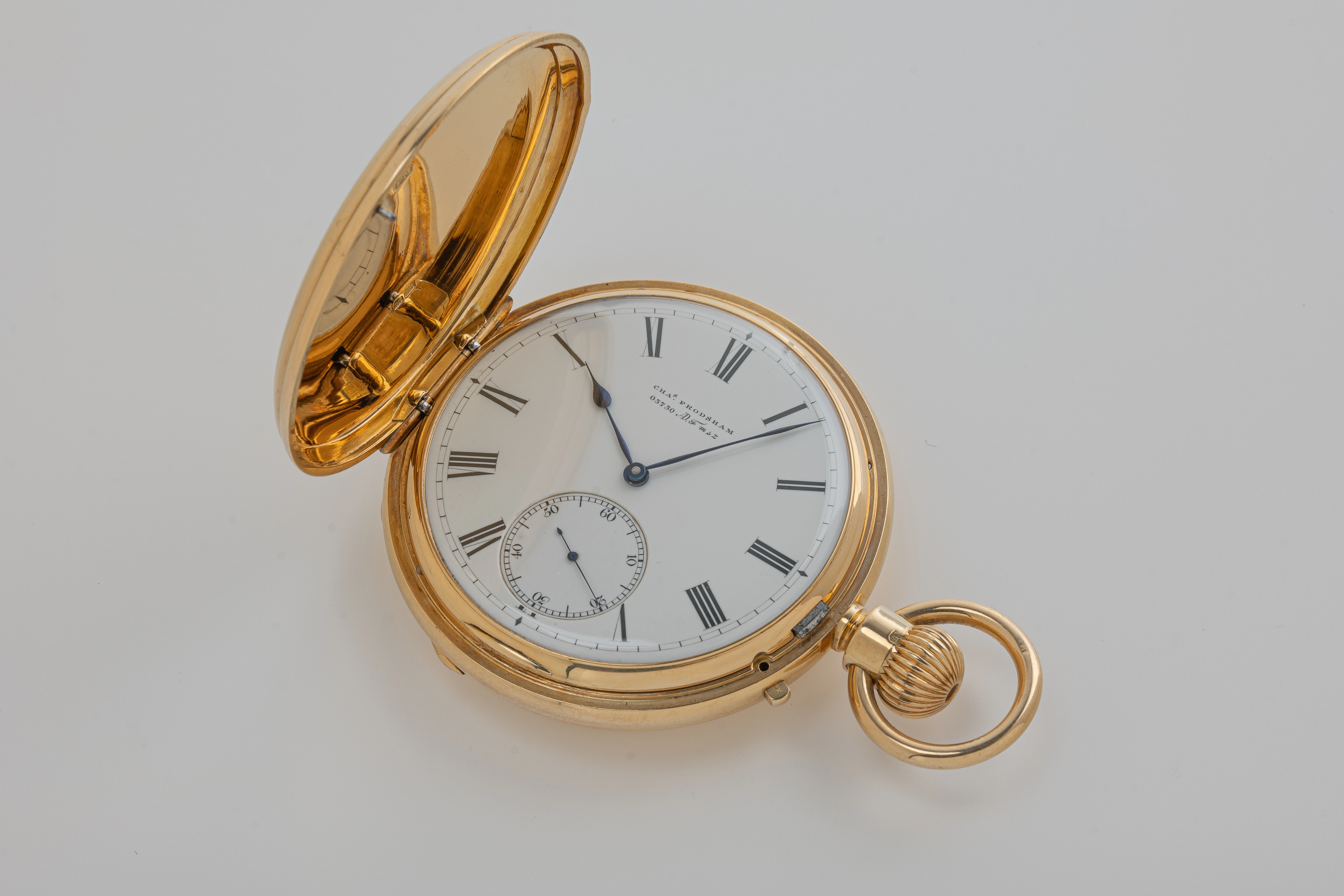
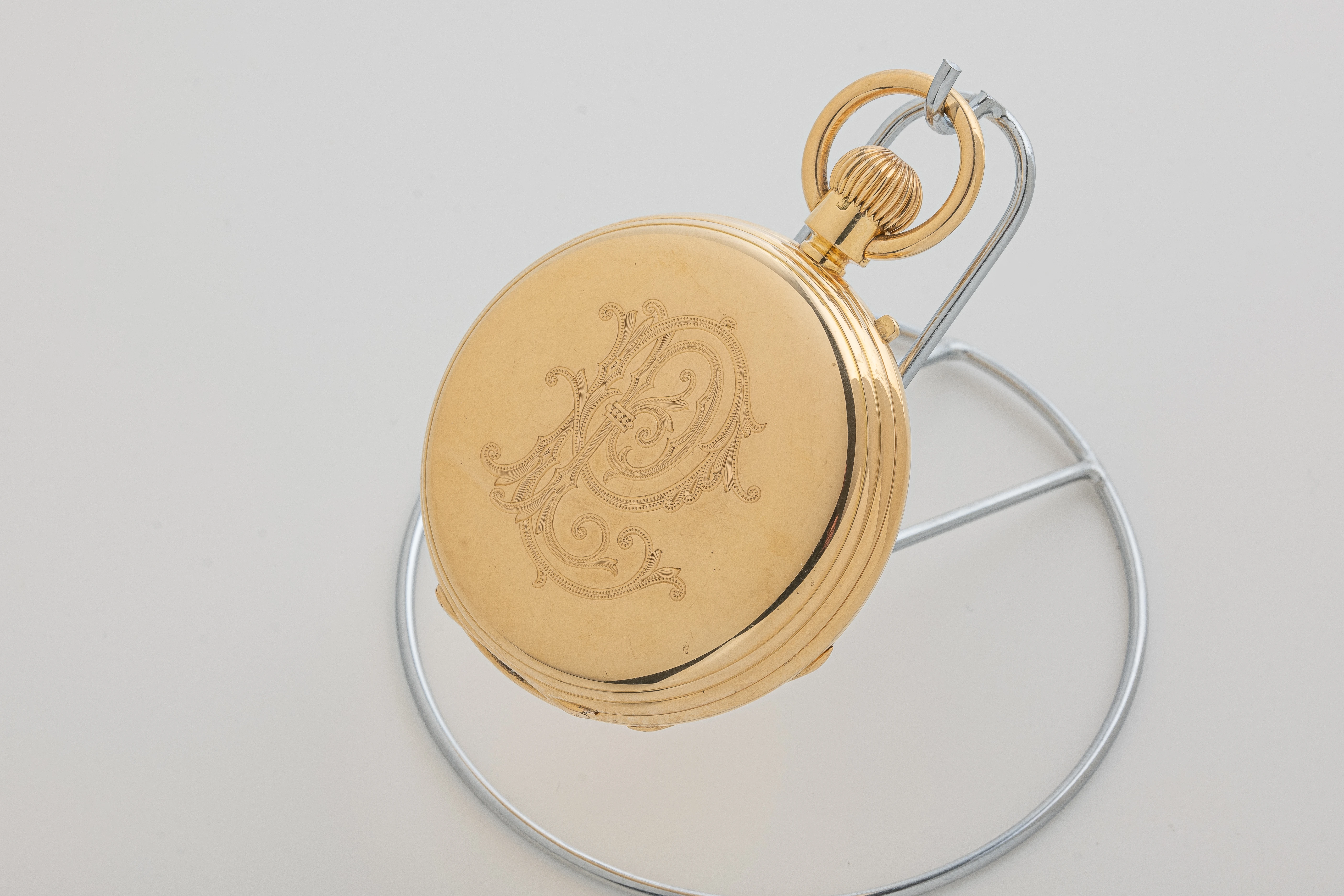
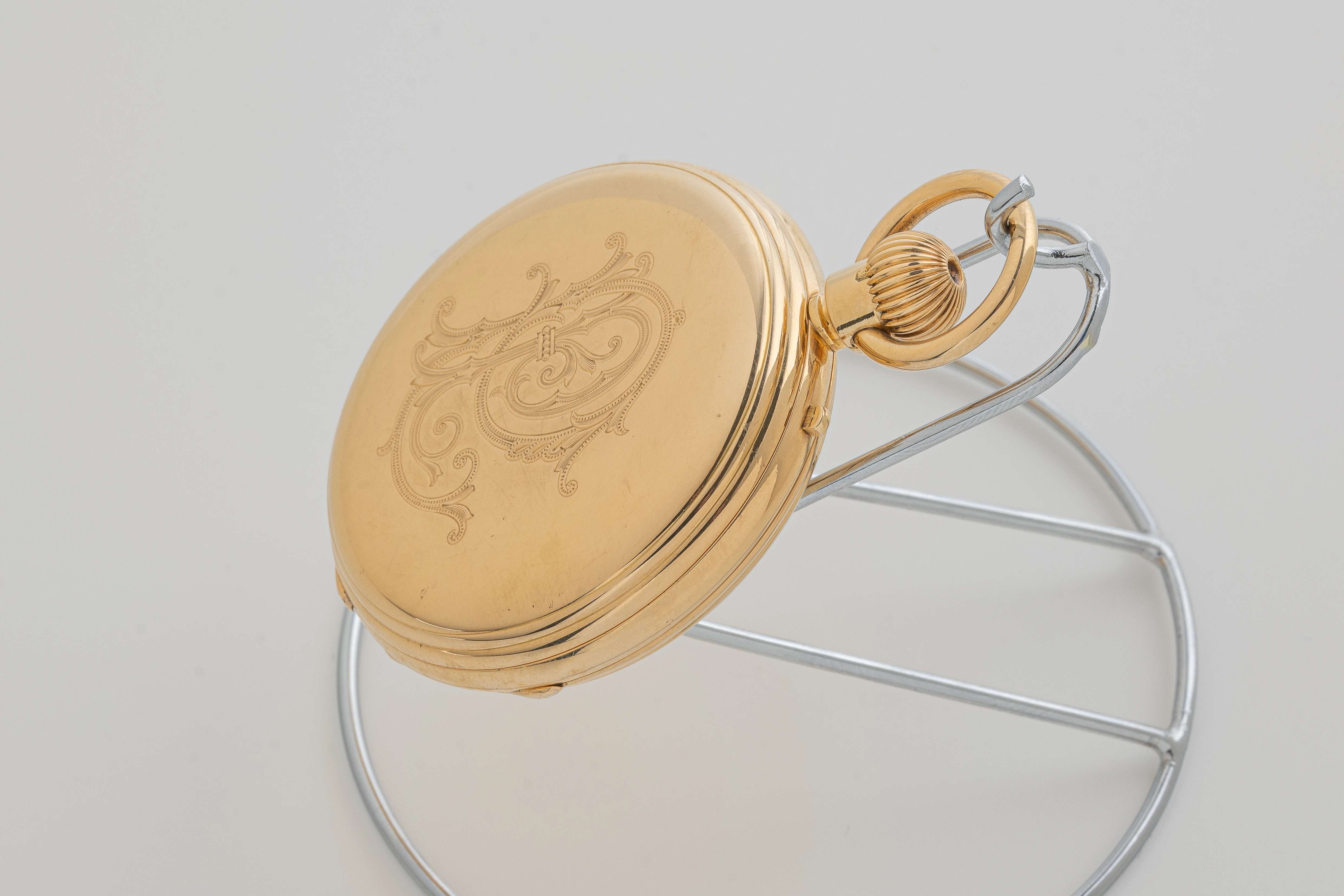
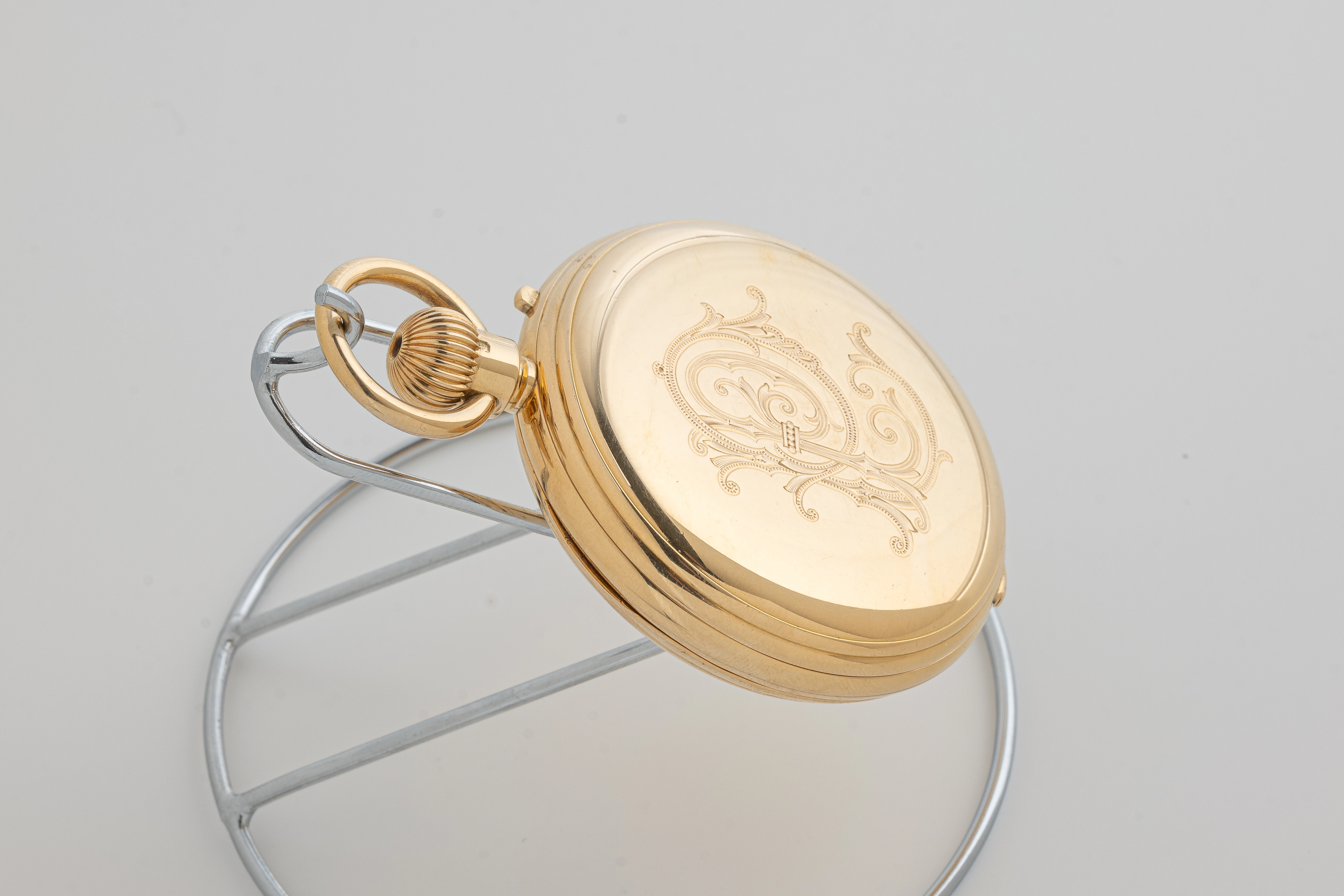
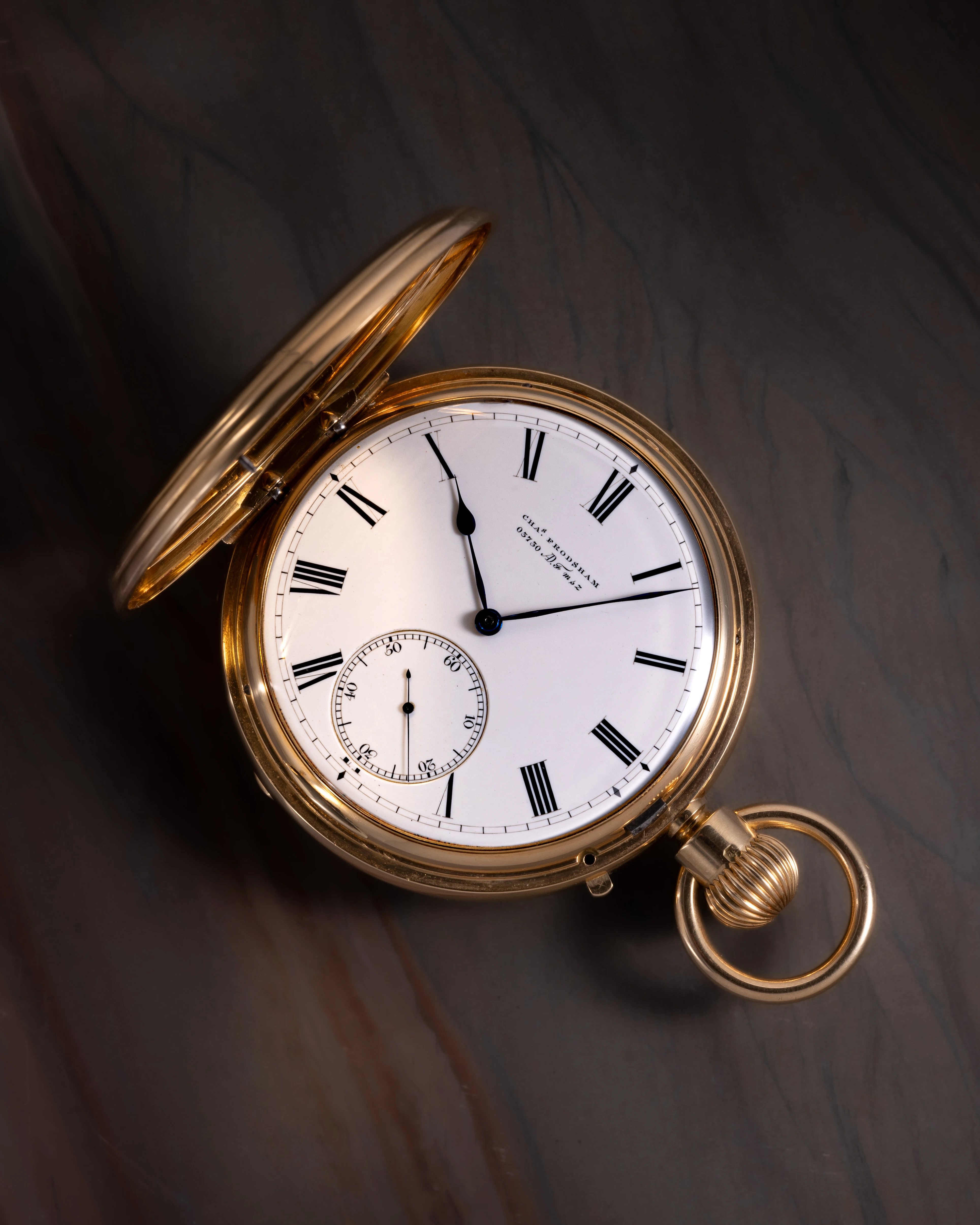
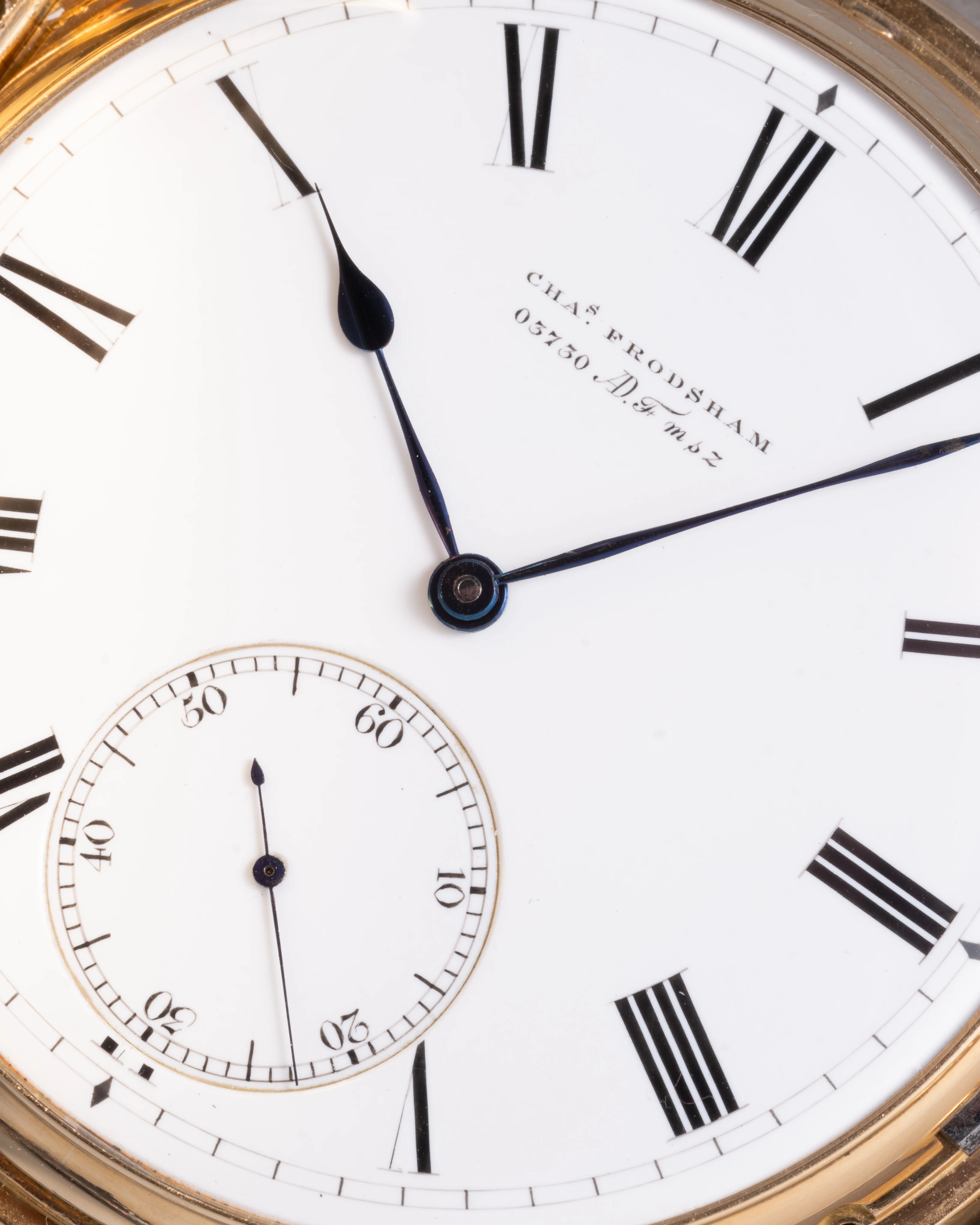
Another feature of this watch sets it apart from many other Charles Frodsham watches. Pocket watches by this company and watches by English watchmakers in general are characterized by the fact that numerous inscriptions are engraved on the movement. Only occasionally, on some examples with complex movements supplied to Charles Frodsham by other watchmakers, are there no engraved inscriptions. In any case, the lack of engraved inscriptions on the movement clearly distinguishes this watch from most other Charles Frodsham watches. This difference correlates with other features of the movement of this watch that go beyond the usual for this brand and which have already been discussed above. At the same time, the design and execution of the case and dial are entirely in keeping with the style we have come to expect from Charles Frodsham watches - double hunter case with stepped profile from both sides, large spherical crown with round bow on a solid pendant, white enamel dial with black radial Roman numerals, outer “railroad" minute track, blued steel “spade and whip” hands and, above all, the charismatic signature with the brand name, the watch number and the cryptogram "AD. Fmsz", which stands for the year 1850. This year was important for the development of Charles Frodsham's company into one of the leading manufacturers of high-quality watches in Great Britain. This status was confirmed a year later by the presentation of the collection at the Great Exhibition in London, where Charles Frodsham received a first-class medal for his exhibits.

ADDITIONAL PHOTOS: