
Daniel Roth – the Man, the
Brand and the Watches,
part 3
The ever-unique style of the Daniel Roth’s
Perpetual Calendar watches
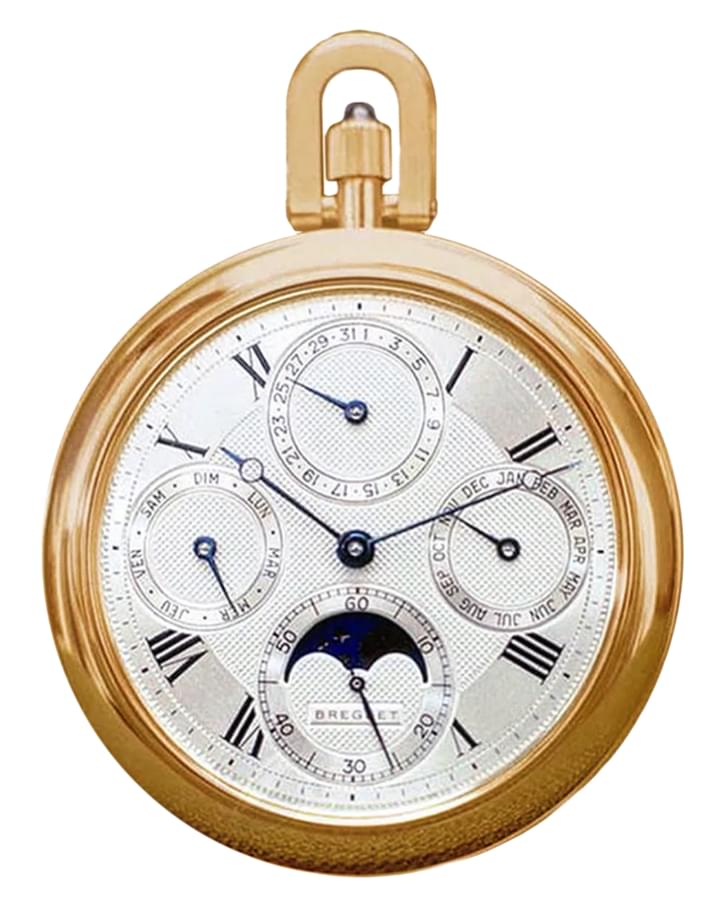
The history of Daniel Roth’s perpetual calendars begins with the time when Mr. Daniel Roth (I use “Mr.” to distinguish him from the brand of the same name that he founded) was actively involved in the development of the Breguet collection in the 1970s and 1980s (until 1987), while this brand was then part of Chaumet. The first watch he produced for Breguet was a perpetual calendar – a pocket watch made entirely by hand. In an interview with Acollectedman.com, Mr. Roth recalled, “Before embarking on the journey, I wanted to properly learn about complications, which is why I went back to school. I learnt everything I could, especially about perpetual calendar movements, doing all this work by hand.”
Later, when he was already heavily involved in the development of the Breguet collection, the same classic style of dial with a cross-shaped arrangement of counters appeared in the elegant perpetual calendar wristwatch Ref. 3050, which is quite rare considering that the production of these watches was limited to a few pieces per year – at least in the first years of production, as François Bodet reports in his book “Breguet, Story of passion 1973–1987”.
The Breguet Ref. 3050 was powered by the automatic caliber 505QP3 (there are different versions of the name for this caliber, but I’ll stick with this one as it is supported by Christie’s and Sotheby’s). The 505QP3 is based on the ultra-thin Frédéric Piguet 71 and is equipped with a Breguet proprietary calendar module, which of course was developed by Mr. Roth and with the help of his colleague, prototypist and watchmaker Louis-Maurice Caillet. So Mr. Roth was well equipped with the knowledge of this complication when he set about developing the Ref. 2117, Daniel Roth’s first perpetual calendar, and yet his thought process remains a mystery to me.
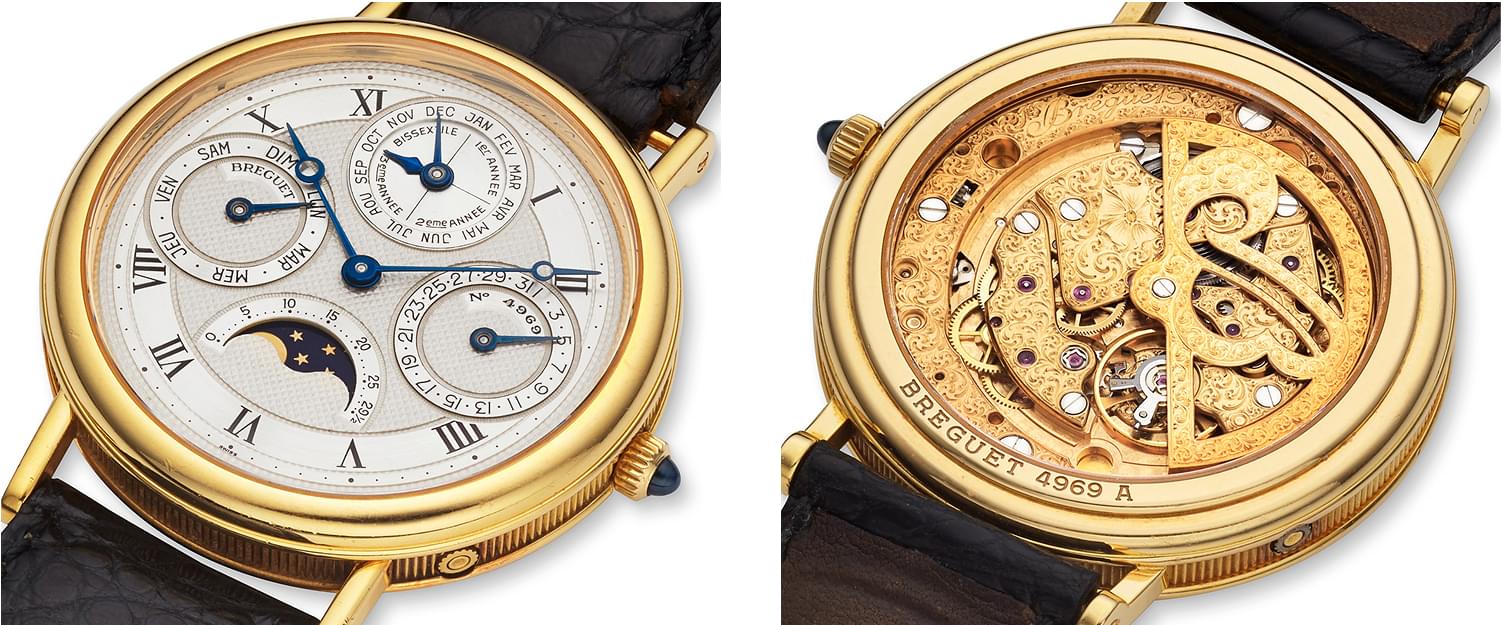
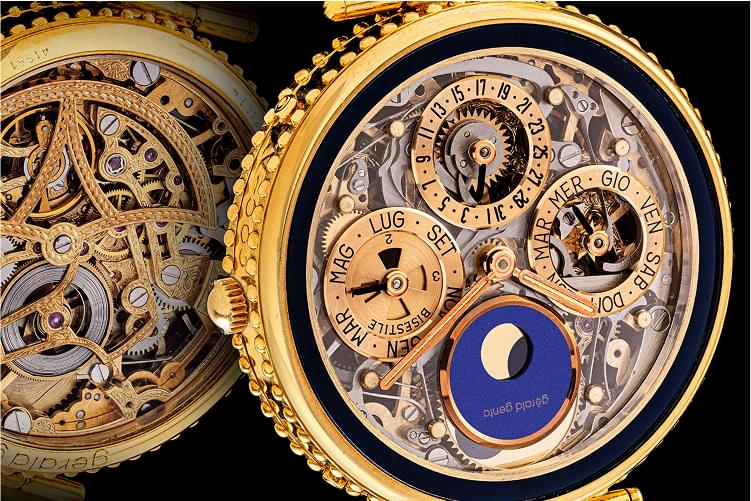
To understand the context, it is worth taking a closer look at whether the perpetual calendars of the Daniel Roth brand and the Breguet brand designed by Mr. Roth are related. After the perpetual calendar school pocket watch produced by Mr. Roth and eventually signed by Breguet, Mr. Roth started to develop the Breguet Ref. 3050, the first automatic perpetual calendar wristwatch by Breguet. The calendar module of the Ref. 3050 has nothing in common with the modules one would expect to find in watches of this type, namely those of Eta (used in perpetual calendars by Omega, Movado, Gérald Genta), Lémania (since 1981 Nouvelle Lémania; the module from this factory was probably used by Ebel), F. Piguet (probably Patek Philippe), Dubois Dépraz (Audemars Piguet, Vacheron Constantin, probably Ebel). This confirms the conclusion, flattering for Breguet and Mr. Roth, that the module is literally a pure design by Mr. Roth and the Breguet team. The design was undoubtedly successful, as Breguet produced the Ref. 3050 and subsequent models based on the same calendar module, including a perpetual calendar with chronograph and a perpetual calendar with minute repeater, until at least the mid-1990s.
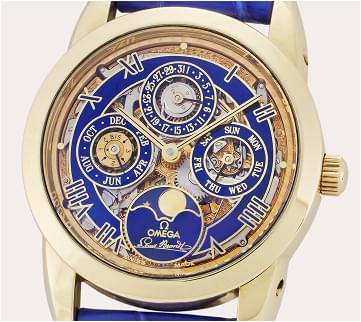
Let’s take a look at the scenario for the introduction of other complications when the Daniel Roth collection was founded and in the early years of the brand. In the case of the tourbillon, Mr. Roth reported that he shared the cost of developing the tourbillon caliber with Breguet. He developed the movement jointly with Lémania, so that the different versions of the same movement were used both at Breguet in the Ref. 3350 (initially) and later in several other references, as well as in the Daniel Roth Ref. 2187/2186 Tourbillons. Mr. Roth did the same when he created the Daniel Roth Ref. 2147 Chronograph with the Lémania caliber 2320, which was also the basis for the Breguet Ref. 3230 Chronograph he had previously developed. In a seemingly completely analog situation, the launch of his Daniel Roth Ref. 2117 Perpetual Calendar was a absolutely different scenario. Mr. Roth decided not to use the early Breguet design. That is, he eschewed the traditional layout with the sub-dials at 12, 3, 6 and 9 o’clock forming a cross-shaped structure and the use of the basic Frédéric Piguet 71 automatic caliber, opting instead for the Lémania 8810 automatic caliber. He did not use the perpetual calendar module he had developed for the Breguet Ref. 3050, nor did he develop a new module in its footsteps. Instead, he opted for the Eta/Gérald Genta perpetual calendar module and commissioned Philippe Dufour, then an up-and-coming independent watchmaker, to adapt and modify it. In an interview with acollectedman.com, Mr. Roth explains: “Dufour was not the mythical watchmaker he is now. He needed some work, so I developed the perpetual calendar with him using the Gérald Genta perpetual calendar as a base movement, which I knew well.”
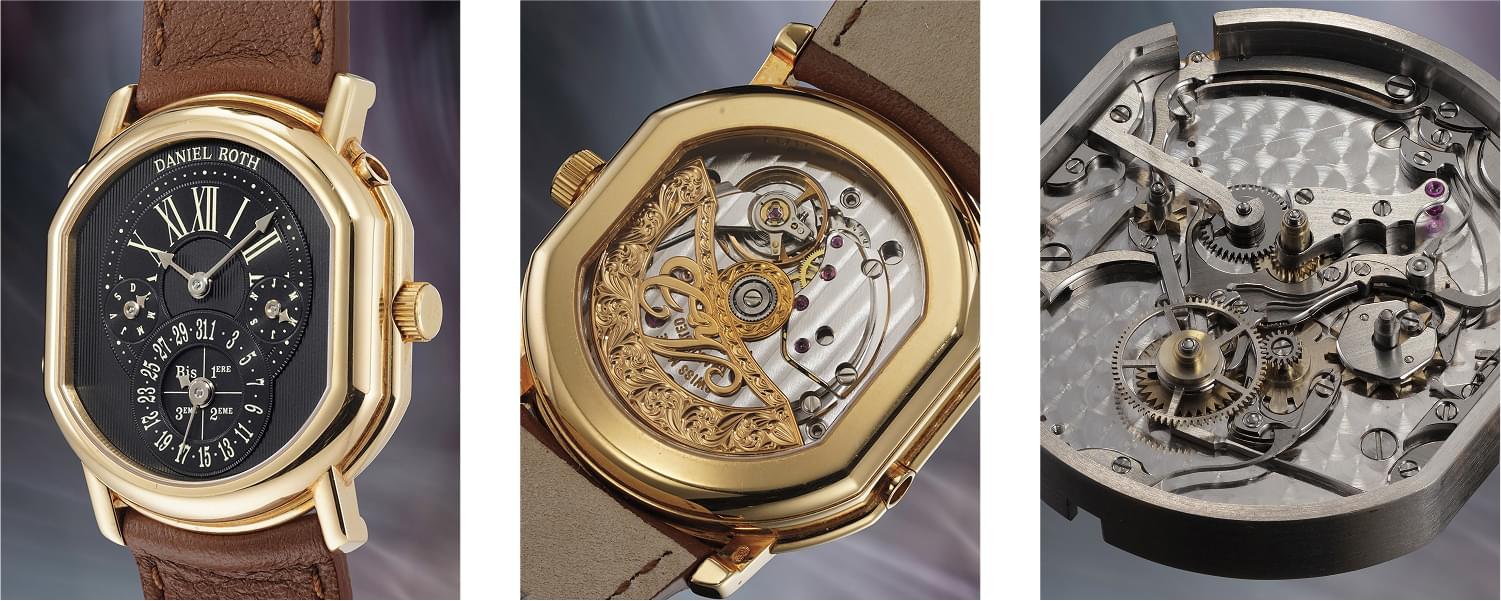
Perpetual Calendar Automatic Ref. 2117
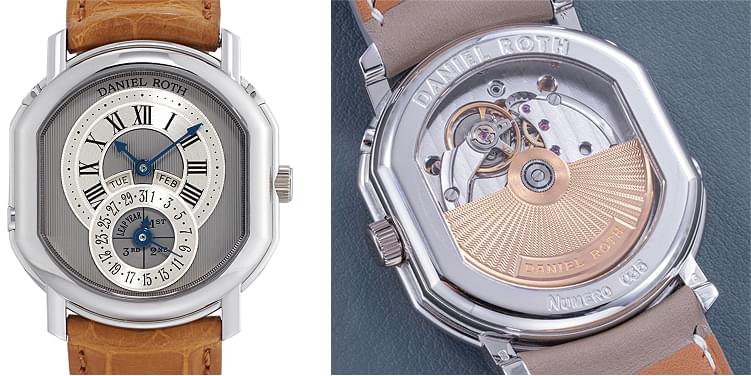
First of all, it should be noted that there are often discrepancies in the publications about the reference system in the Daniel Roth collection. The first models of the Perpetual Calendar in the earliest version of the system were with Ref. 2117. After the Daniel Roth brand became part of The Hour Glass watch division, the reference system was changed: Instead of the first digit 2, the letter C appeared in the references, so the Perpetual Calendar Automatic was designated Ref. C117, while the Perpetual Calendar Automatic Skeleton with open-worked dial was designated Ref. C117S, and the Perpetual Calendar Automatic Diamond-set – Ref. JC117ABASL. After the Daniel Roth brand became part of the Bulgari Group, the main part of the reference retained only three digits – Ref. 117, supplemented by other code designations (in particular, the case size is encoded in the letter after the first three digits).
Much has been reported recently about the involvement of the famous independent watchmaker Philippe Dufour in the development of Daniel Roth’s first perpetual calendar, but nowhere is there any mention of what exactly his work consisted of. As is already known, Mr. Roth chose the Eta/Gérald Genta calendar module on the Lémania 8810 automatic base movement as the starting material for the calendar module of his first perpetual calendar and, accordingly, for the DR117 caliber (originally called 117). It is clear that Philippe Dufour’s involvement actually consisted of two tasks: adapting the calendar module to the layout designed by Mr. Roth and adapting the calendar module and the base caliber to each other. It seems that the main task was to ensure a unique dial design.
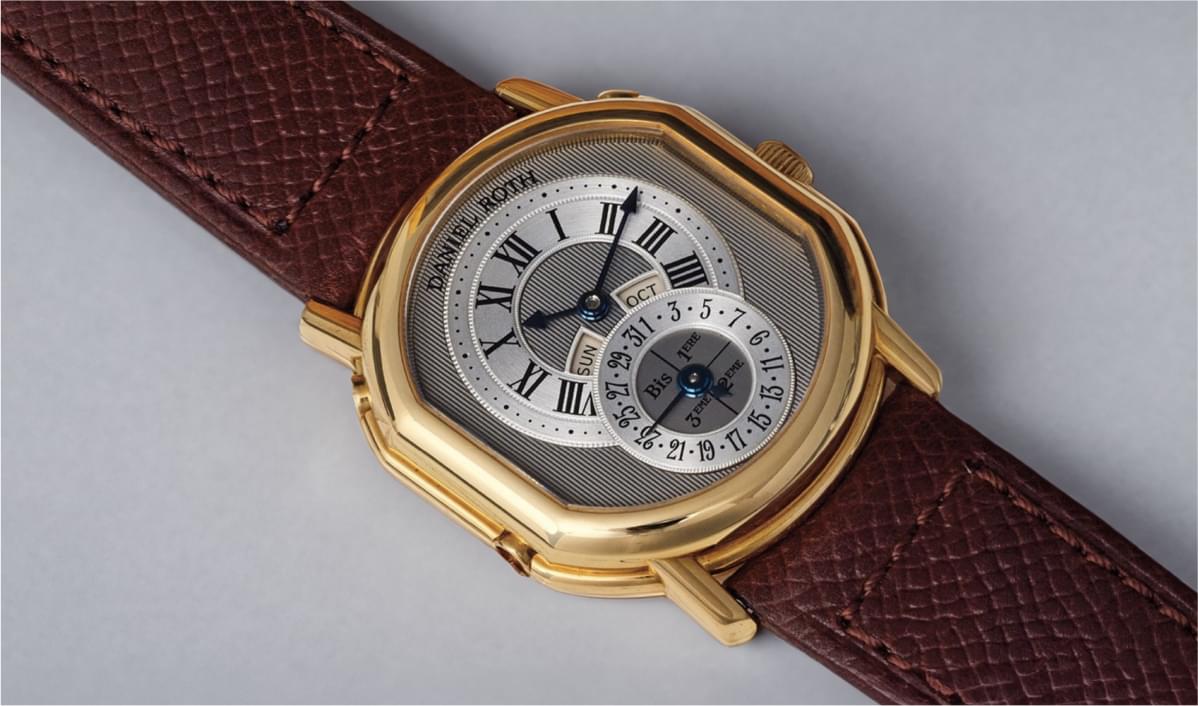
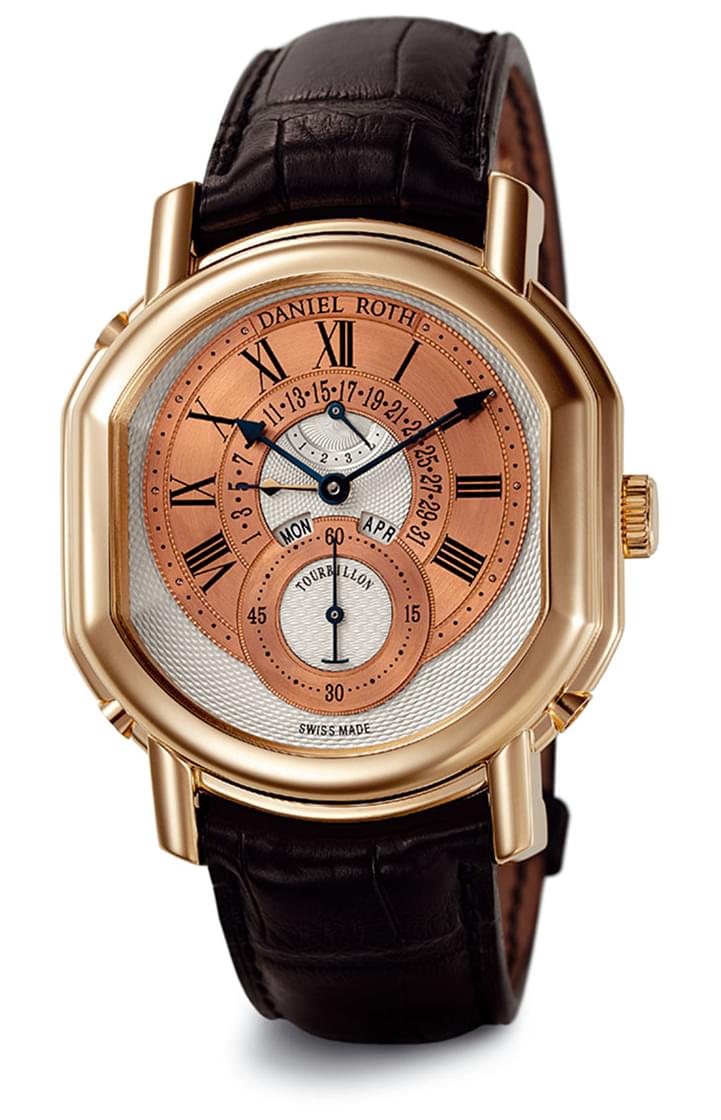
From the outset, Roth rejected the traditional layout of a watch with a perpetual calendar and orthogonal arrangement of the sub-dials in the Breguet Ref. 3050, which he had previously designed. Instead, he designed a dial that combined avant-garde design with a very subtle vintage style that he had noticed in pocket watches from the late 17th and early 18th centuries, whose silver dials featured a characteristic relief decoration with contrasting blackened areas. Mr. Roth decided to place a large and eye-catching sub-dial for the date and leap year at 6 o’clock on the dial – this is the most prominent part of the calendar display, and the day of the week and month indications in the windows in the center, which are barely perceptible in comparison, play a small role in the overall impression. Ironically, their subtle presence is the most notable contribution to the distinctive design of the Daniel Roth Ref. 2117 and some of the brand’s subsequent perpetual calendars.
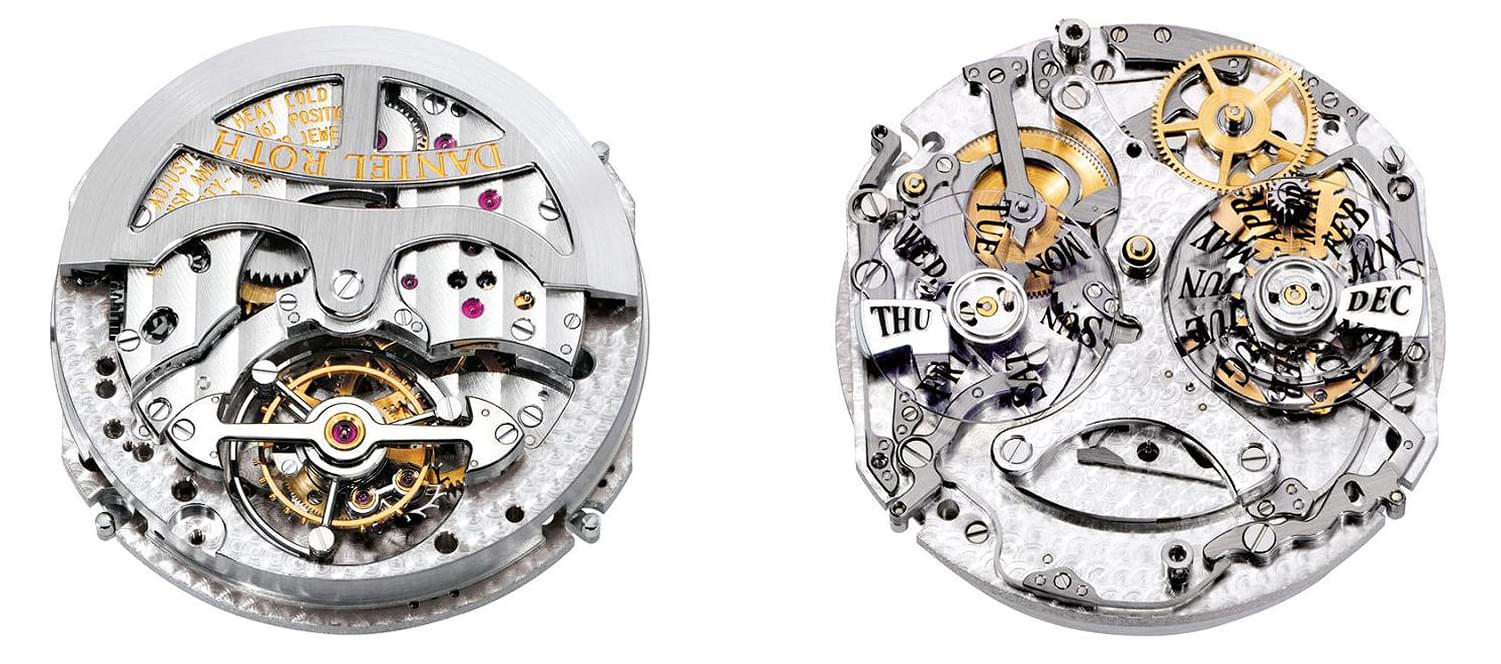
To adapt the original Eta/Gérald Genta calendar module to the chosen dial design, Philippe Dufour incorporated an additional gear train into the module, combining the date and leap-year indications on a single sub-dial. If you remove the dial, the presence of this gear train is clearly visible – it is a large gear wheel with rounded petal-shaped teeth, installed between the stepped cam of the month duration and the date star. Obviously, Mr. Roth omitted the moonphase in order to obtain a clean and clear image – but for Philippe Dufour, this work was hardly a major difficulty. Of course, the same cannot be said of another part of the technical specifications, which concerns the instantaneous switching of all calendar displays at midnight as requested by Mr. Roth, the so-called jumping mode. This function is rarely used in watches with a perpetual calendar, and for good reason: the instantaneous switching of the indications places high demands on the tension of the mainspring barrel (note: the Lémania 8810 caliber, the base movement of the Ref. 2117, has two mainspring barrels). For instantaneous switching to work properly, the movement must be able to store enough energy in the spring of the cam mounted on the 24-hour wheel to overcome the tension of the three click springs that hold the calendar wheels in position, as well as the inertia of all the calendar displays, including the additional leap-year intermediate wheel.
The required tension proved to be too high for the [DR]117 caliber, as prototype tests showed. It was officially announced that the inertia of the day and month discs was too high for the movement. And this is true, as the problem is reflected in the low tension at the exit of the winding barrels of the Lémania 8810 – a feature originally conceived by Lémania in consultation with the Longines brand, for whom this movement was developed in the 1970s. The Dufour and Roth team was unable to overcome this obstacle – not even in 1991, when the prototype of the Perpetual Calendar Automatic Ref. 2117 was presented at the Basel trade fair, nor in 1993, when the first watch was launched – no longer with the originally announced instantaneous function, but in a regular, non-instantaneous version.
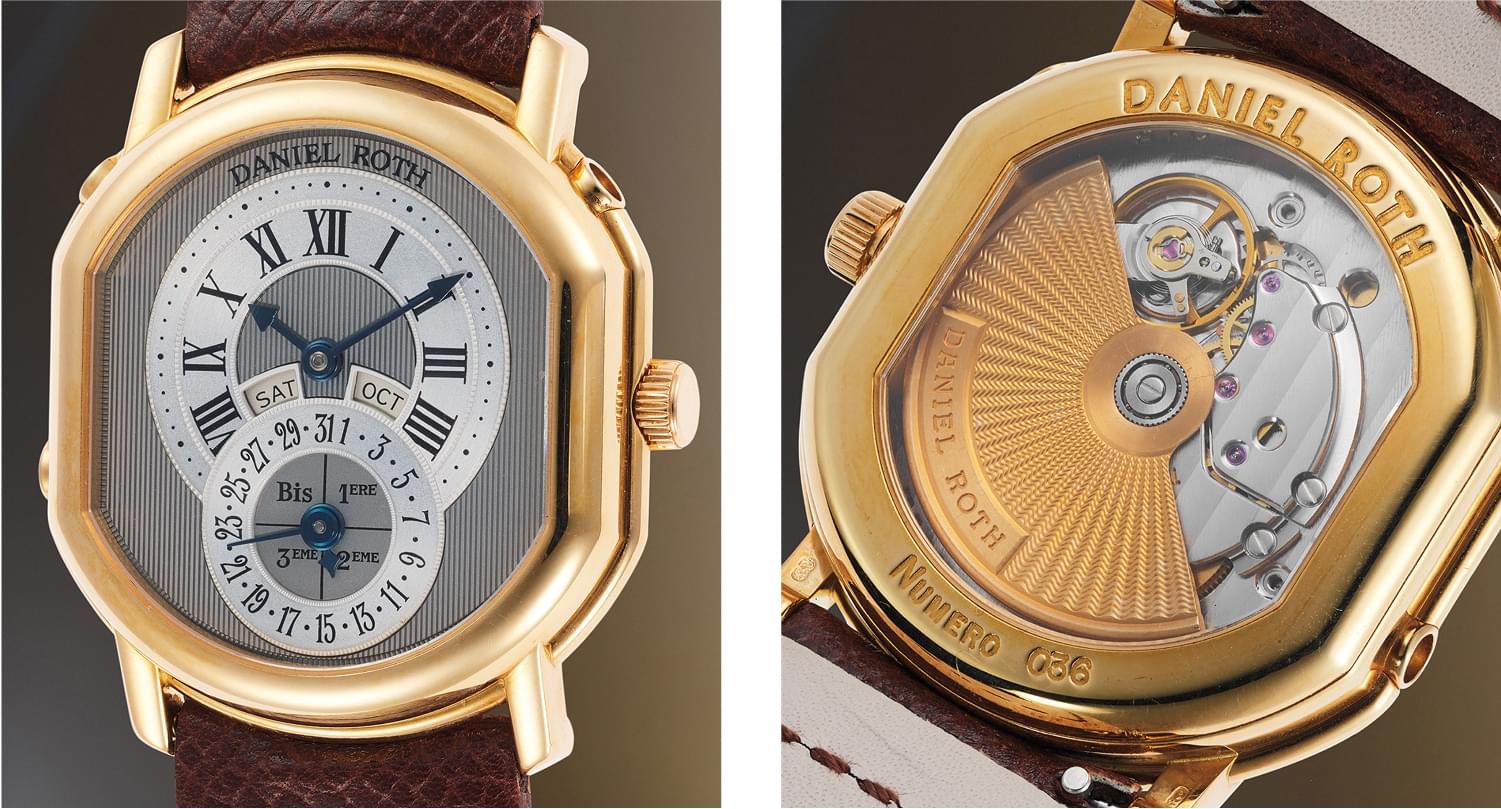
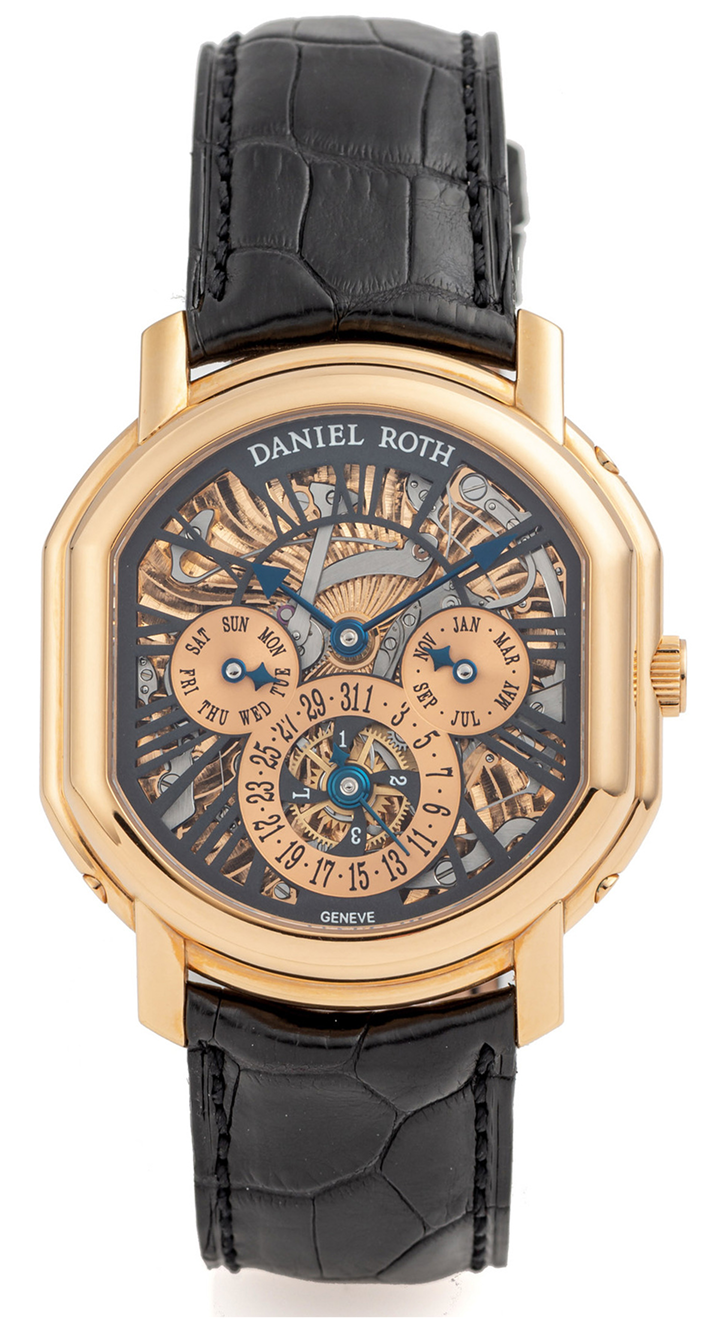
The history of the instantaneous perpetual calendar probably continued later than 1993 (the release of models with hands was announced in 1993), but before 1998, with the development of the modernized Ref. 2117 with hands for the day of the week and the month in two versions: with a regular or open-worked dial. The change of the display system from discs to hands seemed to confirm the official version of the reason for the failure of the original instantaneous function, but something else significant was done to the movement. Interestingly, the reference of the modernized watches remained the same – 2117, while the models with an open-worked dial were called “skeleton” – 2117S, although they are not, while the name of the new version of the movement [DR]117.1 reflects the fact of its modernization. The open-worked dial is very useful for examining how exactly the problem of the calendar’s instantaneous function was solved, because the openings in the dial reveal an additional lever pusher built into the calendar mechanism and under the pressure of a special flat spring. At the tip of the lever is a ruby roller that rolls on the eccentric of the 24-hour wheel, the shape of which differs from that of the eccentric of the original version of the caliber. The calendar mechanism works in such a way that the lever exerts more pressure on the eccentric. As soon as the maximum deviation is overcome, the lever causes the eccentric to rotate quickly and accelerates the switching of the calendar indications.
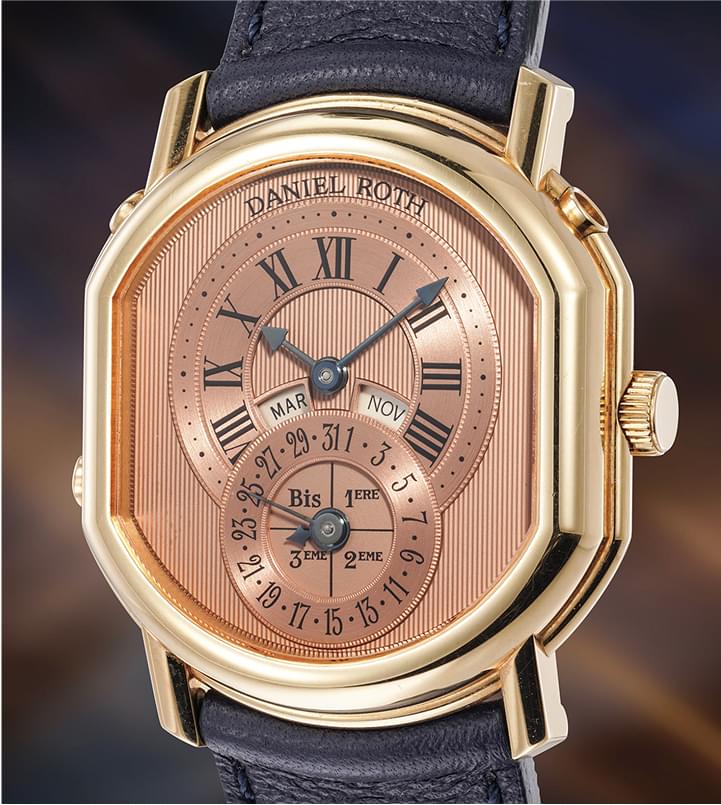
Has the abolition of disc indicators and the introduction of an additional lever completely solved the problem of instantaneous functioning? The answer seems to be no, although the modernized calendar should switch displays faster than the original version. Here we find ourselves in an ambiguous situation, trying to answer the question: How fast should the switching be for it to be considered instantaneous? According to the opinion often found in publications, the design of the calendar module should be described with the oxymoronic term “semi-instantaneous perpetual calendar”. Unfortunately, the question of whether the versions of the Ref. 2117 with pointer indications for the day of the week and month and a solid dial are “semi-instantaneous” remains unanswered, as it is not clear whether the additional lever is built into the calendar module due to the solid dial. However, the opinion of the community, which can be gleaned from the description of the Ref. 2117 with hands in various sources, is this it is a “semi-instantaneous” or even “instantaneous” calendar.
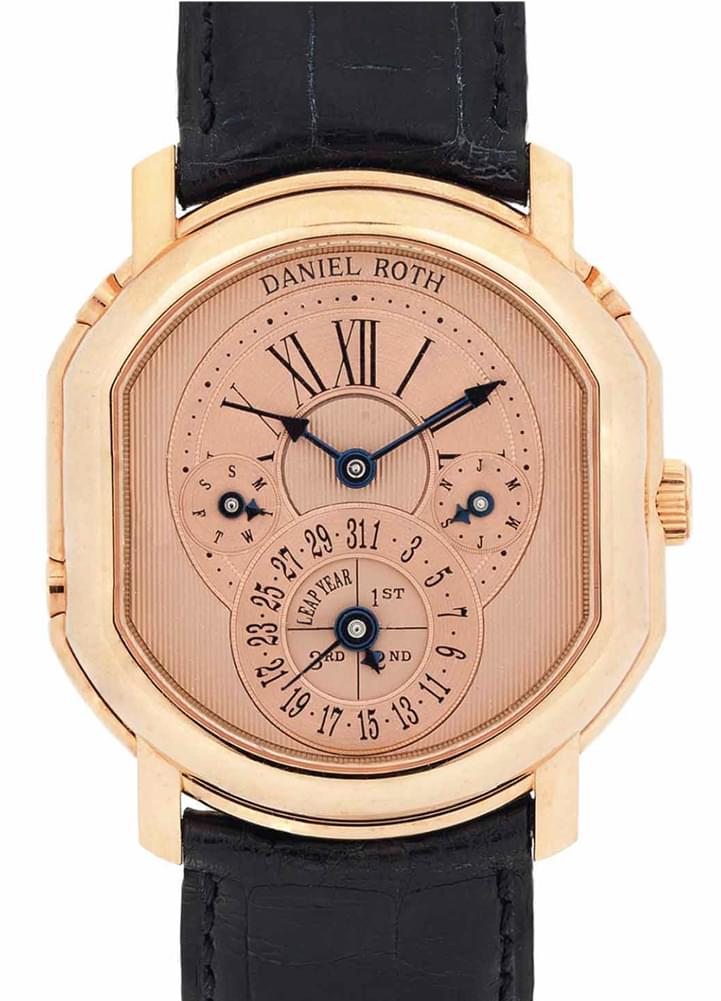
You might think so – indeed, such watches do not have high-inertia discs, but in the description of “A superb and ultra rare instantaneous pink gold perpetual calendar wristwatch” (mind you, just “instantaneous”, without “semi”), lot 58 of Phillips Reloaded: The Rebirth of Mechanical Watchmaking, 1980-1999 auction, we find the coveted photo of the perpetual calendar module – without the extra lever that makes the calendar mechanism “semi-instantaneous”. Therefore, the question of the degree of instantaneousness of the calendar of the Ref. 2117 models with hands for the day of the week and the month and a closed dial therefore remains open.
However, an analysis of all available sources shows that all Ref. 2117S (as a reminder, this is the version of the Ref. 2117 with hands for the day of the week and month and an open-worked dial) have the additional lever built in, i.e. it is the Ref. 2117S that is at least “semi-instantaneous”, while the Ref. 2117 with day and month hands and a solid dial should be under suspicion.
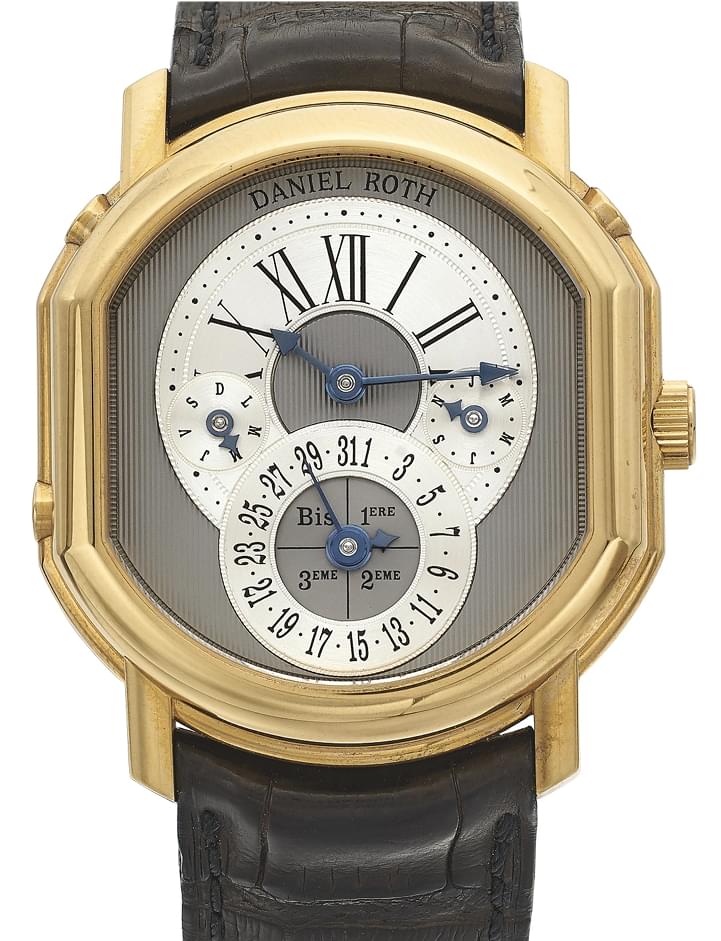
To complete the picture, it should be noted that the Perpetual Calendar Automatic Ref. 2117 required a modification to the base Lémania 8810 caliber, as the hour and minute hands – presumably inspired by the design of the Daniel Roth Tourbillon Double Face Ref. 2187 – were moved slightly upwards to make more room for the day of the week and leap year sub-dial, giving the dial an even more impressive, distinctive look. The same adjustment was later made when the brand switched to a different base caliber, the Girard-Perregaux GP3000, for subsequent perpetual calendar models.
In total, the original Daniel Roth Perpetual Calendar Automatic Ref. 2117 range consisted of nine basic versions: three dial and module versions (solid dial and apertures; solid dial and hands; open-worked dial and hands), with each version produced in three different shades of 18k gold: Yellow, rose and white gold, designated BA/BB/BC; platinum versions were also reported, but I could not find any examples of these. There were also different versions of the solid dial: a grey ruthenium-coated Ligné guilloché dial (the most common version); a salmon-colored Ligné guilloché dial; a black Ligné guilloché dial; a black dial with silver-colored chapter ring and date scale. Daniel Roth also offered bespoke watches and jewelry versions with diamond-set cases, some of which have appeared on the market.

Instantaneous Perpetual Calendar Ref. 119.Х
In the development of Daniel Roth’s perpetual calendars, the Ref. 119.X models are a logical continuation of Ref. 2117 (C117; 117), which offered the function of the perpetual calendar as an instantaneous or perhaps “semi-instantaneous” perpetual calendar. Daniel Roth officially announced the launch of Ref. 119.X in 2003, at a time when the brand was already part of the Bulgari Group. The main reasons for the introduction of the Ref. 119.X seem to be firstly the transition to a different base caliber Girard-Perregaux GP3000, which replaced the Lémania 8810 – the movement based on the GP3000 is called DR114, and secondly the increase in case size from 38x35x10.8 mm (L-size) to 41x38x9.8 mm (X-size), which was in line with the worldwide trend towards larger wristwatches. At the same time, after reducing the thickness by a whole millimeter, the brand offered its customers an automatic perpetual calendar with significantly better proportions. In general, complex mechanical watches with a thickness of less than 10 mm seem to be a winning position for any player in the luxury collector’s watch market. Production of the previous Perpetual Calendar Ref. 117 was discontinued.

From a mechanical point of view, the perpetual calendar module of Ref. 119.X is essentially identical – it is a “semi-instantaneous” version of the module developed for Ref. 2117, with a hand for the day of the week and the month and an additional lever. The only significant change was made to adapt the module to the new base caliber.
The same applies to the dial design, which retains the style and feel of the open-worked Ref. 2117S, although it has been adapted to the larger case and the associated larger dial. The chapter ring has been widened and Roman numerals have been added, bringing the Ref. 119.X closer to the original design of the Ref. 2117 than the open-worked Ref. 2117S version. In addition, the sub-dials for the day of the week and the month have been redesigned. The days of the week and months are now marked with three letters on the dials instead of just one, making them easier to read. The leap year display has also been redesigned, but remarkably the design of the mainplate of the calendar module has remained the same, decorated with the same rococo floral ornaments as the open-worked Ref. 2117S. With the introduction of the Ref. 119.X, the brand abandoned yellow gold watches and introduced models in 18k white gold, 18k rose gold and 950 platinum. It also ended the debate over the correct name for the calendar function by giving the new models a new, unambiguous and rather long official name: Masters Grandes Complications Instantaneous Perpetual Calendar.
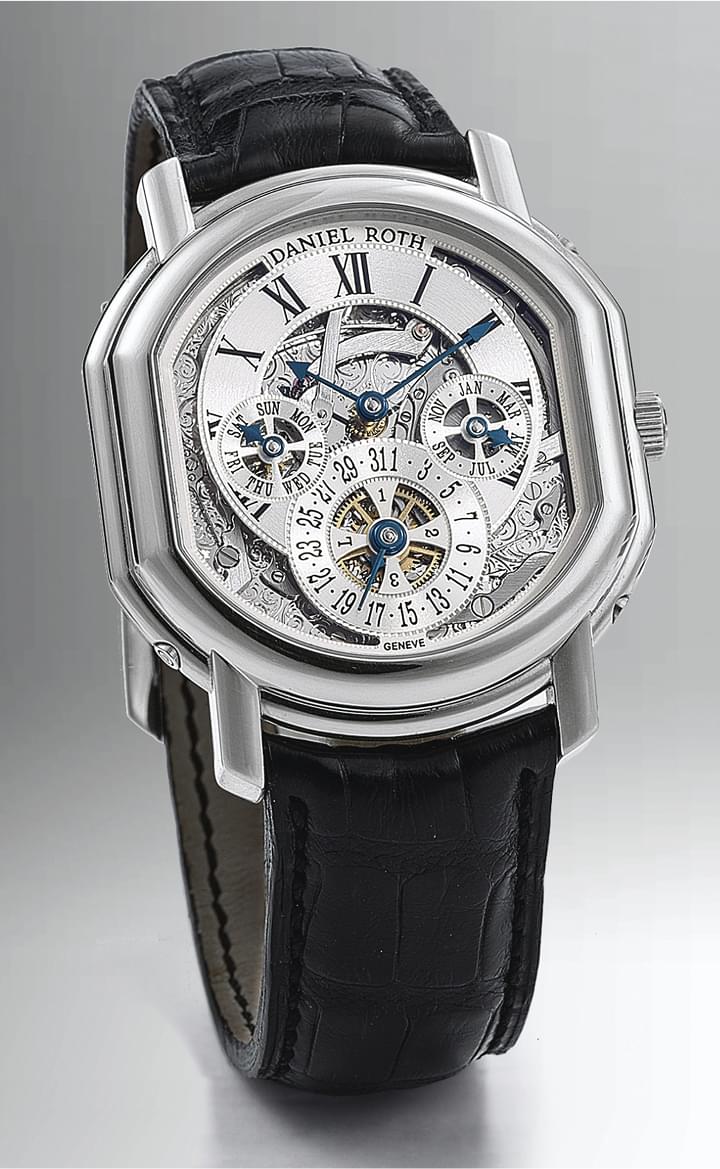
Although Mr. Roth had already left the brand he founded, the original design of the Ref. 119.X can be recognized as typical of Daniel Roth. The brand’s design team clearly had a different vision and over time changed the overall look of Daniel Roth watches towards what could be described as “bulgarish” or “New Style.” This was also evident in the design of the Ref. 119.X three years after its launch, in 2006, when the Ref. 119.X was updated in a “new style” in line with this strategy”, with models offered in 18k white gold, 18k rose gold and 950 platinum. The most striking change was the dial, which since then has featured an open-worked chapter ring with large and even very large Roman numerals radiating from the center, very much in the style of Roger Dubuis watches of the 2000s. The calendar counters have generally kept the same design, but the pretty guilloché “filet sauté” outline that gives the dial a museum-like character has completely disappeared, and the leap-year sub-dial has been given a dynamic swirl shape (too dynamic, in my opinion). The surface of the mainplate of the calendar module has also been changed – it is decorated with a rough, deliberately hand-engraved surface reminiscent of a colimaçonnage pattern.
Minute Repeater Perpetual Calendar Ref. C189
In the mid-1990s, the brand announced the release of this watch in three gold colors, but unfortunately no trace of this model could be found in the available sources. Perhaps this was just Daniel Roth’s plan to release such a heavy complication – the expected retail price was a quarter of a million Swiss francs. Unfortunately, it is unclear which module for the perpetual calendar the Ref. C189 was to be equipped with, while the hand-wound Lémania 389 minute repeater was chosen as the basis. Note: In some publications, the reference C189 refers to the minute repeater by Daniel Roth, which in reality has a different reference C190, also based on the Lémania 389 (this watch was produced in very small numbers, allegedly three, one for each gold color).
Perpetual Calendar Moon Phases Ref. 118.L/118.X
With the Ref. 118.L, launched in 2001 when the brand was already part of the Bulgari Group, Daniel Roth brought back the moonphase to the perpetual calendar, which was originally presented in the Eta/Gérald Genta calendar module. In the earliest version of the Ref. 118.L, the brand meticulously, if not literally, reproduces the design of the first Ref. 2117, including the case dimensions (L-size; 35x38 mm) and the design of the dial with grey ruthenium and vertical Ligné guilloché stripes, scale markings, day of the week and month displays in windows – except, of course, for the most important innovation – the moonphase display, which on the Ref. 118.L is designed as a round window at 12 o’clock, just like on Gérald Genta1147’s perpetual calendars. The early Ref. 118.L and the Ref. 2[C]117 are so similar that even experts sometimes confuse the reference, including Phillips in four out of five cases.
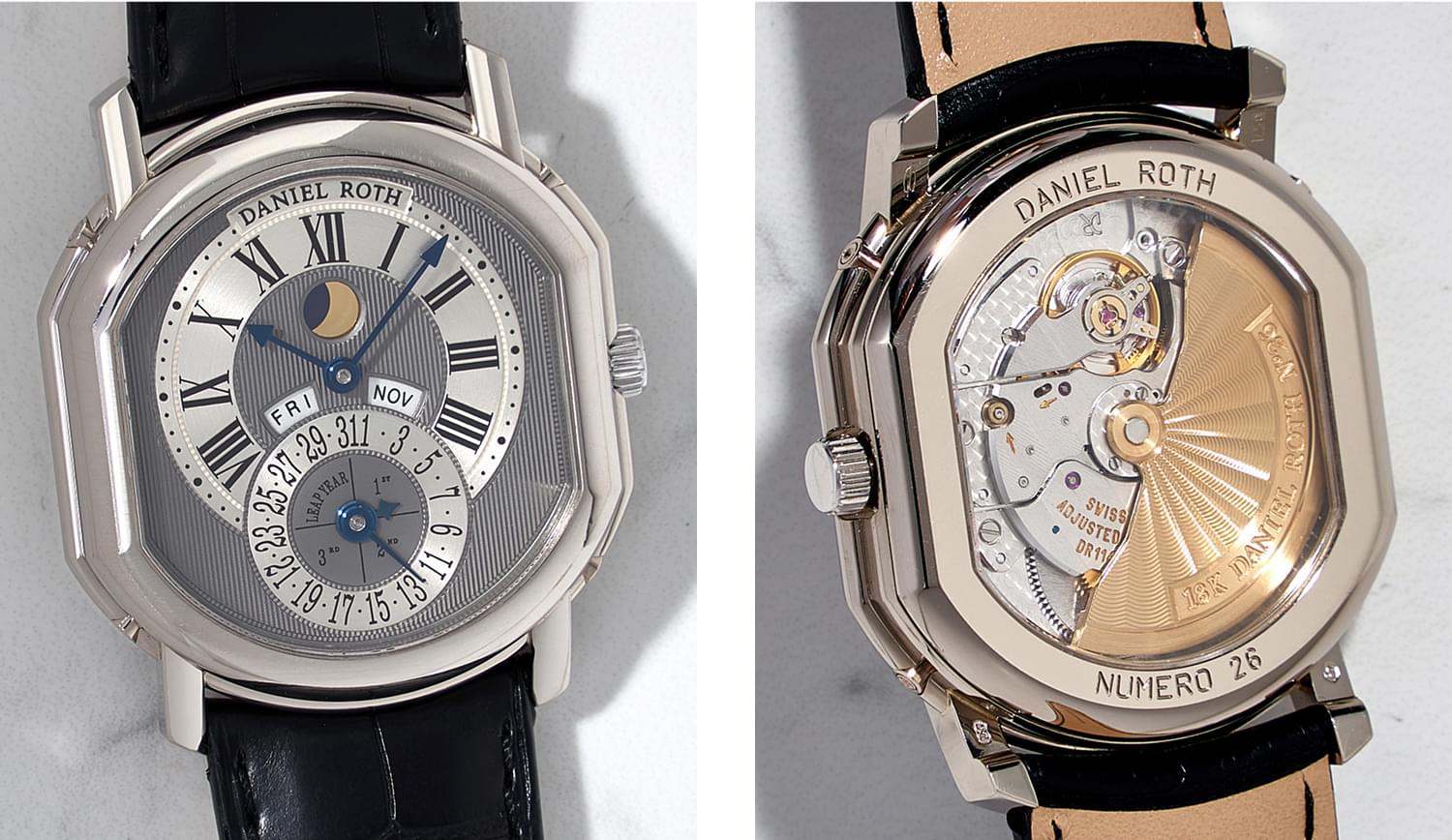
Daniel Roth offered the Ref. 118.L with an L-size case (35x38 mm) in three colors of 18k gold or 950 platinum.
Besides the retrieval of the moonphase, an important difference between the Ref. 118.L and the Ref. 2[C]117 is the new DR114 caliber, which is based on the Girard-Perregaux GP3000 – it replaces the DR117 caliber of the Ref. 2117 models, which used the Lémania 8810 as its basis. Since the day of the week and the month are indicated by discs, it can logically be assumed that the calendar module of the DR114 caliber is an early, non-instantaneous version. In fact, Daniel Roth never claimed that the Ref. 118 was instantaneous. It is interesting to note that the brand also used the designation DR114 for the different (albeit with almost the same basic characteristics) movements of the Instantaneous Perpetual Calendar Ref. 119.X, Perpetual Calendar Time Equation Ref. 121.Y and finally the Athys Perpetual Calendar Ref. 112.Y.
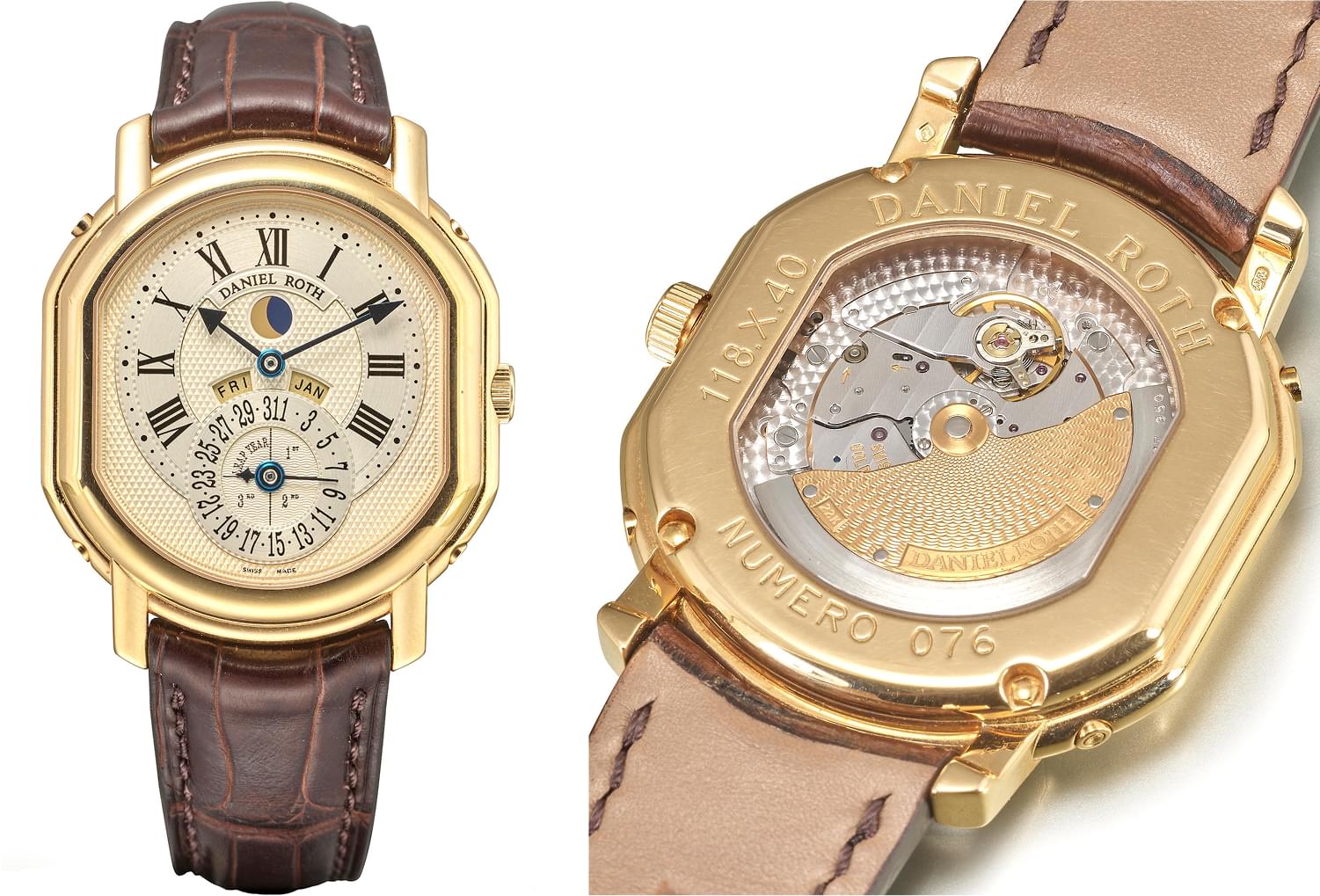
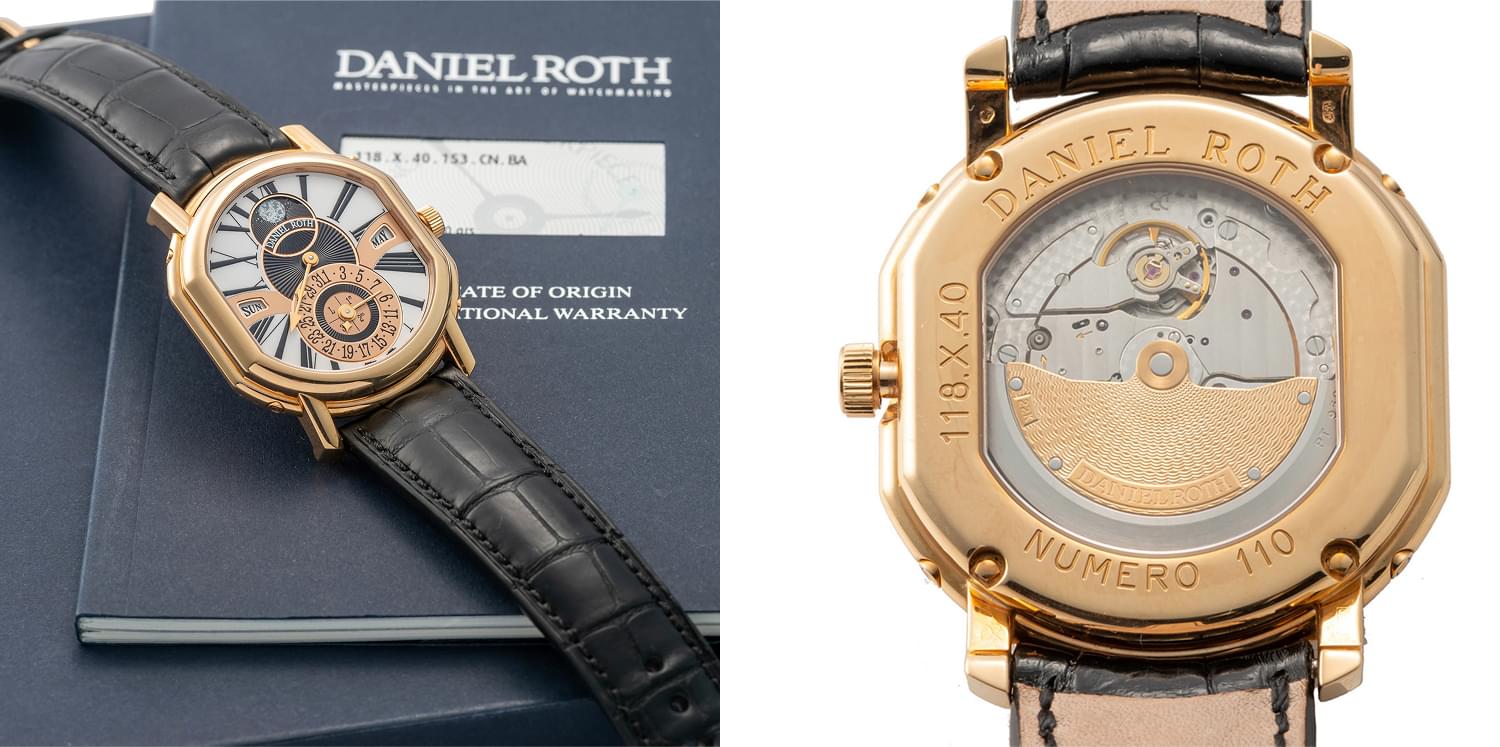
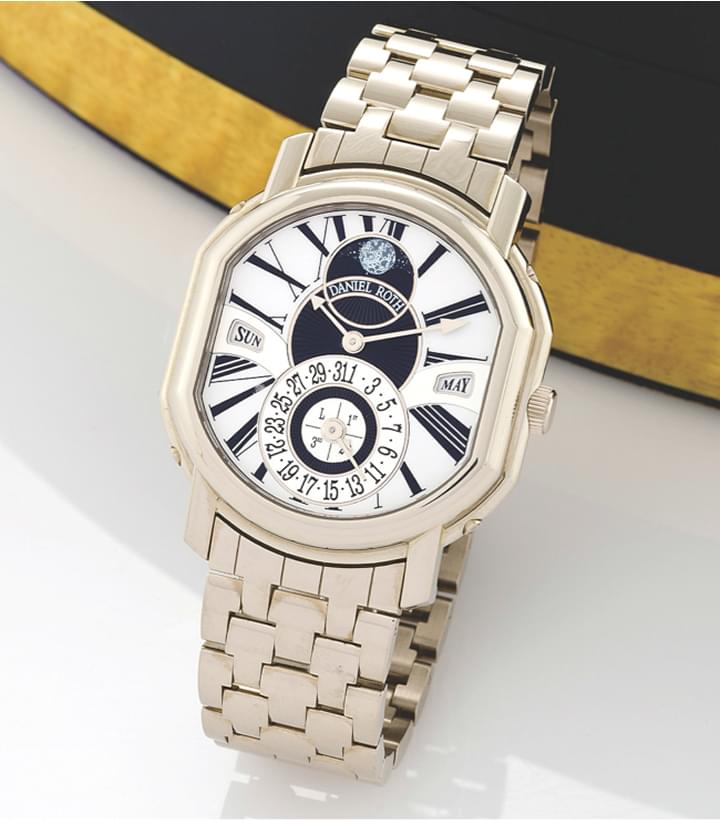
In 2002, one year after the launch of the Perpetual Calendar Moon Phases Ref. 118.L, Daniel Roth presented a new version of this design with a case enlarged to X-size (38x41 mm) and a dial decorated with guilloché with a lozenge motif and a leap year sub-dial with guilloché vieux panier, while the Daniel Roth logo was moved to the inner area of the chapter ring. This (second) generation of watches continues to use the DR114 caliber, which is based on the Girard-Perregaux GP3000. The watches were produced in 18k yellow gold (118.X.40), 18k white gold (118.X.60) and 950 platinum (118.X.70), with the gold models also being offered on five-row gold bracelets with T-shaped links.
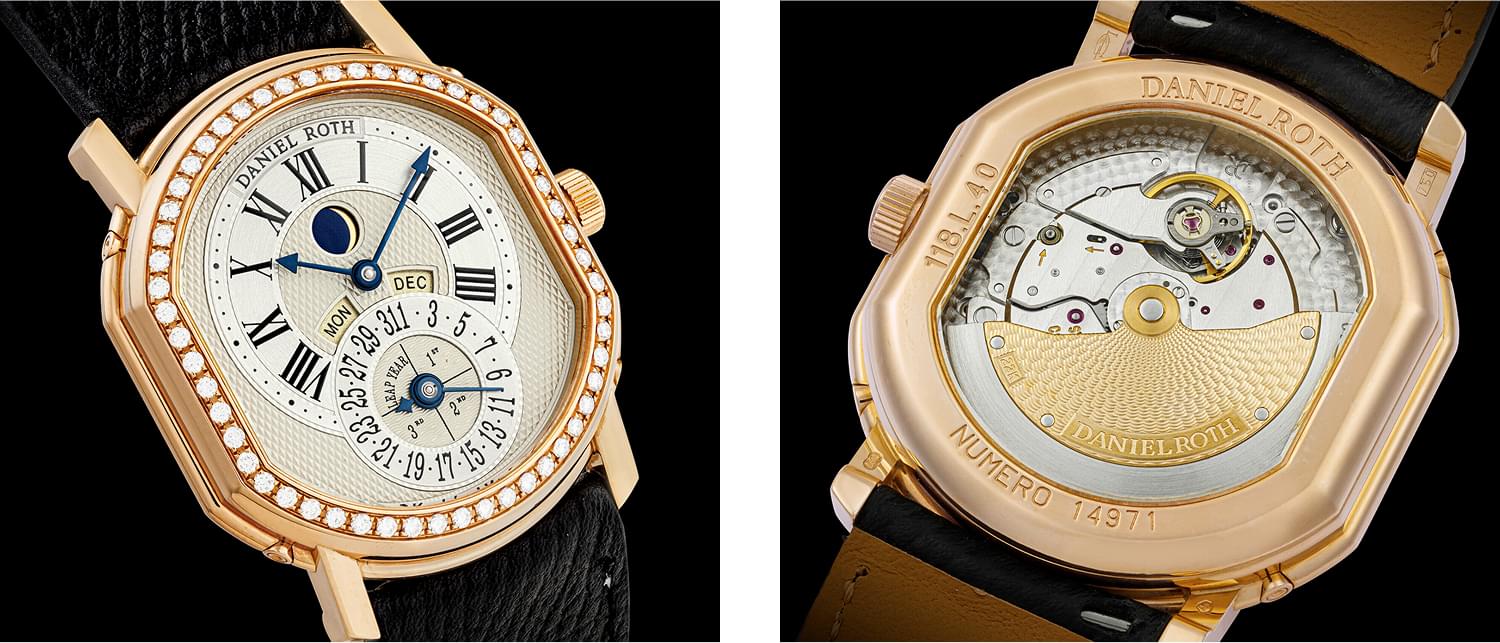
It is worth noting that the second-generation dial with guilloché lozenge and vieux panier, which we see in the rare diamond-set Ref. 118.L with a first-generation case in size L and a diamond-set bezel (case number 14’971; sold by Christie’s).
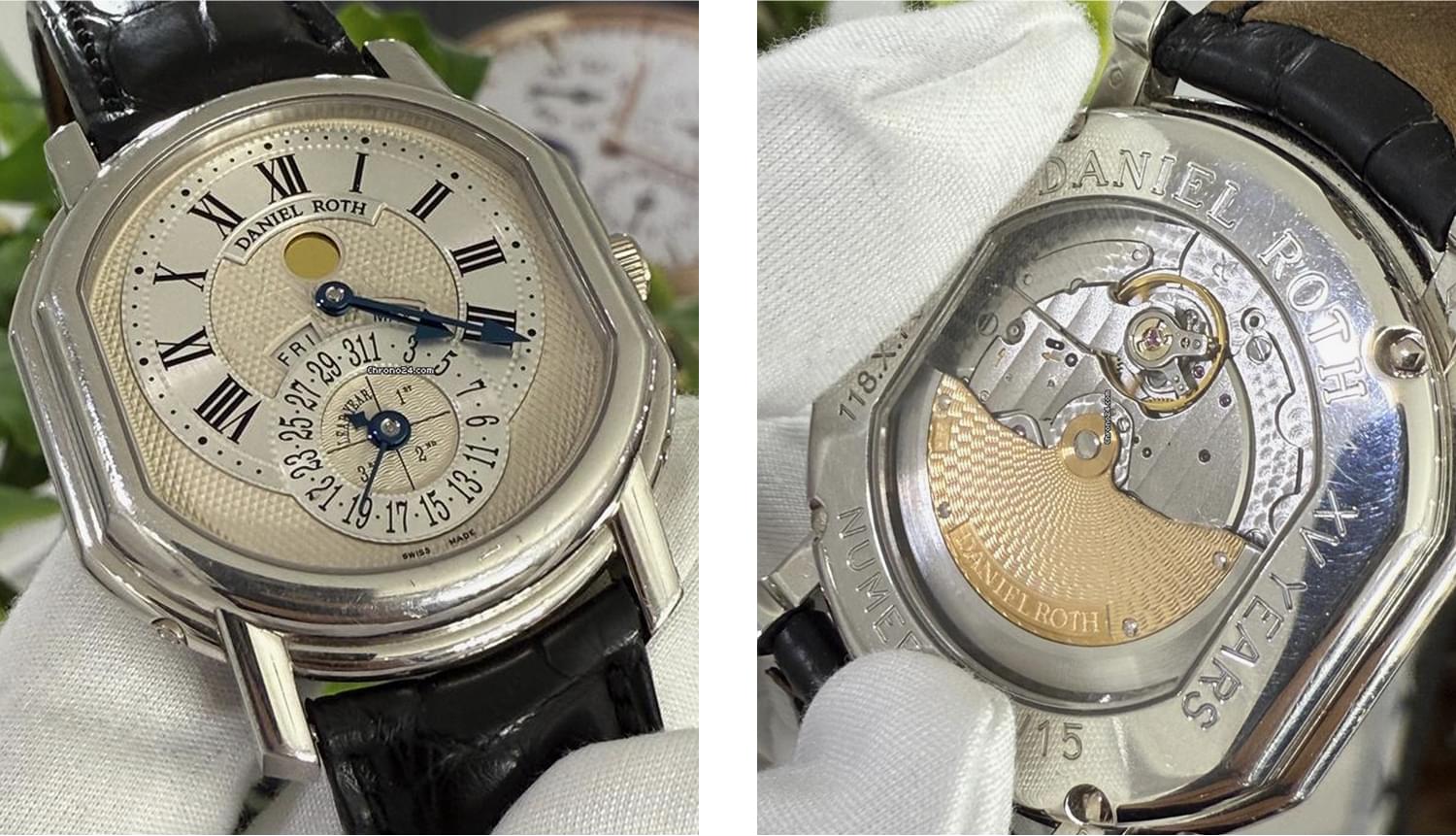
The list of rarities naturally also includes the special limited edition of 15 pieces of the Perpetual Calendar Moon Phases XV Years Edition Ref. 118.X.70 in 950 platinum with a second-generation guilloché dial, in the center of which the numerals XV are engraved above a guilloché pattern, and the engraving “XV Years” on the case back. This watch was launched in 2004 in honor of the brand’s 15th anniversary.
The latest, third generation of Ref. 118 appeared in 2005. The design in the Ref. 118.X version, i.e. with a large X-size case (38x41 mm), was updated by introducing a dial in the dynamic “bulgarish” design with large, radially arranged Roman numerals, apertures for the day of the week and month moved to the edge of the dial, and a moonphase in the most common design with a fan-shaped aperture and a photorealistic image of the moon. The watch was available in 18k rose gold, 18k white gold or platinum 950.
Perpetual Calendar Chronograph Moon Phase Ref. 377.X/379.Y
This watch has a combination of a perpetual calendar and a chronograph, which is extremely rare for Daniel Roth. In this context, it is unclear why the brand, which caters primarily to the collector community, did not use the classic high-end hand-wound Lémania 2320 chronograph as a base, which was previously used in the Ref. 2147, and instead opted for the Frédéric Piguet 11.85 automatic column-wheel chronograph with vertical clutch. The only reason for this seems to be to offer the everyday wearer a practical wristwatch with a perpetual calendar that does not have to be wound by hand. This movement formed the basis for the Daniel Roth perpetual calendar chronograph Ref. 377.X, launched in 2002, and its automatic caliber DR207, which used an Eta/Gérald Genta calendar module with the original specifications, i.e. with a leap year on the sub-dial of the month and with moonphase. The module was most likely adapted for the Frédéric Piguet 11.85. The placement of the leap year indication on the month sub-dial is the main difference between this module and the modified versions for references 2117, 119 and 118, where the leap year indication is on the date sub-dial. The use of the Eta/Gérald Genta calendar module with its original display arrangement distinguishes the Ref. 377.X from the perpetual calendars and chronographs of other brands that are based on the Frédéric Piguet 11.85. The Ref. 377.X was offered in two limited editions of 15 pieces: Ref. 377.X.40 in 18k yellow gold and Ref. 377.X.60 in 18k white gold with a guilloché dial with a lozenge motif and guilloché vieux panier on the recessed counters. The dial features applied Breguet Arabic numerals, which are rarely found on Daniel Roth dials.
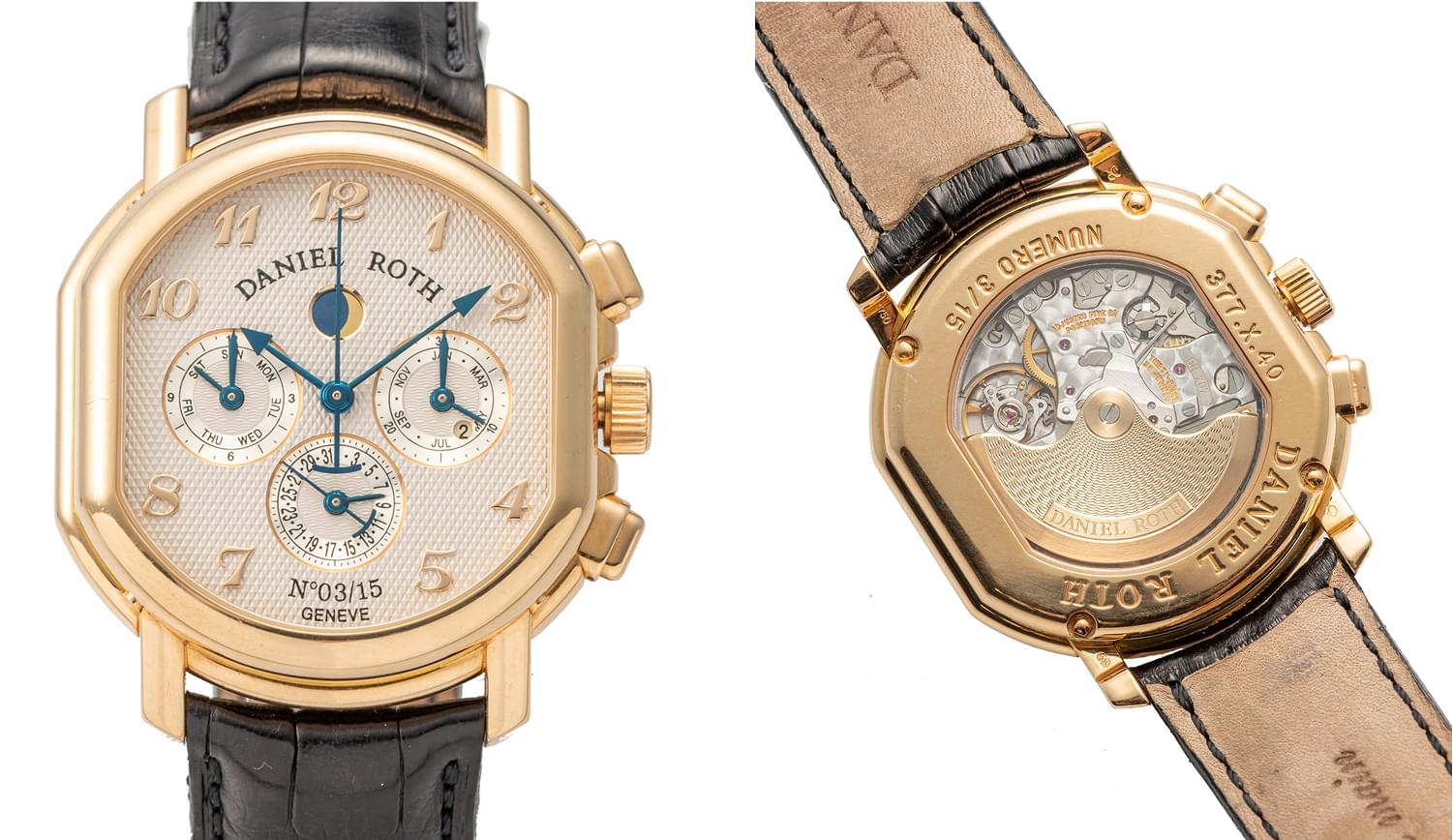
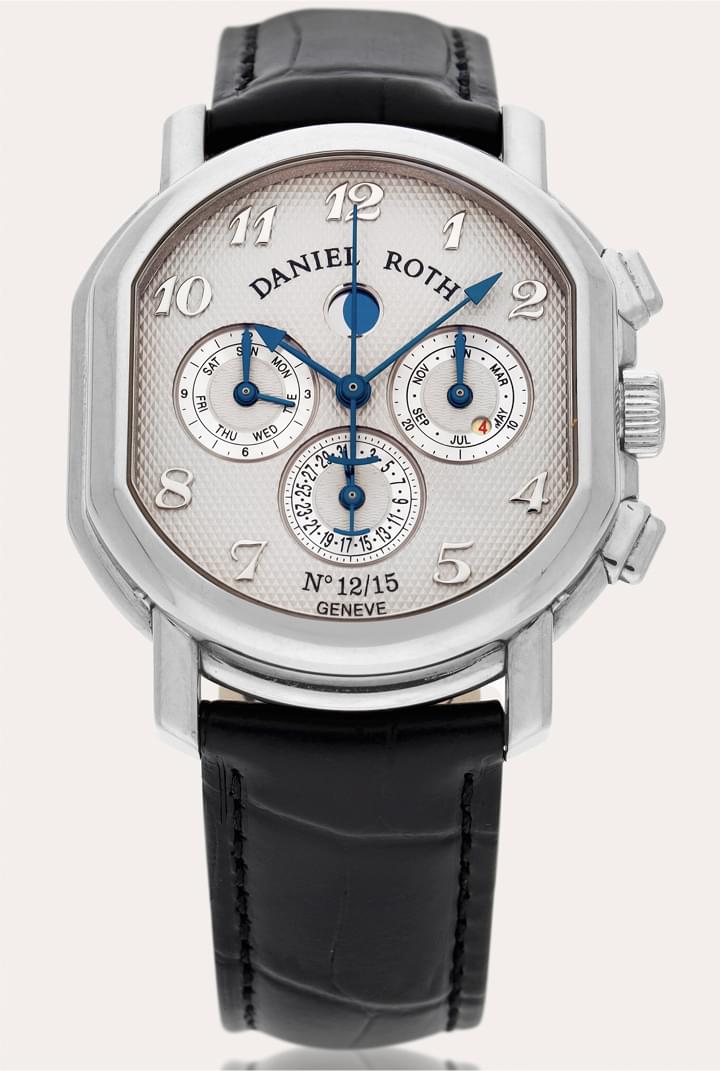
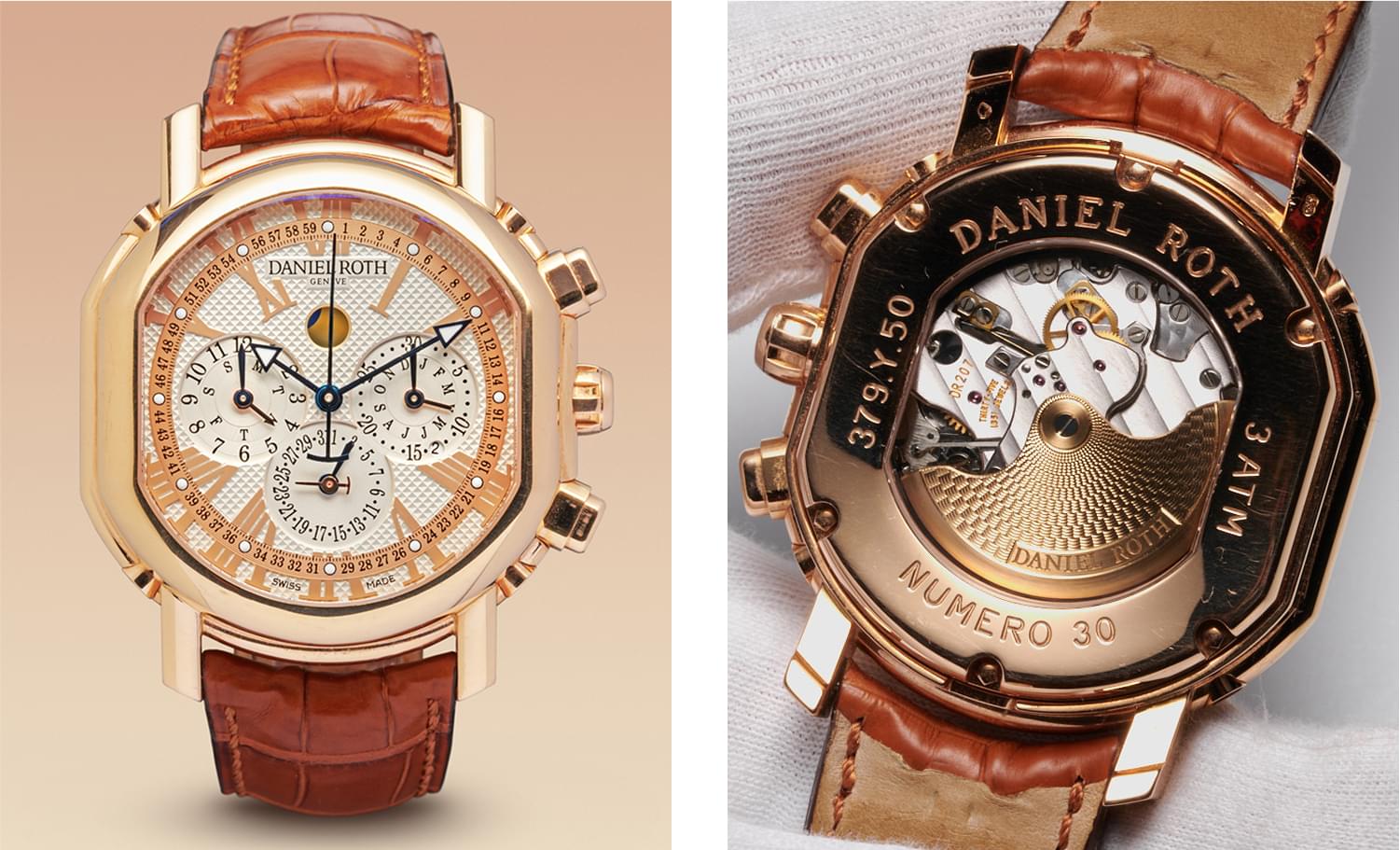
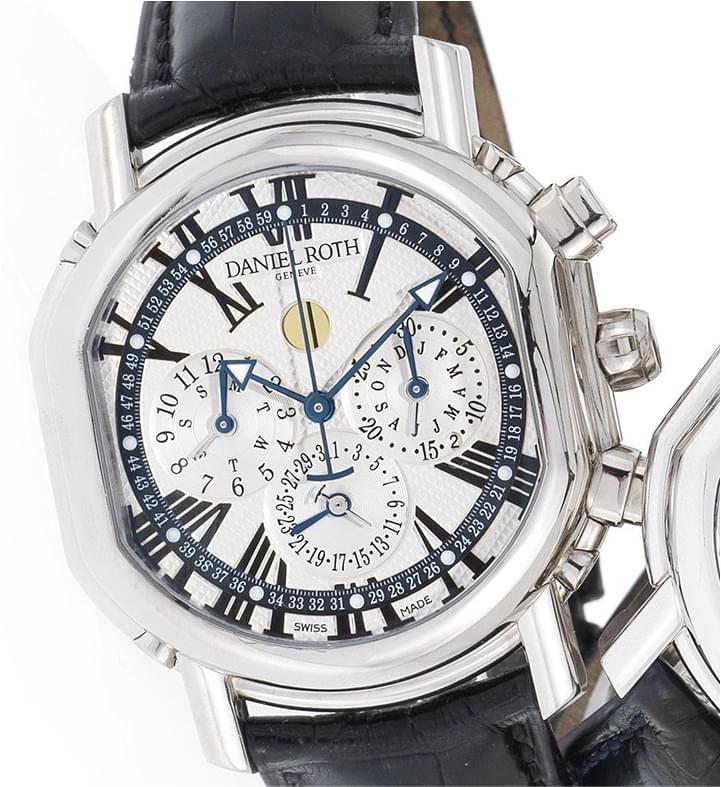
The second generation of the Perpetual Calendar Chronograph Moon Phase was launched in 2008 and was offered in five versions with a Y-case (41x44 mm) instead of the X-case (38x41 mm) of the first generation models: in 18k rose gold (Ref. 379.Y.50.193.CC.BD), in 18k rose gold with diamonds on the bezel (Ref. 379.Y.50.193.CC.BD.S02), in 18k white gold (Ref. 379.Y.60.192.CN.BD), in 18k white gold with diamonds on the bezel (Ref. 379.Y.60.192.CN.BD.S02) and in platinum 950 (Ref. 379.Y.70.194.CM.BD), all in unlimited but numbered editions. The second-generation models were equipped with the same automatic DR207 caliber, which was based on the Frédéric Piguet 11.85, a curved Ellipsocurvex case and a refined, multi-level dial with recessed sub-dials decorated with fine circular grooves, a main dial plate with a recessed, square pyramid ornament (a kind of reverse Clous de Paris decoration) and an applied scale with large, radiating Roman numerals, an imprinted minute track with 1/5 second markers. As with all later releases, consumer interest in these editions declined significantly from the late 2000s onwards, so there is often doubt as to whether some versions were produced for sale or just as display pieces.
Perpetual Calendar Time Equation Ref. 121.Y
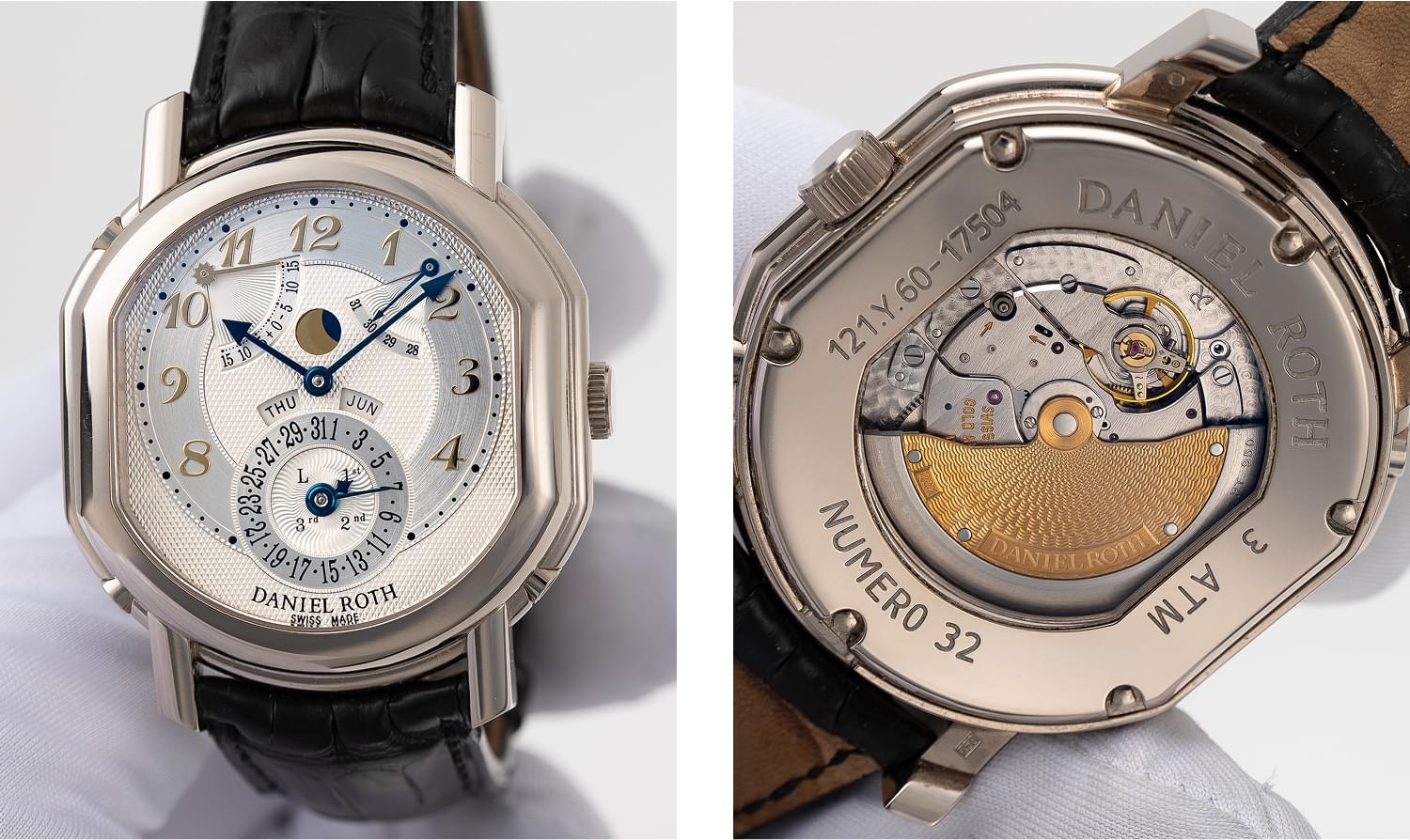
Daniel Roth launched the first generation of Perpetual Calendar Time Equation watches in 2004, when the brand celebrated its 15th anniversary. With this design, Daniel Roth clearly followed in the footsteps of the Breguet brand by offering a complicated version of the classic perpetual calendar function. Daniel Roth added an equation of time display and a display for the number of days in the month – both of which are extremely rare in perpetual calendar wristwatches. The equation of time display is the astronomical function to indicate the discrepancy between apparent solar time, which directly follows the daily movement of the sun, and mean solar time, which follows a theoretical mean sun with uniform movement along the celestial equator. This display is located between 10 and 11 o’clock on the dial of the Perpetual Calendar Time Equation Ref. 121.Y. This reference also has a number of days in the month display, which makes this particular perpetual calendar configuration unique in the industry – this display is located between 1 and 2 o’clock. Decorated with a lozenge guilloché motif, the dial retains the structure of the original design of the Daniel Roth perpetual calendar Ref. 2117 and subsequent versions, with a large date and leap year sub-dial at the bottom (at 6 o’clock) and apertures for the day of the week, month and moon phase in the center. The chapter ring features applied Breguet numerals, which is rare on the dial of Daniel Roth watches. The first generation models were available with a Y-size case (41x44 mm) in 18k rose gold (Ref. 121.Y.40), 18k white gold (Ref. 121.Y.60) or platinum 950 (Ref. 121.Y.70).
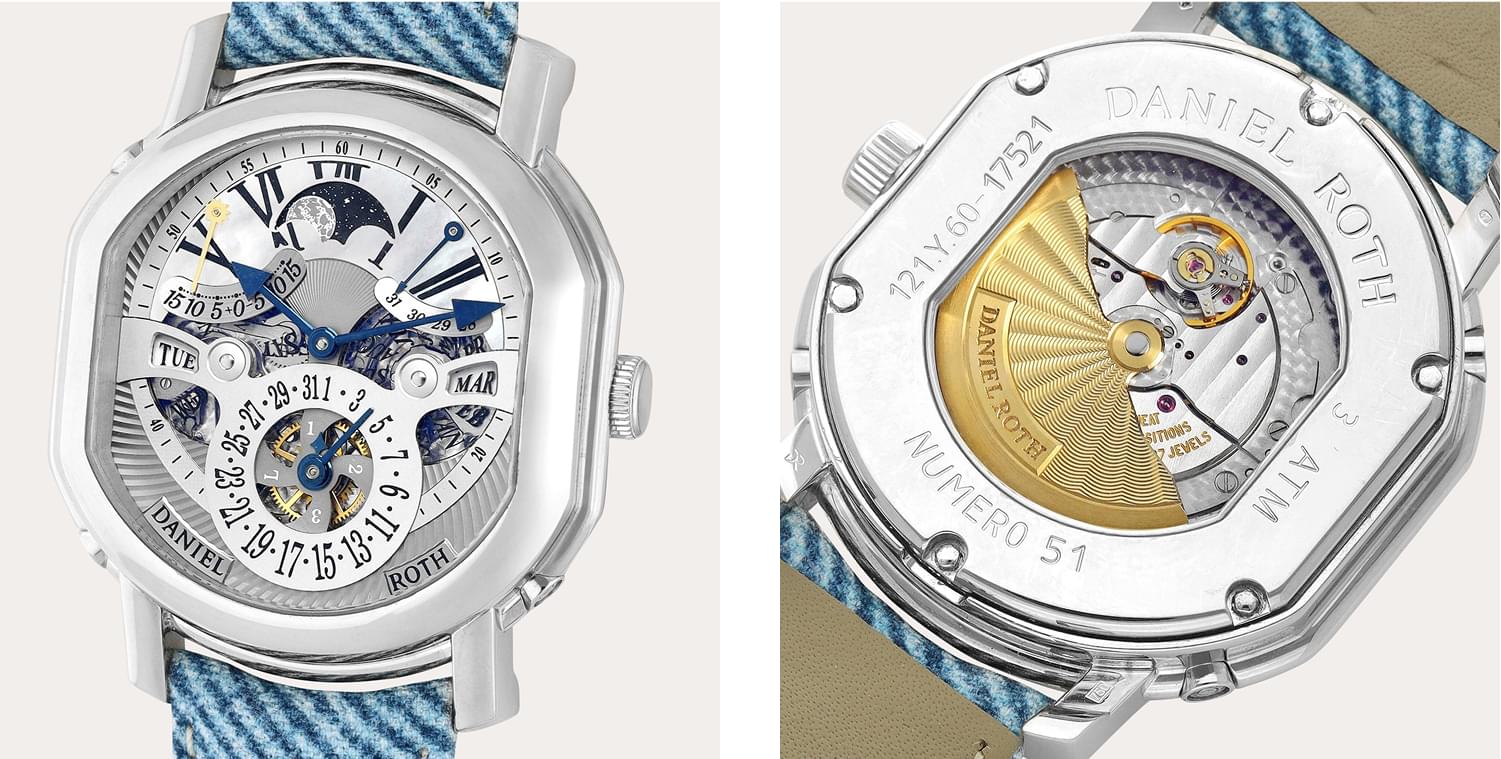
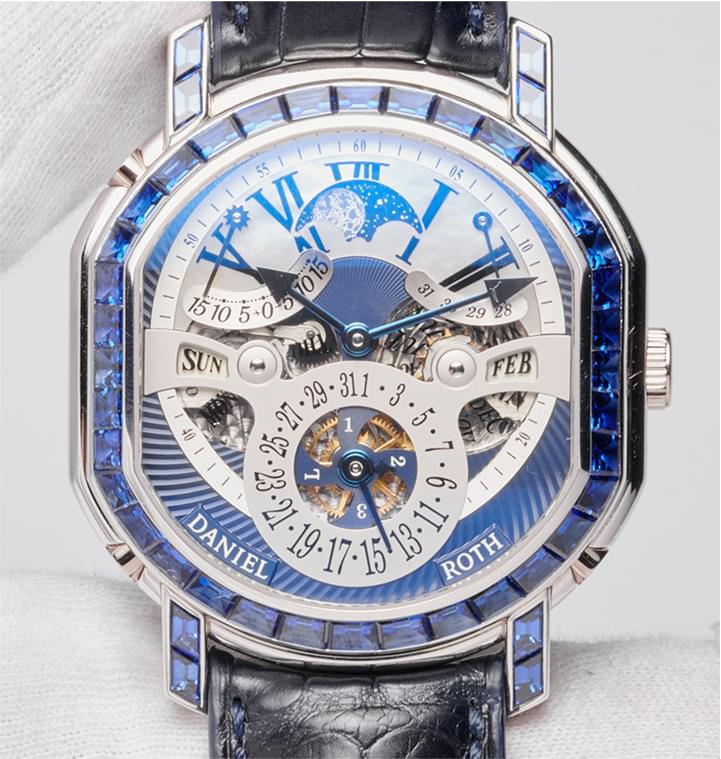
The models of the second generation of the Perpetual Calendar Time Equation bear the same reference 121.Y, but have an open-worked dial in the new dynamic New Style (“bulgarish”) design. The brand produced the second generation Ref. 121.Y from 2007, following in the footsteps of the third generation Ref. 118 launched two years earlier, with a photorealistic moon in a fan-shaped window and apertures for the day of the week and month on “wings” extending from a sub-dial for the date and leap year. In total, the brand offered six models with a 41x44 mm (Y-size) case in 18k white gold (Ref. 121.Y.60.721.CN.BD.S02 with diamond-set bezel and Ref. 121.Y.60.721.CN.BD without diamonds); in 18k yellow gold (Ref. 121.Y.40.720.CB.BD.S02 with diamond-set bezel and Ref. 121.Y.40.720.CB.BD without diamonds); or in platinum 950 (Ref. 121.Y.70.722.CM.BD.S02 with diamond-set bezel and Ref. 121.Y.70.722.CM.BD without diamonds). Judging by the picture that emerges on the secondary market, the second generation of the Ref. 121.Y was not in great demand, as only a few examples appeared over the entire period. With this in mind, the emergence of a unique example of the Ref. 121.Y.70.722.CM.BD.S11 in platinum with a bezel and lugs set with baguette sapphires is a very special event – this super rare watch was auctioned by the Ineichen auction house in 2022.
Tourbillon Automatic Perpetual Calendar Date Rétro Ref. 199.Y
1990s. For the Daniel Roth Ref. 199.Y, this movement was upgraded and given the new designation DR740. This is a perpetual calendar version of the DR730 automatic tourbillon caliber with retrograde date (Ref. 196, Daniel Roth’s smallest and slimmest tourbillon), which the brand launched in 2003. The Ref. 199.Y is the first Daniel Roth watch to combine a perpetual calendar and a tourbillon.
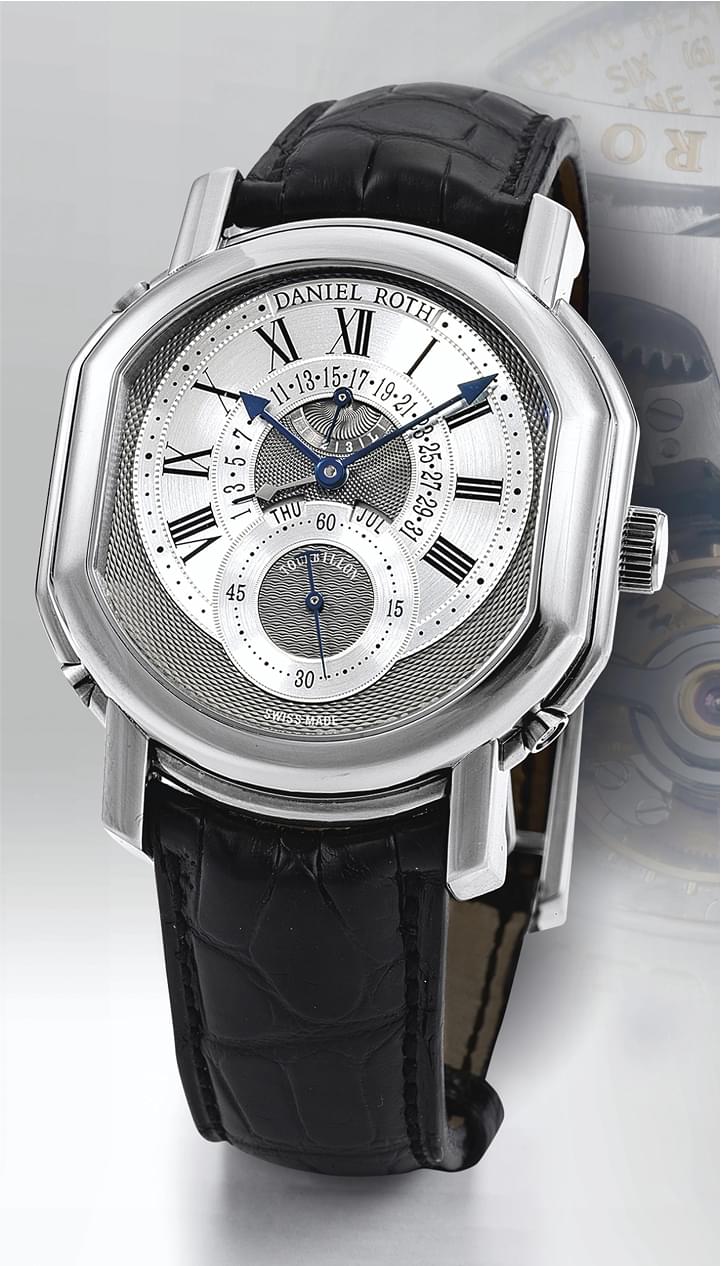
The combination of two important complications has led to a higher price for a watch that inevitably suffers from low production volumes. It is therefore unsurprising that the Ref. 199.Y is one of Daniel Roth’s rarest releases and is difficult to find. Early versions of the first generation Ref. 199.Y with a modern large Y-size (41x44 mm) case have a calm, classic dial executed in a style inspired by the dials of the Ref. 2117, Daniel Roth’s first perpetual calendar. The chapter ring with the hour and minute hands is slightly shifted upwards in accordance with the proven Daniel Roth design DNA, the inner arc of the chapter ring is occupied by a retrograde date scale, in the center there are openings for the day of the week and the month, the upper part of the central zone is occupied by a leap year display, which is also retrograde. The main dial is decorated with a guilloché Grain de riz motif, the small seconds sub-dial with a guilloché vieux panier motif and the leap-year dial with a guilloché Soleil ondulé motif. The dial of the Ref. 199.Y.60.011.CN.BD in 18k white gold is two-tone gray and silver, the Ref. 199.Y.70.610.CN.BD in platinum 950 has a two-tone dial with shades of sky blue and silver, while the Ref. 199.Y.40.165.CN.BD has a two-tone dial with copper and silver tones. The presence of a tourbillon is only indicated by the inscription “Tourbillon” on the small seconds sub-dial, while the tourbillon itself is only visible through the sapphire caseback.
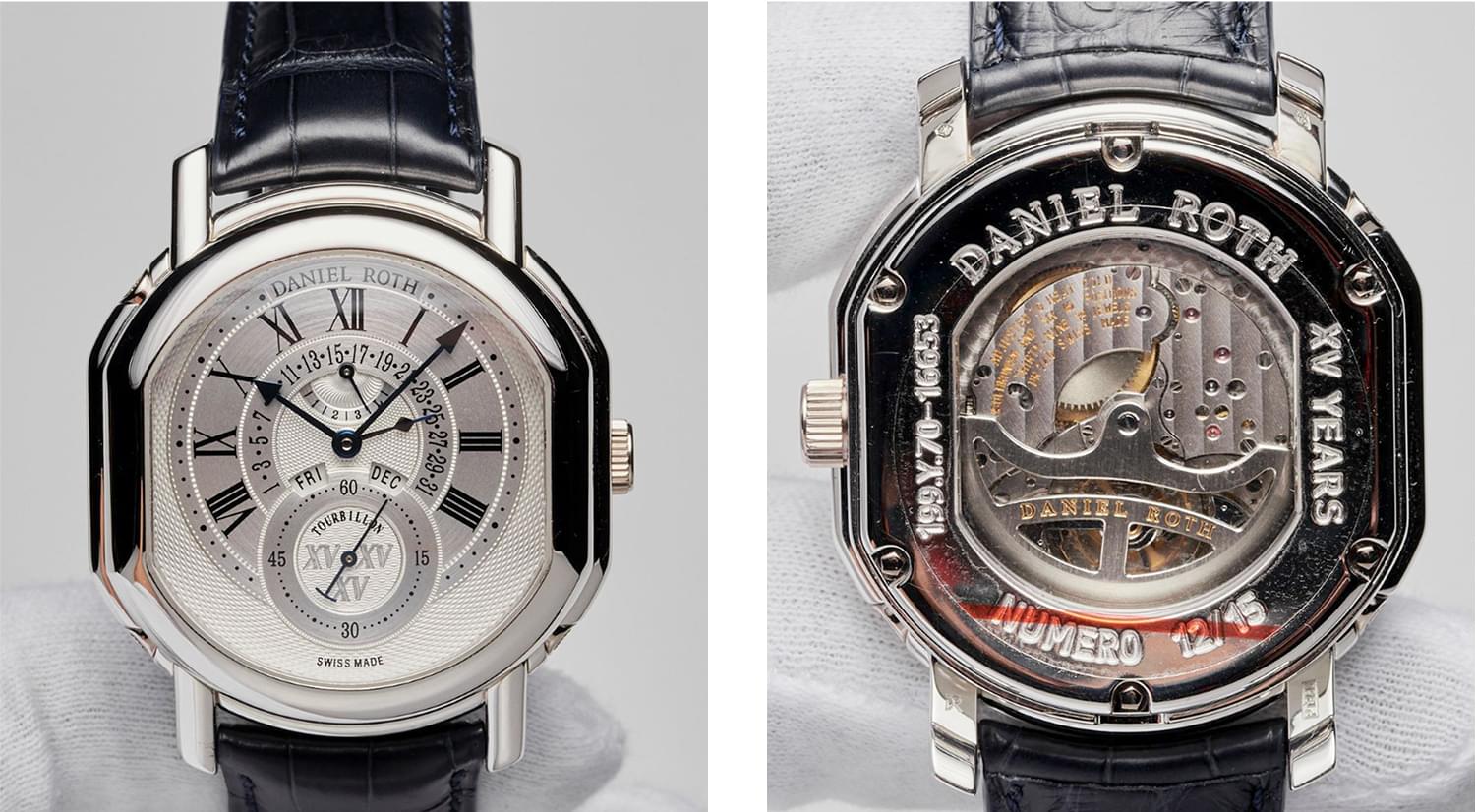
Ref. 199.Y.70.011.CN.BD from 2004, the limited edition “XV Years”, was launched together with other 199.Y models of the first generation in 2004, when the brand celebrated its 15th anniversary. In contrast to the non-limited edition models with two-tone dials, the anniversary model in platinum 950, which was issued in a limited edition of 15 pieces, has a monochrome silver-colored dial with three en1147graved XV numerals above a vieux panier guilloché patern of the small seconds sub-dial. The caseback is engraved with the inscription “XV years”, to celebrate the 15th anniversary of the brand.
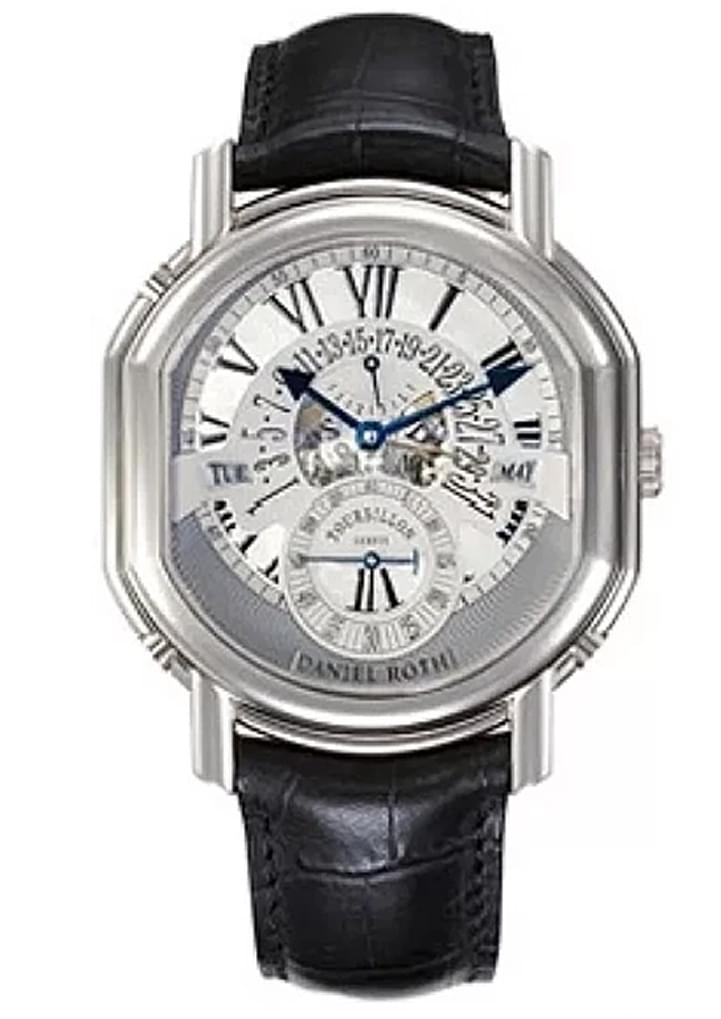
The second generation of the Tourbillon Automatic Perpetual Calendar Date Rétro Ref. 199.Y was probably launched in 2009, with a 44x41 mm case (Y-size) and a New Style dial with a dynamic design and large Roman numerals radiating from the center. The company has planned to launch six models in 18k white gold (Ref. 199.Y.60.721.CN.BD.S02 with diamond-set bezel and Ref. 199.Y.60.721.CN.BD without diamonds); in 18k yellow gold (Ref. 199.Y.40.720.CB.BD.S02 with diamond-set bezel and Ref. 199.Y.40.720.CB.BD without diamonds); or in platinum 950 (Ref. 199.Y.70.722.CM.BD.S02 with diamond-set bezel and Ref. 199.Y.70.722.CM.BD without diamonds). All these models were obviously produced in very limited numbers, if they were produced at all, apart from some exhibition prototypes, as I could not find any models offered on the secondary market.
Tourbillon 8 Jours Double Face Perpetual Calendar Ref. 220.Y
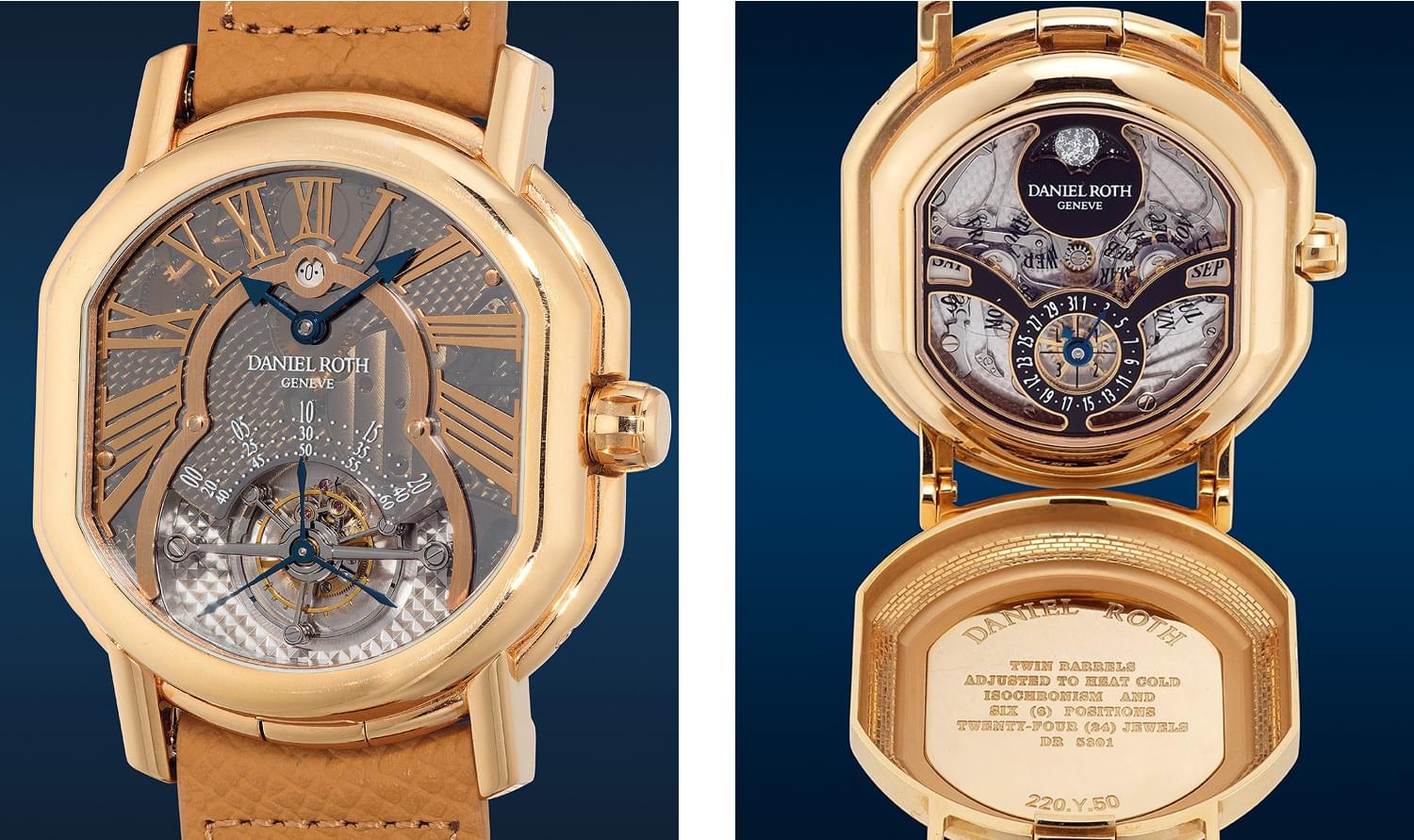
Launched in 2008, this watch has a very special design with a hinged, double-sided case that must be opened to reveal a perpetual calendar on the back. This case design was originally developed for the Tourbillon 8 Jours Double Face Date Power Reserve Ref. 197.X, which was launched in 2002. The front dial of the Ref. 220.Y with a tinted, transparent sapphire crystal plate and applied Roman numerals is strongly reminiscent of the dial of the second generation of the Ref. 197.X with New Style dial, which has been in production since 2006. If we compare the two watches from the dial side, the only significant difference between the Ref. 220.Y and the second-generation Ref. 197.X is a small opening at 12 o’clock, where the digital power reserve indicator of the Ref. 220.Y can be found. The most important difference, however, is the secret dial on the back of the case of the Ref. 220.Y, which is revealed when the hinged case is flipped up after pressing the pusher at 6 o’clock – this is where the perpetual calendar is located. The perpetual calendar dial on the back of the Ref. 220.Y is open-worked and made in the same New Style as the dial on the front. It is interesting to note that the Ref. 220.Y has almost the same perpetual calendar module as the Ref. 118. The DR5301 caliber of the Ref. 220.Y is in fact a complicated version of the DR5300 caliber of the Ref. 197.
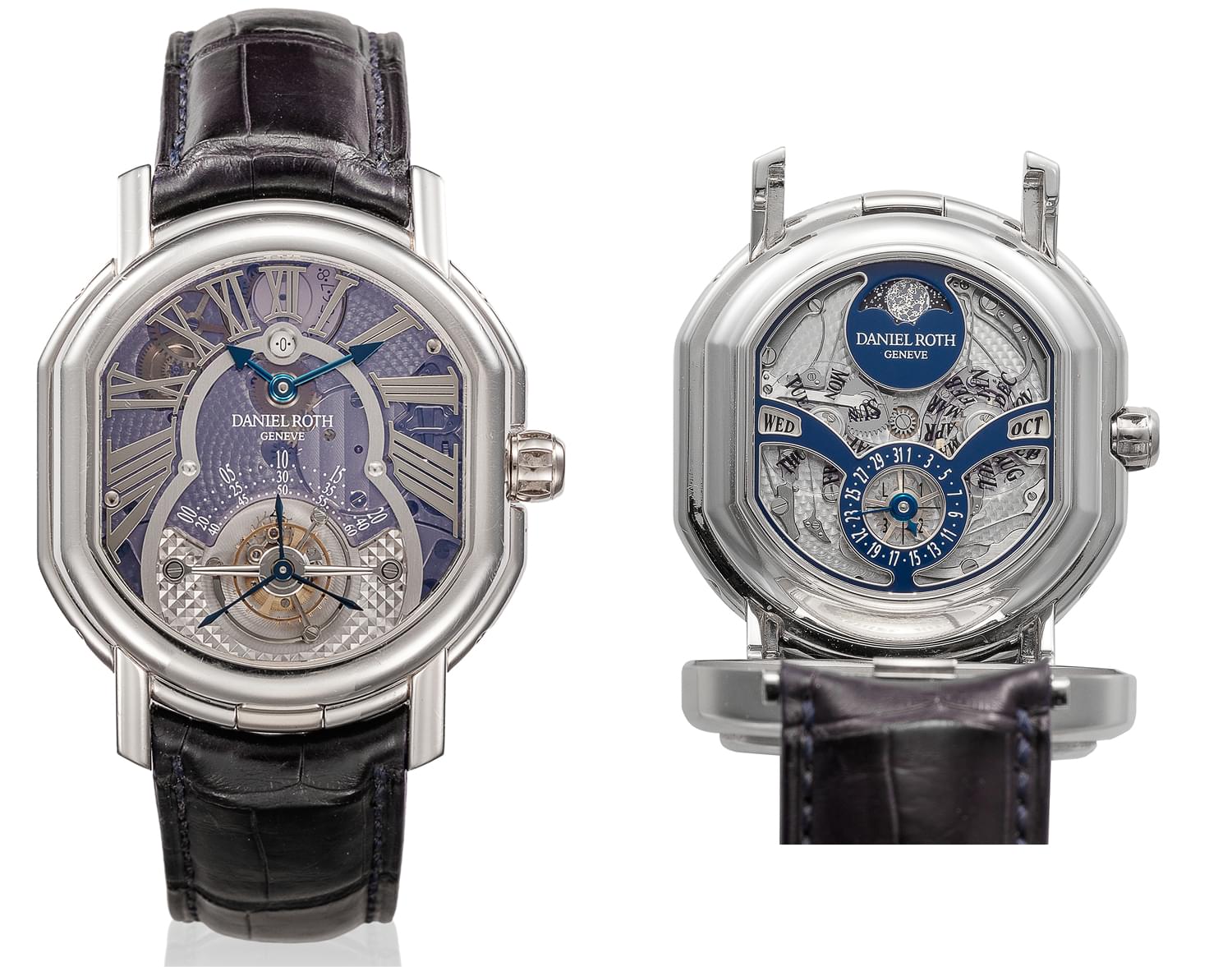
Daniel Roth has launched three main versions of the Tourbillon 8 Jours Double Face Perpetual Calendar: with an 18k yellow gold case and a smoked crystal dial (Ref. 220.Y.20.146.CN.BD; there may have been a typing error in the press release and the reference should start with 220.Y.40 ); in 18k rose gold with a smoked crystal dial (Ref. 220.Y.50.144.CB.BD); in platinum 950 with a lavender crystal dial (Ref. 220.Y.70), of which only a handful were seen on the market. This is a very rare edition, of which probably no more than 30 were produced.
Athys Perpetual Calendar Ref. 112.Y
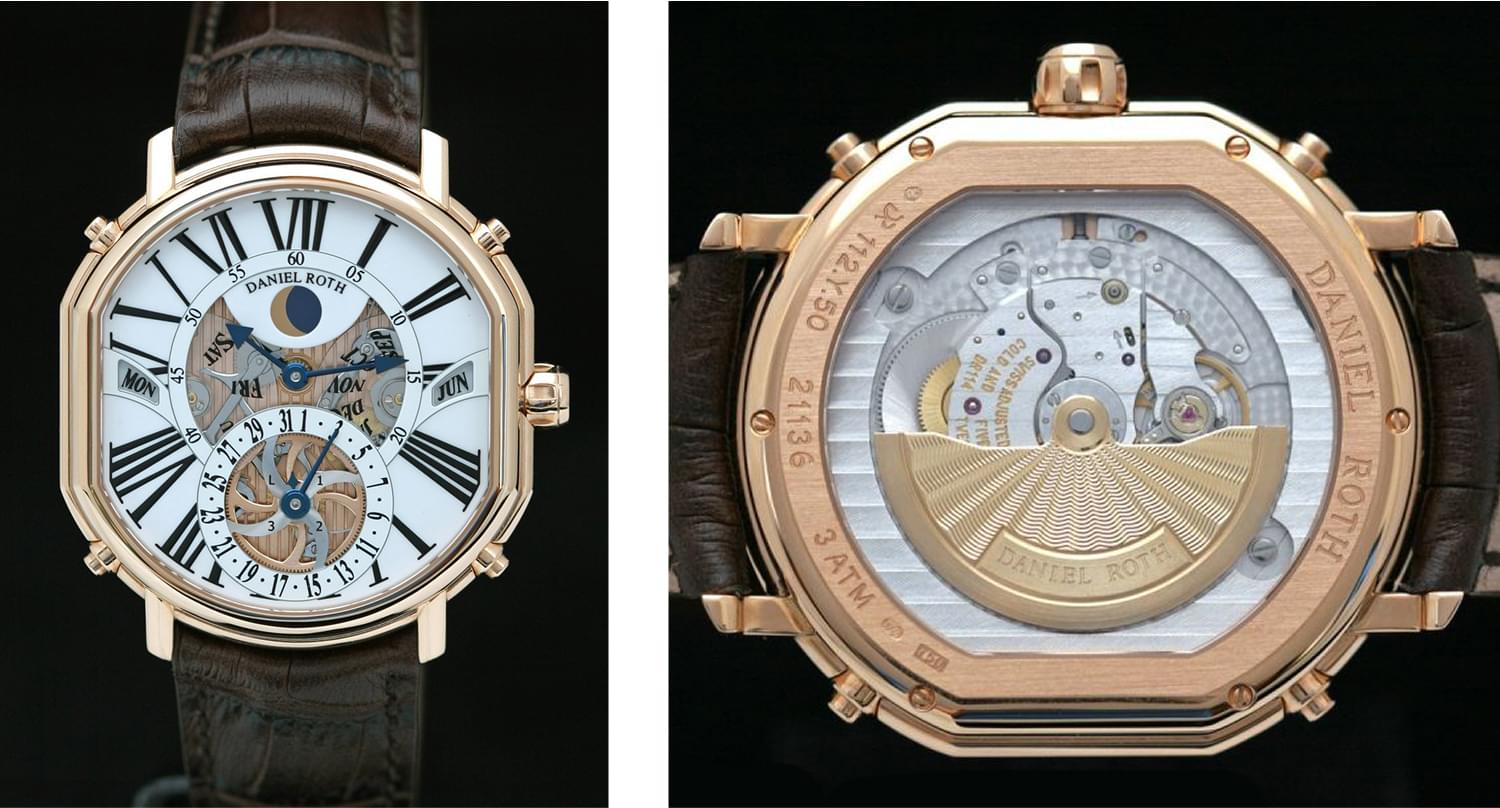
The company announced the launch of this watch in 2009, when the brand celebrated its 20th anniversary, and most likely this release was dedicated to that occasion. The watch is equipped with the DR114 automatic caliber, which is a modified version of the caliber of the same name that was developed for the Perpetual Calendar Moon Phases Ref. 118.L from 2001. The base movement of the DR114 in the version for the Ref. 112.Y is still the Girard-Perregaux GP3000, the change concerns the module for the perpetual calendar. Everything looks as if only the finishing technique of the mainplate of the module has been changed, which has been given a finish with vertical relief stripes. In terms of functionality, the module has retained the previous features, i.e. the functions of a non-instantaneous perpetual calendar with displays for the day of the week and the month on discs and a moonphase display.

As far as the design codes are concerned, the dial of the Athys Perpetual Calendar Ref. 112.Y is designed in the dynamic New Style, with large black Roman numerals radiating from the center on a white, partially open-worked dial. The openings for the day of the week and the month are located on “wings” that extend from a large date and leap year sub-dial, whose openwork structure and the leap year wheel underneath feature a swirl design. This is the last perpetual calendar to bear the Daniel Roth logo. It was announced just one year before the brand ceased trading. Apparently, Daniel Roth planned several versions, at least the models in 18k rose and white gold. This is indirectly confirmed by photos of the perpetual calendar module with mainplate in rose gold-colored and silver-colored versions that appeared in the press. Although only the Ref. 112.Y.50 is documented with a rose gold case, this was apparently a prototype made for exhibition purposes. No Athys Perpetual Calendar Ref. 112.Y has appeared on the secondary market.