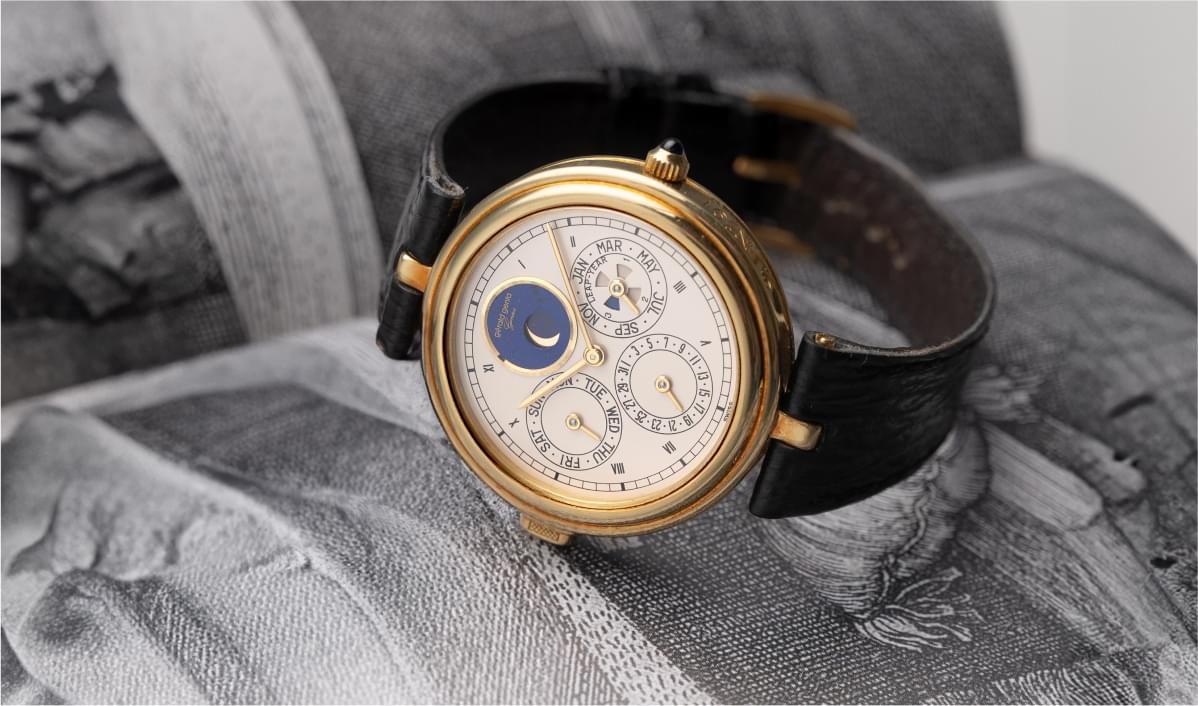

Gérald Genta part 2
What we offer you is an [virtually unrealizable] attempt to describe the full range of designs created by Mr. Genta
Under the magnifying glass:
the hands
Apart from the Fantasy designs, which are a special case, Mr. Genta was extremely conservative when it came to the hands of his watches. His early watches almost universally used obelisk-style hands – a very slim obelisk with a pointed tip, and the hands in a similarly slim ‘stick’ design with a rounded tip. It was not until 1983 that the luminous baguette hands, which I prefer to call ‘Genta baguette’ hands, appeared in the watches of just launched Succes sports collection (originally Gold&Gold, later Spirit). We are surprised (or not?) to recognize in these hands almost the same design that Mr. Genta liked to use for his best third-party designs such as the Royal Oak, Nautilus and Seamaster Polaris. And it’s a really beautiful, harmonious shape, one of those designs that should be described as archetypal and classic. In fact, Mr. Genta made a rare contribution to the development of watch design – he created his own dial style with ‘Genta baguette’ hands in combination with similarly shaped applied baguette indexes or with applied round indexes, which we usually find in Gérald Genta watches.
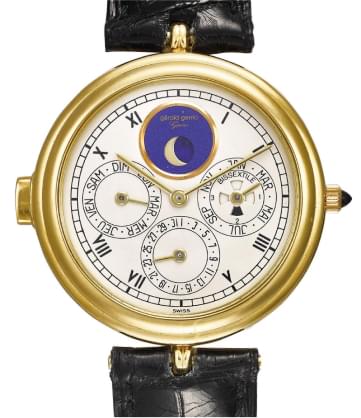
It’s interesting to note that the early Royal Oak collection generally uses the similar hand types: ‘Genta baguette’ hands for basic models, slim ‘obelisk’ hands for Royal Oaks with complication such as the perpetual calendar.
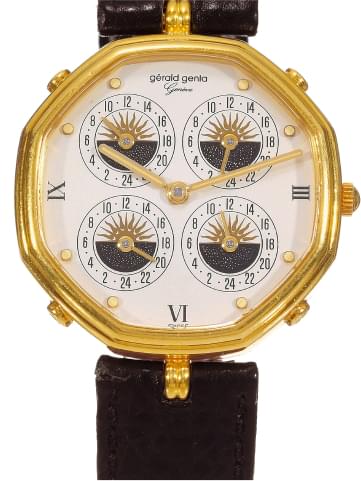
In 1988, two new hand shapes appeared for the brand: the large triangular hands of the Ice Crystal series – these models remained rare and exotic, and the ‘sword’ hands, which were used more and more frequently until 1995 and 1996, when they dominated in the watches of the Arena collection (originally Rétro Classic and Classic models).
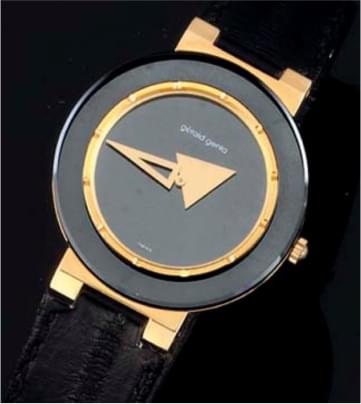
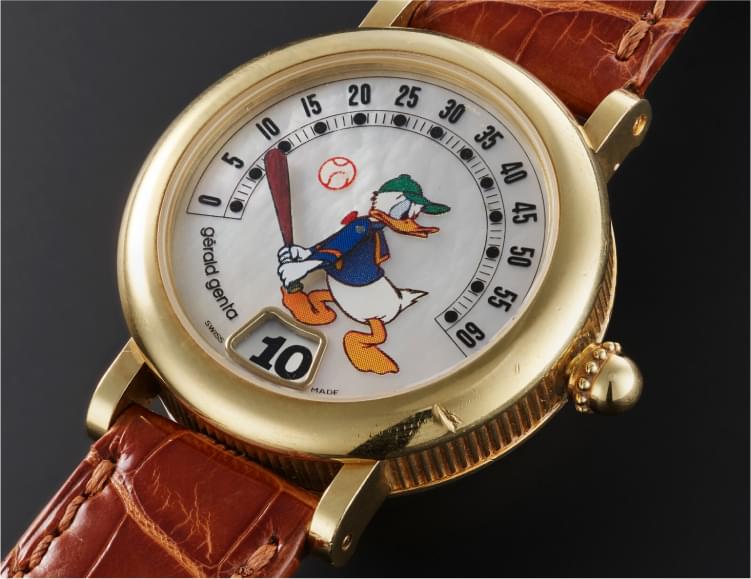
The designs of The Hour Glass period are dominated by the ‘sword’ hands, which were introduced to the collection by Mr. Genta himself. Unfortunately, there are also new models in the Bulgari period with hands that have nothing to do with Mr. Genta’s heritage or style, although they certainly stand out. The latter refers mainly to the open-worked ‘pierced baseball bat’ hands, which are geometrically unbalanced and therefore, in my opinion, too far from Mr. Genta’s style. I have the impression that the design of the pierced ‘baseball bat’ hands is the result of a co-evolution of the ‘sword’ hands of the Rétro Classic watches and the baseball bat that appeared as a minute hand in the hands (wings?) of Donald Duck, a character from the Rétro Fantasy collection from the days of the ownership of The Hour Glass. The Octo collection, perhaps the most attractive design created during the Bulgari period without Mr. Genta’s involvement, features ‘Dauphine’ hands, which have the advantage of not looking too extravagant, but unfortunately are not characteristic of Mr. Genta’s style either.
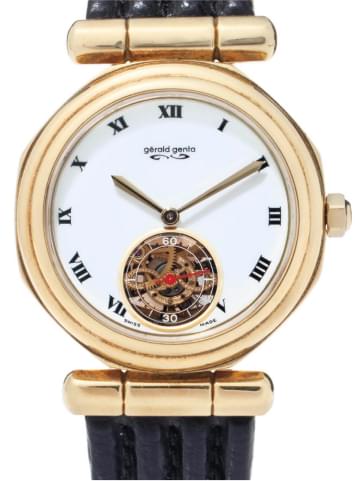
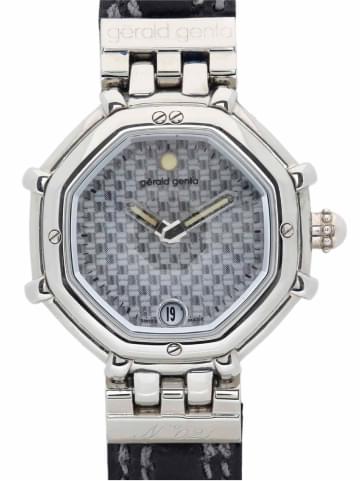
Also worth mentioning are the hands with a unique design invented by Mr. Genta and used in Success ladies watches since 1993. These hands could be described as ‘Genta crystal’, as the luminous and transparent hands are made of faceted synthetic sapphire, giving them the appearance of precious stones.
Under the magnifying glass:
the dials
Open-worked dials, sapphire casebacks... Mr. Genta was one of the first in the industry to understand how important it is that the customer who buys mechanical watches, especially those with complications, can see and appreciate the fine craftsmanship inside the watch. As far as I can tell from the information available, he offered such watches as early as the 1970s, while the industry only came to appreciate this approach in the late 1990s to early 2000s.
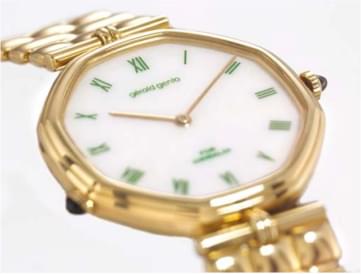
At the same time, the ornate and finely crafted dial itself certainly adds considerably to the appeal of the watch. Gérald Genta handcrafted dials include those made of white agate, which create a unique visual effect. This white, slightly translucent hard stone gives the dial both visual depth and a lucid, airy character. The markings on Gérald Genta’s agate dials were often applied with colored paint, e.g. blue, green or red, which further enhances the airy character of the watch. The first watch with an agate dial appeared in the Gérald Genta collection in 1983, perhaps even earlier.
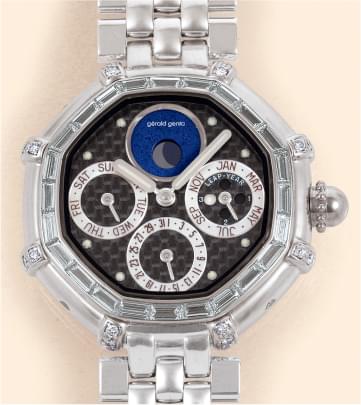
Gérald Genta watches with dials made of other decorative stones such as red coral, malachite, jadeite, black opal and lapis lazuli will always attract attention. In almost all of the brand’s watches with moonphase display, including the perpetual calendars, the decorative disks for the moonphase sub-dial are made of lapis lazuli, which is the hallmark of Gérald Genta watches with calendar complications.
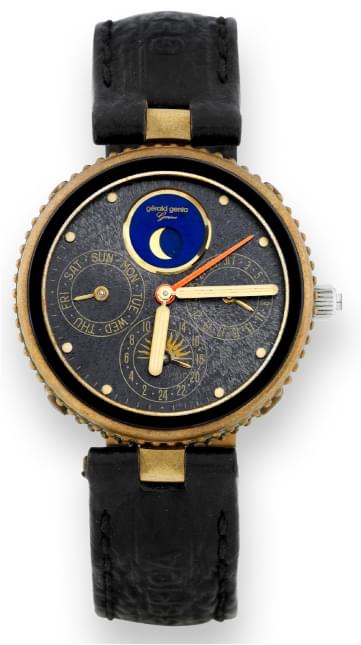
In 1984, the brand launched the Géfica collection, for which an unusual ‘mountain stream’ textured motif was created with chaotically arranged notches emanating from the center of the anthracite-colored dial, creating a unique interplay of light and reflections.
One of Mr. Genta’s world firsts is the introduction of such an avant-garde material as carbon fiber composite in watchmaking. He started to use it as a material for dials in 1988 or 1989. There were Gérald Genta watches with a bezel made of carbon fiber, and this material was also used for the links of the bracelets. In addition, Mr. Genta was apparently the first to use fiberglass composites to decorate dials.
Under the magnifying glass:
the winding crowns
Early Gérald Genta watches often had a simple crown with a traditional fluted cylindrical shape or a fairly standard luxury watch crown with a sapphire cabochon, sometimes set with a single diamond. From around 1988, Genta’s ‘bowler hat’ crown, his bold interpretation of Cartier’s fluted cabochon crown, became more common on the Classic, Gefica, L’Octo and Success watches and has been the only option for subsequent Arena watches since 1996.
From around 1988, the Octagonal watches were fitted with a hexagonal crown, which Mr. Genta had already used so brilliantly on the Royal Oak in 1972. As with the Royal Oak, the combination of the octagonal shape that dominates the design of the Octagonal watch and the hexagonal crown is a stroke of genius. Or a designer’s joke.
The collector should be aware that earlier watches with ‘bowler hat’ or hexagonal winding crowns sometimes appear on the market, but most probably received the later crown during servicing.
Under the magnifying glass:
skeleton watches
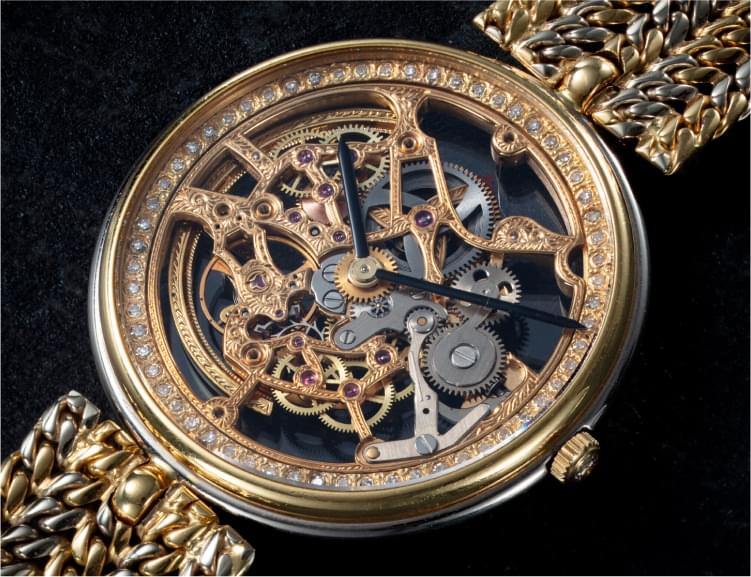
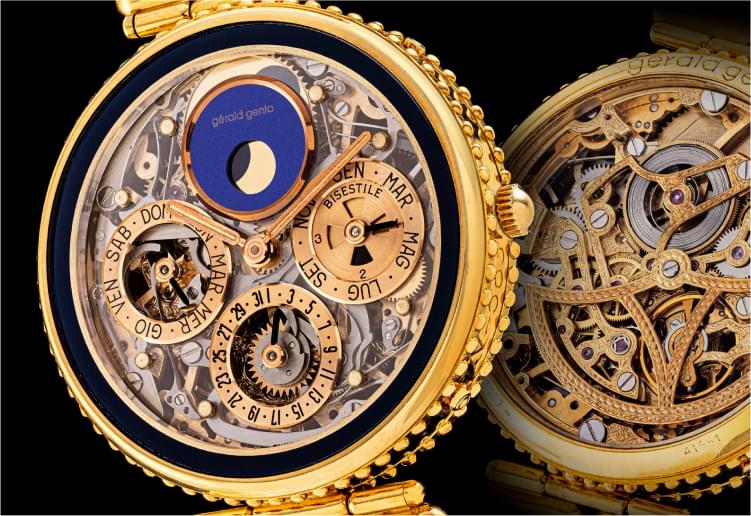
In Gérald Genta’s watches, we find a traditional type of skeletonization, and it is very likely that Mr. Genta has chosen the maximum degree of transparency for the entire industry by leaving a minimum of metal on the bridges and the main plate. The remaining thin frames of the bridges and mainplate decorated with the traditionally obligatory engraving. This very detailed design, as you can see, is further emphasized by the fine structure of the braided gold bracelet, which is often found on such watches. In the early days, the 1970s and early 1980s, the brand released many skeleton models, most of which were very thin.
For skeleton watches Gérald Genta mainly used three basic calibers that were supplied by the then independent Frédéric Piguet factory (which, along with its sister brand Blancpain, was acquired by Swatch Group from its former owners in 1992).
The first
is the small hand-wound Frédéric Piguet caliber 21, which is slightly thicker than the 1.7 mm
The second
is the self-winding Frédéric Piguet 71, which is 2.4 mm thick.
The third
is the Frédéric Piguet pocket watch caliber 15, which was also used by Gérald Genta in pocket watches and some so-called wrist-pocket watches – it is 1.9 mm thick.
All are indeed impressively thin
The latter was very rarely used by the brand, I would like to find it more often in modern wristwatches. All of these calibers were not only used in simple two-hand ‘solo-tempo’ models, but also served Gérald Genta as the basis for its complications, in the vast majority of cases for the perpetual calendar modules designed for wristwatches and separately for pocket watches and wrist-pocket watches. Among the versions of a skeleton design, we find two types: with a partially skeletonized calendar module and an open-worked dial, and in a fully skeletonized ‘transparent’ version. After the introduction of the in-house automatic caliber 12000 with tourbillon, it was mainly used as the basis for perpetual calendar watches in a partially skeletonized version with an open-worked dial and very rarely in a regular version with a solid dial.
Under the magnifying glass:
bracelets
In the early days, the brand’s collection was dominated by two options – a leather strap, in crocodile leather depending on contemporary taste, or braided gold bracelets, often in a two-tone design, usually in yellow and white gold. Mr. Genta clearly preferred to combine braided gold bracelets with skeleton models, apparently with the aim of creating a harmonious combination of the fine texture of the bracelet and the fine details of the decoration of the skeletonized movement.
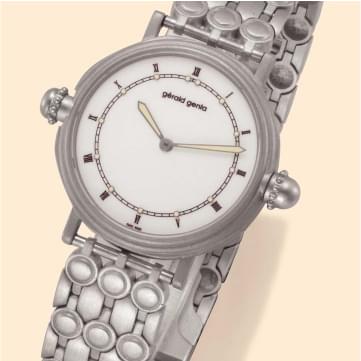
The heavy bracelet with the cylindrical bars and the flat links that connect them is Mr. Genta’s first basic bracelet design. It has appeared in the collection since around 1981. It was the most popular and widely used until its production was discontinued in 1996. As we can imagine, this design probably originated from Mr. Genta’s desire to create a harmonious combination of a bracelet and a Vendôme-type case, where the strap or bracelet attachment part is designed as a bar that is connected to the case in the middle. There are many variations of the basic design with the bars, and I think this is one of the most unnoticed signs of the creativity that Mr. Genta has brought to virtually every aspect of watchmaking.
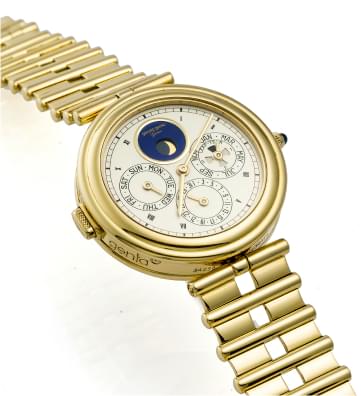
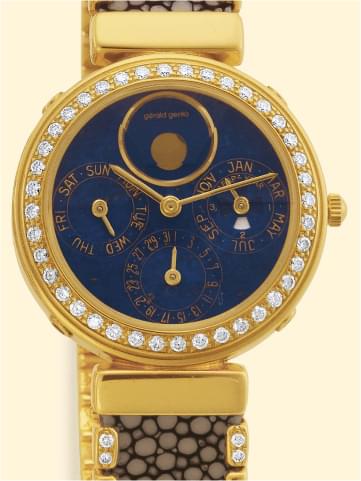
An extravagant gold bracelet with a leather interior was introduced around 1986 and can be found on some chunky, sporty models from the Classic collection. It should be noted that Galucha leather is used for such a bracelet by Gérald Genta – long (ten years) before the jeweler and designer Fawaz Gruosi claimed to have invented the use of this type of leather for watch straps.
in 1987, a new bracelet design with five rows of links appeared. It had two flat, cylindrical links on the two outer sides and three ‘rice grain’ links on the inside. From around 1992, it increasingly replaced the bracelets with cylindrical bars. This can be clearly seen in the bracelets that were supplied with the watches in the Success collection. Around 1993, an updated version of the five-link bracelet appeared, in which flat cylindrical links were interspersed with ‘rice grain’ links, i.e. the latter were the 2nd and 4th links.
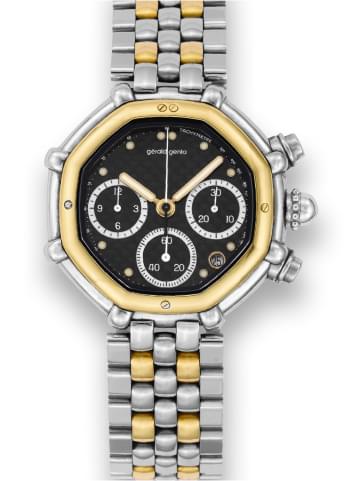
Since 1996, with the relaunch of the collection and the introduction of the new basic Classic and Rétro Classic designs, the latest variation of the ‘rice grain’ bracelet design appeared, this time in a six-row version where the ‘rice grains’ are the 2nd and 4th links and the double middle link is flat cylindrical. The Hour Glass, a new owner of the brand, obviously decided to simplify production and allowed almost no variations of the basic bracelet design, which was executed in steel, gold and bicolor (steel plus gold). Bracelets of this type were also used in the collection during the Bulgari period, at least until 2003.
Classic collection
and the other classic round watches
This category partly comprises watches with round cases and straight lugs, a modernized version of the Empire style once developed by Abraham-Louis Breguet for pocket watches and adapted by the brand for wristwatches in the 20th century. Mentioning the name Breguet in this context does not seem superfluous, as Mr. Genta himself mentioned in his interview that he developed designs for this brand, which was relaunched during the period when it was owned by Chaumet. It would be useful and revealing to find further evidence of this fact in addition to the statements of the master himself. Among Gérald Genta’s watches, we find only a few instances that refer directly to the Breguet style. The earliest are the rare examples such as the Classic Complete Calendar watch from around 1983, which features a ribbed caseband. The same feature was perhaps used in Mr. Genta’s most recent activity for his brand, namely in the design of the Rétro Classic and the Classic in the 1996 version. The ribbed caseband of these watches is the most conspicuous reference to the Breguet style, which has been implemented in almost all Rétro Classic and Classic (Arena) watches since 1996. At the same time, other important elements of the Breguet style, namely Breguet numerals, Breguet hands and a Breguet-style guilloché dial, are not found on Gérald Genta watches. The only exceptions are a few examples of round and tonneau-shaped self-winding watches with retrograde perpetual calendar and minute repeater, e.g. Ref. G4042, made from 1993 to 1996, and the Grande Sonnerie Ref. G0026 from 1996, whose dials feature applied Breguet Arabic numerals.
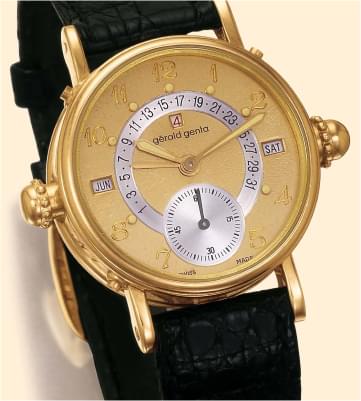
The design of a Gérald Genta Classic collection is characterized by a round case, usually with a rounded bezel in the style of a double pomme, a rounded caseback rim, straight lugs or a Vendôme-style strap attachment, with a bar on many models. Obviously, Mr. Genta generally preferred the Vendôme-style case, which we find on most Classic watches before 1996. Some sporty versions of the Classic design have very accentuated and massive bars on the case – like the so-called Bomba chronographs. This name is unofficial and seems to be a nickname that was probably coined by the brand’s Italian customers.
In the early days of the brand, until 1996, round models in the brand’s collection were usually referred to as Classic, while models with complications were usually named after their complication. Models with a new, more dynamic and sportier design compared to the previous Classic designs, and with retrograde minute and jumping hour complications were initially given the official name Rétro Classic from 1996 onwards. The name Rétro does not refer to the retro style, but to the retrograde minute display – a module with such a display was introduced in the same year along with the introduction of a new, more massive case design. Later, when the brand became part of Bulgari, the watches with this design were grouped into the Arena collection around 2003, although the original name was longer – Arena Contemporary.
Octagonal collection and other octagonal designs
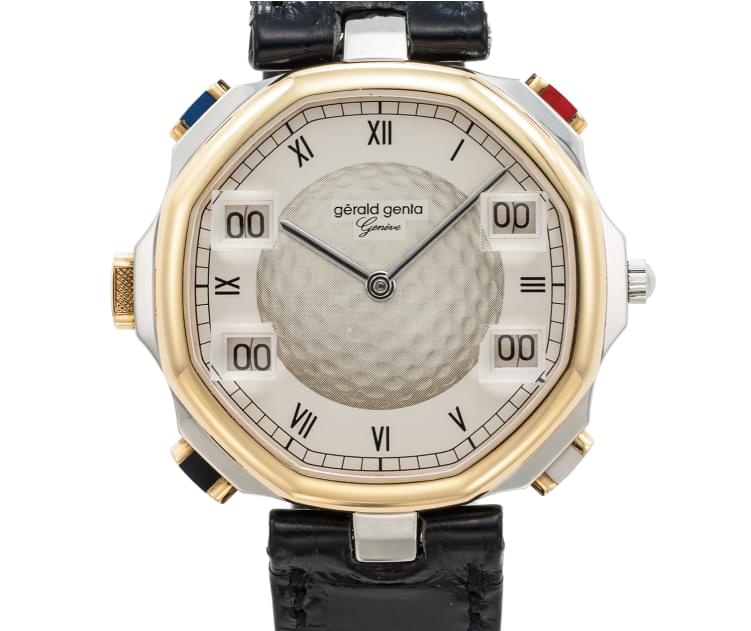
The design of the Octagonal collection is characterized by an overall classical style, but with an octagonal case that is unusual for this genre. Mr. Genta’s interpretation of this shape usually has equal sides, but sometimes they are different. All sides are slightly rounded, all corners are also rounded, the bezel usually has a double pomme profile; on particularly complicated watches, the bezel can have a high relief. The Octagonal cases are usually of the Vendôme type, i.e. with a crossbar for attaching the strap or bracelet, the crossbars can be hidden or visible, and sometimes they have a solid cylindrical shape. I refer to all of these watches as Octagonal, even though the models with different configurations may have different historical names.
Success, the sporty version of the Octagonal, is distinguished by the bulky octagonal case and upper part of the double pomme bezel acquired the characteristic spider-like protrusions from the corners of the octagonal bezel outwards. Watches with this design appear to have been produced under the name Gold&Gold from 1981, before apparently being renamed Spirit from 1987 and finally Success in 1993 (the engraving of the name of the Success collection also appears on the caseback of the watches around 1993).
The Success watches are of great interest from a collector’s point of view, as they contain many of Mr. Genta’s innovations. These include, for example, dials made of carbon and fiberglass composites, sandwich dials with slotted indexes, transparent luminous hands made of faceted, polished sapphire and sapphire crystal with facets that point into the interior of the watch. The Success collection was discontinued in 1996 with the introduction of the Rétro Classic collection.
The Octo, the latest version of the octagonal idea developed by the brand’s design team during Bulgari’s period in 2004, has little in common with Mr. Genta’s Octagonal style other than the octagonal shape. The closest thing to the Bulgari era Octo are the little-known Maxi Time models (I prefer to call them Octagonal Maxi Time), where the octagonal design was complemented by accentuated case protrusions on the side edges. Incidentally, the Mickey Mouse Minute Repeater, the first model of the Gérald Genta brand relaunched by LVMH in 2023, shows more of the spirit of the Octagonal by Gérald Genta than the spirit of the Octo by Bulgari in its design. This suggests that when LVMH recently separated the Bulgari and Gérald Genta brands, it decided to leave the 2004 version of the Octo design to Bulgari.
The latest version of Octagonal is the L’Octo series, which was probably launched in 1993 (this name has been mentioned in brand communication since at least 1995). It is the closest predecessor – in name – to the Octo collection, which was introduced in 2004. There is an unavoidable ambiguity here, as the name L’Octo mentioned in the mid-1990s follows the French-speaking tradition, whereas in English texts it was quite natural to use the direct version of the name Octo. It should also be remembered that Mr. Genta patented the name Octo Gold in 1983, so adopting the direct version of the name seems quite reasonable. However, to distinguish the L’Octo of the mid-1990s from the Octo of 2004, I prefer to use the French version of the name, L’Octo. Let us now turn to the design. The dial of the L’Octo watch shows the influence of a then new style that found its final expression in the Rétro Classic watch launched in 1996: it features ‘sword’ hands that replaced the ‘stick’ and narrow ‘obelisk’ hands used until then, new dense and large rectangular serif hour markers, large Arabic numerals in the cardinal points in a condensed style and an internal minute track. Also noteworthy is the combination of an octagonal case and a round bezel with a double pomme profile; accordingly, the crystal also has a round shape. This was a significant evolution of the Octagonal design, but one that went almost unnoticed, as the L’Octo collection was not destined to be a conspicuous phenomenon – even in the specialized press, mentions are rare.
The reason for this is obvious: the launch of this design was soon overshadowed by another Rétro Classic release, apparently favored by the management of The Hour Glass, since 1996 by the owners of the brand Gérald Genta. I do not see this as a devaluation of Mr. Genta’s creative legacy, but the reasons for this lie in the brand’s marketing strategy, which could also be supported by public demand data. Mr. Genta’s accusations regarding the significant reduction in average selling price by the Hour Glass group also indicate that in such a situation, round watches are always preferred because they are less costly to manufacture, all other things being equal.
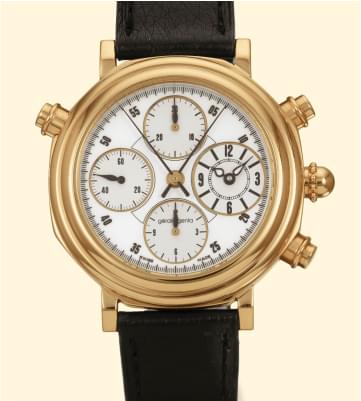
‘Pyramid’ design [unofficial]
The name ‘pyramid’ refers to the baroque design with a multi-level pyramid-shaped bezel. The comparison with the pyramid was used by Mr. Genta himself. This design is most commonly found in ultra-complicated watches such as the Grande Sonnerie and the Minute Repeater Perpetual Calendar Tourbillon, although much less complex models such as Gérald Genta’s perpetual calendars and even automatic two-hand ‘solo-tempo’ models also appear in this design. Of particular note is the ultra-thin Classic Quantième Perpétuel ‘Pyramid’, which was launched in 1991. According to the brand, it was the thinnest watch in the world with a perpetual calendar and a moonphase display. The watch was powered by a hand-wound Frédéric Piguet 21 caliber and used an in-house module for the perpetual calendar. Finally, the movement was 3.3 mm thick, while the case of the watch was only 5.5 mm thick.
For the Grande Sonnerie watches, Mr. Genta created his most detailed designs in the Baroque style. Among them, the octagonal version of the design predominates, although there are also watches in other shapes. The Grande Sonnerie was of course only produced in extremely limited numbers due to the incredible complexity of the movement and will remain an unforgettable testament to Mr. Genta’s horological genius.
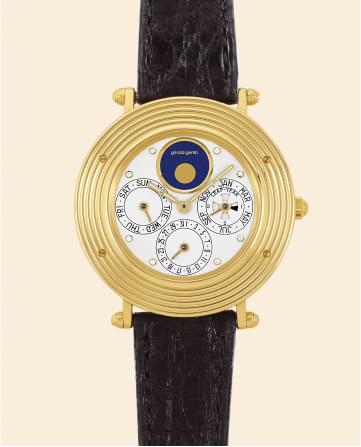
Grande Sonnerie
The development of the Grande Sonnerie watch and its highly complex self-winding movement was completed in 1994 to mark the brand’s 25th anniversary. The watch was touted as the most complex wristwatch in the world, and it was. Mr. Genta mentioned in an interview that he had sold 23 examples for one million Swiss francs each. It probably dates from 1994 to 1996 or 1997. Later, according to Gérald Genta’s staff, the brand produced at least one Grande Sonnerie watch per year thereafter.
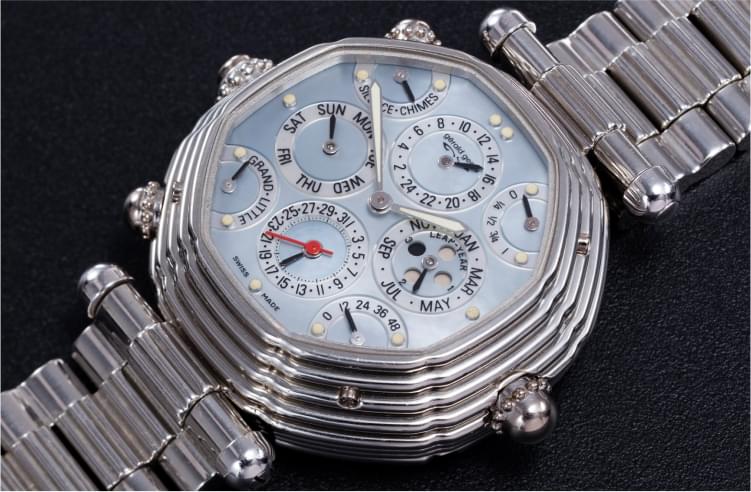
Although the movement was subject to changes in all editions up to 1999, it was consistently referred to as caliber 31000. Grande Sonnerie Ref. G0025 of anniversary edition, which came onto the market in 1994 (case serial numbers 66xxx) has an Octagonal ‘pyramid’ case and an automatic movement. It features the functions of a large/small strike on four gongs (Westminster chimes), a minute repeater, a tourbillon, a perpetual calendar with date, day of the week, month and leap year display, a 24-hour GMT display, indicators of the power reserve of the movement and the striking mechanism, and indicators of the large/small strike and strike/silence modes.
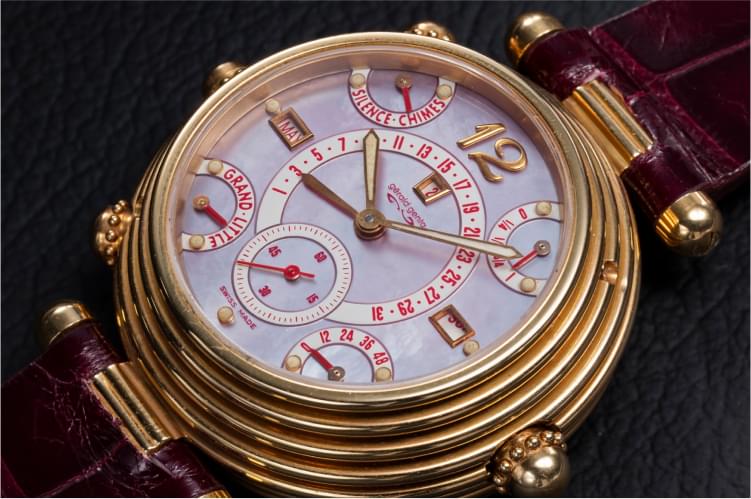
For the Grande Sonnerie Ref. G0026 in the Classic round ‘Pyramid’ case, which was apparently offered to customers in 1995 (case serial numbers 69xxx), a different perpetual calendar module was used, showing the retrograde date, with the day of the week, month and leap year displayed in the apertures. This watch lacked a 24-hour GMT display.
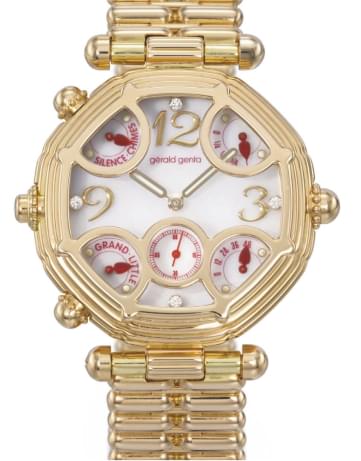
In 1996, the next edition, Grande Sonnerie Ref. G0027, saw the light of day, again in the Octagonal ‘Pyramid’ case (serial numbers 71xxx). This edition has no calendar module.
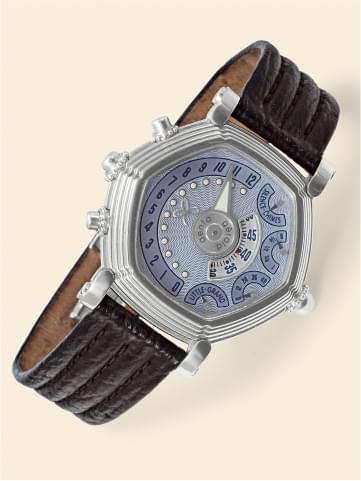
Presumably in the same year (this date is given by Antiquorum), the Grande Sonnerie was also issued with a hexagonal case, which is unusual for highly complicated Gérald Genta watches. The Grande Sonnerie ‘Hexagonal’ again shows the typical Mr. Genta’s ‘pyramid’ architecture, it has no perpetual calendar module, but a retrograde hour and a wandering minute. It is quite possible that this edition was commissioned by the retailer Asprey as part of a mysterious Gérald Genta edition known as the ‘GGM references’. Three Grande Sonnerie ‘Hexagonal’ examples are currently known, all marked with the reference GGM1. One is in white gold (with a bracelet in this metal), while the second (in platinum) and the third (in yttrium!) are characterized by a clover leaf motif on the dial. Based on this design element, Sotheby’s suggests that this watch was intended for Prince Geoffrey Bolkiah of Brunei, an avid collector of luxury goods and owner of Asprey. It is therefore only logical to assume that Gérald Genta produced the GGM series exclusively for Asprey. The series ranges from the ultra-complicated Grande Sonnerie to the sporty titanium Géfica Safari Chronograph and small jewelry watches for women. It can be assumed also while the GGM series was created for Asprey, the owner of Asprey requested that the watches made for him personally be marked with the cloverleaf symbol. This must of course be confirmed.
Gérald Genta pocket and wrist-pocket watches
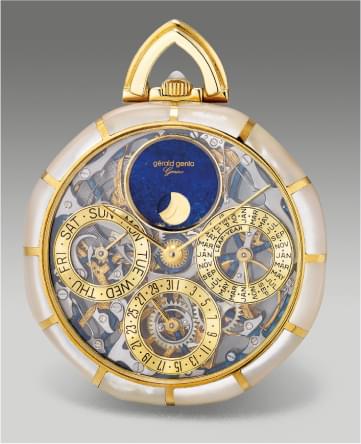
Gérald Genta issued pocket watches, especially in the early days of the brand’s career. I think the reason for this is obvious: in those years – mainly until the end of the 1980s – there was still a community of collectors who preferred pocket watches and were also interested in modern pocket watches. That is why we do not find ‘normal’ pocket watches among the few Gérald Genta pocket watches; they are always much more collector’s items than ‘normal’ pocket watches designed to tell the time. Most of them are equipped with calibers with complications. These are usually a perpetual calendar, often in combination with a minute repeater or Grande Sonnerie, very rarely a chronograph or a watch with several time zones, such as the rarest model Five Continents, announced in 1984.
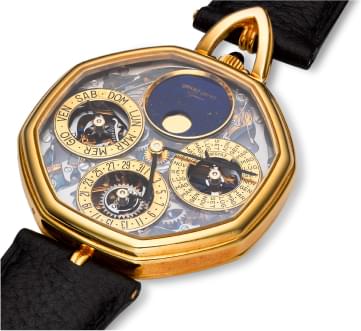
There are also models in the brand’s collection that show signs of both pocket watches and wristwatches – these are the so-called wrist-pocket watches. In my opinion, the design of the Gérald Genta Toi et Moi wrist-pocket watch, which was created in the early 1980s, is a real treat for watch lovers. It is an extremely rare watch with a large 41 mm octagonal case and a hand-wound pocket caliber. The following models are known: Ref. G2406.9 with perpetual calendar and Ref. G3018.8 with perpetual calendar and minute repeater.
Gérald Genta clock as an art object
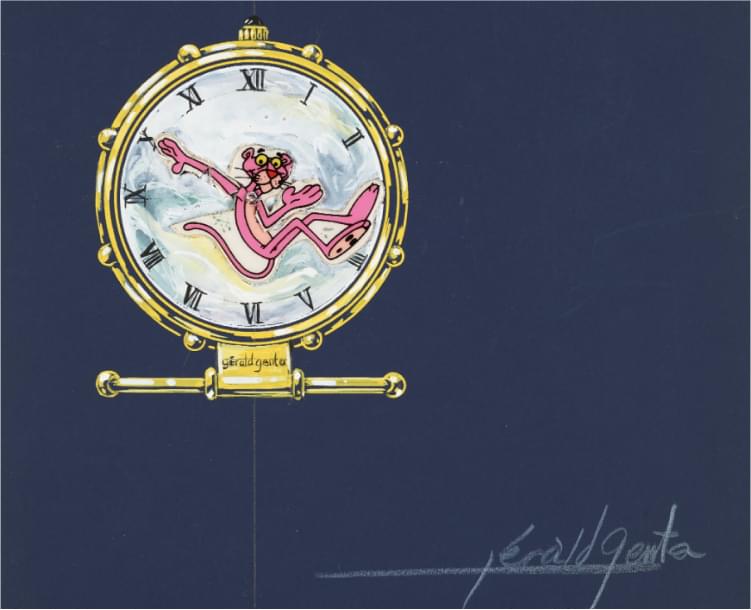
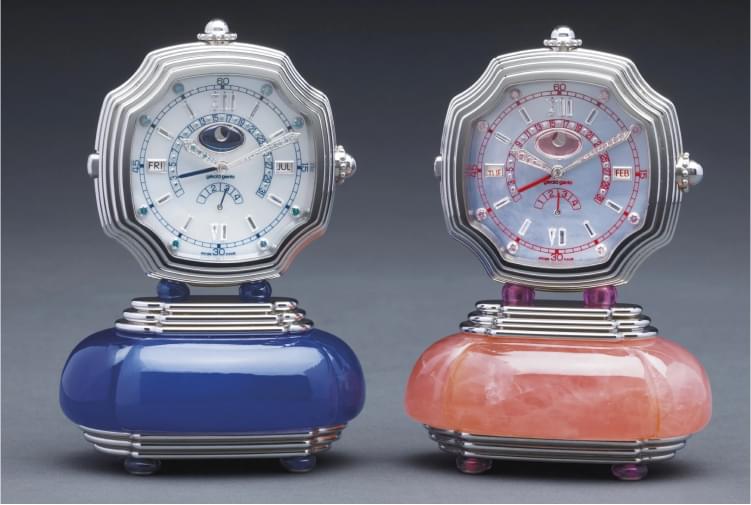
Another extremely attractive and equally rare art object are the desk clocks by Gérald Genta. There are two motives for the production of such objects: firstly, to satisfy the demand of collectors, as with the pocket watches, and secondly, to produce an avant-garde timepiece and thus bring the brand into conversation. For the collector’s timepieces, the brand used pocket calibers with complications, usually a perpetual calendar, often in combination with a minute repeater or Grande Sonnerie. These clocks were made as unique pieces and mostly to order. Information about them is therefore scarce, even if they occasionally appear on the aftermarket. Almost nothing is known about avant-garde models such as the Fantasy ‘Pink Panther’ travel table clock, that the brand announced in 1985; demand and therefore production quantities were probably extremely low.
Géfica Safari and other Géficas
The Géfica Safari is the world’s first luxury wristwatch with a bronze case, which has been in production since 1984. The use of bronze for a luxury watch was undoubtedly a bold decision by Mr. Genta, even if it did not cause as much scandal as the introduction of the Fantasy design.
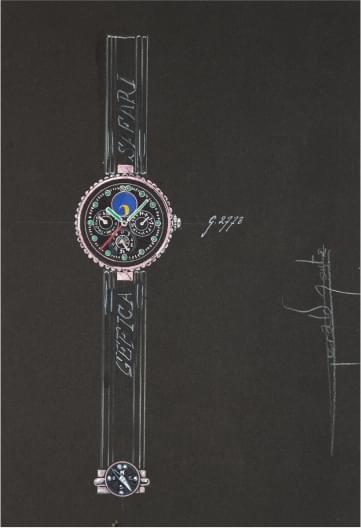
Legend has it that he decided to equip a watch with a bronze case for his fellow hunters who were going on safari in Africa and did not want to take a watch made of polished metal that would glare in the sun. Thus, the Géfica Safari design was born. Production of the original Géfica watches was discontinued in 1996. This was essentially the same time that the brand was acquired by The Hour Glass and the Rétro Classic collection was launched. In 2007, under the auspices of Bulgari, the brand launched the previously unimaginable 46 mm Géfica bronze watch (I would prefer to call it Géfica II), whose design was inspired by the original version, although its character is significantly different. This development was done without the involvement of Mr. Genta himself, but he expressed his appreciation for this design. In my opinion, the Géfica II deserves to be hunted on the secondary market.
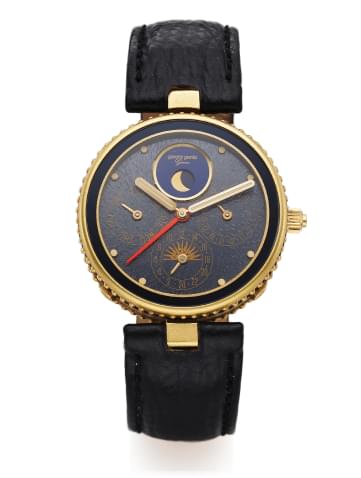
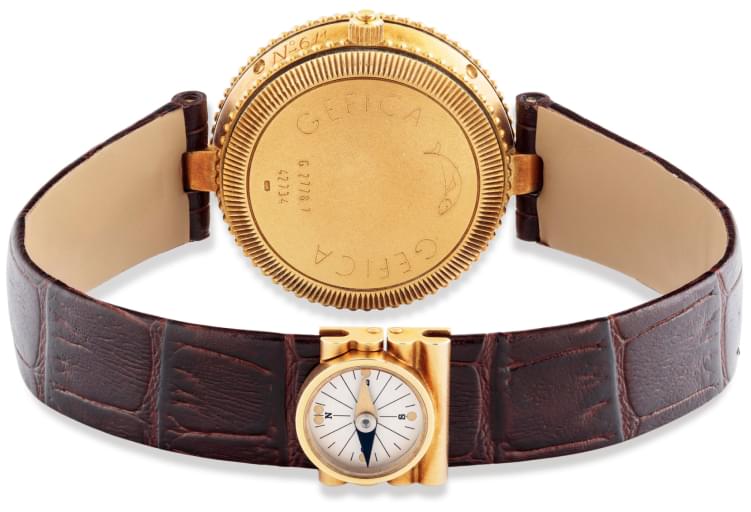
The round case of the original bronze Géfica Safari watch has a bezel and caseback with a fluted ‘studded’ edge’ – a sort of anticipation of Gérald Genta’s studded ‘bowler hat’ crown, now considered one of the hallmarks of the brand’s style. The studded edges of the case give the watch a special tactile feel, in my opinion a very valuable but often underestimated feature.
From 1987, the brand decided to give the yellow gold versions of the Géfica Safari the name Géfica Sahara, although it did not adhere to this decision itself; most models continued to be offered under the original name Géfica Safari. For example, the gold Géfica Sahara models may well have a ‘Géfica Safari’ marking on the bracelet, strap, etc.
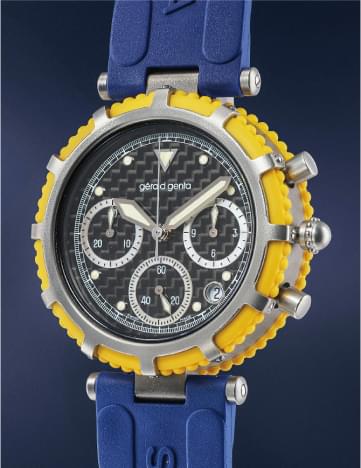
In addition to watches made of bronze or yellow gold, the brand also offered steel, titanium and the extremely rare platinum versions of the Géfica. An appealing design variant appeared at the end of the collection’s life cycle, apparently in 1995 or 1996, in the form of the quartz chronograph Ref. G3620.7 in blackened stainless steel. This model is sometimes referred to as the ‘Darth’ in the collectors’ community.
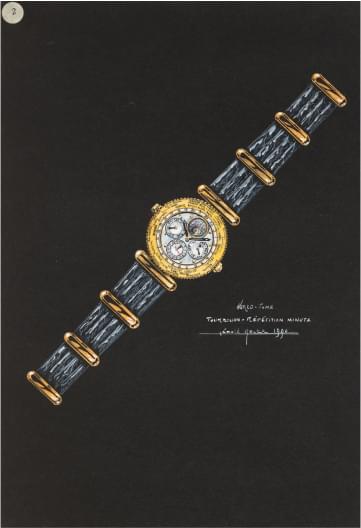
The Géfica collection includes one of the most complex watches in the history of the Gérald Genta brand (with the exception of the Grande Sonnerie, of course) – the Géfica Répétition Minutes Quantième Perpétuel Tourbillon Universal Time, which was launched in 1990. It should be noted that the caseband of this model is octagonal, so that the watch can be considered a kind of hybrid between the Géfica and the Octagonal design – an extremely rare feature which, in combination with its extremely complex movement, promises good collector potential.
The original version of the Géfica Safari features a multifunction quartz caliber with date, day of the week, moonphase, 24-hour GMT display and alarm functions. The clasp of this watch has an unusual design, as it is equipped with a portable magnetic compass. Géfica watches are everything a safari hunter needs.
The Géfica collection is dominated by quartz models with original multifunction quartz caliber or with a reduced range of functions – down to only two hands. The out-of-the-ordinary designs include the New Antique line launched in 1988 with dials shaped like antique coins (hello Bulgari), the Universal Time edition with a world time function and city names engraved on the bezel. Not forgetting the complicated mechanical watches, the aforementioned Géfica ultra-complicated model produced since 1990 and the exquisite Géfica Ref. G4103.4 skeletonized perpetual calendar introduced in 1987.
Maxi Géfica [unofficial]
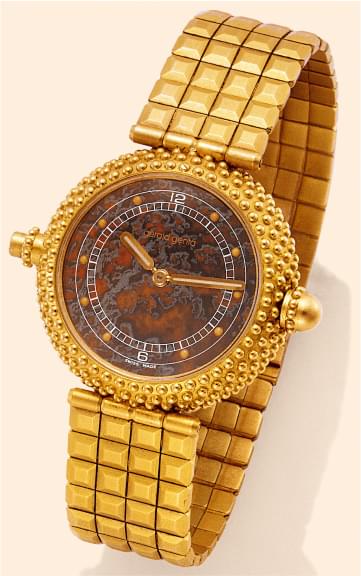
This particular design, which I call Maxi Géfica, seems to be an extension of the idea of the studded Géfica bezel with a multiplication of this detail to several rows of studs. Numerous rounded cylindrical protrusions on the case give the watch a special mood, a tactile appeal and a particular charm that can only be compared in its emotional impact to Mr. Genta’s ‘pyramid’ design. These watches were produced in small numbers shortly before the brand was taken over by The Hour Glass, from about 1993 to 1995, probably some time after, and are all worthy of special attention, especially the extremely rare minute repeaters.
Fantaisie, then Fantasy
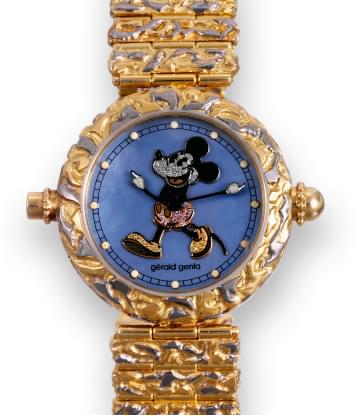
The watch with an animated cartoon character on the dial showing the time with rotating hands is not Mr. Genta’s invention. He took the first step to introduce this design, then considered “reserved for bazaar watches or children’s models”, into high-priced Swiss watchmaking, and as the reaction of the conservative community in 1984 showed, it was a bold and risky move. The Fantasy design brought an element of fun, entertainment and play to serious luxury watchmaking by offering the opportunity to see on the dial characters from Walt Disney cartoons, Pink Panther from United Artists, Papaya the Sailor Man from Paramount Pictures, Spider-Man from Marvel Comics, the occasional erotic characters and perhaps a few other characters created by special request, so we can expect new discoveries.
A fact that today can only be perceived as comical: Initially, the appearance of the Gérald Genta Fantasy watch was negatively received by the traditionalist public and even caused a scandal. When Mr. Genta presented this design for the first time at the Montres et Bijoux de Genève exhibition in 1984, the organizers asked him to remove the frivolous watch with unsuitable cartoon figures from the show window, but instead Mr. Genta defiantly left the exhibition. Today, the Fantasy watches are not only regarded as one of the designer’s boldest statements, but also as cute and charged with positive emotions.
The name Fantaisie is original (remember Mr. Genta’s patented ‘Les Fantaisies’) and is used as such in French-language texts. In English-language texts, the name Fantasy appears predominantly, which I prefer by default for all Gérald Genta watches of this type, especially since it has definitively established itself since 1996, when the Rétro Fantasy collection was launched.
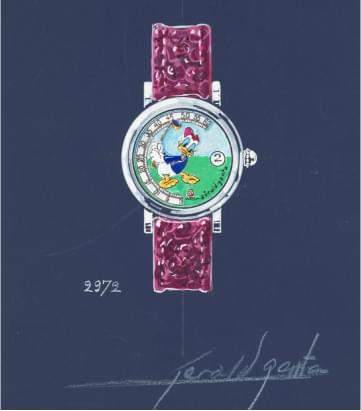
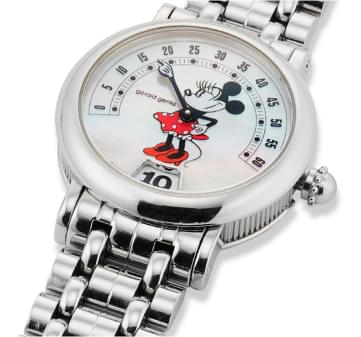
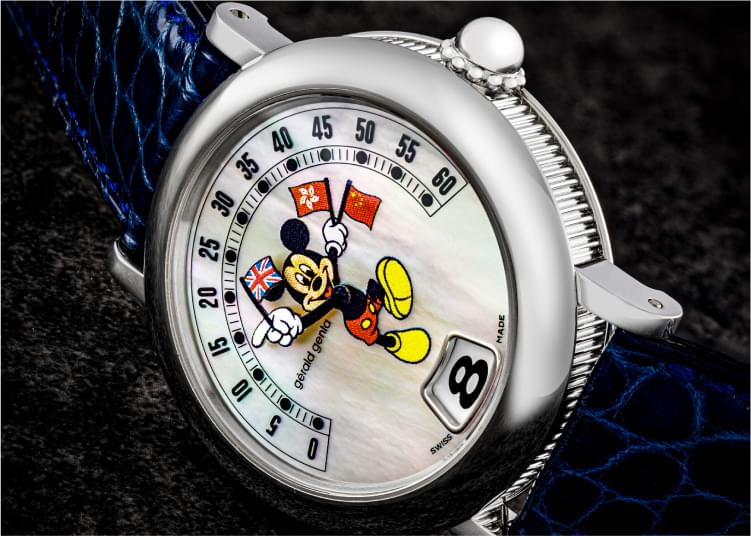
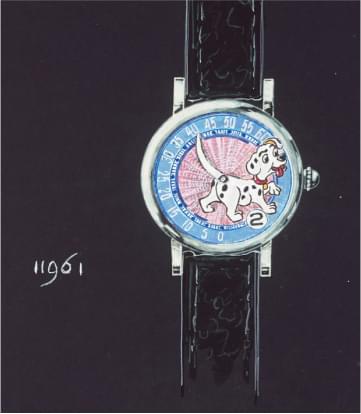
On the early Fantasy watches from 1984 to 1996, hands, paws or other character attributes, such as the legs of a nude woman or a golf club, are used to indicate the hours and minutes on a classic analog 12-hour dial. Since 1996, the dials of the Rétro Fantasy watches have shown the time with a jumping digital hour display and a retrograde minute hand, while the classic Fantasy watches were immediately discontinued.
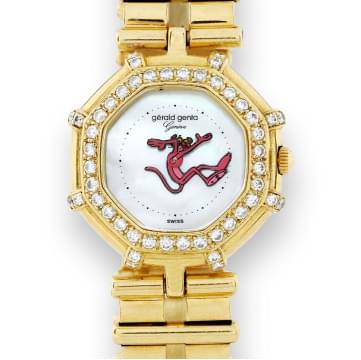
A collector should definitely look out for the rare Fantasy versions that are not round or octagonal in shape. I could only find information on a single early oval Fantasy watch made around 1984. Also extremely rare are the Fantasy desk clocks announced for 1985 and the minute repeater wristwatches (one example is known, dated 1993, sold by Antiquorum).
Rétro Classic, then Arena Contemporary, then Arena
The Rétro Classic design, later renamed Arena during the Bulgari period, is a special page in the history of Gérald Genta. It is noteworthy that this design came to the market with a new development, namely a display module with a digital jumping hour and a retrograde minute hand, hence the word Rétro in the name of the collection. Technically speaking, this module made it possible to synchronize the return of the retrograde minute hand to the zero position with the changeover of the jumping hour – this is the fundamental difference between this development and some other versions of the jumping hour. This development also gave the brand an attractive new dial design. The presence of a digital hour display and a semi-circular retrograde minute track gives the dial a distinctive dynamic look that is radically different from the traditional 12-hour dial with traditional circular hand rotation.
The Rétro Classic collection was launched in 1996 at the same time as the Rétro Fantasy collection; they even had the same movement. It is important to note that this coincided with the acquisition of the brand by The Hour Glass group. One of the consequences of the change of ownership was a complete relaunch of the brand collection. After that, there was practically only one collection, divided into two designs, Rétro Classic and Rétro Fantasy, to which a small number of other models were added. The Rétro dial designs (Rétro Classic and Rétro Fantasy) with retrograde minute and the slightly more complex Double Rétro with retrograde minute and date, introduced in 1997, appear to be Mr. Genta’s last developments for his brand. This assumption is supported by the fact that in the industry, no collection is developed immediately; usually this process takes about a year (sometimes brands specify a shorter period – nine months, apparently with the aim of nudging the public with an easy-to-understand association).
The second argument in favor of a direct involvement of Mr. Genta in the development is the mention of his name as inventor in the patents describing the modules and constructions of Rétro (1996) and Double Rétro (1997). In addition, the Double Rétro patent uses the case of the Rétro Classic watch as an illustration. The final argument is a series of sketches by Mr. Genta, auctioned at Sotheby’s Gérald Genta: Icon of Time in 2022. It contains mainly Rétro Fantasy versions and some sketches that are close to the Rétro Classic. Therefore, the round Arena design, which includes the Rétro Fantasy and the Rétro Classic, was definitely developed by Mr. Genta himself, even if the introduction coincides with the sale of the brand to The Hour Glass group, which very quickly forced Mr. Genta to leave the brand he founded. It is no coincidence that I focus on this fact, because it is important how much of the heritage of the Gérald Genta brand is directly linked to Mr. Genta.
This design remained largely unchanged until the brand ceased trading in 2010.
Apparently, Mr. Genta was not involved in all later developments of the Gérald Genta brand.
These later developments include the outstanding Octo design, which was introduced in 2004 when the brand was already owned by Bulgari. This is not to say that this design has nothing to do with Mr. Genta’s legacy. Despite the shared shape, Gérald Genta’s Octagonal watch design can hardly be called the predecessor of the Octo – the characters are too different. However, another design by Mr. Genta, the Octagonal Maxi Time, which was launched in 1985, seems much closer to the Octo. I have already spoken here earlier about the circumstances of the origin of the name Octo.
Some other rare designs
Mr. Genta was overly creative. His brand’s collection is far from limited to the main designs discussed in detail here. There is a whole range of beautiful, sometimes even stunning creations, a small selection of which I would like to present here. This is definitely only a small part of the ‘rare’ designs, and I am sure there will be many more wonderful discoveries to come.
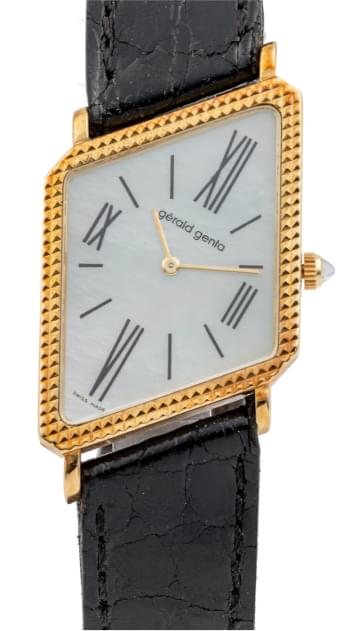
The Gérald Genta La Diagonale Ref G2995.7 was introduced in 1986–1987 at the latest. The historical model is obvious here: it is the Cartier Parallélogramme, also known as the Losange and better known today as the Tank Asymétrique. The first watches with this design came onto the market in 1936, and by the 1980s it was largely fallen into oblivion. Of course, Parallélogramme was not forgotten by the experts, but Cartier waited another ten years to finally bring this design back onto the market. Yes, today it is not a sign of good taste to repeat what Cartier does. But in the 1980s, this design was a rare, almost forgotten curiosity for Mr. Genta, worthy of being honored and revived with a special watch from his brand. The Gérald Genta La Diagonale watch is very rare. I have found information on only a few examples equipped with an ultra-thin hand-wound movement, most likely a Frédéric Piguet 21.
An extremely rare (so much so that I couldn’t find a good quality photo) self-winding perpetual calendar Gérald Genta Quantième Perpétuel Ref. G2072.7 (circa 1989) is a story that has nothing to do with the previous plot. Given the diamond shape of the case, this watch should really be called Lozenge Quantième Perpétuel. As with many of his shaped designs (i.e. octagonal, hexagonal), Mr. Genta carefully rounds the sides and corners of a watch case, and thanks to the cross arrangement of the sub-dials of perpetual calendar, they fit perfectly on the diamond-shaped dial of this watch. With this amazingly harmonious watch, Mr. Genta has once again proven that he is the supreme master of shaped watch design.
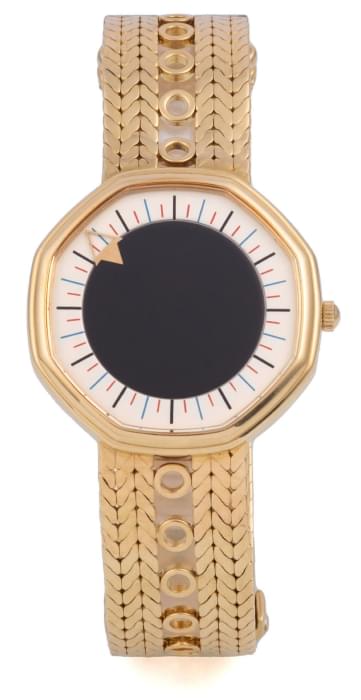
The same applies to the Octagonal Kaleidoscope watch. This design was launched around 1983. Of the two known versions, the Kaleidoscope Ref. G2705.7 with central disc hour display is particularly attractive to my taste. There are no other hands on the dial. Perhaps this is the only single-hand watch that Mr. Genta designed for his brand. You could say that this watch is unfortunately equipped with a quartz caliber and not a mechanical one, but that was just the way of the times: quartz movements were considered the last word in watch technology in the 1980s. Add the last word in watch design here and we get the perfect watch. Please note, this watch has a perfect pair: I have the suspicion that the Audemars Piguet Philosophe watch, also a single-hand watch, was designed by Mr. Genta as well. Just compare the dials.
This concludes, for now, my exploration of the legacy of Mr. Genta, perhaps the most creative watch designer of all time. Lately, he is often referred to as the Picasso of watch design, but it seems to me that his talent is more akin to another art – architecture. Like the best architects, he had a perfect sense of shapes and knew how to combine them harmoniously. Even on a miniature scale, for wristwatches. It has to be said that he was luckier in his craft than any other architect: can you imagine an architect who has erected around a hundred thousand buildings?